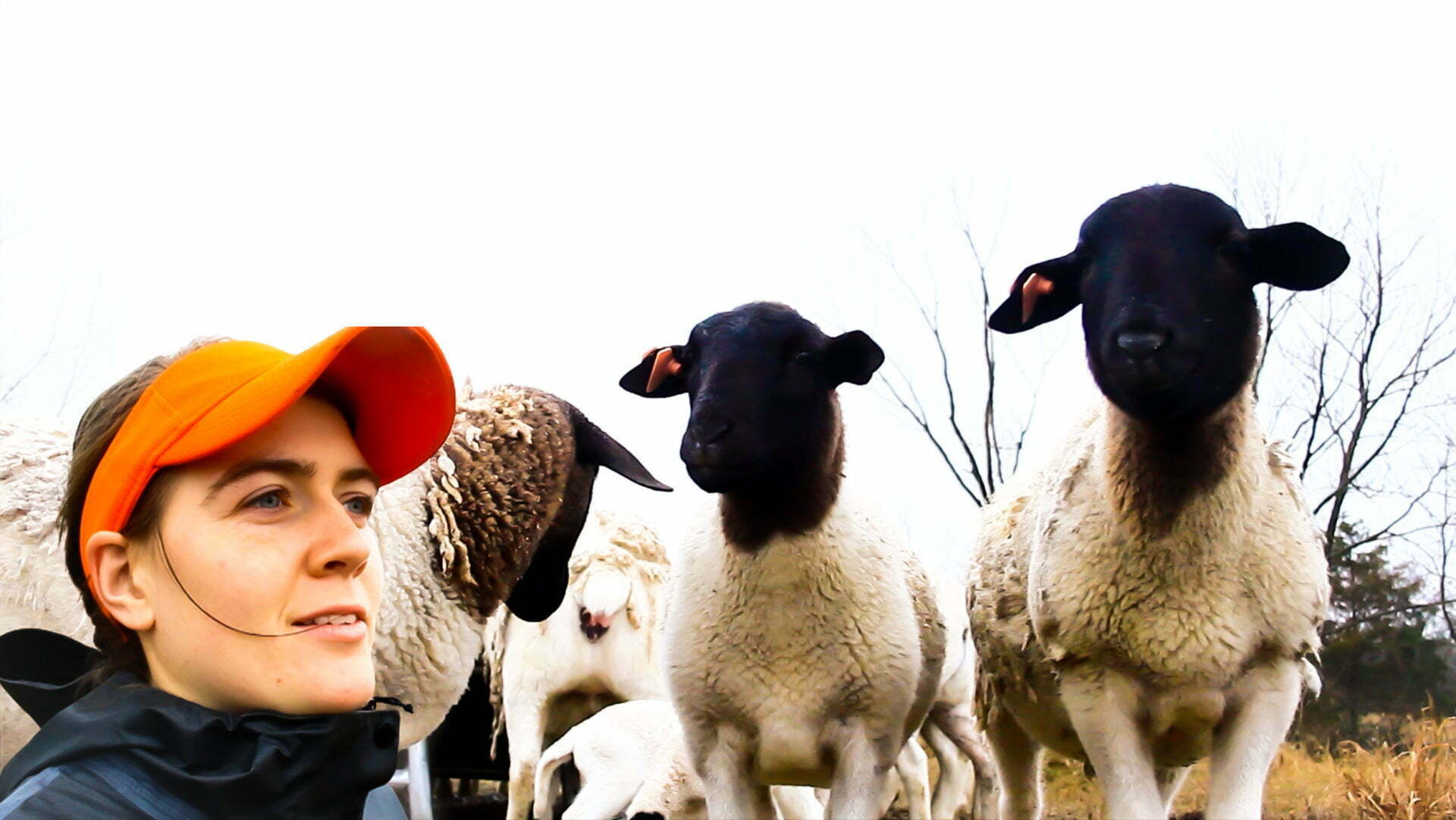
ARE SHEEP PROFITABLE? Why I Chose Sheep Over Cows for My Farm Business
Are sheep profitable? Are sheep more profitable than cows? Why did you choose sheep over cows? If I start a sheep farm, how long will it take to become profitable?
I receive these kinds of questions regularly. Unfortunately, the answers will be different for everyone and you have to find the answers for yourself, based on your own research. In farming there are so many variables: geographic location, natural resource, human resource, and most importantly, what your local market will support (aka, who is going to buy your farm goods). And even after all of this research, there is a fair amount of risk involved.
In my context, Lord-allowing, sheep present a projected gross revenue that is approximately 400% greater than beef.
I am going to walk you through the evaluation process that lead me to choose sheep instead of cows for my farm business. I am going to share some of the pros and cons of sheep vs. cows. I am going to highlight the profit-killers that sheep farmers wrestle against. Finally, I am going to walk you through a real-time example of how sheep offer a 400% greater revenue potential on my small acreage farm than cows do.
Sheep vs. Cows:
| Sheep: | Cows: |
| ❌Need daily monitoring. | ✅Can be left alone for weeks on end. |
| ❌Easily killed by predators (defenseless). | ✅Can largely defend themselves. |
| ❌Frequently die of parasites. | ✅Rarely die of parasites. |
| ❌Require more expensive fencing. | ✅Require less expensive fencing. |
| ❌Lambing must be monitored closely to avoid significant mortality. | ✅Calving typically requires minimal monitoring (heifers being the exception). |
| ❌Need regular hoof care (unless terrain is rocky). | ✅Do not need regular hoof care. |
| Sheep: | Cows: |
| ✅Wean their body weight equivalent in offspring every year. | ❌Wean 1/2 their body weight equivalent in offspring every year. |
| ✅Begin reproduction as early as 9 mos. | ❌Begin reproduction at 14 months. |
| ✅Raise twins and triplets. | ❌Raise singles (twins generally do not thrive). |
| ✅My Dorper sheep cost $10 per head to overwinter. | ❌My beef steer cost $150-250 per head to overwinter (cost hinges on availability of stockpile forage). |
| ✅Easy to grass-finish on low-moderate pasture quality. | ❌Require high quality pasture for a high quality grass finish. |
| ✅ $3/lb 2021 USDA Market Average. | ❌$1.8/lb 2021 USDA Market Average. |
| ✅Market prices not as easily manipulated. | ❌Market prices easily manipulated by systemic and political factors. |
| ✅Thrive in drought (*at least my Dorpers do). | ❌Must be destocked in drought. |
In short, sheep require significantly more time and human resource than cows. You have to be a shepherd in order to be successful with sheep. If you are willing and able to undertake the role of shepherd, sheep reproduce twice as fast as cows and bring almost twice as much at U.S. cattle auctions than cows. Sheep thrive on pastures that would starve a cow and are a drought-resistant cattle option.
How do I determine profitability? I make sure all costs are counted and revenues exceed costs. But here is where I have to be honest: I am not counting the cost of my time at this point. I am giving my sheep business my time for free… and I have farm hands who donate 4-8 hours per week to help me with heavy lifting. If I were to put a price tag the amount of time I am giving this farm, I would probably not be profitable for 72 years. Just being honest here. But I’m in good company… this seems to be the story of every good rancher’s life.
Two major profit-killers for sheep farmers are PREDATORS and DISEASE.
Predators can wipe out an entire small flock in one night. Disease (internal parasites, vitamin deficiencies, hoof infections, etc.) is part of a fallen world and will always be present on some scale or another. Regenerative Agriculture will never completely eradicate death and disease. The health and protection of my sheep are actually things that I include in my regular prayers. They are profit-killers that only the Lord can protect me from.
Why did I choose sheep over cows for my farm business?
The Lord opened doors to several different market streams:
About one week before I bought the flock I had a local grass-fed meat market contact me. They had seen my work with the flock on Instagram and called to discuss a recurring order for 40 lambs per year. This was the ultimate push for me: a serious meat buyer.
I had also begun to research the Dorper breed and found it was (and is) growing in popularity. I realized that this flock of 25 purebred Dorper sheep was a diamond in the rough. It held far more potential than lamb chops; live animals were (and are) in high demand. Thus, a second market emerged: breeding stock.
To top it all off, I had begun making videos about my farm work. I initially began this as a video journal for myself, but people started watching and enjoying my videos as well. This presented a third marketing and income opportunity: sheep-based education and entertainment.
In my area, there is significant competition for grass-fed beef:
Selling grass-fed beef was my initial plan for profit. I did some market research (google and farmer’s markets) and found there were already some well-established grass-fed beef producers in my area. I also live in a rural area where everyone grows their own beef. I knew it would not be impossible to carve out my own space in the market, but I realized it would take a lot more time to do so. What’s more is that pasture raised lamb was retailing at about 30% above grass fed beef. After this market research, sheep appeared a faster track to profitability.
Sheep presented higher revenue potential for my small acreage:
The best way for me to explain this is to build out my real-time example with the 23 acres of pasture I have. I estimate that with my intensive rotational grazing my 23 acres can support 10 animal units, or 10,000 lb worth of animal (**please know that I am approaching this number incrementally to monitor how my land responds to the animal load). I am going to build this out based on current USDA market prices for conditioned beef steer of 550lb and feeder lambs of 65lb.
| Sheep: | Cows: |
| 10,000lb = 80 Dorper Ewes | 10,000 lb = 9 Cows |
| 80 ewes = 10,400 lbs worth of saleable offspring in every year. | 9 cows = 4,950 lb worth of saleable offspring in every year. |
| Current USDA Market price is $3/lb | Current USDA Market Price is $1.80/lb |
| 10,400 x $3 = $31,200 | 4,950 x $1.80 = $8,910 |
| ✅Estimated Gross Revenue Potential: $31,200 | ⭕Estimated Gross Revenue Potential: $8,910 |
My gross revenue potential is higher than what is listed above for a few reasons: I am running purebred and registered full-blood breeding stock, I am marketing my flock through value-adding consumer education (videos), I am running grass-based breed selection (cutting input costs and improving the value of my breeding stock), and I am selling any meat products direct to consumer.
USDA Market Price Evaluation:
I advocate for private sales, but pricing for private sales are often dictated by USDA market (auction) values. As I reviewed USDA market prices for beef and sheep, I realized that sheep were bringing almost double the price of beef cattle.
My lifestyle allows me to be a shepherdess:
I work from home, and have been doing so for 10+ years. I love being right here, at home on my farm. I have the ability to give my sheep the time they need. While I never would have imagined myself to be in this position, I love the farm work and farm life. I now understand why the aged farmers say “you have to love this life”. Some of the challenges you encounter will make you feel like you are cracking in half. No amount of money can make the stress worth it… but if you love something, you are willing to give it more than you’ll ever get back. And that is exactly the place I have come to as a farmer and shepherdess.
Sheep Offer Me a 200% Faster Return on Investment:
I will walk you through both a beef-to-market timeline and a sheep-to-market timeline. In order to generate sizeable revenue with a small beef herd, I believe that direct to consumer meat sales is the only way to go. That is what this evalutaion will reflect.
Journey to cash-flow with beef
(with a herd and not a stocker-steer operation)
- 9 months gestation.
- 22-24 months to harvest on a steer.
ROI (return on investment) for Beef = 33 months.
Journey to cash-flow with sheep
- 5 months gestation.
- 4 months to weaning and sale of breeding stock or 6 months to harvest of lamb.
ROI (return on investment) for Sheep = 9-11 months.
Two key elements that make sheep a better fit for my context are: I have time to be a shepherdess, and I am working on small acreage.
The bottom line of my journey is that I am farming sheep because the Lord has lead me to farm sheep. The Bible says that whatever your hand finds to do, do it with all your might. That why I am giving this effort all I’ve got... it’s not about money (TBH: I could make more money waiting tables right now). While I am doing my best to be wise and make decisions that may lend to profitability, I realize that the Lord is in control of profitability.
Farming is a humbling thing because it makes you realize how little you know. Despite these plans and evaluations, at the end of the day I am praying the Lord blesses my efforts. And that is my primary hope for profitability.
So that’s it! This is an explanation of why I chose sheep over cows for my small farm business. I hope I presented my evaluation in such a way that will help you to make the right decision for your farm.
-the Shepherdess
the story of Artaban

My Documentary for the National Grazing Lands Conference
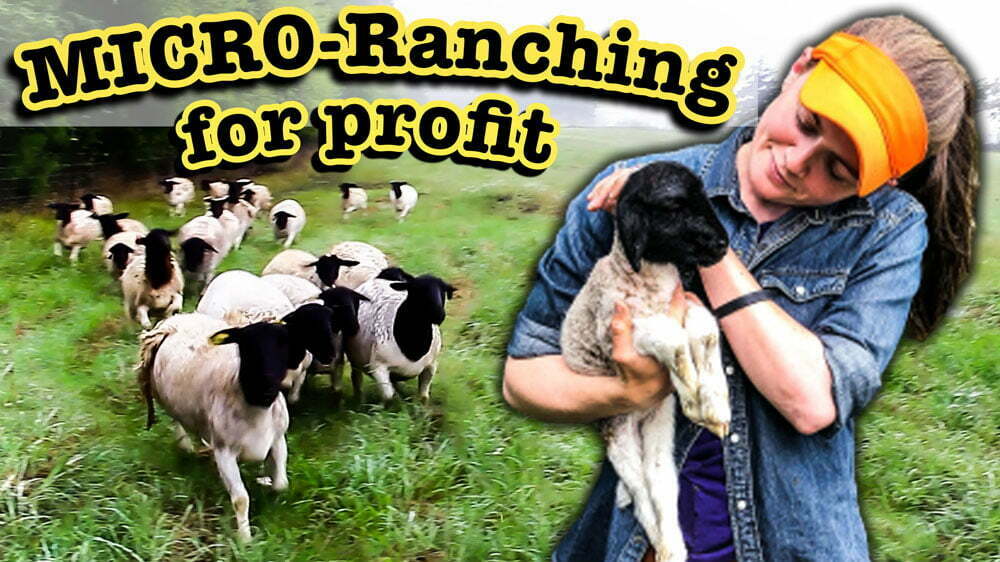
National Grazing Lands Coalition invited me to speak at their National Conference this year. While I am unable to attend the national conference in-person, National Grazing Lands allowed me to submit this video documentary on my small scale cattle ranching (to be aired at the conference)! This is a pretty complete summary of the past 18 months of my life as a beginner farmer. It outlines my micro ranching for profit startup, my transition from beef to Dorper sheep as the main focus in my farm business, and the ways I am marketing my farm products (Dorper sheep).
Video Timestamps:
2:54 Micro Ranching for Profit
14:20 Why did I switch from beef to Dorper sheep?
16:24 American Agriculture in Crisis.
20:04 How I am selling my farm products.
27:39 This is harder than I though it would be.
Thank you so much to all who have been with me on this journey from the very beginning. I am so grateful for your support of my Dorper sheep farm.
-the Shepherdess
Sheep Farming for Beginners
In Loving Memory
“Take care of your lambs, girl.”
“Take care of your lambs, girl.”
Those were his last words to me.
My grandad passed away yesterday.
For the past few years he lived close to the farm.
He drafted plans for chicken coops, helped install sheep fencing, and would always tell me how good my flock looked. He loved lambing season and would daily ask “how many new ones today?”.
I am grateful for the time we had with him… but more than anything I’m grateful for the Gospel we were able to share with him. I want to share the following verses straight from the Bible and I hope you’ll take time to read them.
“For we ourselves also were sometimes foolish, disobedient, deceived, serving divers lusts and pleasures, living in malice and envy, hateful, and hating one another. But after that the kindness and love of God our Saviour toward man appeared, Not by works of righteousness which we have done, but according to his mercy he saved us, by the washing of regeneration, and renewing of the Holy Ghost; Which he shed on us abundantly through Jesus Christ our Saviour; That being justified by his grace, we should be made heirs according to the hope of eternal life.” Titus 3:3-7
Life is short no matter how long you live. If you know Christ, share Him with others; if you don’t now is the time to seek Him.
I’m going to be taking a week off of YouTube and social media. Small Farmer Virtual Meetup will also be postponed until December.
I’ll be spending the extra time with my family and taking care of my lambs :).
The Shepherdess at Harmony Farms
Regenerative Farmers Worldwide

Here at Harmony Farms I rotational graze my sheep, perform small scale pasture plantings, and (thanks to my sister the Chicken Lady) run a live pasture fertilization program. These are the ways that I am practicing regenerative agriculture on a small scale. All of the aforementioned efforts are aimed at improving soil quality across my 23 acres.
Today, however, I am highlighting Regenerative Farmers Worldwide. These farmers are small-scale growers, doing what they can with what they have. These farmers are working with land, animals, and crops to improve soil quality.
Why all the emphasis on improving soil quality? The improvement health is the backbone of regenerative agriculture. The practices we implement on our farms all tie to one question: “will this improve or destroy the soil?” The following stat from globalagriculture.org shows both the value of healthy soil and the danger that it is in:
“Our most significant non-renewable geo-resource is productive land and fertile soil. Each year, an estimated 24 billion tons of fertile soil are lost due to erosion.“
globalagriculture.org
Below is “the Shepherdess Top 5” Regenerative Farmers of the month! I put no emphasis on the size of a regenerative farming operation. In this community it is the faithful stewardship of resources, not output volume, that makes a successful farmer.
Friendly Flock, cevennes, Valleraugue, France:
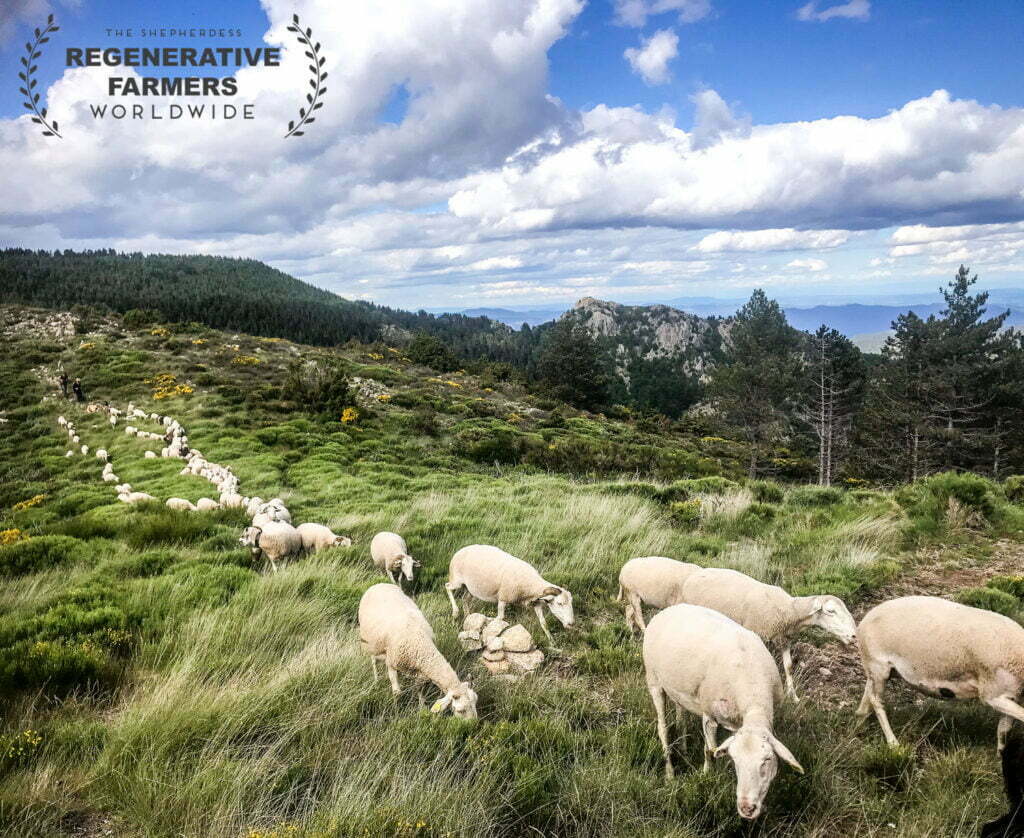
We have a small farm with 120 sheep 7 goats and 1 cow, all grazed as one herd! We herd the sheep in the hills where you can hardly do any fence. We use Holistic planned herding and principals to guide the sheep. We herd them everyday to fresh grass and give long recovery periods for the grass (1year plus). This extended rest period is given because growing conditions are harsh and the soil is very degraded. We started this year and we want to sell lamb of exceptional quality. Our goal is to give ecosystems the space to completely express themselves and to restore water,mineral and energy cycles. We also change where the sheep sleep (every 3 days) to create high impact and a lot of dung. The places we change every year to increase fertility of the land. We have a website: friendlyflock.fr Our goal is to sell all our products online and via shipping directly to clients.
Currently growing: sheep, goats, cows.
How are you improving soil health on your farm?: Rotational grazing.
Learn more about the farm: friendlyflock.fr
Lady’s Farm, Eastern Kentucky, USA:
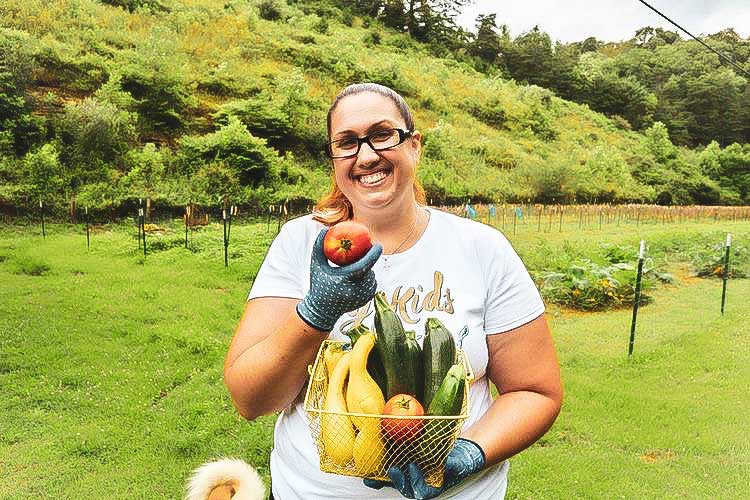
Currently growing: Two major gardens (at rest for the remains of the season), chickens, and pigs.
How are you improving soil health on your farm?: We are using chicken and pig manure, cover crops and future plans of a no till garden.
Learn more about the farm: Lady’s Farm on Instagram
Holland Harvest, Honey Grove, TX, USA:
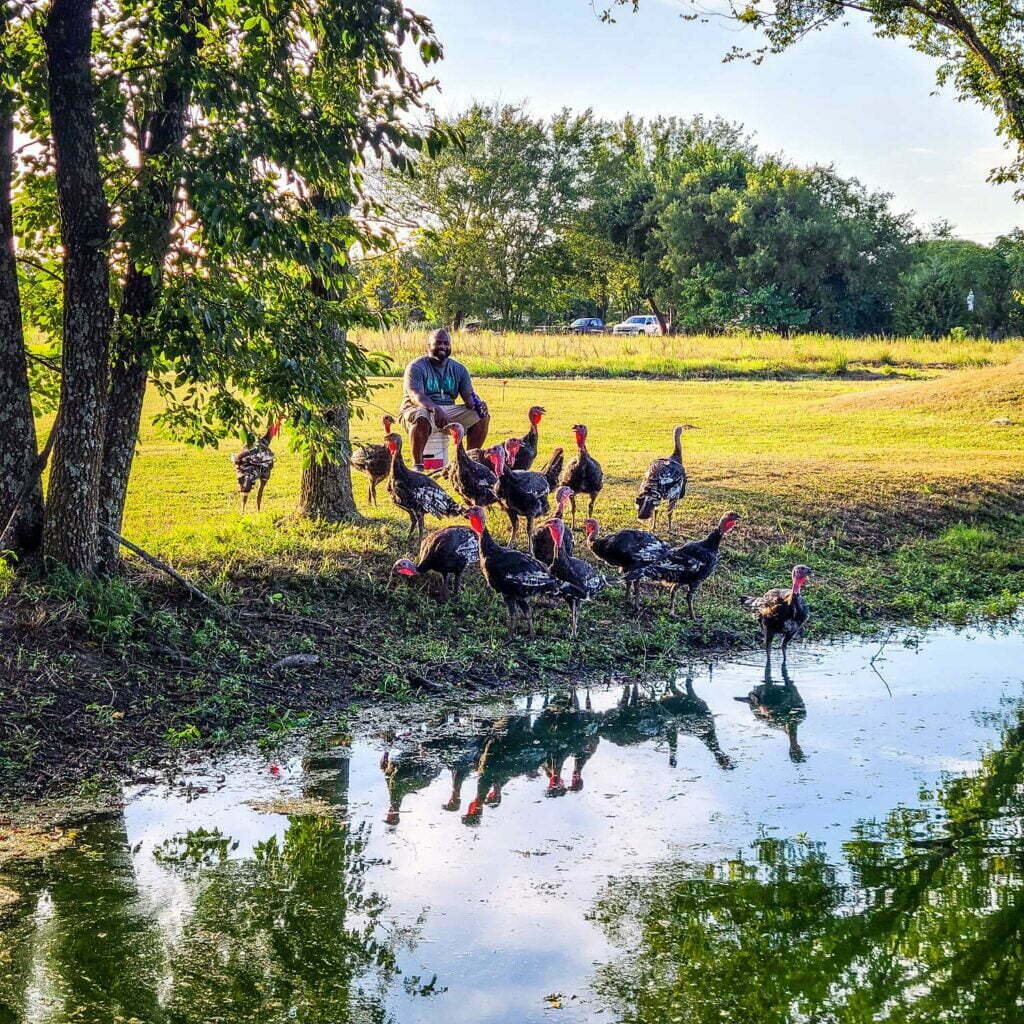
Currently growing: small garden, turkeys, egg layings chickens.
How are you improving soil health on your farm?: Animal grazing rotation.
Learn more about the farm: Holland’s Youtube Channel
de Beer Family Farms, Brooks, GA, USA:
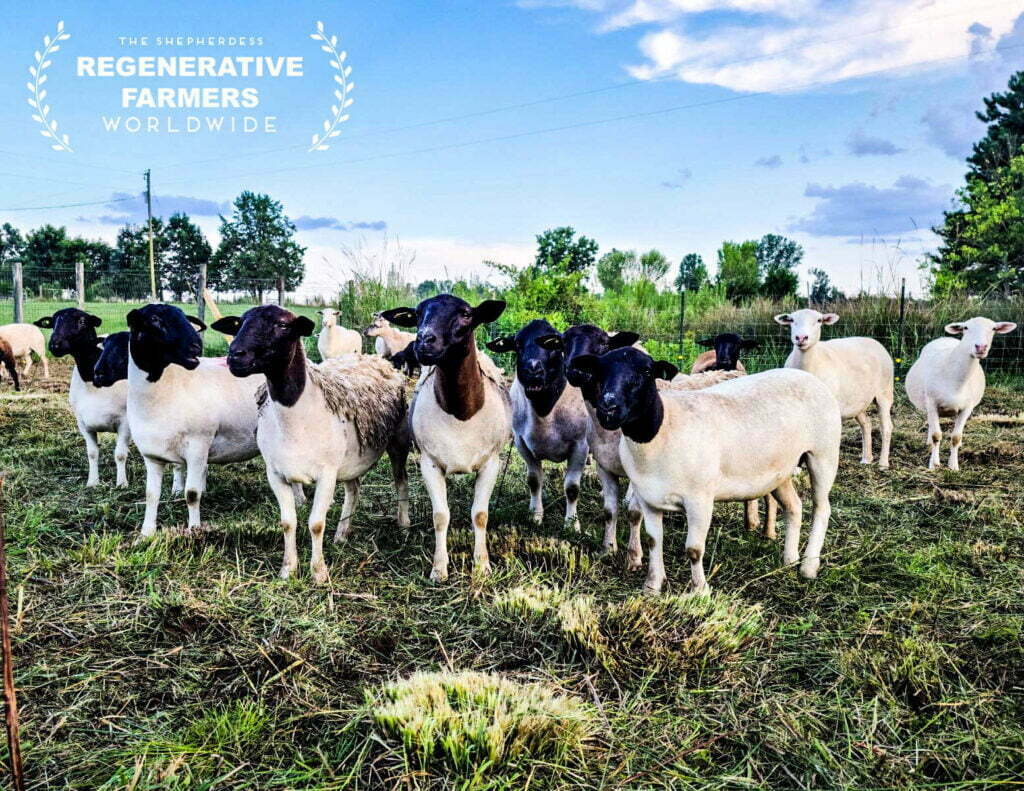
My name is Taylor de Beer and my husband Hendri and I own de Beer Family Farms! We have a small farm in Brooks, GA. Currently we have a flock of Fullblood Dorpers, Katahdins, Cornish cross meat birds, and a large variety of free range chickens. When we moved to our property 4 years ago, there had not been any livestock on the property for quite some time. There was very little variety vegetation wise. Now, we have been rotating our sheep everyday, with the meat birds following after them in chicken tractors. We also hand seed different seed mixes of what is in season before the sheep graze so they trample them into the ground. It’s been amazing to see the change in our soil and the variety of grasses, legumes, etc that have grown since we started with sheep a short 16 months ago. The dung beetles have been amazing this year, a section the sheep have been on 2-3 days beforehand will be almost completely void of any dung. We have just started with the meat chickens, so we are looking forward to seeing the impact they have on the soil, by following the sheep.
Currently growing: Dorper and Katahdin Sheep, Cornish cross meat birds, and a large variety of free range chickens.
How are you improving soil health on your farm?: Rotational grazing sheep, raising broiler chickens, Hand seeding pasture grasses.
Learn more about the farm: de Beer Family Farm on Instagram
Groce Family Farms, Southern Indiana, USA:
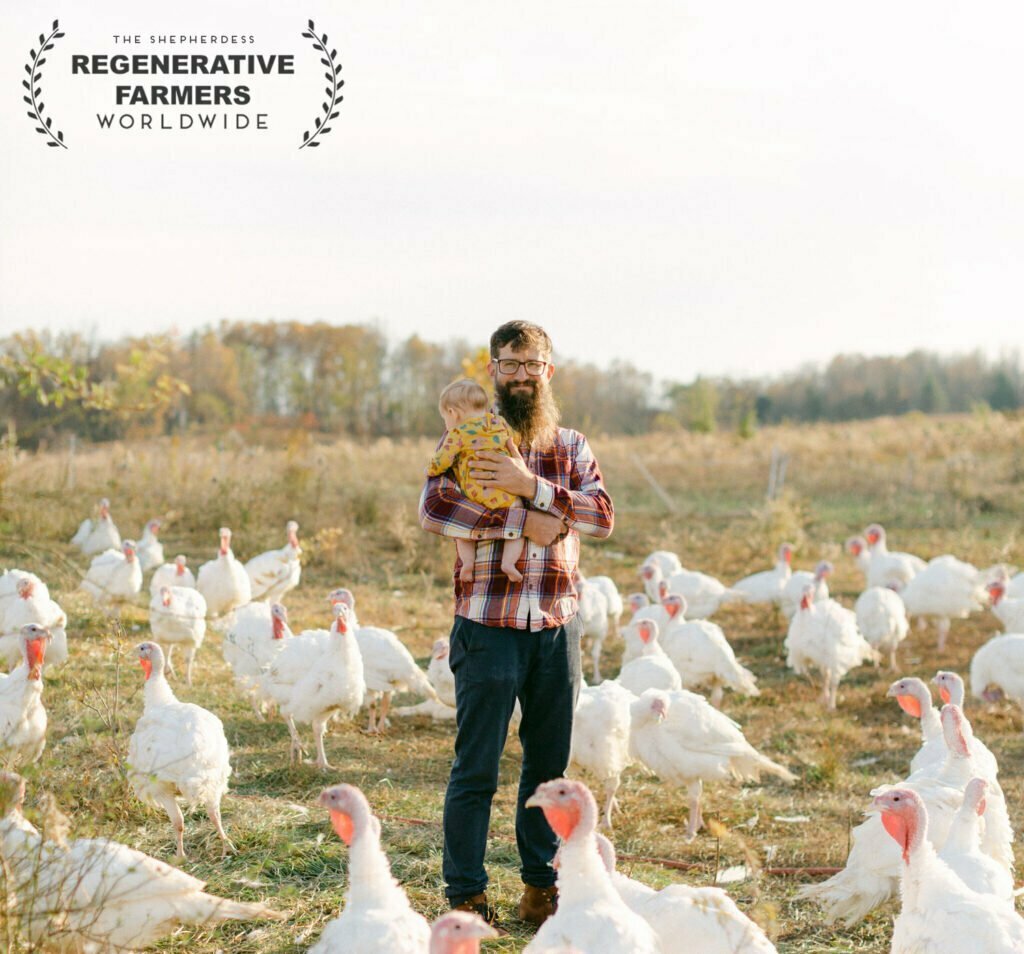
Groce Family Farm offers forest raised pork, open-pasture chicken duck and turkey, and 100% grass fed beef through our meat CSA and at farmers markets in the Louisville and Southern Indiana areas. We also work with restaurants and grocers as well. Along the way we added four wonderful children, learned a lot, and have grown in our understanding of how to raise abundant healthy food and interact with land in a way that brings about diversity, health, and flourishing to the whole system, from earthworms to eaters.
Learn more about the farm: https://grocefamilyfarm.com/
Currently growing: beef, pork, chicken, duck, and turkey.
How are you improving soil health on your farm?: Rotational grazing multiple species. Chemical-free land management.
Learn more about the farm: https://grocefamilyfarm.com/
If you would like to have your operation considered for my next Regenerative Farmers post, please email me with the following info:
Your Farm Name:
Where you are located:
What you are Farming:
One way you are working to improve soil quality on your farm:
Your farm’s website or social handle:
2-3 images from your farm:
Thanks for reading!
-the Shepherdess
“Know that the LORD, He is God; It is He who has made us, and not we ourselves; We are His people and the sheep of His pasture. ” Psalm 100:3
September Farm Update

Hello friends!
What an exciting thing to be nearing the end of summer! Autumn ushers in a slower pace as we round off a busy spring and summer here at Harmony Farms. I’d really love to see you at my Small Farmer LIVESTREAM this month. It is a free event and I hope you will join me and farmers across the world as we talk about what’s happening on our farms!

The Good:
I was so thrilled with the results of the first Shepherdess Livestock Sale. It was such a pleasure to meet with buyers and send these lambs to their new homes. I am so grateful to each buyer who invested in my operation by purchasing my stock. Many are asking when my next Dorper lambs will be available for sale. March/April 2022 is the tentative date for pre-orders on my next lamb crop.
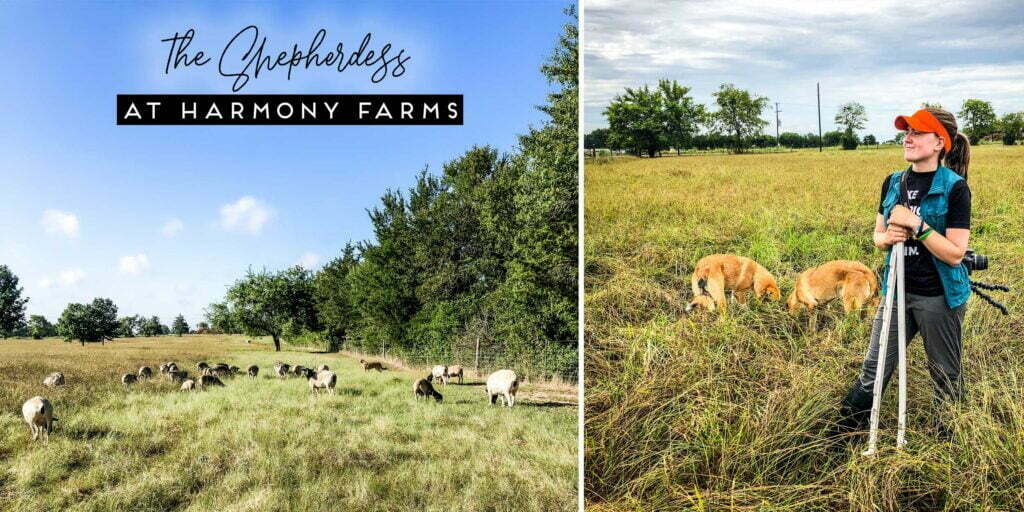
I slowed the rotation from once a day moves to once a week moves. The intense heat brings significant relief from one of my primary enemies in pasture: the barber pole worm. Hot and dry weather decreases the parasite load on pasture and allows me to slow my rotation without compromising animal health.

The Challenging:
Heat kicked in hard this August (heat index of 104+ for several weeks). I had to be extra vigilant to stay on top of hydration and electrolytes for the flock. A really helpful tool for that was Apple Cider Vinegar. I added about 1/2 cup per 40 gallons of water during a severe heat wave. The addition of ACV really increased the flock’s water consumption, which helped relieve much of the stress that the heat induced.
Thanks for reading this farm update! I really appreciate you being a part of what I am doing at Harmony Farms.
-the Shepherdess
“But those who wait on the Lord
Shall renew their strength;
They shall mount up with wings like eagles,
They shall run and not be weary,
They shall walk and not faint.” Isaiah 40:31
INCOME vs. EXPENSES on my Sheep Farm Startup
DISCLAIMER: This Small Farm Business article and video should not be used to replace legal or professional counsel. Use your brain, know your pocketbook, and make sure that at least one of the two has something in it at all times ;).
With the close of my first livestock sale, I have one full year of expenses and income under my belt. I am now ready to analyze profitability of my sheep farm. I have data from all 4 seasons, I have infrastructure costs, and now I have income from my first livestock sale. With the aforementioned, I have everything necessary to evaluate the profitability of my sheep farm.
The size of an operation has little or no connection to it’s overall profitability. In business the term “scaling” is used a lot. Scale is just another word for size. If you can be profitable on a small-scale, you can be profitable on a large-scale. If you cannot generate a profit on a small scale, you will not do so on a large scale.
The profit analysis I am getting ready to outlay is from my small-scale sheep farming operation. This season I had only 16 productive ewes. My ultimate goal is to have 80 productive ewes on my sheep farm.
It is critical that I evaluate the profitability of my farm at this 1/5 scale. If I can hone in on profit margins and streamline my costs I will have a solid foundation for moving forward.
I have a trademarked slogan for my farm business: Think big, start small, don’t quit. It really breaks down into a business formula: Set your large-scale goals, test it out it on the smallest scale possible, then put in the work necessary to grow that small success.
My 4-Step Process for Determining Profitability:
Here is how I analyzed my farm’s profitability in 4 steps:
Step 1: I took all of my expenses to date and split them into 7 major categories.
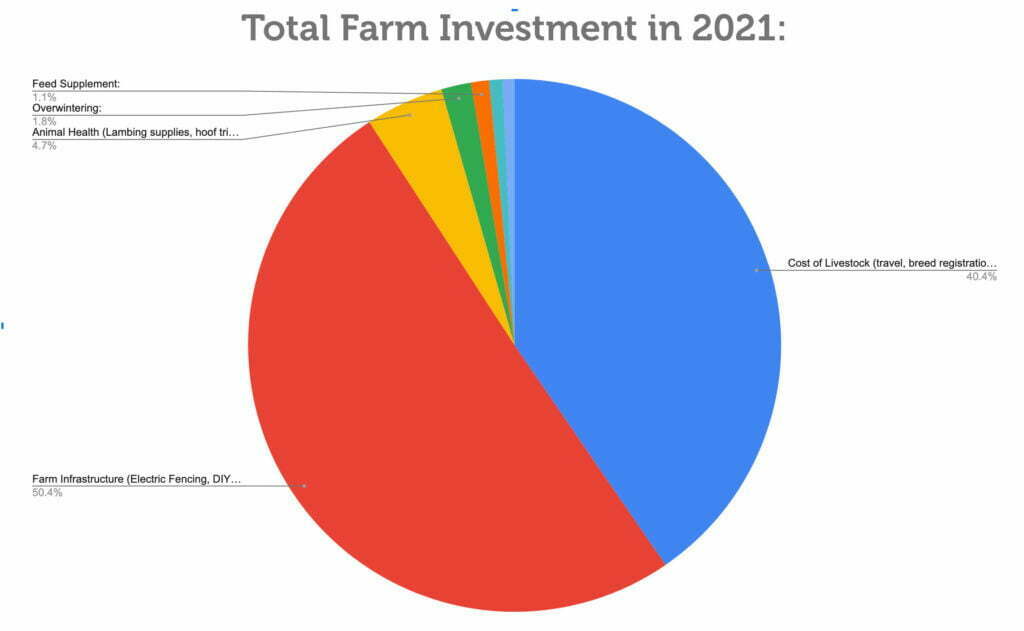
| Category: | Description: | % of total: |
| Farm Infrastructure | Compensation for sheep-specific the perimeter fencing (woven wire), Electric Fencing system, Sheep Chute, Sheep Trailer, Portable Troughs, etc | 50.40% |
| Cost of Livestock | Initial purchase of 25 ewes, sourcing and travel for a registered ram, a small set of registered ewes, and Dorper Sheep Breeder Society Membership and Registration. | 40.40% |
| Animal Health | Lambing Kit, Hoof trimmings supplies, dewormers, a setup for taking fecal egg counts at home, mineral boosters. | 4.70% |
| Overwintering: | Hay, Protein Supplement, Minerals | 1.80% |
| Feed Supplement: | Year Round Minerals | 1.10% |
| Books/education: | Grazing Management Books | 0.80% |
| Marketing: | Website Hosting for ShepherdessDorpers.com | 0.70% |
Step 2: I adjusted my cost sheet to reflect depreciating assets only, removing the cost of appreciating assets (livestock).
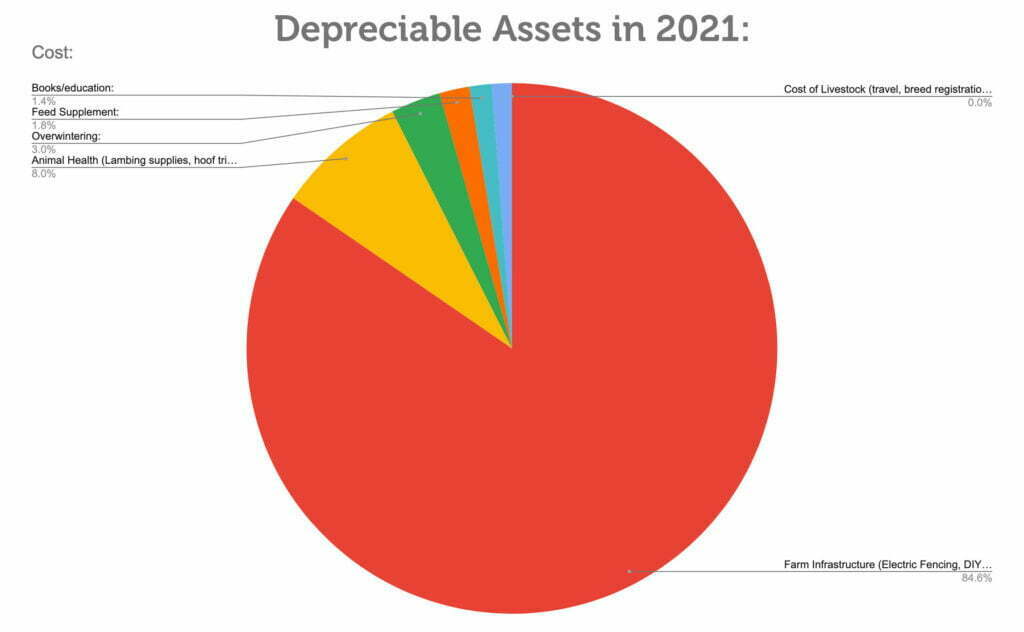
Depreciable assets are things that will decay over time. Whether it is in 1 year or 25 years, all of the things in my Farm Infrastructure category will have to be replaced at some point.
Appreciating assets are those that increase in value as you own them. My ewes are appreciating assets because they produce lambs every year. Unless I have a devastating predator attack or disease hit the flock (both of which are actual risks I pray against regularly [you can pray with me if you want… haha! But I’m serious.]), my flock should only grow.
If a ewe dies (or is culled) and the flock does not generate a replacement for her during lambing, I will list the initial cost of that ewe under expenses for that year.
Step 3: I divided the cost of the Farm Infrastructure (depreciable assets) by 7, assuming that all of the farm infrastructure will decay within 7 years. This amount, plus the cost from all of my other categories amounts to the total expenses for 2021.
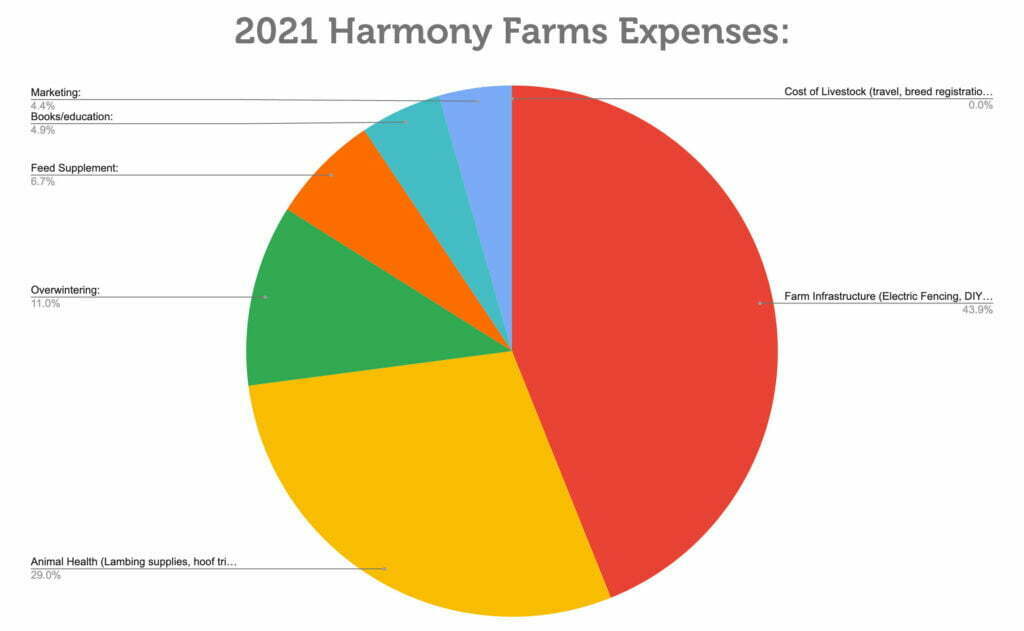
Step 4: Acknowledge the value of “reinvested capital gains” (for me: ewe lambs that increase flock size) and add this to the cash-revenues. I had a net increase of 7 ewes this season (I had 9 ewe lambs total, however 2 of my mature ewes died). I am working to grow my flock to 80-ewes. Instead of collecting cash on these lambs, I reinvested my “gains” back into the flock.
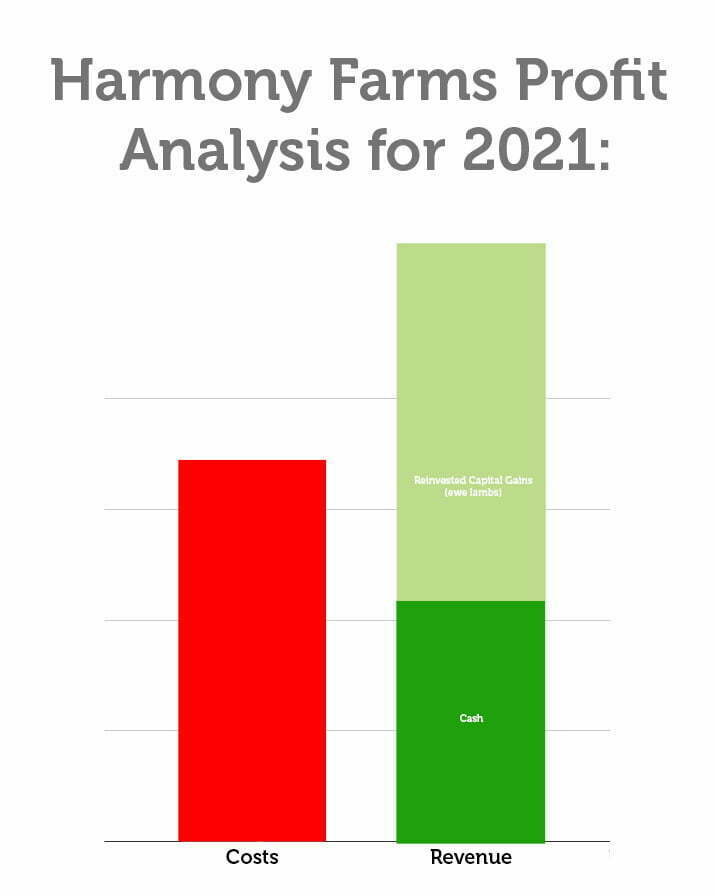
With the inclusion of my “reinvested capital gains” revenue from my sheep farm exceeded cost by 36% in 2021!
While this year technically involved shelling out 10x more cash than I received from my operation, there is significant profitability in my pasture based sheep farming model… if I can stick it out to the end of 7 years! 90.8% of the money I have spent will not have to be spent again and the remaining 9.2% are recurring costs that can be trimmed with experience.
This does not include the cost of my labor. This is an average of 12 hours per week and is a further investment in the farm.
Thanks for reading my 2021 Sheep Farm Business Profit Analysis. I look forward to seeing you in 2022!
-the Shepherdess
“I am the LORD your God, Who teaches you to profit, Who leads you by the way you should go.” Isaiah 48:17
SELLING MY FIRST DORPER LAMBS

How Rotational Grazing Saved me $200K
🎉DETAILS ARE HERE!!!
Save the date for August 11th and 8AM CST!! I will be selling 10 head of Dorper Sheep from my Flock. Details are explained in the video above and more can be found HERE AT ShepherdessDorpers.com! If you have any questions, please email me at shepherdess(at)harmonyfarms.blog .
**Please note, the buy button will be viewable on August 11th at 8 AM CST. First come first served, no reserves. Thank you all very much!
-the Shepherdess

“Know ye that the Lord he is God: it is he that hath made us, and not we ourselves; we are his people, and the sheep of his pasture. ” Psalm 100:3
Hoof Care
Relentless Rainy Season on the Farm
LIVESTREAM TONIGHT AT 7PM (cst)!!

the Role of a Shepherd(ess)
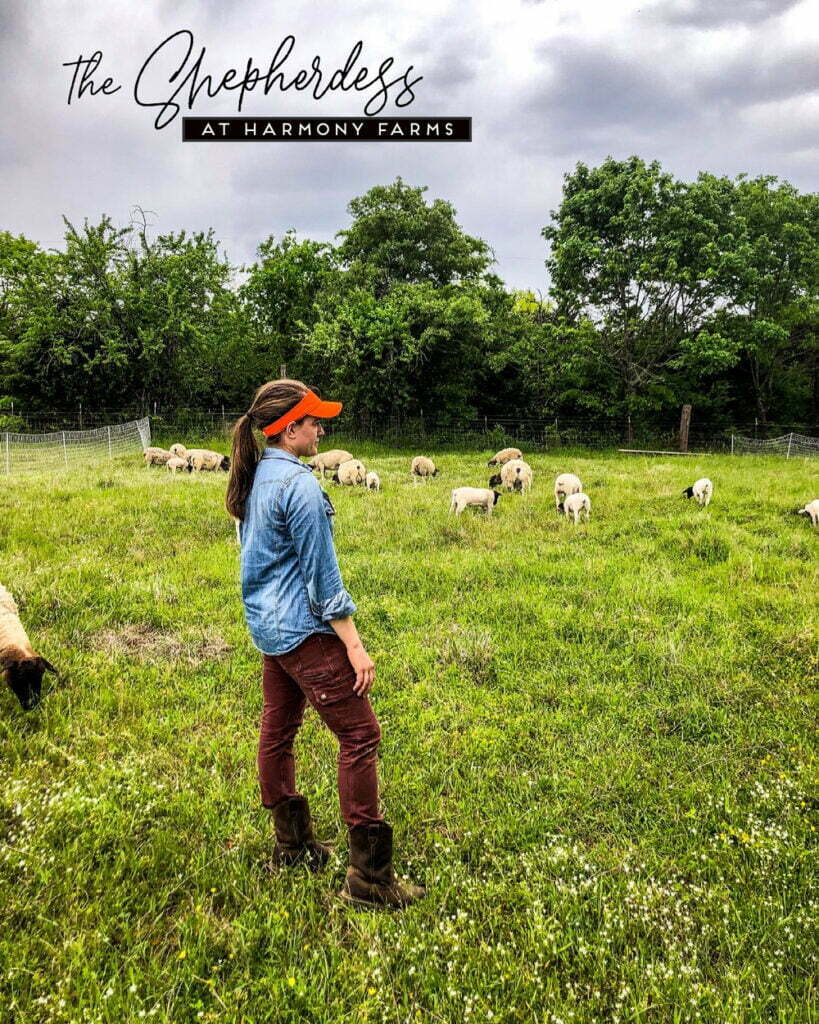
Since the beginning of time, sheep have been among the only animals assigned a human counterpart. The role of a shepherd(ess) is one that will never be obsolete.
.
.
When I undertook the ownership of this flock, I did so with the understanding that I was assuming a role as well as an animal. I had spent 6 months managing their grazing program and realized this intensive movement, this shepherding, was essential to their well-being.
.
.
Ultimately, however, what I know from the Bible shapes my understanding of a shepherd’s role. As I work with these animals I get a look at the unconditional love of of Christ. I see a worthiness in this undertaking because of what I know of my Shepherd. I understand that these animals will require more patience and grace than they are worthy of… and I’m ok with that.
.
.
I will grow in experience, I will perfect my techniques, I will upgrade my equipment… but at the end of the day sheep need a shepherd(ess), and that is the job I have undertaken.
.
.
Jesus said: “I have come that they may have life, and that they may have it more abundantly.
I am the good shepherd. The good shepherd gives His life for the sheep.” John 10:10-11
.
.
-the Shepherdess at Harmony Farms
EMAIL ME FOR DORPER SHEEP BREEDING STOCK AVAILABILITY.
Planting Pasture Grasses for Cattle with no Heavy Equipment or Machinery
4 Marketing Tips for Farm Businesses
MY FIRST LAMBING SEASON
Growing Pains

I was feeling it tonight. I thought it was burnout.
So I sat down and put pen to paper: I wrote down everything that has happened over the past 6 weeks.
Pulling the flock off pasture for a historic winter storm, working sheep solo for the first time, pulling lambs: one a success and one leaving me with nothing but sore muscles and an ear-tag with no owner. Building our first permanent infrastructure. Initiating spring’s intensive grazing program. W-A-I-T-I-N-G on edge for the remainder of the flock to lamb. Working to remain consistent in the business building side of my farm… and more.
Looking at that paper full of experiences I realized…
It’s not burnout, it’s growing pains.
The experiences of the past 6 weeks have been unmatched opportunities for growth.
As I correct my perspective, I shift to thankfulness. Thankful the Lord has brought me through each new and difficult experience.
I know more now than I did 6 weeks ago… and while it doesn’t eliminate the exhaustion, it does lift my spirits.
I’m sore, but I’m growing… and that growth is worth the exhaustion.
-the Shepherdess 🐑🌱
“My grace is sufficient for you, for My strength is made perfect in weakness.”2 Cor. 12:8
From scattered to following.

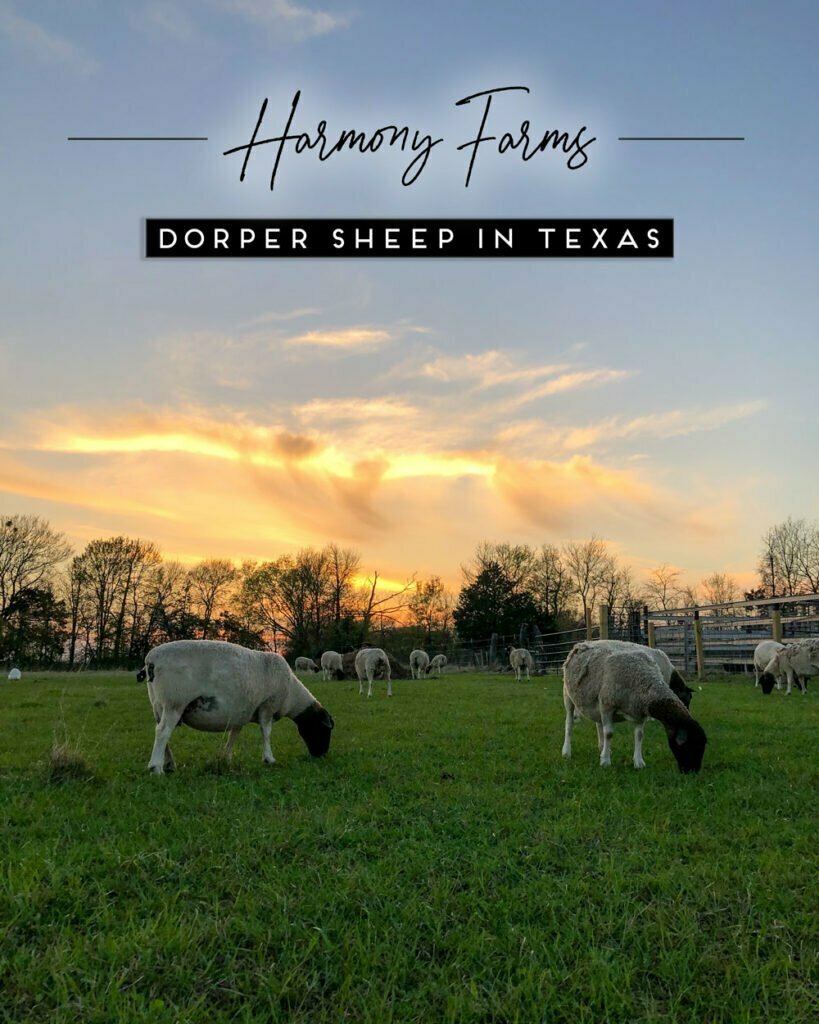
8 months ago I stepped on pasture and the flock scattered. They did not trust me… they did not understand what I was there for.
As I began to work with the flock, they came to the place where they would follow my feed bucket. They came for what I had to offer.
As I continued the rotational grazing program (moving them to fresh pasture daily), my sheep began to understand: I was there to care for them.
In time, I no longer needed the feed bucket to draw them. They came to know the sound of my voice. They began to respond to my call.
Now when I step on pasture there is no hesitation or fear; my sheep follow me.
They came first in hopes of receiving something. Now they come because they know me, they trust me. (And, TBH, they are animals so they probably do still hope for food at some point🤷🏼♀️).
This process has drawn me back to the relationship I have with my Shepherd.
I think, as Christians, we often come to Christ because we want something out of it. We want that feed bucket full of hopes and dreams.
And He is patient with that.
But as we grow in our relationship with Him we understand that He is doing something greater than just carrying that feed bucket. We begin to understand that His plan is bigger and, regardless of what He gives us, He is leading us to the very best.
And we begin to draw near and trust Him for Who He is as much as what He gives.
The process of building trust with this flock took time and is still a work in progress. Even so, our trust in Christ is a work in progress.
Nevertheless, His care is unconditional.
And as a shepherdess I now understand the delight He feels when His sheep draw near without the use of a feed bucket. 😅
-the Shepherdess
The Lord God says: “So will I seek out My sheep and deliver them from all the places where they were scattered…” Ezekiel 34:12
Preparing for Lambing Season My Lambing Kit
Diversity: a Corner Pillar in Regenerative Farming (Part 1)
Show notes from Mack Farms. (Foreword and Editor: the Shepherdess)
Foreword: The principle of Diversity is a corner pillar in Regenerative Agriculture. As regenerative farmers we should pursue the principles of diversity in every area of farming. So doing will maximize not only efficiency, but also profitability. The following show notes are from Elijah Mack and they outline a few of the ways that we, as regenerative farmers, can weave a safety net of diversity on our farms.
Diversity “Resilience is Diversity in motion”
– Daniel Griffith, Timshel Wildland
Diversity is stability, a safety net in your farming infrastructure. Farming comes with very little guarantees. Diversity is a way to cover your bases and build security into your operation. In the beginning, God created the heavens and the earth… and diversity was fundamental in His design! Diversity with the blessing to be fruitful & multiply. Creation is still dynamic. (Gen. 1:1, 28)
Here are a few ways we can diversify as Regenerative Farmers:
Diversity of Equipment
Practical application:
Try to ensure the equipment you invest in is diverse in it’s usability (aka: no single-purpose equipment!!!). Focus on building an inventory of tools that you can multitask with. Rate what you decide to invest in on a Scale of Permanence, by asking how hard will this be to change once I build it? Once you build permanent infrastructure or invest in an expensive (single purpose) tool it is hard to re-configure it.
Here are some tips to make sure your equipment on farm can be diversified:
- Delay the construction of buildings, gates, handling facilities until you know what works.
- Make buildings open and multi-functional, livestock, equip, manure, hay
- Ask yourself: Do I need permanent fence, gates, etc? Can I do something creative with portable electric fencing to achieve the same end goal?
Diversity of Skill Sets
As a Regenerative Farmer, consider yourself – the human body/mind – as the ultimate tool. Also consider how your livestock might be able to do the work for you.
- Diversify your skill set: Jack of all trades, master of none.
- Historically, specialization of tasks has been a downfall. A lack of diversity creates economic frailty; on a personal level and on a national level.
- The Livestock is your first employee on your regenerative farm – use them. As you approach a task, ask yourself the question: “Is there a way I can employ the livestock’s natural behavior to perform this task?” (planting seeds, brush clearing, etc)
Diversity of Creatures on Farm
Think of farm animals as collaborators, not competitors.
Farm examples:
- Cattle – grazers – 80% forage, 20% browse
- Sheep – 50/50
- Goats – browsers – 80% browse, 20% forage.
Consider the forage needs of these “typical” farm animals and then ask yourself, “how can I manage these animals so that they maximize the various forage resources on my farm?”
To be continued!…
Deworming my Dorper Sheep (FAMACHA SCORING and Selective Drenching)
WHAT DOES A SHEEP FARMER DO?
How to Brood Chicks for BEGINNERS
Day in the Life of a Shepherdess
PROTECTING SHEEP FROM PREDATORS with Guard Dogs
Winter Chores on a Sheep Farm
FREE INSTRUCTIONS: Electric Fence for Sheep