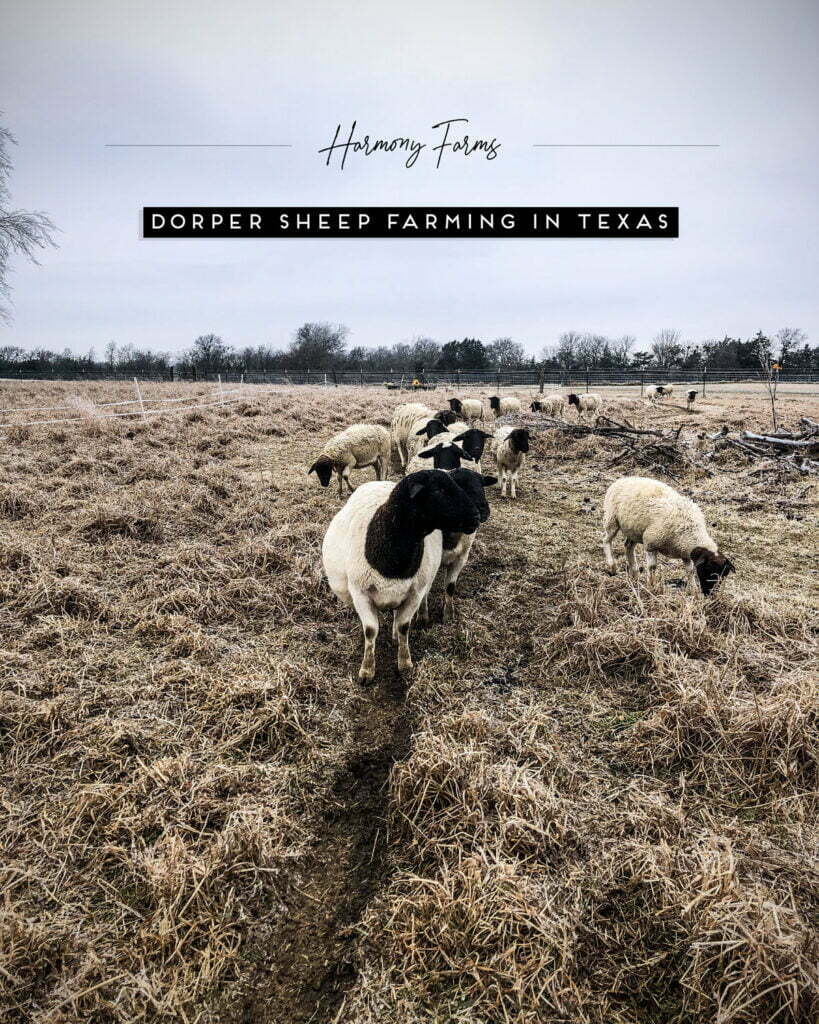
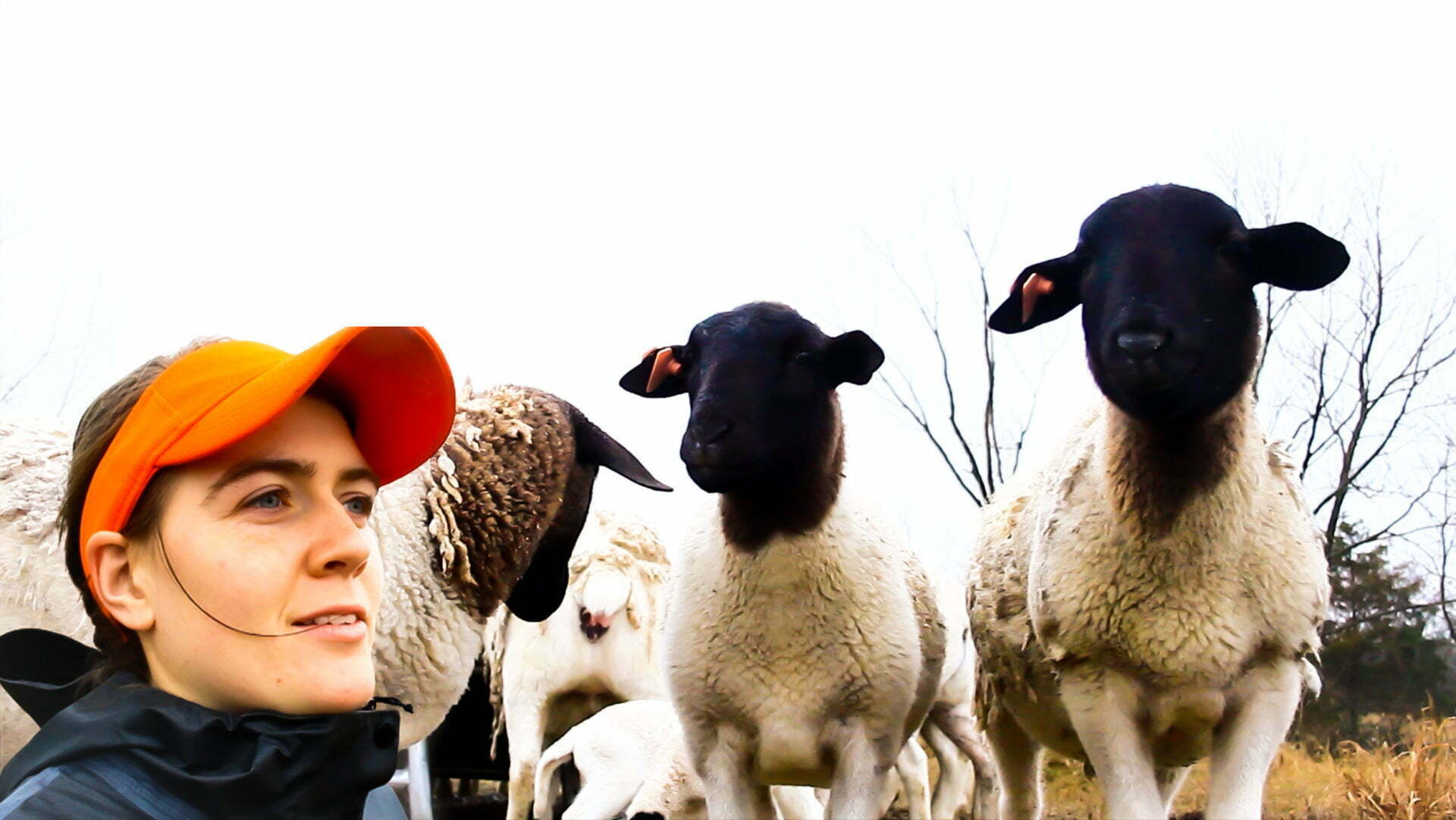
Intensive Rotational Grazing Dorper Sheep
May Farm Update
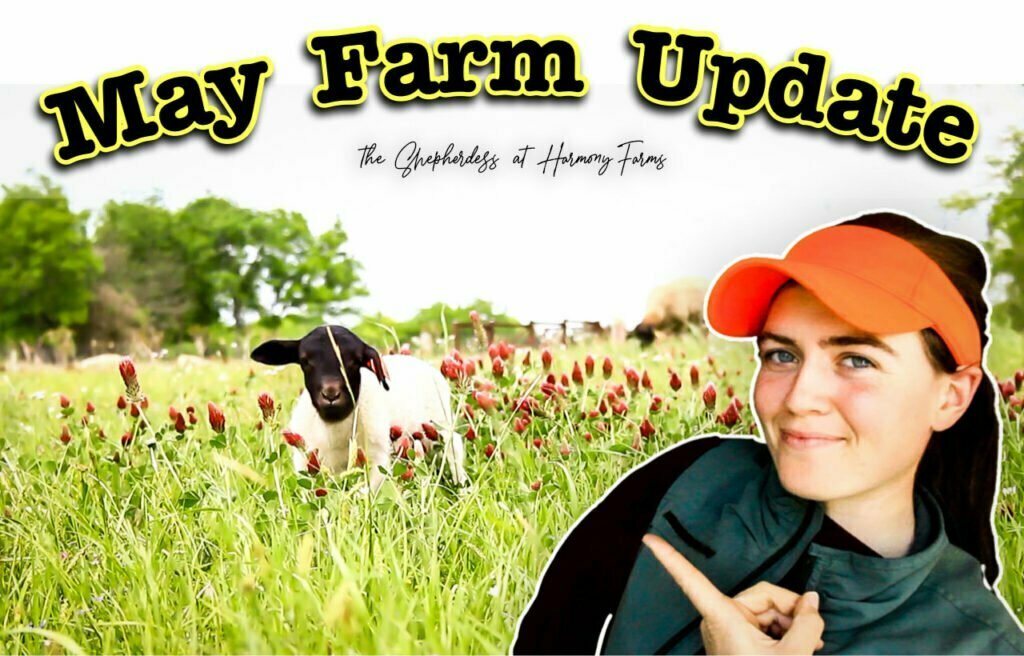
Hello Friends!
It’s time for a monthly Harmony Farms update! I have a lot of questions about breeding/live stock availability. I will have 10-12 head available for sale this August, Lord-willing. I have about 4 rams, 6 wethers, and possibly 2 ewes. I will be sending out more info as we approach the date, so please stay tuned!
Scroll to the bottom for a full list of the ONLINE EVENTS I am hosting this month! (Including a LIVE ONLINE EVENT WITH JOEL SALATIN!!!)
The good:
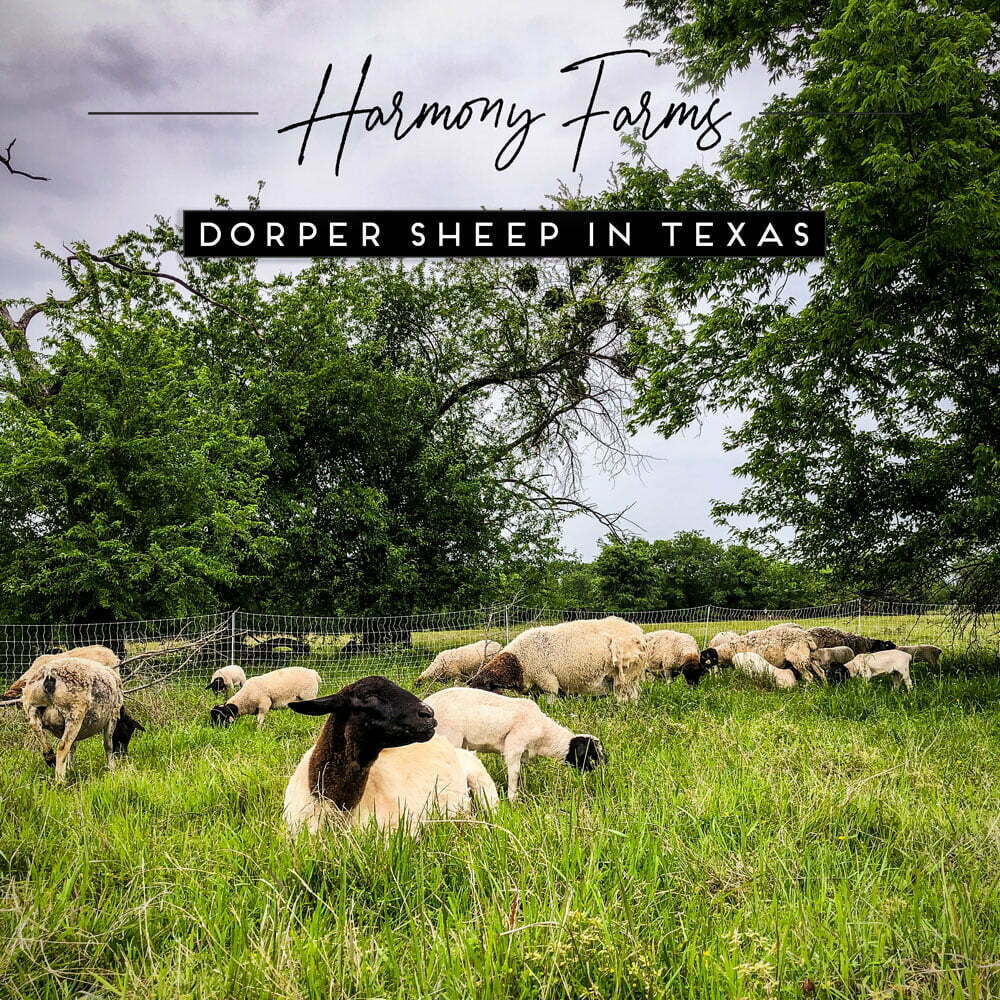
The grass is back! I am back to moving the flock once a day. I put a pause on this intensive grazing during lambing. Juggling both was edging me toward burnout. Now that lambing is over, I am moving daily. It feels so good to see the flock on a perpetual diet of fresh greens!
The challenging:
I put the HERD in Shepherdess this month. I waited too long to upgrade my charger system and the girls began to jump the line. I finally took a day off to update my fence charger, increasing the power on the line from .22 joules to 2 joules. I also improved my grounding system and all is well (and contained) on pasture! Sheep are smart, keep the lines hot.
Online events:
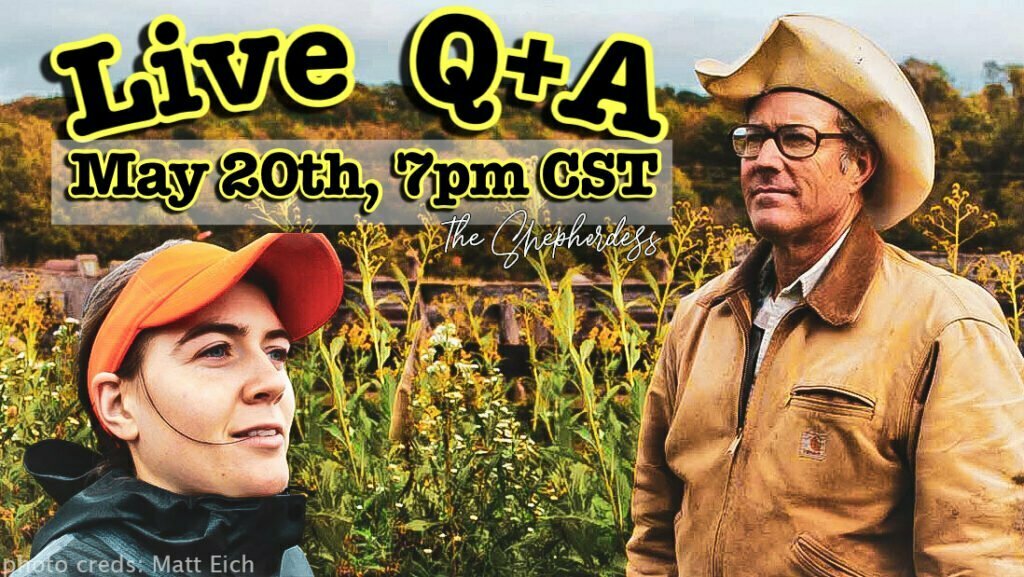
May 20th at 7 PM CST: Joel Salatin LIVE Q+A
May 27th, 7 PM CST: Small Farmer Virtual Meetup
May 28th 7pm CST: Farm on the Web Workshop (FARM-MERCH EDITION)
Thank you for reading my May farm update! Be sure to checkout my most recent videos.
-the Shepherdess at Harmony Farms
“Know that the Lord, He is God; It is He who has made us, and not we ourselves…” Psalm 100:3
the Role of a Shepherd(ess)
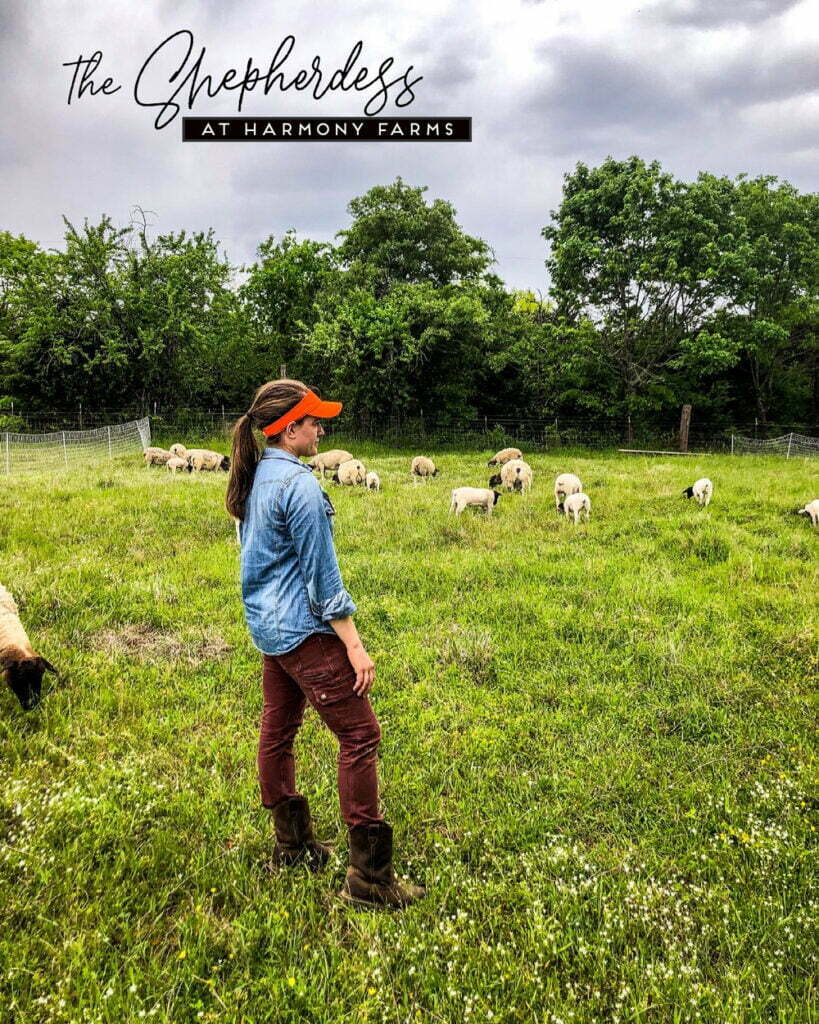
Since the beginning of time, sheep have been among the only animals assigned a human counterpart. The role of a shepherd(ess) is one that will never be obsolete.
.
.
When I undertook the ownership of this flock, I did so with the understanding that I was assuming a role as well as an animal. I had spent 6 months managing their grazing program and realized this intensive movement, this shepherding, was essential to their well-being.
.
.
Ultimately, however, what I know from the Bible shapes my understanding of a shepherd’s role. As I work with these animals I get a look at the unconditional love of of Christ. I see a worthiness in this undertaking because of what I know of my Shepherd. I understand that these animals will require more patience and grace than they are worthy of… and I’m ok with that.
.
.
I will grow in experience, I will perfect my techniques, I will upgrade my equipment… but at the end of the day sheep need a shepherd(ess), and that is the job I have undertaken.
.
.
Jesus said: “I have come that they may have life, and that they may have it more abundantly.
I am the good shepherd. The good shepherd gives His life for the sheep.” John 10:10-11
.
.
-the Shepherdess at Harmony Farms
EMAIL ME FOR DORPER SHEEP BREEDING STOCK AVAILABILITY.
Planting Pasture Grasses for Cattle with no Heavy Equipment or Machinery
How Much Time does my Sheep Farm Take?
Just get started.

“If you just get started, you can’t go wrong.”
My neighbor Karl Ebel said that to me 11 months ago.
I was about to give up on this crazy idea I had of raising livestock… because, honestly, I had no experience and no background that would qualify me for the job.
But that encouragement from someone so much further up the line was all I needed. It propelled me forward.
I don’t think there is any way to be fully prepared for all that this job entails… but I think Mr. Karl had it right: you just have to get started.
I still feel in over my head and I don’t have all of the answers. But day by day the Lord provides solutions for the problems and grace when situations don’t meet my expectations.
If this is your calling: just get started and you can’t go wrong.
-the Shepherdess
EMAIL ME FOR DORPER SHEEP BREEDING STOCK AVAILABILITY.
“Your ears shall hear a word behind you, saying, ‘This is the way, walk in it,’ Whenever you turn to the right hand Or whenever you turn to the left.” Isaiah 30:21

Lambing Dorper Sheep in Texas
REGISTER FOR THE SMALL FARMER VIRTUAL MEET!
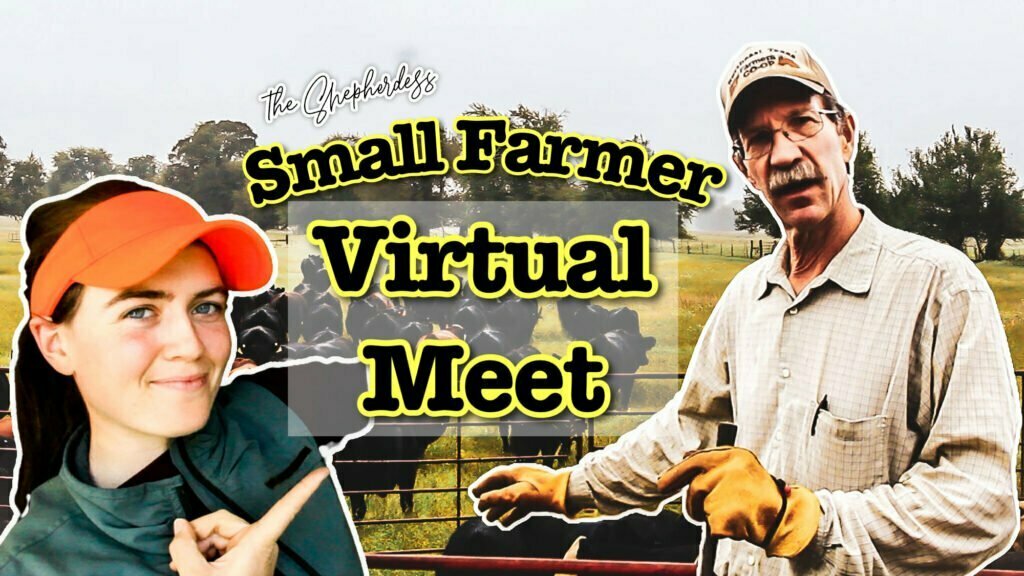
REGISTER NOW for April 22nd’s Small Farmer Virtual Meetup! Co-hosting with me this month is regenerative rancher Karl Ebel of Ebel Grasslands Ranch. Karl Ebel has worked extensively with land management practices and rotational grazing to restore portions of his 900 acre ranch to native Tall-Grass Prairie. He has leveraged his natural resources to create a profitable ranching operation. Karl Ebel ranches beef cattle and meat goats in Upper East Texas!
Bring your questions, April 22nd (at 7PM CST) is shaping up to be a great night!
-the Shepherdess
APRIL HARMONY FARMS UPDATE
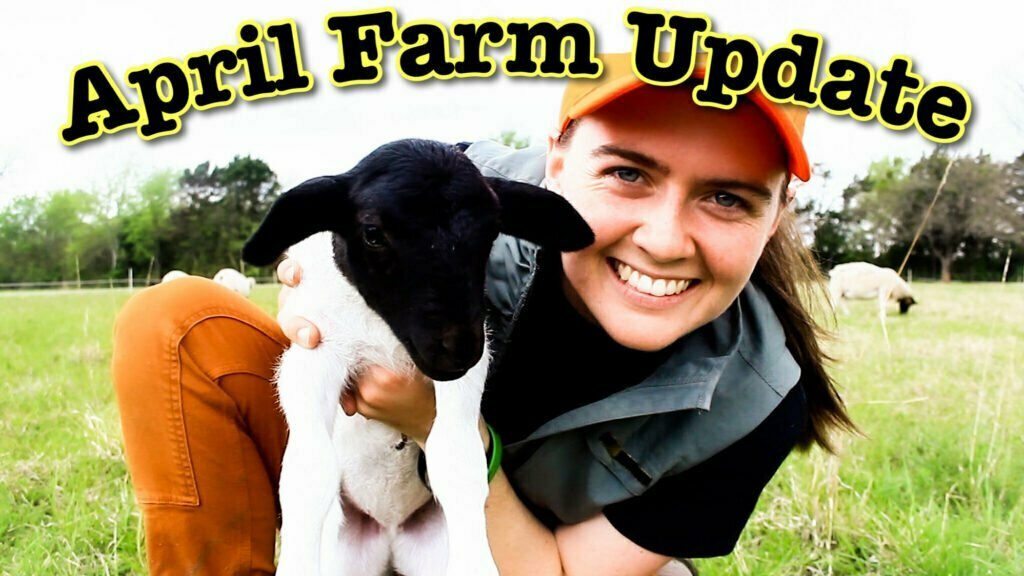
Hello everyone,
I first want to say thank you. Each one of you has been such a support to me as I build my farm! Here is a recap for April 2021. If you scroll to the bottom you’ll see the online events I’m hosting this month!
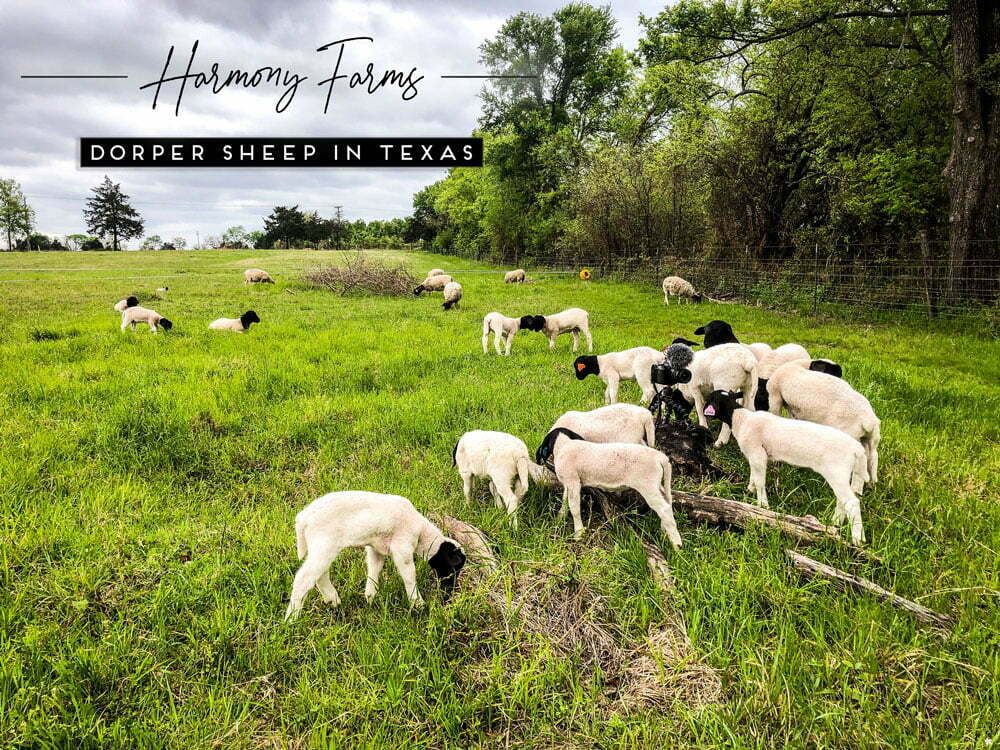
The Good:
We are capping off a great lambing season! We had a lamb-crop of about 1.35 this year. I am extremely grateful for the quality that I am seeing in these little Dorper lambs. We had more rams than ewes this year. This means I am going to be marketing some pasture raised meat as well as a few breeder rams for other small farmers.
The Challenging:
Lambing was a lot more hands on than normal this year. I had to assist about 1/2 of my first time ewes. After consulting with some of my “sheep mentors” I came to the conclusion that I may have been too liberal with my winter protein supplement. In utero, lambs put on the majority of their weight in the last 4-6 week gestation. By overfeeding in that time period I created fat moms and fat babies… which can mean difficult labor. I am grateful to have the situation to learn from and look forward to adjusting my strategies in the future.
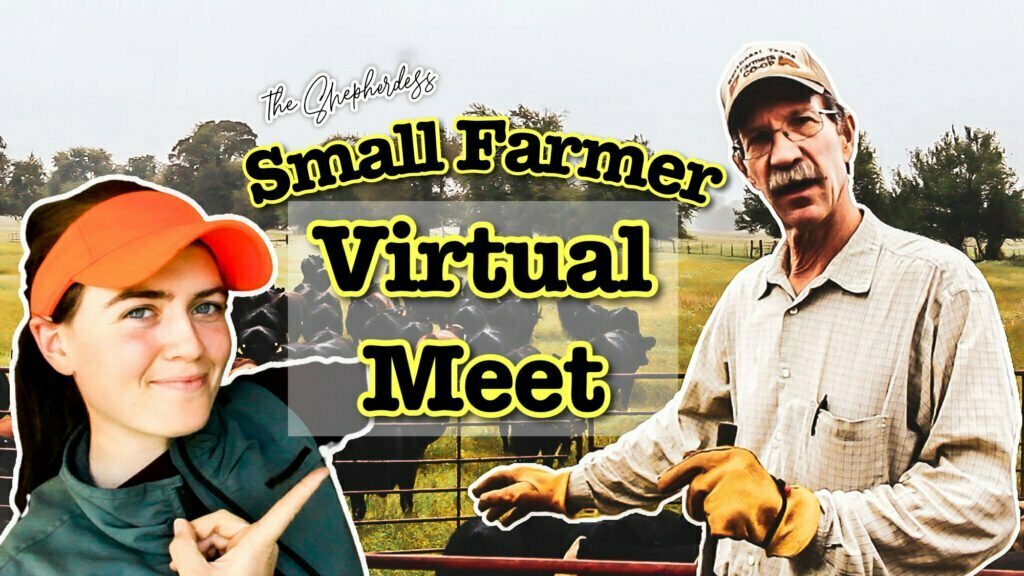
APRIL EVENTS:
Small Farmer Virtual Meetup with Karl Ebel
WORKSHOP: How to Build a Website for your Farm
Thank you for reading my April farm update! Be sure to checkout my most recent videos.
-the Shepherdess
“Know that the Lord, He is God; It is He who has made us, and not we ourselves; We are His people and the sheep of His pasture.”
Psalm 100:3
Caring for a Rejected and Weak Lamb
4 Marketing Tips for Farm Businesses
KARL EBEL: REGENERATIVE RANCHER
MY FIRST LAMBING SEASON
WHEN FARMING IS HARD
Growing Pains

I was feeling it tonight. I thought it was burnout.
So I sat down and put pen to paper: I wrote down everything that has happened over the past 6 weeks.
Pulling the flock off pasture for a historic winter storm, working sheep solo for the first time, pulling lambs: one a success and one leaving me with nothing but sore muscles and an ear-tag with no owner. Building our first permanent infrastructure. Initiating spring’s intensive grazing program. W-A-I-T-I-N-G on edge for the remainder of the flock to lamb. Working to remain consistent in the business building side of my farm… and more.
Looking at that paper full of experiences I realized…
It’s not burnout, it’s growing pains.
The experiences of the past 6 weeks have been unmatched opportunities for growth.
As I correct my perspective, I shift to thankfulness. Thankful the Lord has brought me through each new and difficult experience.
I know more now than I did 6 weeks ago… and while it doesn’t eliminate the exhaustion, it does lift my spirits.
I’m sore, but I’m growing… and that growth is worth the exhaustion.
-the Shepherdess 🐑🌱
“My grace is sufficient for you, for My strength is made perfect in weakness.”2 Cor. 12:8
LAMB IS STUCK | HOW I HELPED MY EWE GIVE BIRTH
From scattered to following.

8 months ago I stepped on pasture and the flock scattered. They did not trust me… they did not understand what I was there for.
As I began to work with the flock, they came to the place where they would follow my feed bucket. They came for what I had to offer.
As I continued the rotational grazing program (moving them to fresh pasture daily), my sheep began to understand: I was there to care for them.
In time, I no longer needed the feed bucket to draw them. They came to know the sound of my voice. They began to respond to my call.
Now when I step on pasture there is no hesitation or fear; my sheep follow me.
They came first in hopes of receiving something. Now they come because they know me, they trust me. (And, TBH, they are animals so they probably do still hope for food at some point🤷🏼♀️).
This process has drawn me back to the relationship I have with my Shepherd.
I think, as Christians, we often come to Christ because we want something out of it. We want that feed bucket full of hopes and dreams.
And He is patient with that.
But as we grow in our relationship with Him we understand that He is doing something greater than just carrying that feed bucket. We begin to understand that His plan is bigger and, regardless of what He gives us, He is leading us to the very best.
And we begin to draw near and trust Him for Who He is as much as what He gives.
The process of building trust with this flock took time and is still a work in progress. Even so, our trust in Christ is a work in progress.
Nevertheless, His care is unconditional.
And as a shepherdess I now understand the delight He feels when His sheep draw near without the use of a feed bucket. 😅
-the Shepherdess
The Lord God says: “So will I seek out My sheep and deliver them from all the places where they were scattered…” Ezekiel 34:12
Preparing for Lambing Season My Lambing Kit
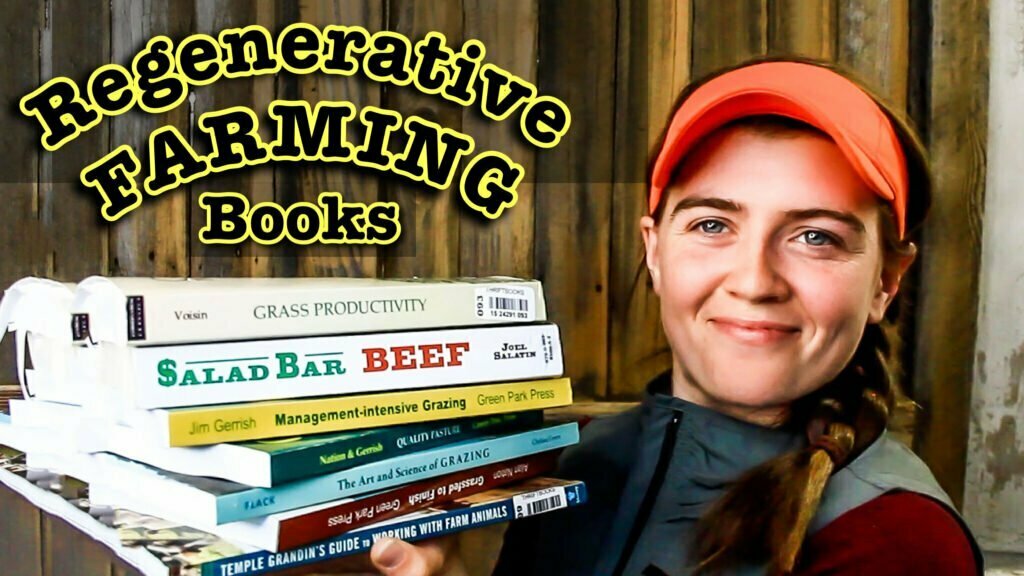
Books on Regenerative Farming and Agriculture
Use this code for 30% off the book list below! (hey all! Update for 2022, you must buy all 5 books to qualify for the 30% off. Thanks for understanding!)
“PUB35“
Salad Bar Beef by Joel Salatin
Management Intensive Grazing by Jim Gerrish
The Art and Science of Grazing by Sarah Flack
Grassfed to Finish “A Production Guide to Gourmet Grass-Finished Beef” by Allan Nation
Quality Pasture “How to Create it, Manage it, and Profit from it.” By Allan Nation
(books from the following sources are already discounted, the coupon will not work at this site.)
Temple Grandin’s Guide to Working with Farm Animals
Grass Productivity by Andre Voisin
HOW TO IMPROVE YOUR SOIL QUALITY
6 Ways I’m Building My Farm Into a Business
Committed.
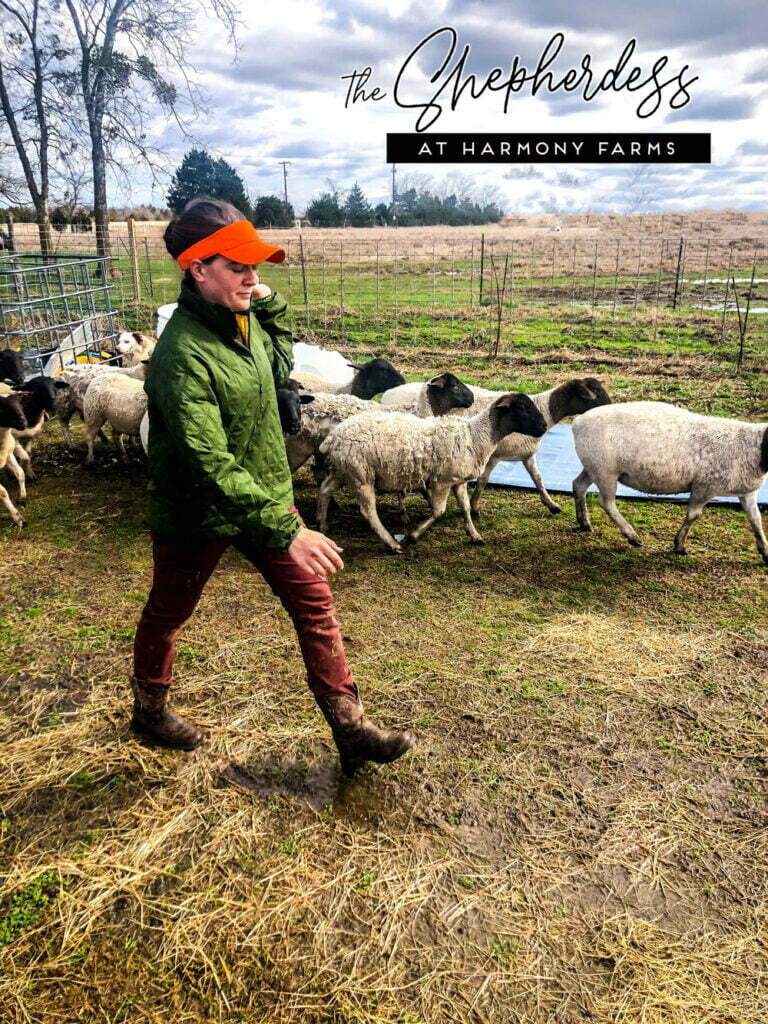
“It’s not crazy, it’s being a shepherdess.”
7 words that set me free as I was rigging up electric fencing at 11pm the other night.
At the end of the day sheep are sheep. Not pigs, not cows, not chickens, not ducks. Sheep are sheep and they need a shepherd(ess).
When I made the decision to buy this flock I had already been managing it for several months.
When I became a shepherdess I did so with the understanding that these sheep will require more of me than any other animal I probably could have chosen.
If I were to retain any other expectation, I would quit.
As I remind myself of that commitment , frustration fades into a sense of duty. I am sure that time and experience will smooth out some of the bumps, but, by the grace of God, I am committed.
-the Shepherdess🐑🌱

How I Left the CITY and Started a SHEEP FARM
BACKYARD SHEEP | 28 SHEEP IN MY BACKYARD
DIY Homemade Sheep Chute Build (Part 1)
Diversity: a Corner Pillar in Regenerative Farming (Part 1)
Show notes from Mack Farms. (Foreword and Editor: the Shepherdess)
Foreword: The principle of Diversity is a corner pillar in Regenerative Agriculture. As regenerative farmers we should pursue the principles of diversity in every area of farming. So doing will maximize not only efficiency, but also profitability. The following show notes are from Elijah Mack and they outline a few of the ways that we, as regenerative farmers, can weave a safety net of diversity on our farms.
Diversity “Resilience is Diversity in motion”
– Daniel Griffith, Timshel Wildland
Diversity is stability, a safety net in your farming infrastructure. Farming comes with very little guarantees. Diversity is a way to cover your bases and build security into your operation. In the beginning, God created the heavens and the earth… and diversity was fundamental in His design! Diversity with the blessing to be fruitful & multiply. Creation is still dynamic. (Gen. 1:1, 28)
Here are a few ways we can diversify as Regenerative Farmers:
Diversity of Equipment
Practical application:
Try to ensure the equipment you invest in is diverse in it’s usability (aka: no single-purpose equipment!!!). Focus on building an inventory of tools that you can multitask with. Rate what you decide to invest in on a Scale of Permanence, by asking how hard will this be to change once I build it? Once you build permanent infrastructure or invest in an expensive (single purpose) tool it is hard to re-configure it.
Here are some tips to make sure your equipment on farm can be diversified:
- Delay the construction of buildings, gates, handling facilities until you know what works.
- Make buildings open and multi-functional, livestock, equip, manure, hay
- Ask yourself: Do I need permanent fence, gates, etc? Can I do something creative with portable electric fencing to achieve the same end goal?
Diversity of Skill Sets
As a Regenerative Farmer, consider yourself – the human body/mind – as the ultimate tool. Also consider how your livestock might be able to do the work for you.
- Diversify your skill set: Jack of all trades, master of none.
- Historically, specialization of tasks has been a downfall. A lack of diversity creates economic frailty; on a personal level and on a national level.
- The Livestock is your first employee on your regenerative farm – use them. As you approach a task, ask yourself the question: “Is there a way I can employ the livestock’s natural behavior to perform this task?” (planting seeds, brush clearing, etc)
Diversity of Creatures on Farm
Think of farm animals as collaborators, not competitors.
Farm examples:
- Cattle – grazers – 80% forage, 20% browse
- Sheep – 50/50
- Goats – browsers – 80% browse, 20% forage.
Consider the forage needs of these “typical” farm animals and then ask yourself, “how can I manage these animals so that they maximize the various forage resources on my farm?”
To be continued!…
Deworming my Dorper Sheep (FAMACHA SCORING and Selective Drenching)
I wouldn’t have believed you.
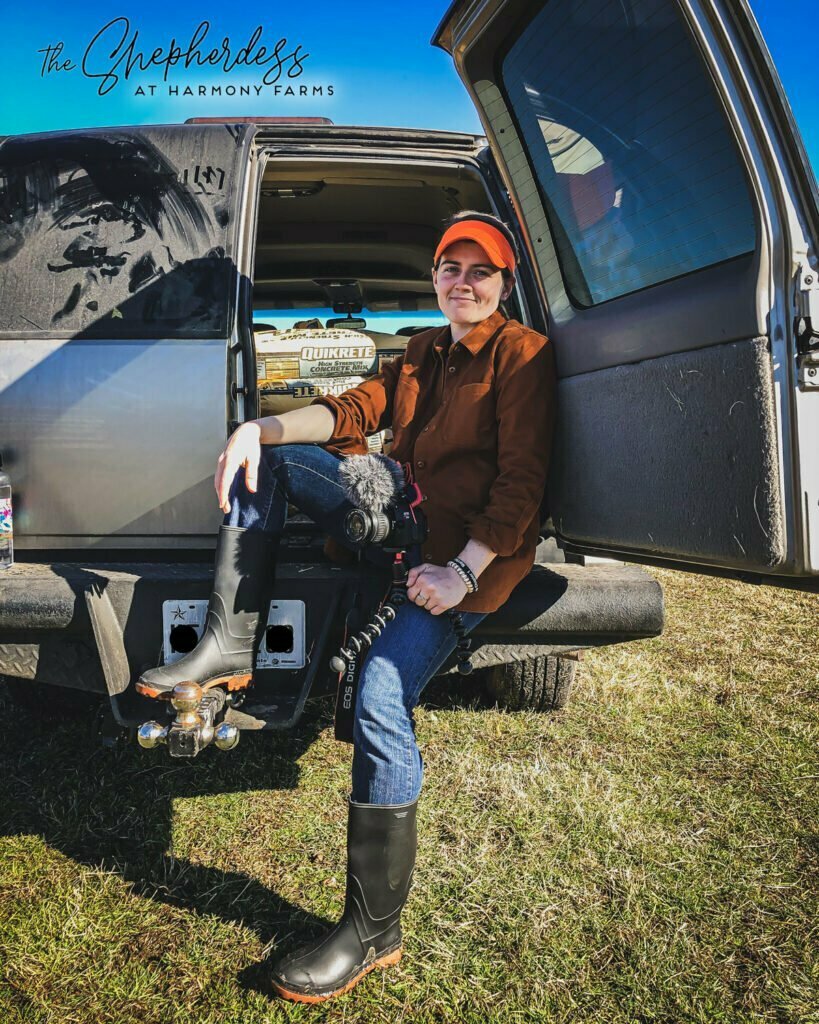
If you would have told me a year ago that I would the shepherdess of a flock I worked so hard to ignore, I would not have believed you.
For years I shoved off anything farm related, hoping if I ignored it long enough it would go away.
But last May I felt like the Lord was was leading me to use my gifts in management and marketing to produce a solution to the crisis that was unfolding in our nation. Grocery stores were empty. Millions of animals were being euthanized due to centralized processing closures. A food system that sustained 300+ million people was cracking in half.
So what do you do when you receive a wake up call?
I knew I didn’t want to go back to sleep. So I did the next thing: I looked out my window at 30 acres of grass and asked myself: how much food can I grow here?
And I started growing it… with no previous farming experience.
I hope people following my journey will do the same thing. Look at your resources, no matter how small, and ask yourself: “How can I be part of the solution?”.
For you, the answer may or may not be becoming a farmer. However, I believe the Lord has given everyone of us gifts and resources to steward; first for His glory, and second for the service of others.
Thank you for following this journey I am on. It’s all new to me, but His grace is sufficient… and I’m finding myself so very satisfied in a life that I tried to ignore for so long.
-the Shepherdess
“I can do all things through Christ who strengthens me.” Philippians 4:13