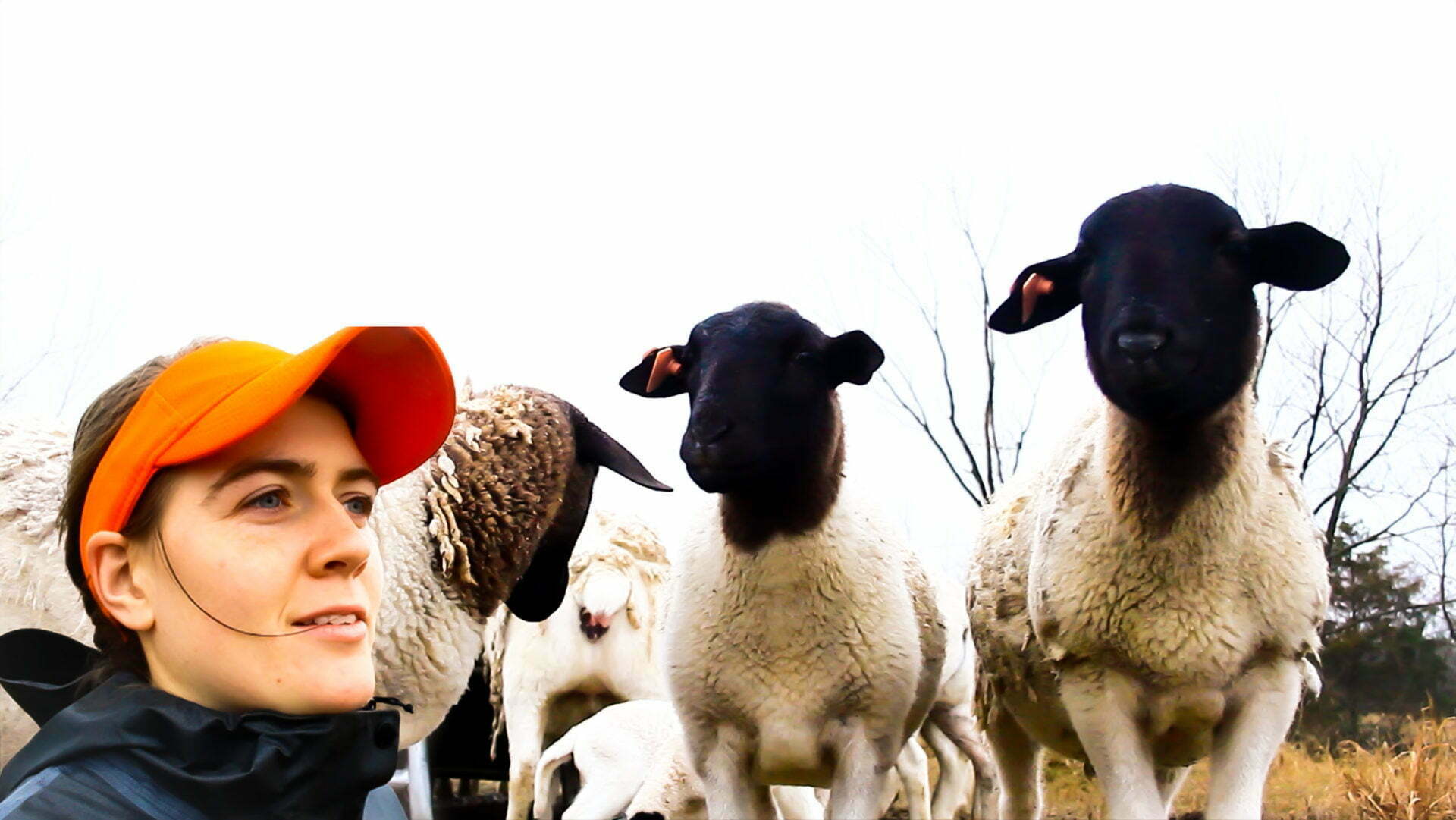
THIS MONTH’S CO-HOST: ELI MACK OF MACK FARMS IN PENNSYLVANIA
Resources for Beginner Sheep Farmers, Dorper Sheep for Sale in Texas!
THIS MONTH’S CO-HOST: ELI MACK OF MACK FARMS IN PENNSYLVANIA
As promised, here is a complete list of what my Dorper sheep eat in the winter. This is what I feed my sheep in the winter when I remove them from pasture and confine them to a winterized barn. I rarely have to confine my sheep. However, winter storm URI blew through and buried our pasture in 9″ of snow. For this reason, I pulled my Dorper sheep off pasture and fed them in a warm, shedded area for about a week.
Here is what I fed my 26 Dorper sheep every day while they were in their winter housing. This is a ration for my BREEDERS, not my eaters. Our beef and lamb for market is grass fed entirely. The pellets and grain I feed my breeder ewes disqualify them from a grass fed to finish program. This is fine because their purpose is to breed, not to be eaten.
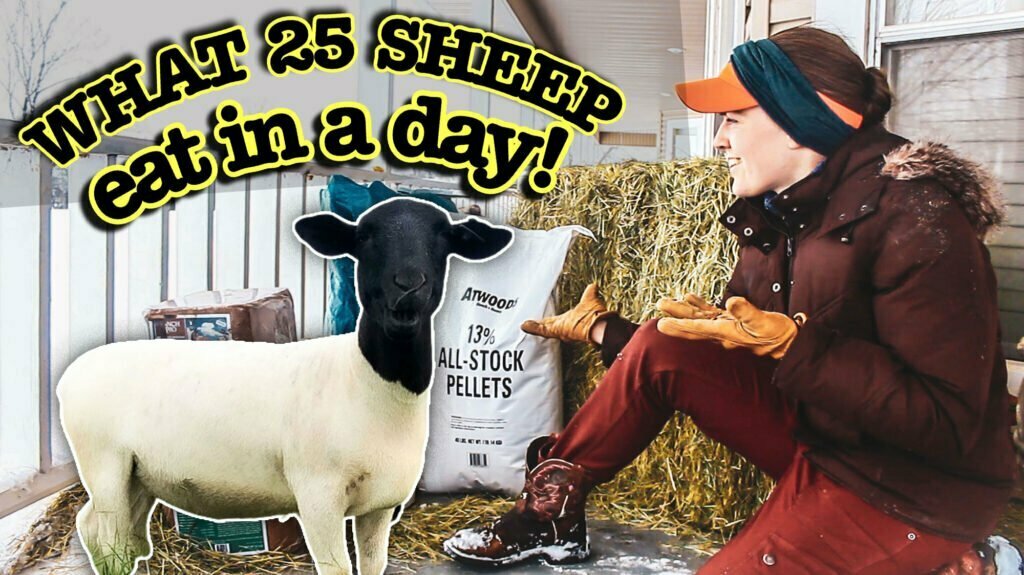
WHAT DO MY 25 SHEEP EAT IN A DAY?
(Images below. All items purchased from my local Atwoods store.)
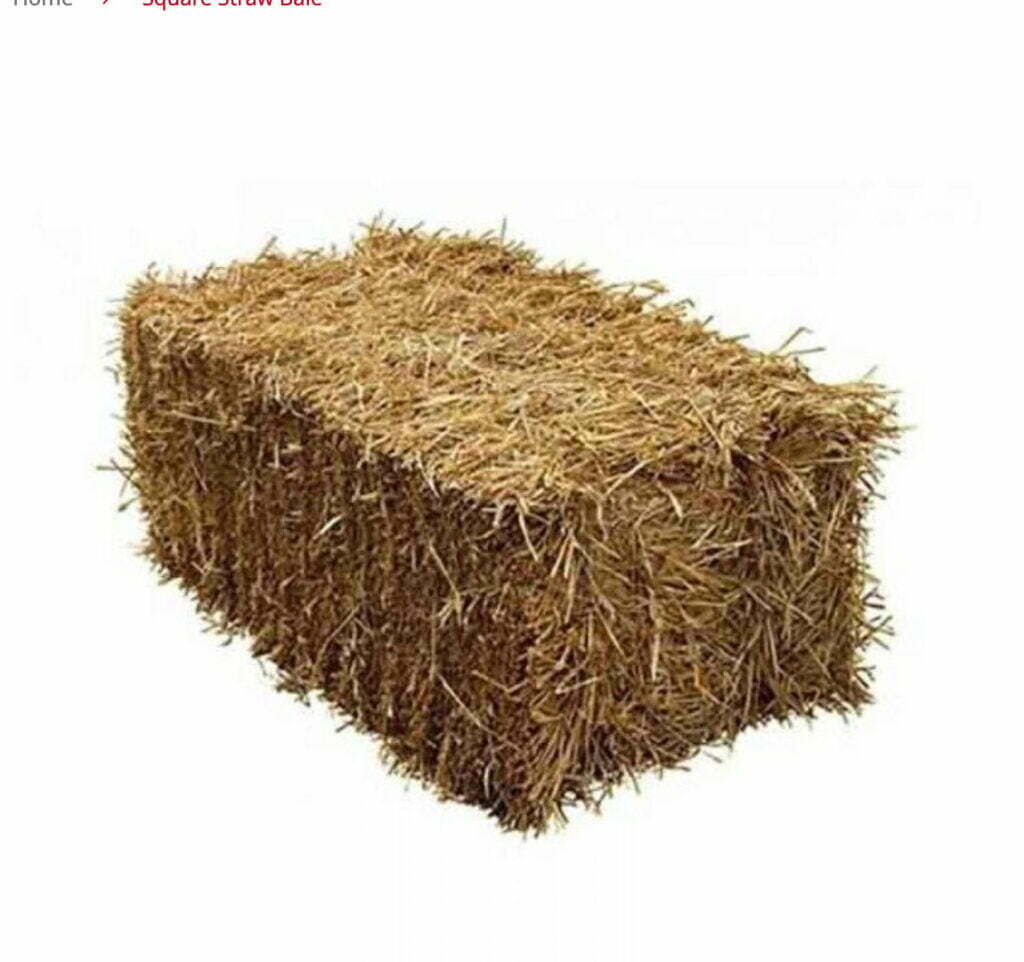
2 square bales of hay.
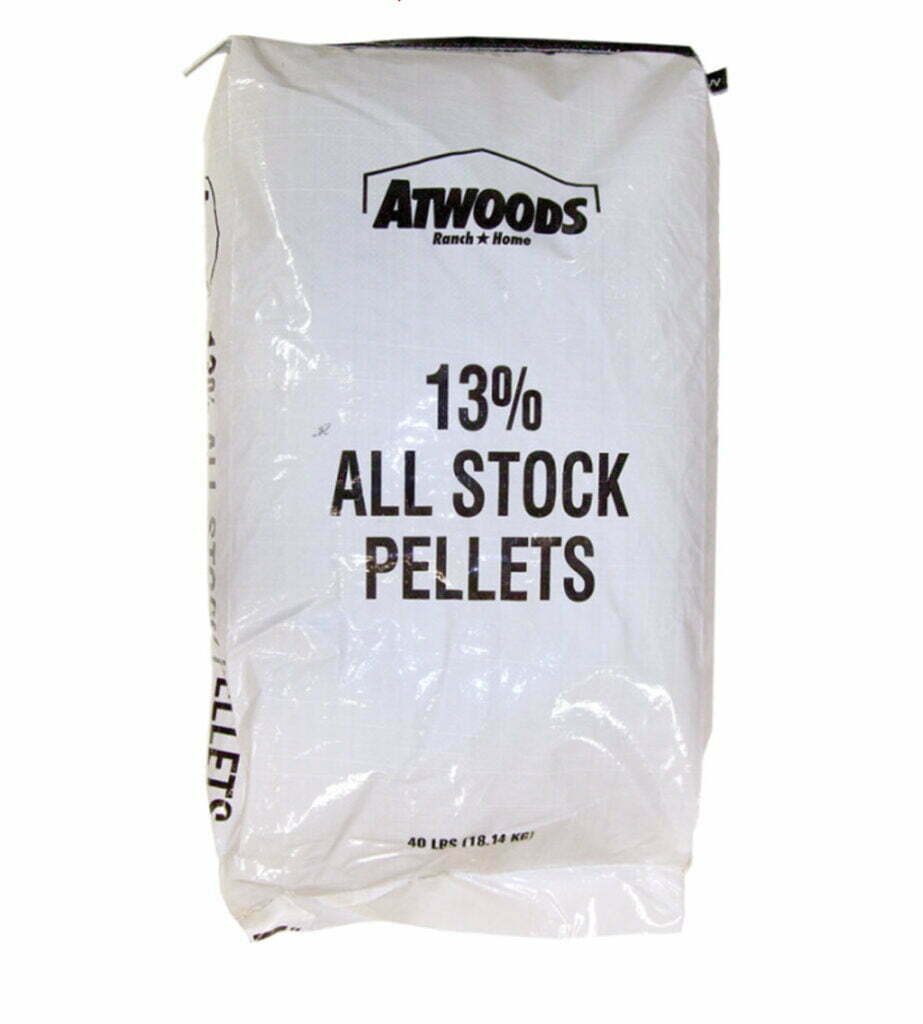
20-25 lbs of 13% All-Stock pellets.
1 Mineral Block (Free choice. Will last much more than a day)
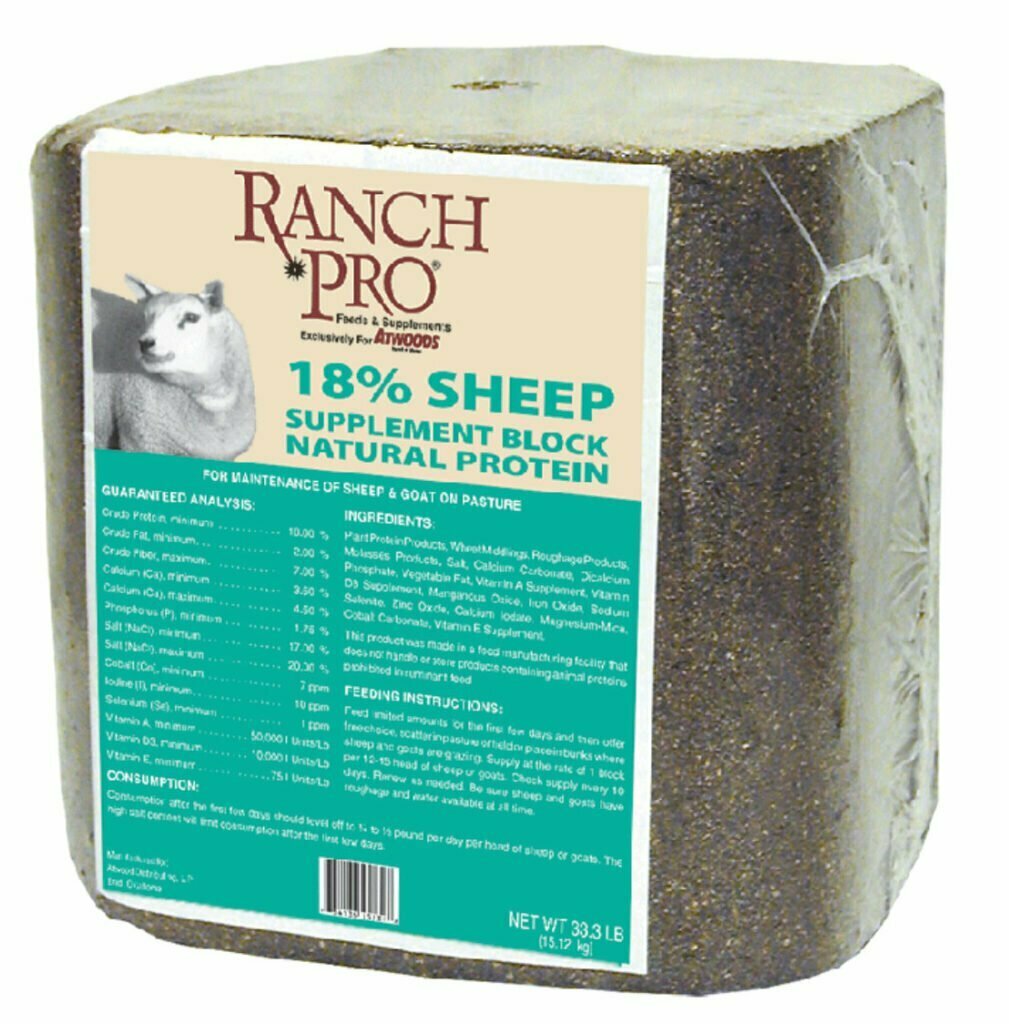
1 Ranch Pro 18% Protein Block (Free choice. Will last much more than a day)

I hope this helps you!
-the Shepherdess
“Therefore, whether you eat or drink, or whatever you do, do all to the glory of God.” 1 Corinthians 10:31
BE SURE TO PROPERLY ANCHOR THESE STRUCTURE.
This DIY portable shade structure allowed me to launch a rotational grazing program for my sheep over summer at a fairly low cost. Because I found the hog paneling on sale, the total cost of one of these shade structures was just $60. It took 4 of these DIY shade structures to comfortably shade my 25 sheep. Every time I moved to a new paddock, I simply flattened the shade structures and pulled them to the new spot.
If the wind was set to be greater than 10MPH, I had to make sure I anchored each structure with tent stakes. Otherwise, these shade structures would literally fly across my pasture like a kite. Be aware of the deficiencies in this design, but also know that this list and tutorial will give you a good starting place for cheap, portable shade structures for a rotational grazing program.

Each portable shade structure requires:
16×4′ Feedlot Panel (you can go wider than 4′, but I wouldn’t go any longer than 16′)
Plastic Zip Ties
2 Lengths of 90″ long CHAIN Link
4 Metal Snap Hooks
Blue Polyester Tarp (might recommend choosing shade cloth instead. The blue tarp is waterproof, but does not have much UV tolerance)
4 Tent Stakes
I hope this helps you!
-the Shepherdess
“The earth is the Lord’s, and the fulness thereof; the world, and they that dwell therein.” Psalm 24:1

“And he said unto me, My grace is sufficient for thee: for my strength is made perfect in weakness.” 2 Corinthians 12:9
When I started farming I had NEVER managed livestock and would NEVER have been labeled an “outdoorsy person”. In fact, my real job was digital marketing in the retail industry.
But God is able.
“Don’t be a farmer.”
“You could make more money in one week than you’ll ever make from that flock.”
“Those sheep aren’t worth it.”
These are things I heard when I became interested in Regenerative Agriculture this year.
And, from an external perspective, they were all right… I felt crazy too. But at the end of the day becoming the Shepherdess of this flock was not a choice I made, but a calling I received. And one day at a time I am stepping into what I believe that Lord wants for me.

What does it take to be a shepherdess? T-I-M-E. Time. If there is anything I’ve learned from this journey is that sheep need your time. The more you give them, the better they respond to your management.
It hasn’t changed since the beginning of time: sheep need a shepherd(ess). When you leave sheep to themselves they deteriorate. When you take the time to shepherd them, they thrive. Under the care of a shepherd(ess) sheep change. They begin to trust, they begin to follow, they begin to understand the way you work and move in response to your behavior.
And if you draw it back to Christ, the Great Shepherd, it is the same. He is always there: telling us to draw near to Him, seeking us when we stray, never leaving or forsaking us. He gives us not only His time, but He gave us His life on the cross.
So I look at these sheep with dirty knees: totally reliant, kind of dumb… and I see myself.
Then I switch to the perspective I have as their shepherdess: When they are thriving, I am happy; when they stray (aka: bust out of the electric fence), I am grieved. With this shift in perspective I get a glimpse at the love of Christ.
It is a love that relies not on my capabilities, but rather, Who He is and what I am to Him.
-the Shepherdess🐑🌱
“For you were as sheep going astray, but have now returned to the Shepherd and Overseer of your souls.” 1 Peter 2:25
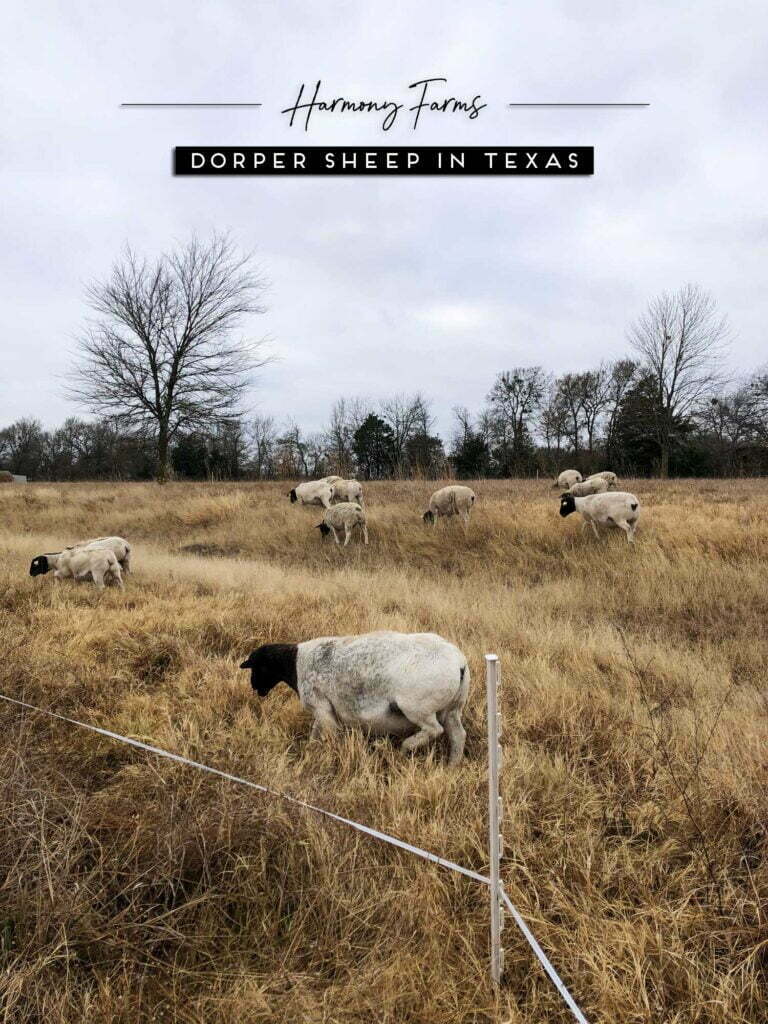
I wanted to quit rotational grazing my sheep this month.
There is no green grass, we have already made one pass through each paddock since the first frost, and the sheep are becoming more difficult to contain. While we are feeding hay, I assume their constant escape of the electric fencing is an instinctual drive to find more and better food.
Thanks to some encouragement from sister, and farm-partner in crime, I am continuing this rotational-grazing-sheep-thing over winter.
I realize that not everyone lives in a mild winter-climate like Texas, so barn and bedding are essential for many farms… but with average temps at just 40-50 degrees in my parts, I don’t feel like I have any excuse to pull the flock off pasture.
Here is why I am rotational grazing my sheep over winter:
I am rotational grazing my sheep for even manure distribution.
The flock puts off about 150lbs of manure per day. Having this spread across 30 acres instead of in a barn is worth the moves. Plus, I have NO machinery to scoop and redistribute deep bedding, were I to house the flock in a well-maintained barn. By continuing to rotational graze, the sheep are ammending for my lack of machinery and spreading their own manure across the pasture.
I am rotational grazing my sheep for Parasite Management.
The parasites that can plague sheep are dormant, but not absent, during winter. Paddocks still need rest time during winter for UV sanitation and parasite die off. By rotational grazing my sheep over winter, my pasture paddocks continue to receive 30-45 days of rest between grazing.
I am rotational grazing my sheep to avoid soil compaction.
When I wanted to pause rotational grazing over winter, I considered designating a 7-acre pasture to be my “winter pasture”. However, as I watched what happened when I left the flock in one spot during days and days of rain, I realized I’d end up with a mud pit by the end of winter. I know for a lot of climates there is no other option than to leave your animals in what is called a “sacrifice pasture”. For me, however, my winters are mild and I do have the ability to maintain my rotational grazing program.
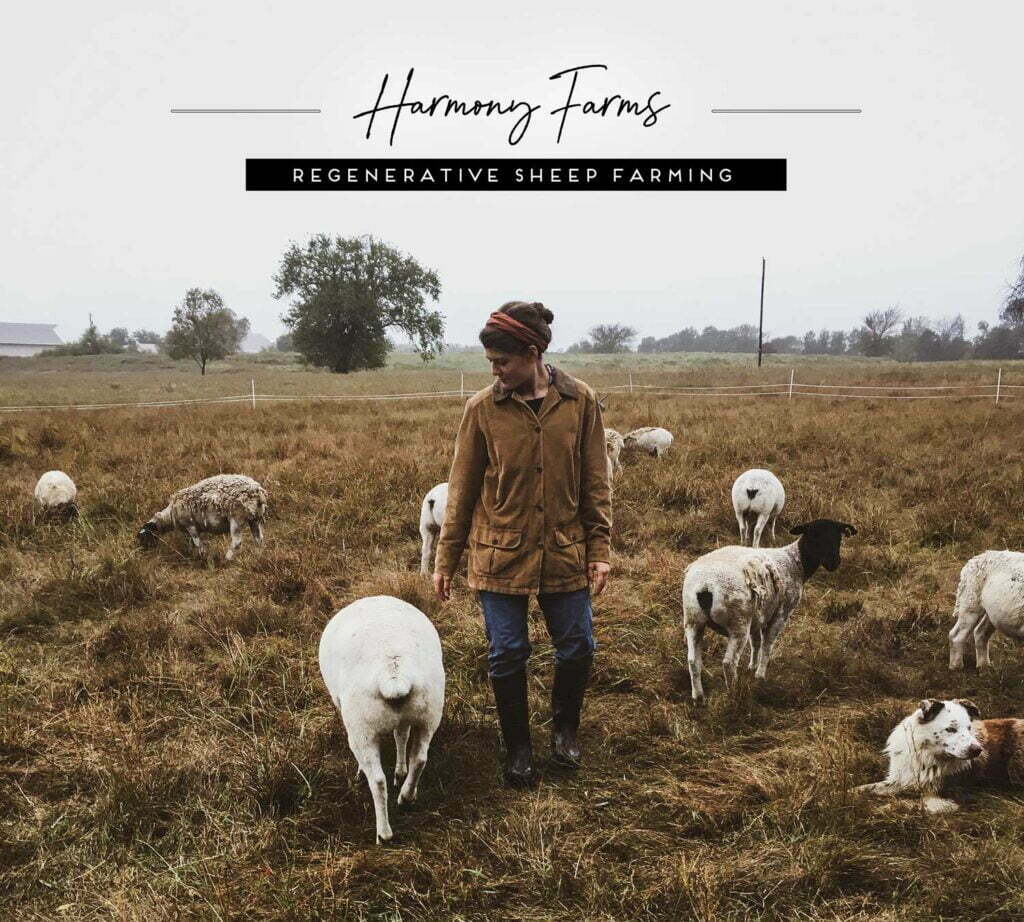
I am rotational grazing my sheep over winter to maintain personal work habits.
Confession: I feel like consistency is difficult for me to cultivate and maintain. By maintaining my rotational grazing program throughout winter I am staying in the groove and constantly working with the flock. When spring comes and the weekly rotational grazing program shifts back to a daily rotational grazing program, I will have a better chance of adjusting back to that work load.
Do you rotational graze your animals? If so, are you able to maintain your rotational grazing system over winter? Tell me in the comments!
-the Shepherdess
“And let us not be weary in well doing: for in due season we shall reap, if we faint not.” Galatians 6:9
FREE INSTRUCTIONS: Electric Fence for Sheep
Join us next time!
Multi-Species Rotational Grazing:
Today I’m going to give you a look at our multi-species rotational grazing system. We graze sheep, cows, chickens, guinea fowl, and a mini horse all on the same pasture. On our farm we practice management intensive rotational grazing with all of our animals. We are practicing multi-species rotational grazing on a small scale. Each species of animal complements the other on pasture. Multi-species rotational grazing works with God’s ecological blueprints to stimulate and regenerate the landscape.
All Our Animals Grazing Together:
Multi-species grazing is simply the practice of grazing all different types of animals together on the same piece of land. We graze sheep, cows, chickens, guinea fowl, and a mini horse, all on the same pasture. Our animals get along very well together on pasture. When we initially joined the sheep with the cows, we put them in pastures side by side for a day. This allowed them to get used to one another before the became pasture-mates. Our mini horse, Winnie, is the only one that has given us trouble. Winnie does not like the sheep. Winnie does, however, like the cows and has adopted them as his grazing buddies!
Management Intensive Rotational Grazing:
On our farm, we have implemented a management intensive rotational grazing system. This system employs electric fencing to break up our pastures into small paddocks. We move our animals to a new paddock every 2-7 days, depending on the season. Management-intensive rotational grazing is a benefit to our animal’s health because we are constantly moving them to fresh ground. Management-intensive rotational grazing is beneficial to our land because it allows for even manure distribution and gives our pasture grasses plenty of time to rest between grazing.
Working on a Small Scale:
Our multi-species rotational grazing system is small-scale. We have 3 cows, 25 sheep, 30 chickens, 5 guinea fowl, and 1 mini horse. We are grazing these 64 animals on roughly 30 acres. At this point in time, we have more land than animals. On top of this, the practice of intensive rotational grazing tremendously increases the carrying capacity of our acreage. This gives plenty of room to increase the number of animals on farm.
Grazing 5 Species Together:
Each of the 5 species in our multi-species rotational grazing system complements the other. The cows cut down on the parasites that give the sheep trouble. The chickens and guinea fowl scrape apart the manures for better soil absorption. Last but not least, Winnie, our mini-horse, adds spunk and some defense against predators… but mostly just spunk!
Honoring God’s Design:
At the end of the day, multi-species rotational grazing really honors the ecology that God designed. If you consider it, the Lord made a variety of creatures to inhabit the earth. Each species of animals carries out a specific purpose in nature. If we were to perpetuate a mono-culture by carrying only one type of animal on pasture, our farms would miss out on so many benefits!
-the Shepherdess at Harmony Farms
“The earth is the LORD’S and the fulness thereof, the world and they that dwell therein.” Psalm 24:1
Today we are talking about Dorper Sheep Characteristics! For 3 years, Harmony Farms has farmed a small flock of Dorper Sheep in East Texas. The Dorper sheep breed is a result of cross-breeding the Dorset Horn sheep with the Blackhead Persian Sheep. A primary characteristic of Dorper Sheep is their heat tolerance. The Dorper sheep breed is known for producing excellent quality meat in arid climates. Dorper sheep are a self-shedding sheep breed, meaning they do not require any manual shearing. With this post we are going to dive deeper into these Dorper sheep characteristics!
We purchased our small flock of Dorper Sheep 3 years ago. Harmony Farms is located in upper East Texas where rainfall is above national average. This climate is more moderate and balmy than the breed is intended for. For this reason, we must intensive rotational graze our Dorper Sheep during the rainy seasons in order to keep the parasite load down. With intensive rotational grazing management, our flock of Dorper sheep is thriving in East Texas!
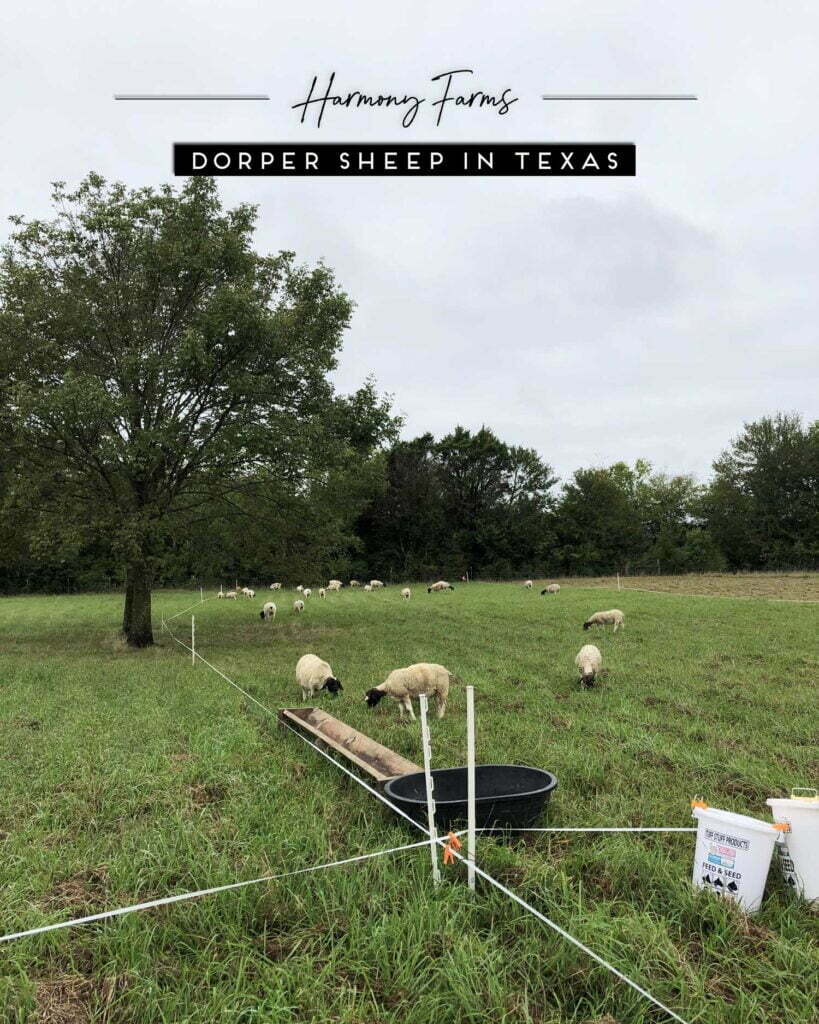
Dorper sheep are a self-shedding, heat tolerant breed:
The Dorper Sheep is a result of cross breeding the Dorset Horn Sheep with the Blackhead Persian Sheep. The Blackhead Persian Sheep is a breed native to the arid regions of Somalia and South Africa. This side of their genetic pool gives the Dorper Sheep their wool-less heat tolerant characteristic.
The Dorset Horn Sheep is the other half of the Dorper’s genetic line and is a breed native to south-west England. The Dorper sheep is typically a polled breed, meaning they do not carry any of the horned characteristics from the Dorset side of their genetics. Dorper sheep do, however, grow a small amount of wool which is shed by the animal in warm seasons.
When shopping for a Dorper sheep you will often see it advertised that the particular animal is an “easy shed”. While Dorper Sheep are characteristically self-shedding, some animals shed better than others, while some retain a layer of wool on their backs. In our flock of 25 Dorper Ewes, we have about 2-4 that are not good at shedding their wool on their own. These ewes retain a bit of wool year round. If you are shopping for Dorper ewes or rams, it is a good idea to ask if they shed all on their own.
Dorper Sheep thrive in arid climates:
Characteristically, Dorper sheep thrive in hot dry climates. Dorper sheep are able to convert brushy forage (aka: pasture weeds) into excellent quality meat. If you are farming Dorper sheep in humid, wet regions you will need to have a serious parasite management strategy. Since we are farming Dorper sheep in a very wet and humid climate, our strategy involves intensive rotational grazing and the use of conventional dewormers.
Intensive rotational grazing is needful to manage parasites in nonarid climates:
Intensive rotational grazing is our primary contribution to the heath of our Dorper flock. Sheep are characteristically prone to contracting parasites. For this reason, one of your main enemies on a pasture-based system will be managing worms in your flock. With intensive rotational grazing, we move our flock to fresh pasture every 2 days. This moves them away from their manure and on to fresh grass before the parasite’s infectious cycle begins again. By rotational grazing our Dorper Sheep we have seen a significant reduction (but not complete elimination) in the need for chemical dewormers on our sheep farm.
In all, the Dorper sheep breed has a variety of appealing characteristics. They produce amazing meat on sub-par forage. Dorper sheep do not require the back-breaking shearing process that most other sheep breeds do. Dorper sheep are great for arid regions, but with intensive grazing management can also thrive in humid regions. Dorper sheep are also increasing in value, making them a great investment!
-The Shepherdess at Harmony Farms
“The grass withereth, the flower fadeth: but the word of our God shall stand for ever.” Isaiah 40:8
At Harmony Farms we are raising a flock of pure-bred Dorper Sheep. Harmony Farms is located in East Texas, just outside of Dallas Fort Worth area. We rotational graze our Dorper sheep for the health of both land and animal. Our goal is to produce gourmet grass fed lamb, as well as a superior line of Dorper Breeding stock for other small farms to begin raising their own Dorper sheep in Texas.
Harmony Farms
At Harmony Farms we farm Dorper Sheep right outside of Dallas Fort Worth, Texas. Our small sheep farm is just 30 acres. At this time we run a flock of 25 Dorper ewes and one ram. Our flock lambs every March. We raise our ram lambs for grass fed and finished lamb. Our ewe lambs are added back to our flock to breed out once they have matured.
Pasture Based Dorper Sheep Farming in Texas
Our Dorper sheep farm is located in East Texas. The climate in East Texas allows us to leave our Dorper sheep on pasture year round: spring, summer, fall and winter! We have a small gated corral with a covered shed. We use this structure to perform general maintenance on the flock and administer dewormers. Here in East Texas we receive above national average in both rainfall and sunlight. This provides the perfect climate for raising Dorper Sheep on pasture.
Rotational Grazing Dorper Sheep in Texas
Rotational grazing is a major part of our Dorper Sheep Farming operation. We rotational graze our sheep, moving them to fresh pasture every two days. Rotational grazing is a highly effective way to minimize internal parasites in our sheep. Rotational grazing also benefits our land by providing adequate rest for our grass, and evenly distributing manure for pasture fertilization.

Grass Fed Lamb
At Harmony Farms, our goal is to raise the finest grass fed lamb in Texas. Dorper meat is both tender and flavorful. Lamb is a red meat that provides an excellent source of vitamin B12, B3, zinc, and iron. Being grass fed from start to finish ensure that Harmony Famrs lamb is as healthy as it is delicious.
Dorper Sheep Breeding Stock in Texas
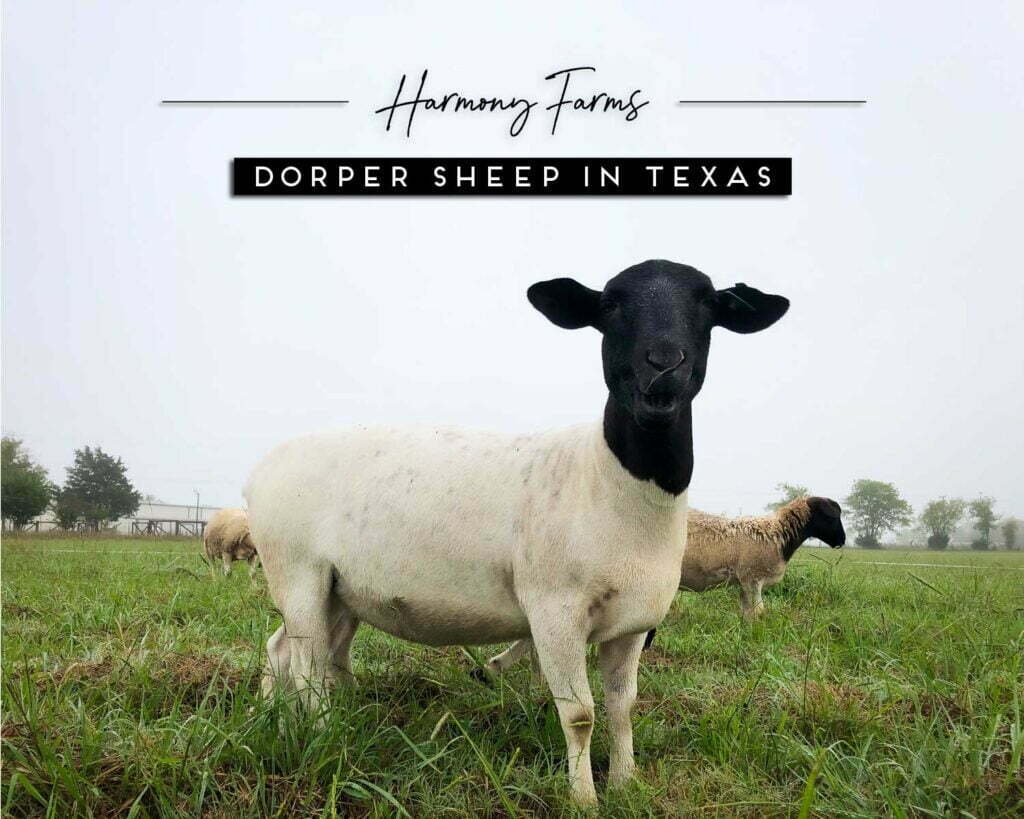
Our secondary goal in raising Dorper Sheep in Texas is to produce a superior line of breeding stock. Dorper sheep are increasing in popularity and value. Because of their heat tolerance and self-shedding quality, the Dorper breed is an excellent choice for sheep farmers in Texas. It is our goal to become a source from which other sheep farmers can purchase quality Dorper Sheep in Texas.
-The Shepherdess at Harmony Farms
“O come, let us worship and bow down: let us kneel before the Lordour maker. For he is our God; and we are the people of his pasture, and the sheep of his hand.”
Psalm 95:6-7
It has been 4 months since we launched our management-intensive rotational grazing program for our flock of 25 Dorper Sheep. We started intensive rotational grazing our sheep (meaning we move them to a new paddock every 2 days) as a means of parasite management. Intensive rotational grazing also allows our pasture grasses to recover at break-neck speed. Because our Dorper sheep farm is located in East Texas, we are able to rotational graze our sheep on a year-round basis. Our fencing is a combination of 6″ hog panel perimeter fence and electric poly-tape. Even though our intensive rotational grazing system has only been in place for 4 months, we have seen some amazing results!!
We launched our intensive rotational grazing program for our flock of 25 Dorper sheep on August 15th. We launched this system as a final effort towards parasite management. Sheep are highly susceptible to worms, the Barber Pole worm being the worst threat of all. Typically you can control worms with chemical dewormers. Unfortunately, our flock of Dorper sheep had developed a resistance to these conventional dewormers (ivermectin, cydectin, etc). Because these dewormers were no longer 100% effective for our flock, the health of our sheep was failing. In efforts to improve the health of our Dorper sheep, we implemented Intensive rotational grazing in addition to these conventional dewormers.
Our intensive rotational grazing program for our Dorper sheep involves moving them to fresh pasture every 48 hours. To carry out this rotational grazing strategy, we use electric fence; electric poly tape to be specific. We use the electric fencing to create small paddocks that provide the sheep with just enough grass to graze for 48 hours. For 25 sheep, each 48 hour paddock is around 1/10 acre.
Why does rotational grazing help with parasites in sheep? To explain how rotational grazing helps reduce parasites in sheep, I will explain the life cycle of the parasite. Worms (parasites) exit the body of the sheep via their manure and lands on the pasture. Within 3-10 days (depending on climate), the worms hatch out of the manure and climb up the grass stem. If the sheep is left to graze on a pasture more than 3 days, they will graze grass that is covered in the microscopic larvae of the Barber Pole worm. Through intensive rotational grazing we move the sheep to fresh pasture before they can graze the grass that is covered in parasites. We fence off the previous pasture with electric fencing so the sheep cannot back-track and re-graze the previous paddock.
In addition to being amazing for the health of our sheep, Intensive rotational grazing is also amazing for the health of our pastures! By only grazing a paddock for 2 days, then moving the animals off the grass is given a lot of time to rest and recover. This short grazing period and long rest period allows the grasses to recharge their root systems. This creates deep roots and allows the grasses to fully recover before grazing. Pasture fertilization through even manure distribution is another benefit of intensive rotational grazing. Healthy sheep and healthy pastures makes intensive rotational grazing a win-win!
Our Dorper sheep farm is located in East Texas. Because we are farming sheep in Texas, we can leave our sheep on pasture all year round. In East Texas we do not typically experience harsh winter conditions like snow or ice, so we can allow our sheep to graze through the winter. Sheep farming in Texas is really an ideal situation for intensive rotational grazing program.
Electric fencing is an essential element in our intensive rotational grazing program. We have a strong perimeter fence that is made up of 6″ hog panel around the entire 30 acres of our farm. We use electric poly-tape within our 6″ hog panel perimeter fence to create the small 2-day paddocks. When we rotational graze our sheep, we use plastic step in posts and electric poly-tape to create temporary paddocks. Once we are done grazing an paddock, we roll it up move to the next one!
So what are the results after intensive rotational grazing our Dorper sheep for 4 months? AMAZING!!! For one, our Dorper sheep stopped dying of worms. Before implementing the rotational grazing program in August, we had already lost 3 sheep to parasite this summer. The body condition of our flock has also improved. Our sheep have gone bony and hallow, to plump and muscular. One of the neatest things is that since we began rotational grazing we have been able to reduce our use of conventional dewormers from twice a month to once a month. Some of our ewes are actually able to go 60 days without any chemical dewormers.
At this time we are still using chemical dewormers on our farm. It’s important to do this because our animal’s lives depend on it. It is, however, our ultimate goal to breed out a line of of parasite resistant Dorper Sheep that have no need for chemical dewormers. Lord-willing this will be a reality within 7 years!
I hope this information about rotational grazing sheep helps you! Intensive rotational grazing is tremendously beneficial for parasite management. Intensive rotational grazing your sheep will also improve pasture quality. Because we intensive rotational graze our sheep in Texas, we can leave them on pasture yer round. With a relatively small investment in electric fencing you can launch an intensive rotational grazing program of your own!
-The Millennial Shepherdess at Harmony Farms
“Know that the LORD, He is God; It is He who has made us, and not we ourselves; We are His people and the sheep of His pasture.” Psalm 100:3
Here is a link to input your email and receive the printable worksheet that accompanies this video!
Are you looking for a Small Farm Business Plan? I have created an easy to follow $100K Farm Business Plan Worksheet that will get you on your way to profitable farm life!
When I ran a poll on the Harmony Farms Instagram page I was excited to find that 83% of voters want to make farming their full-time job and 100% of voters were interested in knowing how I created my small farm business plan.
While $100K may sound like a lot of money, a gross sales goal of $100,000 per year is almost essential for those wanting to make a profit from their small farm. This $100K sales goal is needful because, as the farmer, you will only be left with around 30% after all of your farming expenses are paid.
Farming was not going to be a hobby for me, I set out from the start to make my small farm a serious business… with real profit. As such, one fo the first things I did was create a farm business plan. I established a gross-sales goal of $100,000 for my small farm and began to explore ways that I could stack various types of farm enterprises to maximize my relatively small acreage.
My success here will be a result of the Lord’s blessing, but having a solid plan to profit helps me to maintain my focus in the day-to-day.
I have set a 7-year timeline for taking my farm from zero to $100,000 in annual sales. If you are setting out to make farming a significant source of profit, I encourage you to pace yourself for the long run. It has been said that the average person overestimates what he can do in one year, but even more so underestimates what he can do in 5 years.
But first, why do you want to be a farmer?
Why do you want to be a farmer? Your answer to this question will be your foundation as you set out on the journey toward small farming for profit.
If your answer is simply “I want to make money” you are going to have a weak foundation. There are a million other ways to make this kind of money and, 999,000 of them will be easier than farming.
As a small farmer (especially a first-generation farmer) you are going to encounter a lot of challenges. Farming is not easy. You must have an anchor-point for difficult and discouraging times.
My anchor point is, quite simply, the Lord. I believe He has lead me to this very place in both time and location. It is no mistake that my family exchanged life in the big city of San Antonio for 30 acres of pasture in an East Texas town; and it is no mistake that my unshakeable interest in raising beef cattle resulted in a personal awakening to the urgent need for continued growth in the Regenerative Farming Movement. Modern convention is failing, and it is failing in one of the most essential areas of life: our food supply chain.
I believe that the Lord is leading me to utilize my experience in business to maximize the resources He has placed me in the midst of. This is my why, and this (plus a good support group) keeps me anchored on bad days.
Now we can get started.

Create a $100K Farm Business Plan by Answering 7 Questions:
Outline:
Question 2: Who will buy my farm goods? (Market Analysis)
The first step in creating a Farm Business Plan is Market Analysis. Market Analysis is just a fancy way of saying: make sure there are people out there who want to buy your potential farm goods.
Using the Harmony Farms $100K Business Plan Worksheet list as many ways you can think of to sell your farm goods. Brainstorm and don’t put any limits on yourself. Will you sell your farm goods to friends and family? Will you market to your local community? Will you sell at a metro area farmers market? Will you sell to farm-to-table restaurants? Will it be all of the above? Try to list at least 10 potential customer-groups for your (hypothetical) farm products.
QUICK TIP: Most successful Market Farmers live within 2 hours of a largely populates metro area.
Question 3: What do you have to start with? (Evaluate your resources)
Step 2 in the $100K Farm Business Plan Worksheet is take a thorough inventory of existing resources. Take this resource inventory before you make a final decision about what animal or produce to farm.
In order to minimize startup costs, it is important to make sure your resources closely match the product you decide to farm.
For example: if I wanted to farm gourmet grass-fed beef; but my primary resource is a 3-acre land base that grows nothing but ragweed, my resource does not match my desired finished product. I probably need to think about farming something like gourmet goat’s milk instead.
Go to your Harmony Farms $100K Business Plan Worksheet list as many existing resources as you can think of. List things like acreage, grass quality, rainfall, average days of sunlight, human resource (aka, free help!😂), fencing, and so on.
QUICK TIP: For maximum profitability, make sure the animals or produce you want to farm closely match existing resources. Don’t cling to your ideals at the expense of profitability!
As an example: I thought I would be farming primarily grass-fed beef cattle, but after a thorough inventory of my resources, sheep are a 3x more profitable fit for my operation! I’m still farming beef, but on a much smaller scale than sheep.
A key to profitability in any business is minimizing inputs ($$) by maximizing existing resources!
Invariably there will be that person who says: “What if I don’t have any existing resources??” Well, maybe you aren’t looking hard enough. You don’t need much to farm for profit. I’ve heard story after story of farmers who earn $100K per acre growing specialty products; things like roses, micro greens, and high end organic veggies.
Look for opportunities, not obstacles.
Nuf said.
Question 4: What are you Going to Farm?
Now that you have taken an inventory of what you have to get started with (existing resources), it is time to do your research. What are you going to farm?
Determine what species, or what variety of species, will give you a good profit-per-acre. Research what goes into raising these animals or this produce. Then, go to your local Farmer’s Markets and check out what other farmers are charging for their farm products.
Grass fed beef cattle was my initial goal in farming, but after running the numbers, visiting local markets, and counting the cost of raising sheep, my Grass Fed Lamb will actually be 30-40% more profitable than my Grass Fed Hereford-Angus Beef.
Using your Harmony Farms $100K Business Plan Worksheet, brainstorm again. This time, brainstorm on what you could farm, given your existing resources. Pigs, goats, chickens, beef steer, sheep… make a list and research the needs associated with each class of livestock to determine the best fit for your resources. Also, fill in the “Retail Price Per Pound” field beside each farm product.
QUICK TIP: Visit your local Farmer’s Market. What are the locals farming? What are they charging? How much competition is there for the product you want to farm? Is there a gap in the Market that you could fill with a more unique farm products?
Question 5: How much do I need to sell reach $100K?
Now that you have determined what you will farm, you need to calculate how many units you need to sell to reach $100k in gross sales. In this Harmony Farms $100K Business Plan Worksheet, we are defining a unit as 1lb of meat or produce.
Let’s use Grass-Fed Lamb as an example. A very safe estimate on the price of Grass-Fed Lamb is $11 per pound. To find out how many pounds you need to sell, divide $100,000 by $11. This divides out to 9,091 pounds of lamb. Each lamb on your farm will yield around 40 pounds of meat, so if you choose to only farm sheep, you will need to produce roughly 228 marketable lambs every year.
This will be another point at which your resource inventory comes into play. Do you have the resources to produce the units necessary to reach $100k in annual sales?
Make stocking decisions based on a responsible evaluation of your land base, not desired income.
If, at this point, you realize you do not have the resources to reach this $100K sales goal, don’t worry. You do not have to reach this goal in one year. Start small. Diversify. Rethink your main enterprise… But don’t give up. Do what you can and grow from there.
Question 6: How long will I give myself to reach this goal?
It has been said that the average person overestimates what he can do in 1 year, but underestimates what he can do in 5 years.
My timeline for reaching $100k in annual sales is 7 years. This timeline allows for an incremental increase in stocking density. It allows me to guard against overgrazing, over-stocking, and so on. My 7-year timeline gives me the ability to grow in a way that prioritizes the regeneration of my land base, as opposed to suddenly stocking 100 ewes + 20 cows and entering a degenerative land-management tailspin.
Establish a timeline that will allow you to grow your farm in a way that benefits your land base.
In addition to benefitting my land base, incremental growth also keeps me from having to go into debt to build my farm.
Question 7: How much will this cost?
With steps 1-5 in place, it’s time to make a list of what it will take to equip your farm for production. Make it your goal to buy as little as possible. Be resourceful and use what you have whenever possible.
Profitability is taking an existing resource and converting it into a product that appeals to the masses: but only if the cost of conversion does not exceed the sale price of your product.
I am using a simple spreadsheet to track my farm expenses, as well as list projected expenses. Keep it simple: record what you have spent and when you spent it. Then record any expenses you see on the horizon. Recording these projected expenses allows you to begin strategizing in advance (i.e. what will you sell on Facebook Marketplace to pay for your upcoming farm expenses… 😂).
Two free spreadsheet resources I use are Google Drive and One Drive. Both platforms function the same, but One Drive is more privacy-oriented. Both platforms allow me to access my spreadsheets across all my devices.
Focus.
The analogy of light is so applicable to the different ways we can approach our goals.
On one hand you have a search-light:
A searchlight is equivalent to someone setting out with tons of energy but no real focus. This massive light flashes everywhere, all the time and uses a ton of energy. It does not stay focused on one thing long enough to even illuminate, a path to the end goal.
On the other hand you have a laser-light.
A laser-light is the equivalent of a person setting out with an intense focus on his end goals; he is going in one direction with a clear goal in mind.
In both instances, we are working with the same element (light), but it is the intensity of your focus that proves the game-changer.
By establishing this Farm Business Plan upfront you will have the opportunity to begin with the intensity of focus you need to accomplish your goals.
And to bring it all back to real life: at the end of the day you have to do the work. Plant the seeds, take care of the animals, do the dirty work. Roll up your sleeves and whatever team or support group you accumulate in this farming journey, lead them by your example.
“…but God gave the increase. · So then neither is he that planteth any thing, neither he that watereth; but God that giveth the increase.” 1 Corinthians 3:6-8