Hi friends, Once per year I coach a small group through the exact business and marketing strategy I used to grow my farm* business to $100k+ annual revenue. I meet with this group personally (via weekly LIVESTREAM) for 6 months; teaching marketing and sharing the best tools for (home-based) business growth. This opportunity is not for everyone… Only those ready to take actionable steps toward $100k+ from their farm or homestead. Tap the button below for more info!
-the Shepherdess p.s. I am limiting my $100k Homestead coaching group to 50 individuals this year. Tap the button above for the best chance at securing a spot! *I will be sharing about my sheep farm business, but the business strategy works for any home-made/home-grown product. Think: meat, livestock, leatherwork, homemade skincare, cottage bakery, etc. Thus saith the Lord, thy Redeemer, the Holy One of Israel: “I am the Lord thy God who teacheth thee to profit, who leadeth thee by the way that thou shouldest go. Isaiah 48:17 |
February Farm Update
Hi friends, Here is the monthly update from my farm! Lambing finished with a 40% increase in twinning rate. I traced the increase back to one simple adjustment. Scroll for details! By the way, if you requested my $100k Farm Business plan today and had trouble with the download, click the button below and you’ll be taken directly to the Business Plan Video at my blog:
I shared about my massive canning project in MY LATEST VIDEO. I have had questions about the tools, recipe books, and supplies I used, so I created a spreadsheet with all the resources. Click the button below to access it:
(feel free to hit “reply” to let me know if the list is missing anything!)
Spring grazing is about to kick off! For about 2-3 weeks prior to launching my spring grazing program, I park my flock in one spot. This gives the tender spring pasture a head start before my sheep start to graze it intesively. I try to choose a low quality area of pasture to “park” the flock. This allows all of the nutrients from the hay I feed to fertilize areas that need it most.
My twinning rate increased by 40% this year, which was amazing (no grain or feed inputs at all)! I traced the increase back to the fact that I mowed my pastures in June. This put over-mature forage back into it’s growth-stage and dramatically improved the flock’s performance.
If you are a beginner interested in Raising Meat Sheep (on 30 acres or less), I wrote the Basics of Raising Sheep on Pasture for you!
-the Shepherdess Yes, the Lord will give what is good; And our land will yield its increase. |
Livestream with Karl Ebel!
Heads up! We will be discussing low-input systems for beef cattle (as well as meat goats) and answering your questions live!
(If you cannot join us live, register anyway for a link to the replay) Hope to see you there! -the Shepherdess p.s. Get to know Mr. Karl by watching my previous livestream with him HERE. “And he said unto me, My grace is sufficient for thee: for my strength is made perfect in weakness. Most gladly therefore will I rather glory in my infirmities, that the power of Christ may rest upon me.” 2 Cor. 12:9 |
January Farm Update
Hi friends, Time for the monthly farm update! The winter storm rolled through and everyone stayed pretty cozy. Meanwhile, I completed a unique project (scroll for more). 🥩 Quick note: For those waiting for breeding stock, I plan to have 2 breeding-ready rams for sale tomorrow night. Click the button below to be notified about availability:
This month I took on a unique project. I converted roughly 500lb of meat into shelf stable, meals ready to eat. This meat was the accumulation of a couple of years: meat that is amazing quality but not marketable (eg. a grass-fed sheep that is too old to market as lamb or home-butchered meat that can’t be sold to the public). I am excited to share a video of this process with you, including recipes (hoping to publish on the channel by the end of the month).
This was my first time canning and preserving food. I enjoyed the learning process. I might not recommend making 500lb of meat your first pressure-canning project, but rest assured you can do it if you have to 😅.
I ended up with 220 jars (or 617 meals worth) of finished product. I lost about 8 jars due to rookie mistakes, but those still remained edible – just not shelf stable. I now have Lamb Stew, Taco Filling, BBQ Sandwich Meat, Teriyaki, Stroganoff, and MORE stashed on the shelf. My version of fast food and a great backup for the grocery store the next time the world shuts down.😅
I emptied my freezer just in time to fill it again with a new round of market lambs! January’s lambs finished out nicely. Average finish weight for this group was 95lb with a carcass yield of around 50% – super pleased with these numbers! (reminder: click here if you are looking for a breeding ram from these genetics) Due to low quality winter pasture I supplemented this group at a rate of 1.5-2lb per head per day during December and January. The supplement was a 50-50 mix of whole oats and alfalfa pellets.
If you are interested in raising your own meat sheep, buy my book for beginners: the Basics of Raising Sheep on Pasture
Stay the course, -the Shepherdess “…yea, in the shadow of thy wings will I make my refuge, until these calamities be overpast. I will cry unto God most high; unto God that performeth all things for me.” Psalm 52:1-2 |
December Farm Update
Hi friends, Better late than never: MERRY CHRISTMAS and a Happy New Year :). I am on my annual 7 week social-media fast…. but I always leave leeway for email updates during the break 😉. Here is what’s happening behind the scenes (with 2 books I am loving right now at 30% off).
This month I learned how to use my meat saw. This one is on sale for $80 off right now. (nope, I’m not earning commissions on that link, but if sharing about the discount helped you you can buy me a coffee with some of your savings.😉)
BUTCHERING (the lamb and goat version) has been my go-to as I slowly learn butchering side of shepherding. Buy the book for 30% off (and free shipping) HERE.
Lambing season kicked off (yep, winter lambing is a Texas advantage). Twinning rate is way up and ewe lambs are leading on a 9-1 ratio! This is good news for those on my waitlist for ewe lambs!I plan to open reservations for breeding stock in February. Prayers for Lazarus (the little guy not standing) would be appreciated. I found him 1/2 frozen and the verdict is still out as to whether or not he will “come forth”.
It takes 12-18 gallons of quality milk to raise one lamb. (which translates to about $250 per lamb when I buy goat milk at retail) Instead of buying milk, I use 2 dairy goats to build up a milk bank over summer. These girls definitely earn their keep!
Raising Goats Naturally has been my favorite book for Dairy Goats. Buy the book for 30% off (and free shipping) HERE.
Keep at it, everyone. ❤️ -the Shepherdess “But my God shall supply all your need according to his riches in glory by Christ Jesus.” Phil. 4:19 |
Surprise 😍
If you are like me, you are… ahem… a bit last minute. 🎁 So in honor of you (and me 😉) I am hosting a FLASH SALE on select homestead books, children’s books, and STOCKING STUFFERS: $2 and $7 with $10 FLAT RATE PRIORITY SHIPPING! HURRY, order deadline is THURSDAY at 12pm! I plan to ship everything on Thursday afternoon via PRIORITY MAIL. While I cannot guarantee USPS service standards, I will be packing and shipping for best chance for delivery by Christmas!!!
“Every good gift and every perfect gift is from above, and cometh down from the Father of lights, with whom is no variableness, neither shadow of turning.” James 1:17 |
How I Keep Records on My Small Sheep Flock
How to Breed a Low-Maintenance Sheep Flock (My Simple Record-Keeping System)
In this post, I’m going to walk you through the simple record-keeping system I use to manage and improve my small flock of sheep. This system is designed for flock sizes anywhere between 6 and 100 — small by industry standards, but large enough that organization truly matters.
I’ll cover:
- My ear-tagging guidelines
- What information I track
- How I organize those records
- And how this system helps me breed a low-maintenance, resilient flock year after year
If you raise sheep or goats, I want to encourage you to download my FREE Beginner Shepherd Resource Bundle. It’s an ebook that covers the three pillars of success with small ruminants:
- Raising sheep
- Rotational grazing
- Marketing sheep for a profit
Click the first link in the video description, and I’ll email it to you for free.
A Quick Disclaimer
This is my system, and it works extremely well for my style of grazing and flock size. If you have variations, additions, or ways to improve upon it, share them in the comments — your insight might help someone else refine their own system.
Context: Why My Record Keeping Is Simple
My flock is still under 100 sheep, and after five years of culling hard for low-maintenance genetics, I simply don’t have many health issues to track anymore.
In the early days, I kept more detailed notes because… well, there were more problems.
But today, my sheep are extremely low-input, so my record keeping is:
- Simple
- Cheap
- Effective
All I use are three tools:
- Ear tags
- A daily planner
- Google Sheets
That’s it.
1. Ear Tags: The Foundation of My System
Everything starts with tagging lambs at weaning. I use simple Allflex ear tags (orange is my favorite color for visibility).
My numbering system always begins with:
- The year, followed by
- A sequential number starting with 01
Example:
If I have 70 lambs born in 2025, the tags will run from 2501 to 2570.
Tagging by year is incredibly helpful because I can look at any ewe and instantly know her age. That matters when evaluating health issues — an eight-year-old ewe with minor ailments is not the same concern as a two-year-old with recurring problems.
2. The Daily Planner: Where Raw Notes Live
My daily planner is where I jot down everything as it happens. The types of details I track include:
- Births
- Deaths
- Ailments (hooves, worms, limping, etc.)
- Treatments or supplements of any kind
- Breeding details:
- Ram joining dates
- Removal dates
- First lambing date
- Last lambing date
Whenever possible, I reference tag numbers. For example:
- 1909 had twins on the 5th
- 2304 was limping and needed Hoof & Heel
These quick daily notes become the raw material for my long-term tracking.
3. Google Sheets: The Master Record
Once per month (or sometimes once per quarter), I take all those daily planner notes and enter them into my Google Sheet.
My setup is simple:
- One tab per sheep
- Notes added line-by-line throughout the year
This sheet becomes my end-of-year evaluation tool. Each winter, I cull the bottom 10–20% of the flock based on the data in this spreadsheet. The “bottom” sheep are the ones who:
- Required the most deworming
- Needed frequent treatments
- Struggled with feet or condition
- Needed supplementation that others didn’t
By reviewing each sheep’s tab, the top performers rise to the front, and the bottom performers become obvious.
This is the backbone of how I improve my flock every single year.
Why This System Works
This method is:
- Low cost
- Beginner-friendly
- Highly effective
- Scalable up to around 100 ewes
Most importantly, it keeps me focused on breeding a flock of sheep that thrives with minimal intervention. My system doesn’t reward the sheep that need the most help — it highlights the ones that do well naturally.
That’s how you build a low-maintenance flock.
And if you’re curious about the real costs of raising sheep, be sure to watch the next video — The 15 Costs of Raising Sheep.
HOW TO MAKE A BUSINESS OUT OF FARMING (3 Tips)
This video shares 3 business tips for new farmers from Joel Salatin’s Polyface Farms model!
1 HOUR INTERVIEW WITH Joel Salatin: https://bit.ly/2022atPolyface
Finding Lease Land using onX: • HOW TO FIND LEASE LAND FOR FARMING & RANCH…
Join my Newsletter: http://bit.ly/ShepherdessNWSLTR
SALAD BAR BEEF BOOK: https://bit.ly/SBBeefBOOK
How to Go Full Time in Farming (from the Polyface Farm Business Model)
There are three primary challenges small farms face today if they want to be profitable — not just an expensive hobby:
- Access to land
- Human resources
- Cashflow
During my visit to Polyface Farm, I saw firsthand how Joel Salatin’s unique business model tackles all three of these obstacles. In this post, I’m going to show you how the Polyface example can help beginner farmers break through these same barriers.
How Polyface Inspired My Own Farm Journey
When I first jumped into agriculture, Joel Salatin’s book Salad Bar Beef gave me the confidence that I could raise livestock profitably on just 30 acres — even as a complete beginner.
I read that book nearly six years ago. Three years later, I went full-time in agriculture on my own 30-acre enterprise. I had zero prior experience, and while my journey took a turn away from beef and toward sheep (a better fit for small acreage), I scaled my revenue and built a full-time farm by mirroring key parts of the Polyface model — not just the meat production side, but also Salatin’s value-added enterprises.
For those unfamiliar, the Polyface business model is radically different from the conventional farm model. Joel routinely catches criticism from the “farm establishment,” largely because he refuses to leave money on the table. Polyface isn’t just a meat farm — it’s also an agritourism hub, an educational platform, and a mentorship ecosystem.
Small farmers willing to follow this example quickly discover something powerful:
Inviting people to interact with your farm not only widens margins — it fulfills a deep cultural hunger for connection to land.
As you read through these three challenges and three Polyface-inspired solutions, I encourage you to identify at least one unconventional idea you can apply to your own farm. Drop a comment telling me which one resonates most with you.
1. Land Access: Getting a Foot in the Door
The price of land today makes it nearly impossible for a beginner to purchase acreage outright — at least, not with farming income alone. Thankfully, Salatin highlights three practical pathways for securing land access without shelling out hundreds of thousands of dollars.
Option 1: Steward Family Land
Landowners are aging, and many end up selling only because no one is willing to carry their vision forward. This was my route.
I don’t own my farm. I lease 30 acres of family land for my sheep enterprise.
It has been a win-win: I have access to land I could never afford to purchase, and my family has someone maintaining the property.
Option 2: Lease Land from Strangers
This option is similar to the first — just without the family connection.
I’ve secured several short-term leases this way (I’ll link the full step-by-step video below). Yes, cold-calling landowners is uncomfortable… but you get over it.
My method:
- Use OnX Hunt to find the landowner’s name
- Track down a phone number through community connections or
- Send a letter requesting a lease
Option 3: Inheritance
This is the least common path — most of us aren’t inheriting hundreds of acres.
Joel himself took over Polyface from his father, who purchased it as a worn-out, degraded piece of land. Joel chose to carry forward his father’s vision and build upon it. That willingness to steward legacy is often lacking today, which is one reason many landowners choose to sell rather than leave property to their children.
2. Human Resources: Solving the Labor Crunch
New farmers often start with enthusiasm, juggle every role themselves, and burn out within a few years. The Polyface model solves this through a self-feeding labor pipeline built around two components:
- Seasonal mentorship programs (“Stewards”)
- A small core of year-round staff
The Steward program brings in young people to live and work on the farm during the busiest season: late spring through early fall. These individuals gain hands-on experience and contribute enormous labor value exactly when the farm needs it most.
Stewards work for room, board, food, and mentorship rather than cash — and the very best are sometimes invited to join the full-time paid staff.
This model is ingenious, sustainable, and absolutely repeatable — even for tiny farms.
3. Cashflow: The Polyface Superpower
Cashflow is my favorite topic — and the one I studied most closely while building my own enterprise.
Polyface is not a commodity farm. They don’t sell grain to elevators or livestock at auction. Instead, they operate a direct-to-consumer meat business, selling:
- Pork
- Chicken
- Eggs
- Lamb
- Turkeys
- Rabbits
These are sold through online ordering and local buying clubs, with scheduled delivery drops in affluent, health-conscious communities in Virginia.
But what really widens their margins is the value-added enterprise stack layered on top:
- A farm store with merch and local goods
- “Lunatic Tours” at $25 per person
- Multi-day on-farm seminars
- Self-published books (over 100k copies sold)
- Paid speaking engagements
Not all of us are Joel Salatin–level personalities, so some of these opportunities may not translate directly.
But after interviewing Joel in 2021, I challenged myself to see how many I could adapt as a complete nobody — a brand-new farmer with no credentials.
Here’s what that looked like for me:
- Instead of a physical farm store → I built an online store with handcrafted merch
- Instead of weekly on-farm tours → I publish weekly YouTube videos (digital agritourism)
- Instead of hosting on-farm seminars → I host live online workshops
- And I self-published a book on sheep farming
All of these became meaningful revenue streams that buffer my farm income through the ups and downs of startup life.
If you can find even one unique income stream outside raw food sales — a value-added product, an educational angle, or a digital version of agritourism — your farm’s cashflow becomes far more resilient.
Ready to Take the Next Step?
If you want to see exactly how I scaled from $0 to $100k on a 30-acre beginner farm, watch the next video where I break down the entire process step-by-step.
Meat (sheep) Stats 🐑🥩 | How Much Meat do Dorper Sheep Produce?
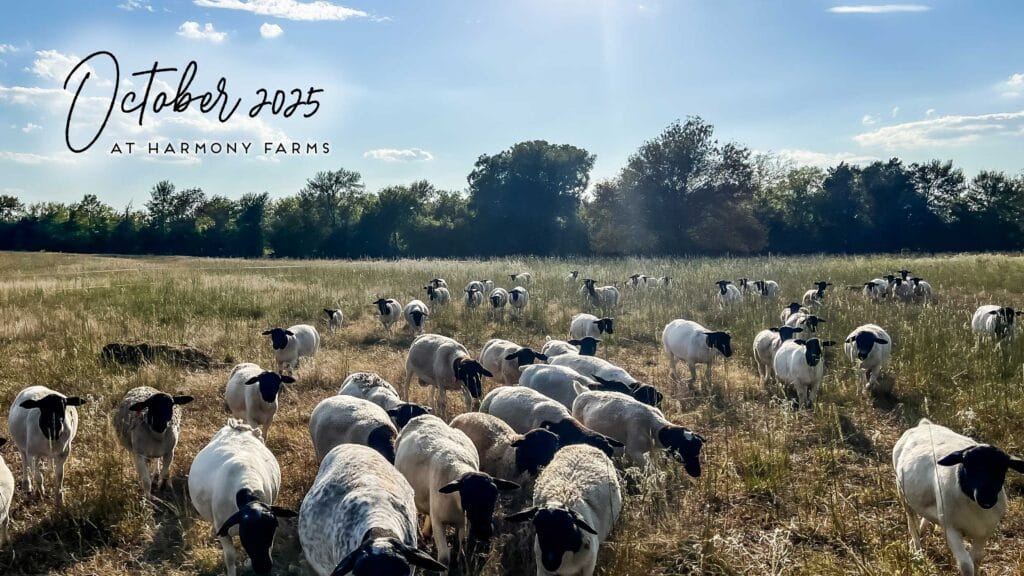
Hi Friends,
October was pretty low-key on pasture, but I sent a few lambs to processing. I will share meat stats and recipes below! 🐑🥩 Thank you to everyone who purchased during my Autumn livestock sale. Breeding stock is sold out for 2025. Next availability is looking like February 2026!
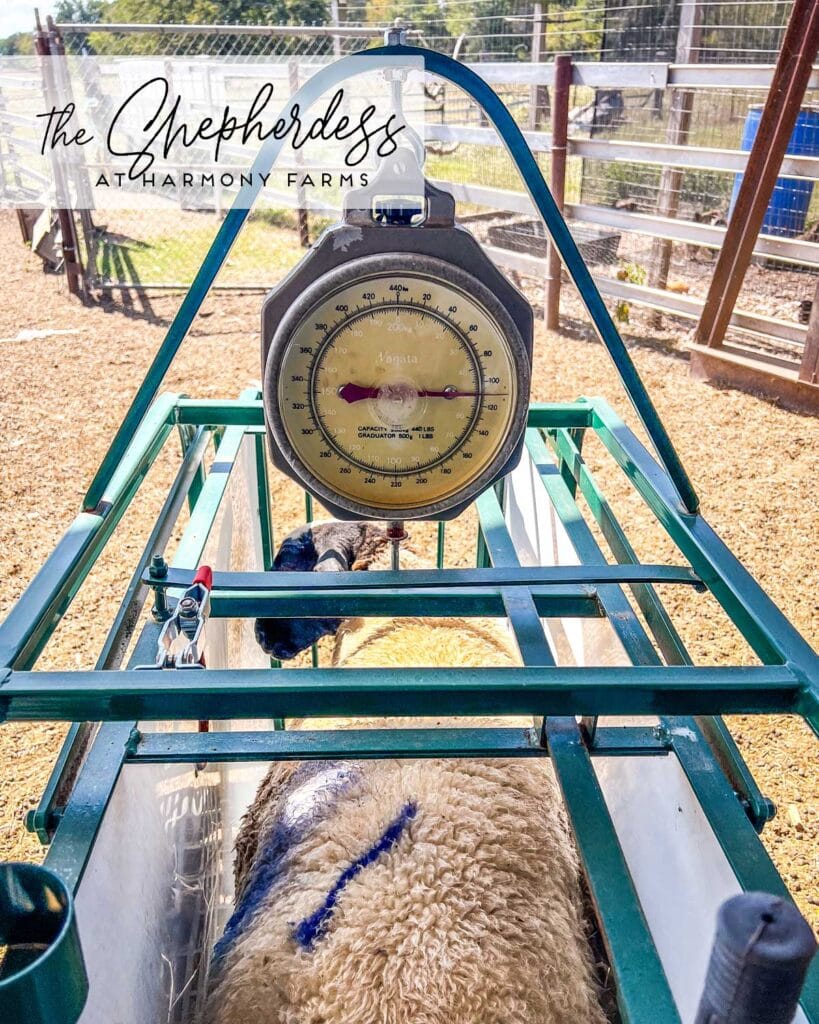
| Grass fed lamb: 110lb at roughly 10 months old. |
I sent a group of meat wethers off to processing in October. I aim for 100lb live weight before sending to the butcher, but 90 lb is also a good average.
My best bloodlines will hit this weight on mom’s milk and forage only by about 9-10 months.
A lamb at 100lb I will yield roughly 50lb worth of meat in the package.
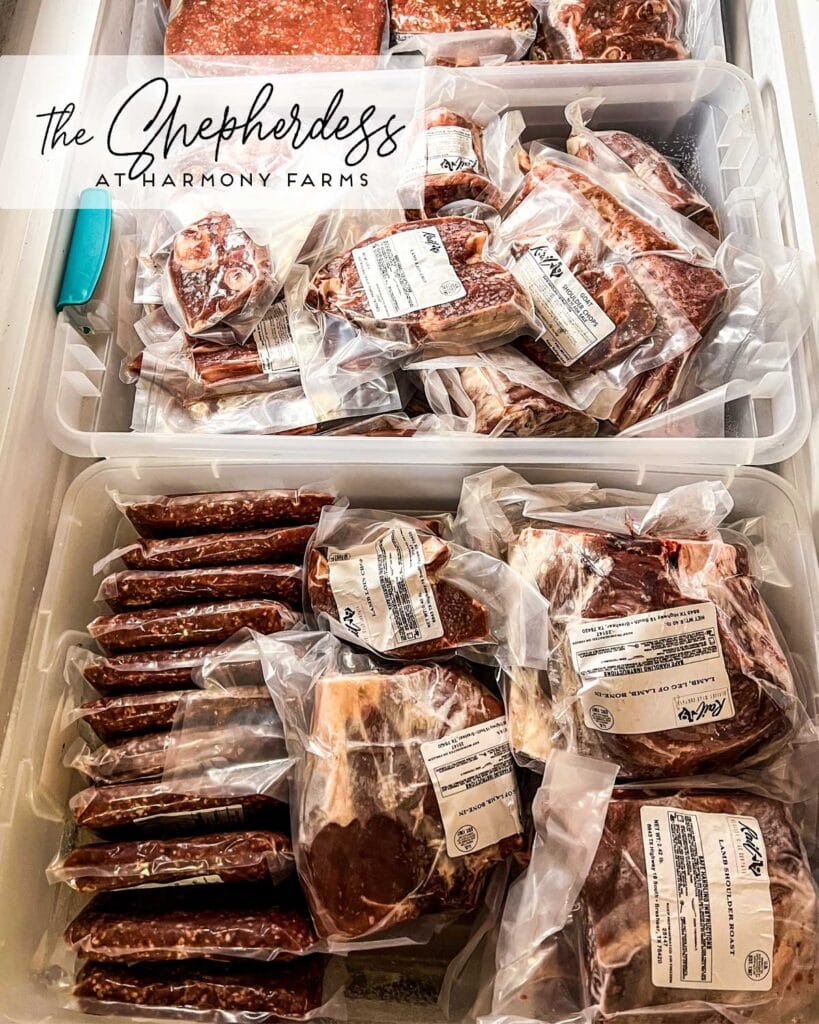
I make my grass-fed lamb available on a local basis before shipping. Subscribe below for a chance to buy my meat once my local demand is satisfied:

A lot of people ask how I cook with lamb, so I created a video with 5 American Style Recipes!
(click the photo above to watch and download the cookbook)
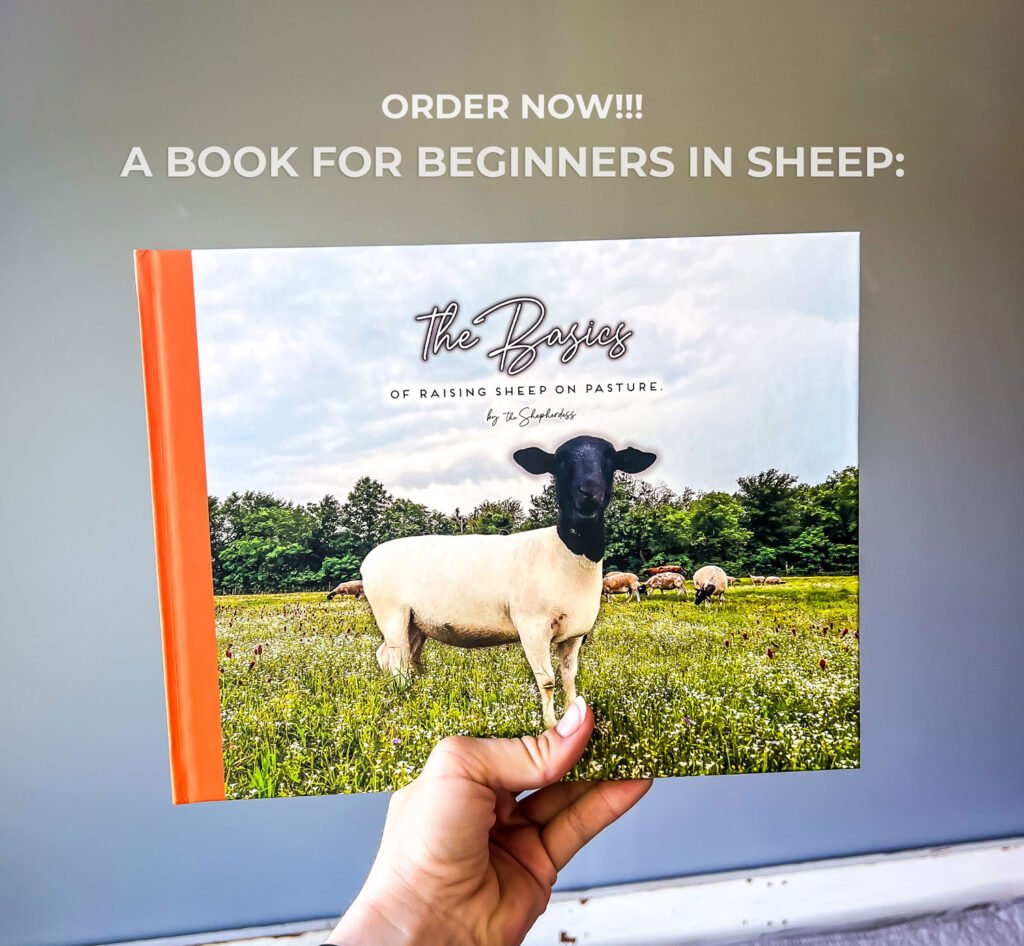
If you are looking to raise your own grass-fed meat sheep, check out my book for beginners: the Basics of Raising Sheep on Pasture
I TESTED LYE AS A DEWORMER FOR LIVESTOCK (vet results)
CLICK FOR MY FREE E-BOOK “13 Things You Need to Raise Sheep”
Does lye work as a natural dewormer for livestock? In this article I am going to share vet-tested results that will give you the answer. I am going to share exactly how I administered lye to act as a dewormer, the animals I ran this test on, and the detailed results from the veterinary office which reveal how effective (or not) that lye is as a natural dewormer for livestock.
Very interesting stuff is upcoming, so let’s get to it.
Premise:
If you are like me, you’ve seen or received a message about the VIRAL “Lye as a Natural Dewormer for livestock videos”: pigs, sheep, goats, cattle, chickens… The viral video claims that Lye works as a dewormer for all classes of livestock. The man who published the video says that he has been using lye as livestock dewormer for 17 years with no negative side effects observed in his animals. He cites that lye has no meat withdrawal period, and no milk withdrawal period.
Withdrawal period is a time period in which you cannot eat the meat or drink the milk of an animal that has been dewormed with chemical dewormer. Withdrawal period is necessary because chemical residuals may present themselves in either the meat or the milk directly after using chemical dewormers. The withdrawal time period ranges from 2-8 weeks depending on what kind of chemical dewormer you are using.
In watching that video, I was intrigued but skeptical. Intrigued because the animals looked healthy, skeptical because there was no real data provided that connected the health of the animals to the lye, just sort of a “I think it works and it’s what I use”. There were no fecal egg counts done to confirm that the lye was actually (the thing) reducing parasite loads.
So I decided to perform an informal research project for myself: to gather the numbers and data that was missing.
Here is exactly how it went:
But first a quick disclaimer: this Article is in no ways encouraging you to use lye as a dewormer for your livestock. Lye is caustic and may kill your animal. This is purely a research project. I am not a veterinarian, so please contact yours before giving anything to your animal as a dewormer.
Back to it:
My Test Subjects & Conditions
I used my small goat herd to test the lye as a dewormer concept. The herd is about 7 head in total: 2 kids (6 mos old) and 5 adults.
I tested this small group of goats instead of my sheep flock because (given the previous disclaimer) I was not sure if the lye would kill my animals. I can afford to lose my goats, but if I were to kill my sheep flock through this experiment I would be out a significant amount of money.
My goats are dairy goats. One of the adult nannies was pretty badly infected with parasites at the onset of this experiment (namely the barber’s pole worm), as indicated by a very severe case of bottle jaw. She was a good test subject.
To begin this research project I removed the goats from the pasture and put them in a pen.
I controlled their feed 100%: giving them a 50-50 ration of all stock feed pellets and alfalfa pellets. I also provided bermuda hay free choice.
Now removing the goats entirely from pasture and putting them into a controlled environment for the duration of this test eliminated any external factors that would either increase or decrease their parasite counts. This gave me a crystal-clear idea of exactly what kind of impact the lye treatment did or did not have on parasite counts.
The Process (and Results):
Once I penned the goats I ran the first of 3 fecal egg counts to find out how many parasites/worms were inside these goats.
Fecal egg counts are the primary means of determining whether a deworming method is effective. You must run a fecal egg count both before and after you deworm your animal. If a given deworming method is effective, there will be a significant reduction in the egg count numbers in that second test.
To run the fecal egg count you need to take roughly 4-5 pieces of goat or sheep manure to the vet. From there, the vet will provide you with egg count on the manure samples. According to my vet, 800 eggs per gram or less is what you want to aim for in your sheep and goats. Numbers higher than this represent a pretty significant parasite infection.
I ran a fecal egg count on 2 of the 7 goats in this test group: Daisy (with the bottle jaw) and Maria.
Results from test #1 showed an egg count of:
- 5400 eggs per gram for Daisy
- 1250 eggs per gram for Maria
Which means both goats were significantly infected with the Barber’s Pole Worm – far beyond 800 epg.
After this first test I gave lye as a dewormer for the first time. I followed instructions almost exactly from that viral video for my 7 goats:
- 1 teaspoon of lye
- 2 cups water
- 2 gallons of feed
I dissolved 1 teaspoon of lye in the water, poured the water into the feed and thoroughly mixed it to where all of the feed was covered in the lye-water.
Then fed it to the goats.
Two days later I took a 2nd round of fecal samples from Daisy and Maria to the vet for the second test.
Results from test #2 showed a fecal egg count of:
- 1200 eggs per gram for Daisy (down from 5400)
- 750 eggs per gram for Maria (Down from 1250)
Now this was a significant reduction, but these numbers were still really high. As a reminder: 800 epg is about maximum in terms of healthy levels.
So at this point, I took a risk and administered a second round of lye treated feed.
The same protocol as the first time around:
- 1 teaspoon of lye
- 2 cups water
- 2 gallons of feed
2 days after that second dose I took a 3rd set of fecal samples from Daisy and Maria to the vet for a 3rd test.
The vet called with the results from that 3rd test and said: there are no worms in these samples.
I said: “What do you mean, there are always some worms, what are the numbers?”
The vet-tech said: “the numbers are so low that it’s not worth counting, but I’d say around 150epg for Daisy and 300epg for Maria”. I was floored and shocked.
Results from test #3 showed a fecal egg count of:
- 150 eggs per gram for Daisy (down from 5400)
- 300 eggs per gram for Maria (Down from 1250)
So yes, lye dewormed my goats almost completely. I observed no negative side effects despite giving the treatment twice in one week.
So what are your thoughts? Is this too risky? Have you had success using lye as a dewormer yourself? Would you use Lye to deworm your own animals? Have you encountered negative side effects in using lye as a dewormer? I am looking forward to this conversation continuing in the comments!
September Farm Update (sheep for sale)
Hi Friends, This farm update includes some long-awaited info. My Fall Lamb and Starter Flock sale kicks off this month! Click the button below to receive exclusive email updates about my Autumn Sheep Sale:
(Unless you tap the button above you will not receive any updates on sheep for sale… make sure and click!)
For the past 5 years I have culled hard for 4 characteristics: Parasite resistance, good maternal traits, hoof health, and meaty frames on pasture only.
This year a 5th trait is really emerging: uniformity. It is super encouraging to see such a notable consistency in frame (meatiness), lowline, and hair coat within the flock.
Fall lambing is underway! Due to a breeding-glitch that happened back in May, my fall lambing season is a bit smaller than usual… but the new additions are looking great!
If you have been waiting to buy lambs or a Complete Starter Flocks from my farm, be sure to tap the button below to be notified once the livestock sale launches!
I added the last of the inventory to the $10 tee sale!! We filled all the orders from the August rush, then added leftovers to the site. This is the end of my tee shirt collection until at least 2026, so grab yours!!
More to come :), -the Shepherdess “The Lord is slow to anger, and great in power, and will not at all acquit the wicked: |
September 2025 Farm Update | Raising Dorper Sheep in Texas
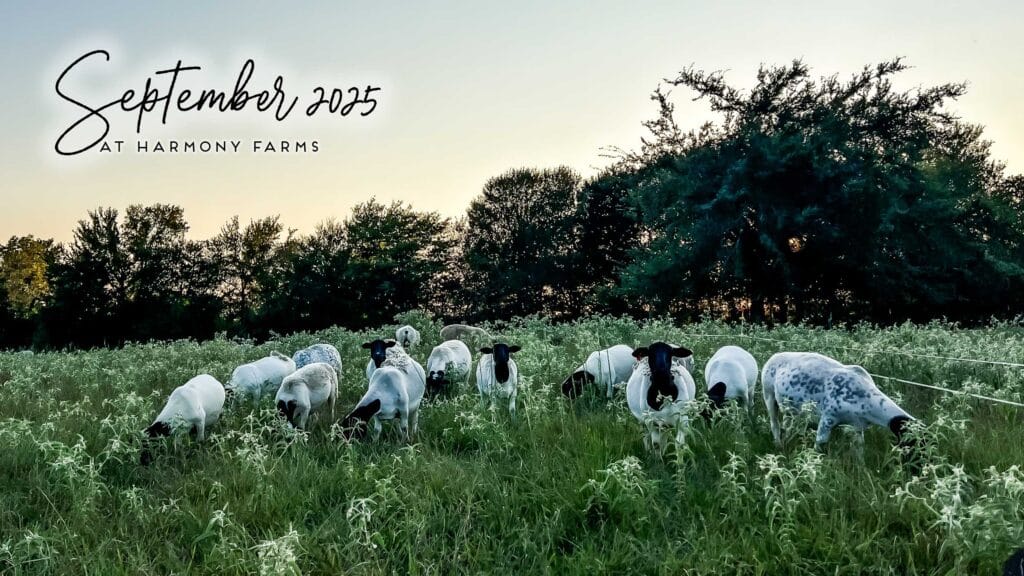
Hi Friends,
This farm update includes some long-awaited info. My Fall Lamb and Starter Flock sale kicks off this month! More updates to follow, so be watching.
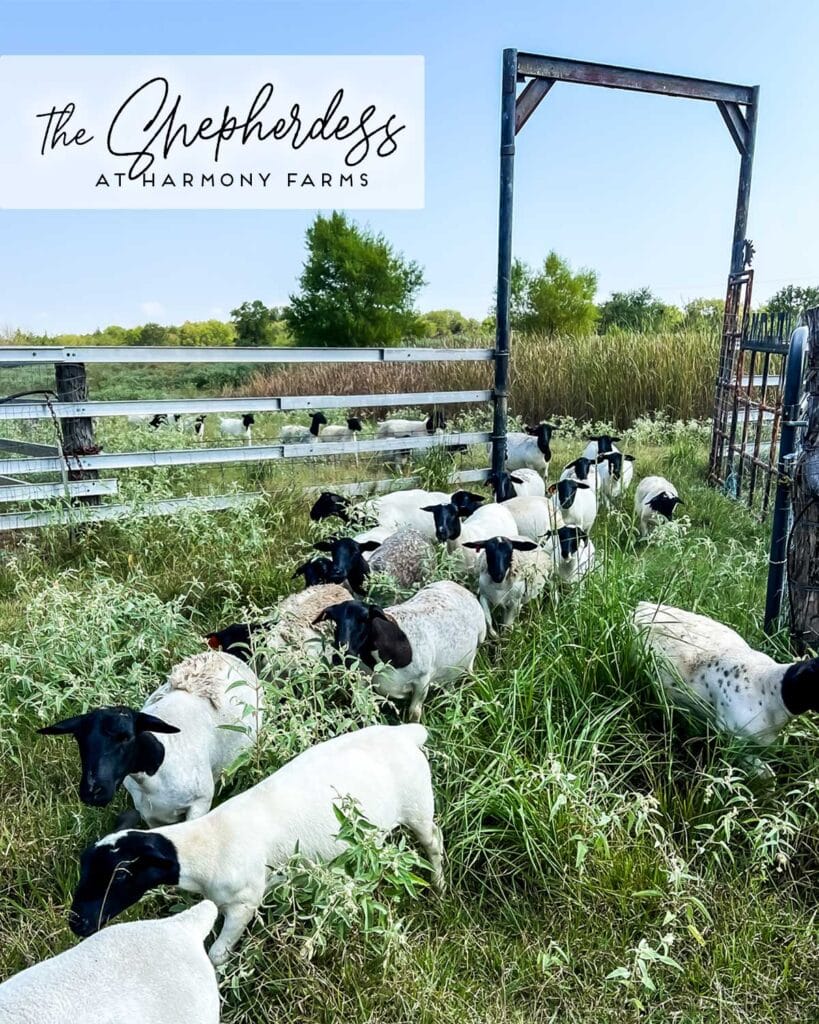
When it comes to my flock I cull for 4 characteristics: Parasite resistance, good maternal traits, hoof health, and meaty frames on pasture only.
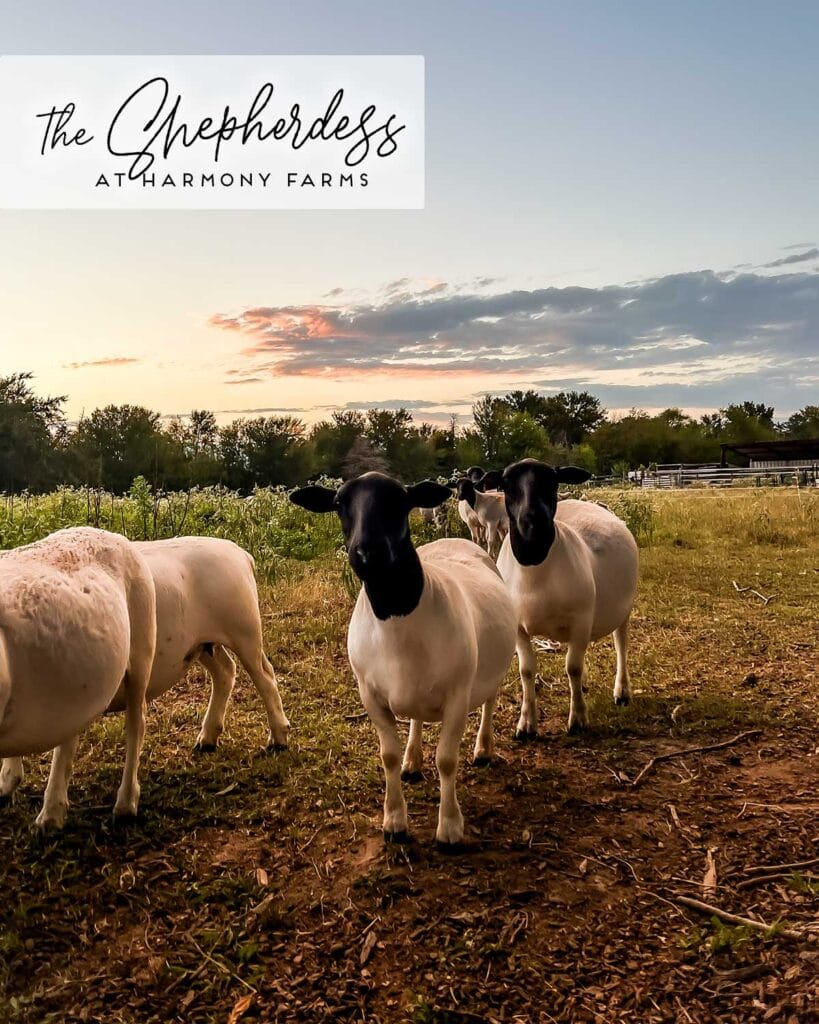
This year a 5th trait is really emerging within the flock: uniformity. While I don’t “cull for cosmetics” it is super encouraging to see the consistency in frame (meatiness), lowline, and hair coat in nearly every sheep.
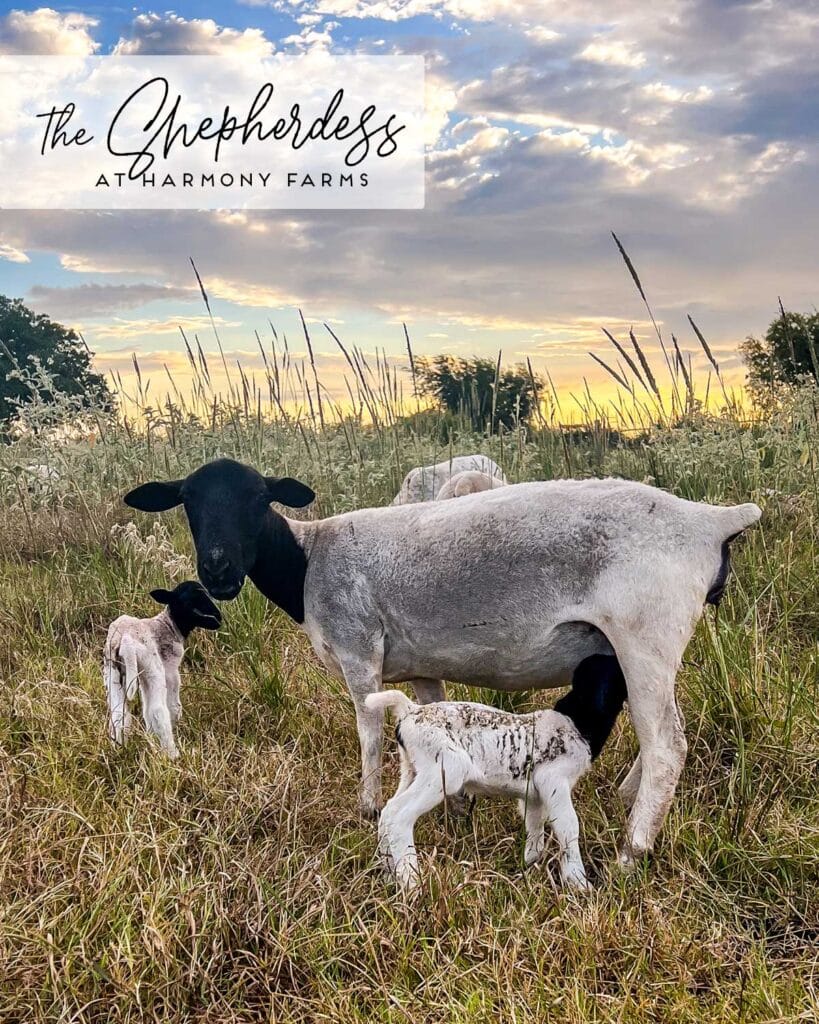
Fall lambing is underway! Due to a breeding-glitch that happened back in May, my fall lambing season is a bit smaller than usual… but the new additions are looking great!
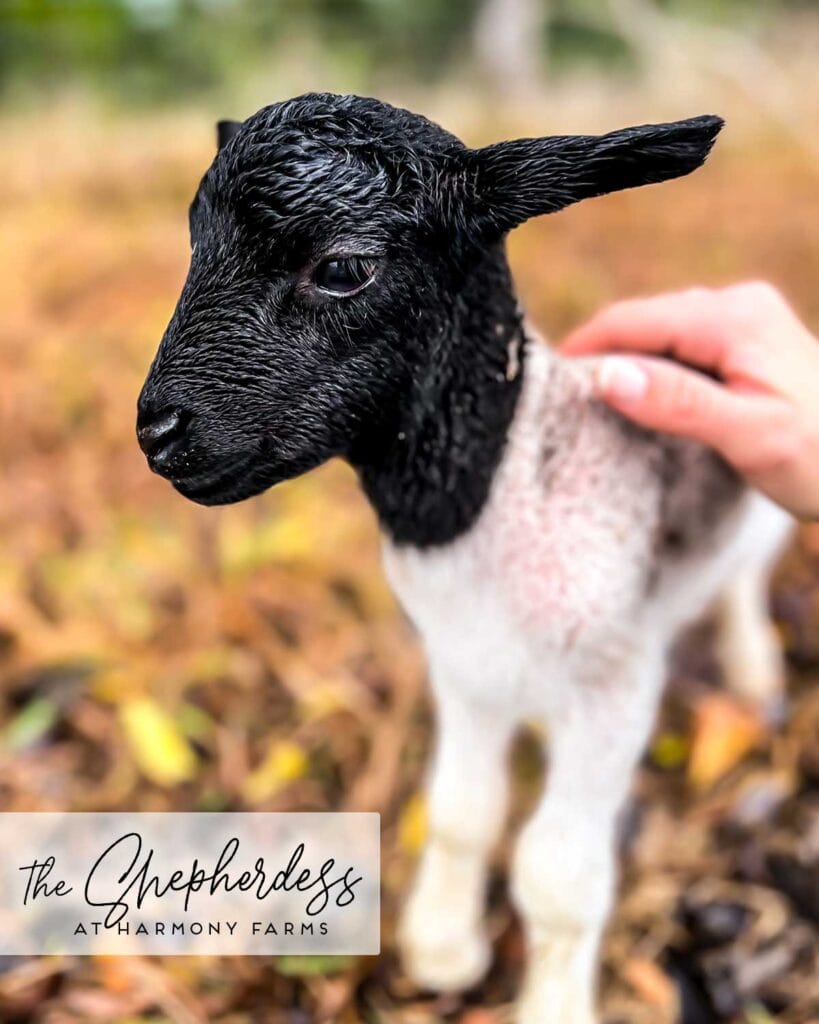
If you have been waiting to buy lambs or a Complete Starter Flocks from my farm, be sure to be on the lookout for further updates!

I added the last of the inventory to the $10 tee sale!! We filled all the orders from the August rush, then added leftovers to the site. This is the end of my tee shirt collection until at least 2026, so jump grab yours!!
More soon,
-the Shepherdess
“The Lord is slow to anger, and great in power, and will not at all acquit the wicked:
the Lord hath his way in the whirlwind and in the storm, and the clouds are the dust of his feet.”
Nahum 1:3
HOW MUCH DO DORPER SHEEP COST?
CLICK FOR MY FREE E-BOOK “13 Things You Need to Raise Sheep”
In this article, I am going to answer a question that nobody wants to: “How much do Dorper Sheep Cost?” Now, nobody wants to answer this question because pricing for livestock fluctuates constantly. However, I am going to write this article in an effort to get you into a current price-range as well as give guidance on the various categories you’ll encounter when shopping for Dorper sheep.
I am going to give you 3 different pricing categories that purebred Dorper sheep fall into going from least to most expensive. The categories include: commercial Dorper Sheep at the Sale barn, value-added commercial sheep at private sale, and high-value registered Breeding stock.
Now something to know is that the most expensive sheep is a dead sheep, and as such I have a free EBOOK for you called “The 13 Things You Need to Raise Sheep”. It will give you a strong head start toward a healthy, profitable flock. Click this link and I’ll email it to you for free.
The first pricing category I will provide is for commercial Dorper sheep from the sale barn. A sale barn is where you will typically find sheep at the lowest cost. There are pros and cons to the sale barn: the pro is lowest cost and ability to get a large quantity of sheep. The con is that there is often not a lot of background information provided on the sheep for sale. There are no guarantees of pure bred status, it’s hard to do diligence and identify what kind of system and feed the sheep were raised on, and often Dorpers at the sale barn are mixed with other hair breeds. Unless you have a lot of experience buying from a sale barn (or help from a friend that does), you could end up with a sick sheep, mixed breed, or potentially genetics that are not suitable for your farm.
In terms of pricing, I use the San Angelo Texas livestock report and I use the “HAIR SHEEP” category of the report for an idea of current pricing for Dorper Lambs. Reports from this week show that you can purchase a 75lb “choice/prime” HAIR lamb at about $2.62 per pound. So for a 75lb lamb you can expect to pay $197 at a sale barn in Texas.
The second pricing category is purebred commercial Dorper sheep at private sale. This is the category that my sheep fall under and the category I suggest you buying from as a beginner buying sheep. Buying private sale enables you to get direct information on the type of feed the sheep receive, how much grain input, what kind of grazing system the sheep are managed under, what kind of medications the flock owner uses, and so much more. It is the best way to get a healthy sheep and the easiest way to traceback and pursue accountability and reparation should you end up with a sick sheep.
Pricing for really good quality commercial Dorper breeding stock at private sale is anywhere from $250-700/hd. That is a really wide spread that is going to be based on what kind of genetics and management the flock boasts.
I sell my breeding quality ewes and ram lambs for between $500 and $700/hd based on the really strong pasture-based genetics I have developed. My pasture raised lambs have about a 50-55% carcass yield at the butcher – meaning a hearty, meaty, low input animal. I have also bred in a lot of value-adding characteristics like parasite resistance, shedding ability, good maternal instincts, and a lot of others. This contributes to me earning top-tier for my sheep because I am breeding for a specific niche that really values those characteristics and understands that while they may pay-up for seed-stock, they are going to get paid back within their first lamb-crop (because of the quality).
But to summarize I would say that $350 per head for quality, purebred, commercial Dorper lamb at 60-80lb is not an unreasonable pricepoint at this point in time.
The third and most expensive pricing category for Dorper Sheep is registered, full-blood at private sale (or more commonly at specialty shows like the Mid-America Dorper Sheep Breeder Show). These are sheep with registration papers at the ADSBS. These papers trace the sheep’s lineage back to South Africa. Registered sheep are rarely, if ever bred for meat production. They are typically always bred for the show ring. Being show animals, they are very expensive.
Pricing will depend on the reputation of the breeder and the phenotype of the animal itself. “Typing” is done on a 1-5 scale, with 5 being the best phenotype. The price range can be anything from $800-8,000 for a breeding ewes and rams. $8k is pretty extreme but not unheard of for Dorper. This year you can expect to pay an average of $1000-1500 for a quality, registered Dorper breeding stock.
But $3,000-5,000 for a ram from one of the best breeders in the country is not uncommon. The reason is that people will pay premium for, say, a “type 5” ram so that they can breed him to a flock full of “type 3” ewes and immediately have a top-dollar, type 4-5 lamb crop that pays for the cost of the ram in the first year.
So in summary, you could be looking at pricing that is anywhere from $200-$8,000 for a quality Dorper Sheep.
If you have experience buying at a sale barn, or an experienced friend who can help you buy, you might be able to source a quality group of ewe lambs for $200 each. My preferred method is to pay around $350-500 per head at private sale to ensure I am getting good, pasture based genetics in my Dorper sheep. Finally, if you are into show animals, expect to pay a median price of $1,000 per head for Registered Dorper breeding stock.
Remember, that the most expensive sheep is a dead sheep, so be sure to download my free EBOOK on “The 13 Things You Need to Raise Sheep” for a good head-start toward a healthy flock.
Know your enemy 🪱🐑 (free class)
|
Hi friends, There is a saying that goes: “If you know your enemy and your (yes, I updated the original saying a bit, but the principle applies regardless 😄) 🪱As you raise sheep on pasture, internal parasites (worms) to be one of your biggest enemies. In fact, worms killed half of our flock in our first 2 years as beginner farmers (yep, ouch!). Today, however, worms are no longer a major issue. To keep parasites at bay, I use a combination of:
Tomorrow I am going to share all of my practices! Come with your questions because there will be LIVE Q+A at the end! Special bonus: I vet-tested the viral “Lye as Livestock Dewormer” concept and will be sharing the results from the veterinary office at the end of the livestream (as well as the potential risks of using lye as a dewormer):
Much of this info will apply to goats as well as sheep. 🐐 If you are unable to attend live, please register anyway and you will receive a replay. There is a room size limit of 150, so please log-on early to secure one of the LIVE seats. All registrants will receive a replay! To support these free monthly meetups please consider one (or both) of the following:
I look forward to seeing you tomorrow (7pm CST)! -the Shepherdess “The earth is the LORD’S, and the fulness thereof; the world, and they that dwell therein.” Psalm 24:1
*DISCLAIMER: I am not a veterinary professional. Please do not attend this meetup in search of (or to supplement) professional veterinary advice. I will be sharing based on experience from my own farm. |
🥳LIVE NOW!! (bonus for first 10)
|
🎉📚 MY BOOK’S 2nd BIRTHDAY EVENT IS LIVE!! (Shepherdess Dorpers Ceramic Mug to the first 10 book orders, and the $30k Side Hustle Planner comes WITH EVERY BOOK*!!)
Birthday week bonuses:🎉 (Bonuses start in for all orders after 8am CST on 8/15 and are granted on a first-come basis)
Keep in mind, the first 10 orders will receive all of the above in ONE MEGA BUNDLE… there are some serious perks this year!!!🎉🎉🎉
Already own the book, but want access to the $30k Side Hustle Planner?
|
| LEAVE a Review |
*Offer runs while supplies last or until 8/21.
For a look at how the book came together, watch this video!
The Basics of Raising Sheep Book is 100% printed and constructed in the USA!⬇️⬇️
|
|
-the Shepherdess
“So then neither is he that planteth any thing, neither he that watereth; but God that giveth the increase.” 1 Cor. 3:7
[Business BOOTCAMP] Monday Briefing
|
Hi Friends, It is time for the Monday Briefing! I am pretty excited about this month’s 🎙️COMPLETION PRIZE, so scroll for info!! ASSIGNMENT SUMMARY: We are in week number 1 of Month 5! In our final months of Bootcamp I am going to be unpacking my entire Content Marketing Strategy for you. This week, I am addressing the importance of a Service-based Mindset in Marketing: Lesson 1 in Month 5: Marketing Mindset & Messaging
(be sure you are logged in when clicking this button or you will see “not enrolled”) Good Marketing is founded on 3 principles, primarily:
Principle #3 has been the most important for my business: serve before you sell. In my first year of marketing, I was giving my customer base a lot more than I was receiving. I “gave” in 3 primary ways:
These were ways of giving that were tied into my Lead Capture strategy (the one that I taught you in Phase 2), so it was a win-win… but the premise is the same: I had to give before I could ask… and it paid off… By the time I had products ready to sell, I had an email list of people that I had been serving (through a free resource, videos about my flock, and educational blog post)… …and these people were warmed up ready to buy. This is also why I suggest that you start marketing before your product is ready to sell. The warm-up process takes time :). 🌱 What a soil base and a customer base have in common… As regenerative farmers, we know that a soil base usually requires that we give it something before we pull a harvest out of it. The same principle applies with to a customer base. Constantly taking is never a winning strategy. The size of our harvest typically relies on the strength of our input… More on a how to establish a Service Based Mindset in Marketing in Assignment 1:
COMMUNITY UPDATES:PODCAST IS UPDATED! I have updated the member-only podcast with:
Here is how to add the Member-Only Podcast to your Podcast Library:
COMPLETION PRIZES for Month 5: All students to complete this month’s assignments will be entered into a drawing for one RODE NT-USB Mini USB PODCASTING Microphone. This connects to your laptop or tablet and is ideal for Podcasting and recording audio narration for YouTube videos. As a reminder: completion prizes are a fun incentive to stay focused, not an encouragement to rush :). Keep at it, slow and steady! -the Shepherdess “And let the beauty of the LORD our God be upon us: And establish thou the work of our hands upon us; Yea, the work of our hands establish thou it.” Psalm 90:17 Earnings Disclaimer: Every effort is made to equip you with the tools and strategies you need to reach specific financial goals. However, there is no guarantee that you will earn money using the classes I provide for you. God alone gives the increase and will dictate whether you are profitable or not. This education comes with no warranties or guarantees. By participating you agree that you understand this earnings disclaimer. |
June Farm Update (with announcement)
Hi Friends, I have an announcement at the bottom, but first up: I have received a few emails wondering if my farm has been impacted by the flooding here in TX. The answer is no. We are several hours north of the floodzone. Please remain in prayer for the families who are facing loss and devastation this month. Until 2017 I lived in the exact area that is being affected. There was a 100-year flood in 2015 and I witnessed firsthand the speed and power with which these flood waters rise. It is hard to explain and nearly impossible to plan for.
This month I decided to clip/mow my pastures. Over the past couple of years we hit June and July and pasture growth outpaced the flock’s ability to graze through it. As a result, forage just wasn’t as palatable or nutritious over summer. So far I am pleased with the decision to mow. We have had plenty of rain, so pasture has recovered quickly. The sheep are in great condition with the better forage quality. And yes, we did intend to bale it but the rain cut the process short.
June used to be one of the most difficult months for me in terms of farming: the heat and managing/sorting/working lambs in it was overwhelming. However in 2023 I moved my entire lambing season back by 1 month (from March/April to Feb/March). This enabled me to finish all of the major lamb work for the year in May (and before the onset of scorching TX summer). I am so grateful to not be working lambs in June and July anymore. 😅
With a slower pace in June, I was able to invest in something I have had in mind for a while: launching YouTube Kids Channel. As a child, summer reading programs were my absolute favorite. The Shepherdess Book Club is a channel that features wholesome read-alouds and craft-projects for children ages 0-9 yrs. To support the channel you can purchase the Shepherdess Summer Camp Kit, which includes a hard-copy of each book and supplies to complete the various craft projects!
I hope the new content provides a respite as you and your little ones finish out your summer break!
Until next time, -the Shepherdess “Be anxious for nothing, but in everything, by prayer and supplication, with thanksgiving, present your requests to God. And the peace of God, which surpasses all understanding, will guard your hearts and your minds in Christ Jesus.” Phil. 4:6-7 |
HOW TO RAISE DAIRY SHEEP (for beginners) Including Where to Buy Dairy Sheep
DOWNLOAD MY DAIRY SHEEP FACT SHEET HERE!
If you are considering Dairy sheep for your homestead, this video is for you! Lydia At Harmony Heritage has raised dairy sheep in Washington State for 22 years – since the age of 9 years old.
In this interview we discuss:
- The best dairy sheep breeds and cross breeds for hardiness.
- How to mitigate (and even eliminate) mastitis in your dairy sheep flocks
- Where to find quality dairy sheep to buy (and how much you might pay)
And MORE.
HOW TO RAISE DAIRY SHEEP
the Shepherdess: I am so thrilled today to be talking with Lydia of Harmony Heritage Farm. Lydia, give us a little bit of an overview of Harmony Heritage Farm—where you’re at, what you’re farming, and when it all started.
Lydia: We are living on about 48 acres of totally raw land right now that we purchased in 2018. It used to belong to my husband’s family back in the fifties.
They had quite a few acres up here in Mossy Rock in the hills. I think in the late 1800s is when they first kind of settled here. There’s a lot of history there. It was really a huge opportunity for us to be able to purchase that.
So we have that for ourselves, and we’re just slowly but surely working on it. It was really super rough property because it was logged in the fifties, and all the stumps were still there, kind of rotting, and lots of blackberries—just rough ground. [00:01:00] So a lot of work has gone into that. We are in Washington state.
the Shepherdess: And what is the climate like for you? Do you have snow? Is it temperate?
Lydia: We’re almost more coastal, so we get a lot of rain.
Normally. This has been a really super dry year, so we’re kind of a little nervous as far as grass and how much hay we’re going to have and all that.
the Shepherdess: So when did you decide to go for sheep?
Lydia: I was thinking about that. It’s just been kind of a natural love that was instilled in me, I think, at a very early age. My mom decorated my nursery with Psalm 23 things, so I had sheep in the room everywhere.
Finally, we moved out here to Washington when I was seven or eight, and my parents said, “It’s time. We need to get some sheep.” So my mom ended up [00:02:00] calling around to like 10 or 15 sheep farmers in the area.
We had this directory of sheep producers, and she said, “Okay, well, whoever calls us back first, we’ll find a sheep for you.” As it went, we only had one person respond—and it was a dairy sheep farm that’s about 30 minutes from us.
So I didn’t even really intend to get dairy sheep at that point. I was just like, “Any sheep will do, I don’t care.” I think I bought a sheep and my sister bought a sheep.
the Shepherdess: Wow. And so you’ve been growing it since then, or was it kind of an off-again, on-again relationship?
Lydia: I have not had one year since I was nine that I haven’t had a sheep.
I think I’ve moved like five or six times, and God has always provided some way for me to keep sheep in my life. One time I even had some friends just keep my sheep for me.
‘Cause I was like, I’m not sure [00:03:00] if we’re going to be able to buy property, but I don’t want to lose my genetics because I’ve worked so hard for what I have, and I didn’t want to lose that line of sheep. So they offered to keep them for me for a season and just gave them back to me after that.
I’m just so grateful. I really think it’s something God has allowed me.
the Shepherdess: Amen.
What breed of sheep are you running?
Lydia: So I have primarily East Friesian crosses. I’m sure you’ve heard about East Friesians. They’re the top dairy breed in the U.S., and they are actually always a mix. We don’t have any purebreds here in the States. They’re normally like East Friesian— I think it’s pronounced Lacaune.
It’s a French breed. Those were the first two dairy breeds that were brought to the United States.
the Shepherdess: How do you spell the last one?
Lydia: I have it on here as L-A-C-A-U-N-E. That’s a breed I really love—that Lacaune, they call it. East Friesians—I have a love-hate relationship with East Friesians because they are kind of your Holstein. They were bred for production, so they tend to be really difficult to keep.
They’re not as hardy, but they produce a ton of milk. So that’s kind of their main claim to fame.
the Shepherdess: Being…
Lydia: Huge producers. But some of the things I was seeing early on with the East Friesians is they’re bred for very short-term, heavy production. So you can expect two to maybe four or five good years of milking and then they get Mastitis. So I early on started breeding in some of the hardier, better-built sheep like Border Leicester. And Lacaune is another Canadian dairy [00:05:00] breed that I am just a huge fan of.
I’m trying to think—my initial, very first sheep that I got was a Lacaune. I just love them because they’re very, very hardy. They have those long—I’m sure you probably know, in your breeding program—you want long bodies, long deep bodies so they can carry lambs well and not have prolapse issues.
And it just gives you a little more meat. So yeah, Lacaune are really valuable for that reason. I incorporated Finns maybe six or seven years ago. I love them for their wool quality and quantity, as well as their lamb production. They tend to have huge litters, which is something that appealed to me.
It’s fun to have lots of babies. The other thing is it does aid in milk production too.
So I’ve heard that the number of lambs [00:06:00] your ewe is carrying affects her milk production—she automatically knows she’s going to need more milk to support them. So I started crossing in some purebred Finns. I had a flock of dairy sheep and then a flock of purebred Finns.
And I decided I really don’t like purebred Finns because—at least in the States—they do tend to be a little smaller and a little bit inbred. There’s not a ton out there. So they were really hard to keep—hard to keep weight on them, wormy all the time.
But crossed with the hardier breeds and the dairy sheep? They’re amazing. So in my breeding program, I like to keep the percentage at 50% or less Finn.
the Shepherdess: So if you could say three goals that you breed for, what are the three things that you breed for in a ewe—if it’s only three?
Lydia: So for the dairy sheep, my first goal was just personality and temperament, which is pretty easy with dairy sheep.
They’re bred for that, so they tend to be more calm and easy to work with for the most part. But there is nothing worse than fighting with a sheep that doesn’t want to be milked. So that’s number one: temperament and personality.
Number two is udder conformation. For me—because I hand-milk all of my sheep—it’s really important to have a good teat structure and udder conformation. And in dairy sheep, they’re not as good as dairy goats yet.
In the States, that’s something we’re really working toward—having udders that are really easy to milk and that won’t create problems like mastitis. That’s been my main goal: to have sheep that have an udder that doesn’t hang below the hocks, because we have really brushy ground up here and they tend to get [00:08:00] mastitis really easily if they’re very heavy and hanging.
And that’s really common with dairy sheep—to have poor udder conformation. So I go more for the conformation than production. I’m not as concerned about how much they’re giving me in a year as I am about…
the Shepherdess: Right, because that will lend to longevity. She’ll be with you longer. So in the long run, she’ll probably produce as much as that one that gives like six gallons, you know, a week.
Lydia: Absolutely. I really, really strongly believe that. And it’s heartbreaking to lose them—especially for the smaller people like us, homestead-type operations, where you’re milking them every day and you’re attached to them and you love them.
And if they’re dying every two years—that’s not fun. And dealing with mastitis is the worst thing to ever have to deal with.
the Shepherdess: What are some [00:09:00] things that you would guide people to—some ways to treat mastitis? I had a couple cases in my flock this past year.
How would you treat it, and what has been most effective for you?
Lydia: Yeah. Early on, someone recommended the cow mastitis treatment—the intramammary ones. There’s “Today” and “Tomorrow.”
And I will usually treat them with “Today.” If it’s really bad… If it’s not that bad—normally these days I hardly ever get it, thankfully—I don’t have to deal with it much anymore.
But I do get a lot of—what do you call it? It’s when they first lamb and the udder is pretty firm and hard and hot. A lot of times you can use essential oils and compresses and just a lot of massaging.
And if you can leave the lambs on them or allow a lamb to nurse continually, that really helps too.
the Shepherdess: That’s really good.
All right, so what is a general milk yield? What would you consider, at your farm, a good-producing [00:10:00] sheep?
Lydia: So we breed at like eight or nine months of age, so they will lamb their first year. And that first year you really don’t get much—you can’t expect much out of them, ’cause they’re still babies. They’re kind of growing themselves.
And then to also have a lamb that they’re carrying—usually one or two lambs—that’s just a lot for them. So normally I tell people between one and two cups per milking their first year. So you may get two cups a day, or you might get four, depending on the ewe.
And then the next year you can expect that to double. I would say their golden years are kind of two to six years old, maybe eight years old. And my really good producers give me a gallon a day plus. My decent milkers are around three [00:11:00] quarters of a gallon a day.
The first month after lambing, all of that milk goes to the lambs. I separate it for 24 hours, and then I just feed all that milk back to the lambs.
Then after a month, when they’re weaned, we’re able to keep that for ourselves. I continue to milk until about July. I start to taper them off a little bit—first I start off with once-a-day milking, then I taper off to every other day.
By the end of August, I have them pretty well dried up for breeding and all the pre-lambing things that need to happen—worming and selenium.
the Shepherdess: What are the feed rations in order to get that kind of a yield?
Lydia: That’s a really, really good question because production depends so much on what they’re eating—and not as much on genetics. We have a ton of green grass here, especially in the spring and usually into summer. We’re very blessed that way. So I don’t supplement them with any grain after lambing, except maybe a handful.
Before lambing, I try really hard not to grain them at all. I know it’s really hard on their stomachs, and they do much better if you stick with alfalfa and grass hay. I’ve had years where I tried graining more—using this alfalfa haylage called Chaffhaye. I don’t know if you have it down there, but it’s great for dairy sheep because they need the water content and the high calcium from the alfalfa.
But dry alfalfa hay gets wasted a lot, so I love the Chaffhaye. Still, one year I tried graining them harder due to poor pasture, and I had a lot of bloat. It was awful. I had a little Mexican friend come butcher some sheep for me and he asked, “Why are you giving them grain? They don’t need grain—they have pasture.” And I was like, Oh, okay.
the Shepherdess: So you’re getting that kind of yield on pasture only?
Lydia: Yeah. It’s really pretty awesome.
the Shepherdess: Let’s talk about supplemental minerals. Dairy animals tend to be a little more sensitive. What should people prepare for?
Lydia: Where I live, selenium is a big issue. Even the mineral mixes don’t have enough. In my earlier years, I had problems with white muscle disease and lambs failing to thrive. So now I always give a Bo-Se shot right before breeding, and then I give them the paste a couple of weeks before lambing as a little boost. I also vaccinate the lambs with Bo-Se at weaning.
the Shepherdess: Do you ever struggle with hypocalcemia?
Lydia: Yes! I have a tip for that—Tums. Just over-the-counter Tums. It’s calcium, and the sheep love it. They’ll gobble it out of your hand. I offer it to my high-producing ewes and most of the time they’ll eat four or five tabs a day. I think it really helps. That, plus giving them alfalfa in the last months before lambing, works great.
the Shepherdess: When my sheep are lactating, parasites become a big struggle. Is that the same with dairy sheep?
Lydia: It can be. But I’ve been able to avoid chemical dewormers except right before breeding. I use Valbazen around the first week of August. We rotate pastures every three days, so that helps a lot. I’ve tried natural methods like garlic and Shaklee Basic H, but I’m not sure how effective they were. We do have some liver fluke issues here, so I rely on Valbazen. But during milking, I usually don’t have to deworm at all.
the Shepherdess: Do you lamb on pasture or in a facility?
Lydia: We usually lamb in January and February, sometimes March for the younger ewes. We keep the sheep in a greenhouse over winter and lamb them out there. Once we start rotating pastures in March, lambing happens on pasture. But dairy lambs often need more attention, especially when there are three or four in a litter. I prefer to have them in lambing pens. I keep them there for 48 hours to make sure they get all their colostrum and a little selenium shot.
the Shepherdess: Your sheep are incredibly prolific. Didn’t you have a 300% lambing rate one year?
Lydia: Yeah, I had 10 ewes lamb and ended up with 33 lambs. They’re amazing.
the Shepherdess: For someone new, what are the biggest challenges with dairy sheep?
Lydia: Start with good stock from a reliable source. There’s a huge range in milk production and hardiness among dairy sheep. I was lucky to live near a dairy that always picked the best sheep for me—best for hand milking, best udders. Commercial dairies often focus only on volume, which might not suit a small homestead. Also, support is important. Books are great, but being able to talk to people helps a lot.
We have a Facebook group called Homestead Dairy Sheep—there are about 5,000 people now. My friends Joy (in California) and Josh (a dairy farmer in Nevada) helped start it. People can post questions, and we’ve got members with 20–40 years of experience who share great advice—even on cheese making.
the Shepherdess: What’s a reasonable price range for a good dairy ewe?
Lydia: I sell my ewe lambs for $500. Those are first-year lambs ready to breed in the fall. My best in-milk ewes go for $1,000. In general, expect to pay $800–$1,200 for a proven ewe with a great udder. Lambs should range from $300 to $500. If you see dairy sheep for $200–$300, be cautious—that’s low.
the Shepherdess: Do you use the milk for personal consumption or products?
Lydia: Both! We drink it and make a lot of cheese—mostly a simple, spreadable chèvre that we eat all summer. We also make ice cream and, occasionally, butter. Butter is tricky because the cream takes a while to rise, but it’s phenomenal.
the Shepherdess: Do you prefer sheep milk over goat milk?
Lydia: Absolutely. I’m not a fan of goat milk at all. But with sheep, what they eat really affects the flavor. I stopped giving alfalfa pellets while milking because it gave the milk a sour, almost fishy taste. Once I quit those, the milk was sweet and amazing. The brand may have mattered. I’m still looking for a good barley/oats/pea mix.
the Shepherdess: You’ve put a lot into your genetics. How can people get in touch with you if they’re looking to start their own dairy flock?
Lydia: Email is best:
📧 [email protected]
Or text me at:
📱 360-880-6181
You can also connect with me on Instagram and Facebook at Harmony Heritage Farm. I do ship sheep across the country. The last ones went to Oklahoma—it cost about $500 per head for shipping. I work with reputable shippers who use clean, safe, compartmentalized trailers. I wait until the lambs are a bit older so they travel strong and healthy. I’ve shipped to Arizona, California, Nevada, and now Oklahoma.
the Shepherdess: That’s a great price. Do you have any availability right now?
Lydia: I do! I have about 10 ewe lambs and 9 or 10 ram lambs still available as of this recording.
the Shepherdess: Do you have a website where people can learn more?
Lydia: Yes! Visit harmonyheritagefarm.com.
There’s an application form on the “Dairy Sheep for Sale” page where you can share about your needs, what you’re looking for, and your family setup. I also post pictures of most of the available sheep, and you can reference them by tag number when contacting me.
$100K PER ACRE MARKET GARDEN BUSINESS (full interview)
Earning $100k per acre farming and direct marketing organic vegetables: almost unbelievable but true and Robert Wagner of Wagner Farms is here to tell us exactly how, including:
- How he started his vegetable farm in 2020 and grew QUICKLY.
- His unique business model that enables him to serve 156 customers every week WITHOUT A FARMER’S MARKET.
- How he organizes his systems to produce almost 60,000 LBS worth of produce on a single acre.
- And MORE
Specific topics are time stamped below and for a printable cheat sheet featuring the top 10 takeaways from today’s discussion on EARNING $100K PER ACRE FARMING, click on the link above and I will email it directly to you.
ROB’S WEBSITE: theWegenerFarm.com
The Shepherdess:
Today we’re talking with Rob and his family, who are working with just 1.5 acres to produce around 60,000 pounds of food annually—and serve 156 CSA customers. We’re going to dive into how they do it.
First, the goal of the Virtual Small Farmer Meetup is to connect small farmers from across the nation—and around the world—to share skills, resources, and encouragement. If you’re here with questions, there are a ton of people ready to help.
Rob, can you tell us where you’re located?
Robert Wegener:
Sure. We’re in Fenton, Michigan.
One interesting thing about our location is that we’re on one of the only hills in the area, which creates a unique little microclimate. So even though we’re in the middle of Michigan, we’re really in Zone 6B. We can stretch the season a little more than you could just a mile in any direction from here.
The Shepherdess:
Wow, that’s neat. Alright, everyone, warm up the comments and let us know where you’re tuning in from tonight. Where in the world are you, and what are you farming? If it’s just hopes and dreams right now, go ahead and share that too—it counts!
I’m here in Northeast Texas, farming primarily Dorper sheep. Occasionally, I’ll raise a beef steer or two, and my sister runs laying hens. Rob, give us a rundown of what you’re raising on your farm.
Robert Wegener:
We’re primarily an organic vegetable farm. We got our USDA certification about three years ago.
We currently have around 270 laying hens, and by summer we’ll grow the flock to nearly 500 to supply our CSA. We also raise broilers and, for the first time this year, we’ll be doing some turkeys. And—if I learn enough from the Shepherdess—we may try our hand at sheep!
The Shepherdess:
That sounds like a solid plan. Let’s dive in.
When did you start your farm?
Robert Wegener:
We bought the farm in 2020. Our first CSA was in 2021 with 10 friends we pretty much cornered into saying yes. That first season was all about seeing if we could actually grow anything.
Now we’re five years in. Last year—year four—we had 120 shares, serving about 156 families (some folks had half shares). We also serve a few hundred families through our farmers market and our farm stand, which I jokingly call my “vegetable vending machine” at the end of our driveway.
It’s been pretty astronomical growth. This year, we’re actually dialing it back a bit—we got a little ahead of our systems last year. Now it’s time to make the farm more efficient and profitable so it’s sustainable long-term.
The Shepherdess:
So 156 CSA customers—are you looking to expand past the 1.5 acres?
Robert Wegener:
Actually, I’d like to go smaller.
If you’ve ever heard of Conor Crickmore in upstate New York—he’s farming less than an acre and making four times the revenue we are on 1.5 acres. This market gardening thing really comes down to systems, efficiency, and how intensely you can use your space.
So I don’t see us expanding our vegetable acreage. I would love more land for animals though—like I said, I’m interested in sheep—but that would mean acquiring a separate property.
The Shepherdess:
And is 1.5 acres your total land base?
Robert Wegener:
Yes, though about 10,000 square feet of that is under plastic—you can see one of our caterpillar tunnels in the background.
The Shepherdess:
Let’s talk business model. Folks are already asking: What is a CSA?
Robert Wegener:
Glad you asked—I get excited about this.
CSA stands for Community Supported Agriculture. The model came from a need to match farm revenue with farm expenses. It’s basically a subscription: customers pay at the start of the season, and that gives me the capital I need to grow the food. In return, they get fresh vegetables and eggs all season long.
But the best part is the community. Our pickup points have become places where people swap recipes, canned goods—you name it. It builds a real connection and keeps folks coming back year after year.
The Shepherdess:
That’s great. How often do customers receive their shares?
Robert Wegener:
We offer four products—two full shares (weekly), and two half shares (every other week). The half shares allow us to offer a lower-cost option while still keeping production even. Two half shares staggered across weeks look just like one full share from a production standpoint.
The Shepherdess:
You mentioned earlier that predictability is a big benefit. Why did you choose CSA over just going all-in at the farmers market?
Robert Wegener:
Predictability is key. I know at the start of the season exactly what I need to grow. I tell people it’s like writing a symphony for 50 instruments—we grow 50 kinds of vegetables. You need to know when to seed, transplant, harvest, and pack.
We grow extras for the market and the farm stand, but the CSA helps us plan. It also lets us grow things we love but couldn’t sell easily at market. We can put something unique in the box, share a recipe, and create excitement.
The Shepherdess:
It sounds like you’ve built a whole system. Did you have a background in farming before this?
Robert Wegener:
At age 12, I was driving a big old tractor—an Oliver 4-270. I worked on my uncles’ farms until I was about 17. Unfortunately, they didn’t adjust to the changing agricultural landscape. They never shifted to direct-to-consumer or higher-margin models, and those farms eventually disappeared.
At the time, being a farmer wasn’t exactly “cool.” It was what you did if you couldn’t figure out anything else. But now, after 30 years in corporate America, I want to be a farmer. I’m stepping away from a corporate career to do what I started at 12.
The Shepherdess:
That’s a powerful full-circle moment. And CSA is such a direct-to-consumer model, too. I recently interviewed Luke Groce, and he started with vegetables in a CSA like you, then added meat. The beauty was that he already had the customer base in place.
You’re also certified organic. Was that something you started with or added later?
Robert Wegener:
We certified halfway through our second year. The process isn’t easy, especially for market gardens like ours with high diversity. But it was worth it—the value of that certification in the market is significant.
Transparency is what really matters. Not everyone can tour the farm, so certification gives customers peace of mind. But yes—it’s a lot of paperwork. We have to track everything from seed to sale, even on a single head of lettuce.
Luckily, I’m decent with Excel and built tools to help us stay organized. We also use Slack with our crew—it creates a great audit trail for inspectors.
The Shepherdess:
That’s brilliant. You’re adapting business tech tools to the farm.
A question came in: Can you break down your CSA pricing? Have you had to raise prices, and can the market support that?
Robert Wegener:
We’ve raised prices every year. We also have a “founder share” with a discount for our original customers—it’s a thank-you for their loyalty.
For 2025, our full share with weekly vegetables and a dozen eggs for 18 weeks is $845. Pay by check and you get a discount (saves us credit card fees). The half share with eggs is about $430. We also offer both without eggs at a lower price.
We spent a lot on marketing last year. This year, we’re charging 16% more—but doing much less marketing. That’s the power of building a brand and tapping into growing demand for honest food.
The Shepherdess:
That’s a great segue. After those first 10 friends, how did you scale to 156 CSA members?
Robert Wegener:
Lots of social media, word of mouth, and some partnerships with local businesses. Social media has been a powerful tool.
The Shepherdess:
Someone’s asking where you got your caterpillar tunnel.
Robert Wegener:
Farmer’s Friend. Best deal going. They’ll ship you a full kit on a pallet with everything you need. If you want to save even more, buy it without hardware and source locally.
We also have two big high tunnels—120′ x 32’—with lots of automation. Those came from Nifty Hoops, a local company here in Michigan. They built the high tunnels; I built the cat tunnels.
The Shepherdess:
What do your hen runs look like?
Robert Wegener:
That’s a bit of redneck engineering! One’s built on a hay wagon with wire and rollout nesting boxes to keep the eggs clean. Another is on a roadworthy wagon—same setup. We also have one on skids built by the Amish. We move them to fresh grass as much as possible.
We use nipple waterers and 55-gallon barrel feeders with ports around the edges. We can load them up once a week and avoid daily chores.
The Shepherdess:
Ariel asks: how do you plan your plantings to match the number of customers?
Robert Wegener:
Trade secret! Just kidding.
I’ve built an Excel model over the years. Based on past data, I know yields per bed-foot. For example, I know a 100-foot bed of bok choy will yield X pounds based on prior seasons.
For season-long crops like eggplants or peppers, we plant based on experience. For potatoes? I plant as many as I can find space for. They’re not profitable in a market garden—but they’re just so cool to grow. Our customers love them.
The Shepherdess:
So they take too much space and time?
Robert Wegener:
Exactly. Potatoes occupy ground all season, while bok choy turns over in 30 days. Same space, way more yield.
The Shepherdess:
Out of curiosity, what’s your day job?
Robert Wegener:
I’m a financial services executive—with an MBA from the University of Michigan and an econ degree from a small liberal arts college. Definitely one of those “overeducated” types. But now I just want to farm.
“He who is faithful in what is least is faithful also in much; and he who is unjust in what is least is unjust also in much.”
Luke 16:10
May 2025 Farm Update
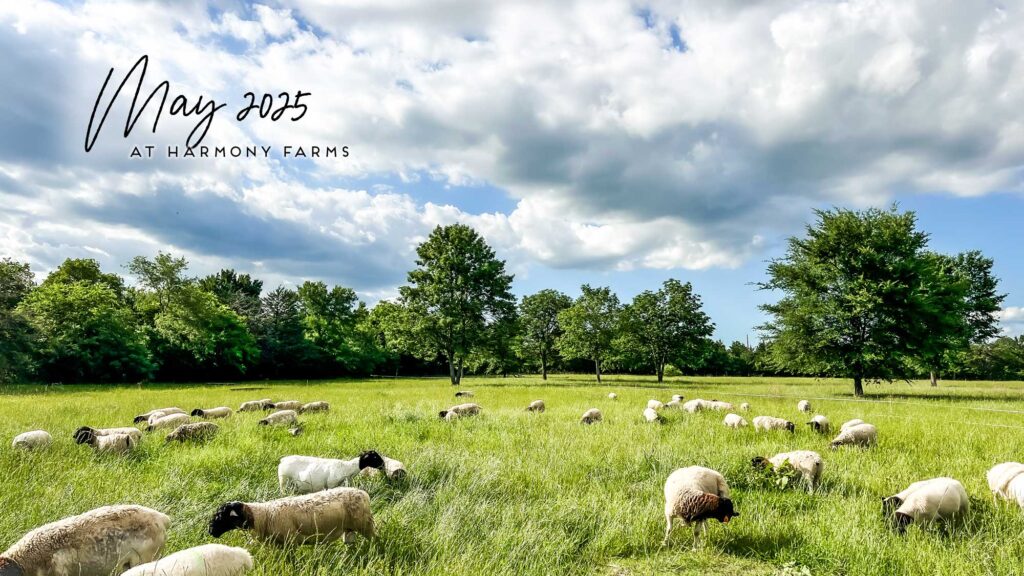
Looking for Dorper Sheep for sale? Join my waitlist here:
Hi friends,
This month definitely had some extreme highs and lows… it’s been a rough week and I’m going to share about it in this update.😔
Good News:
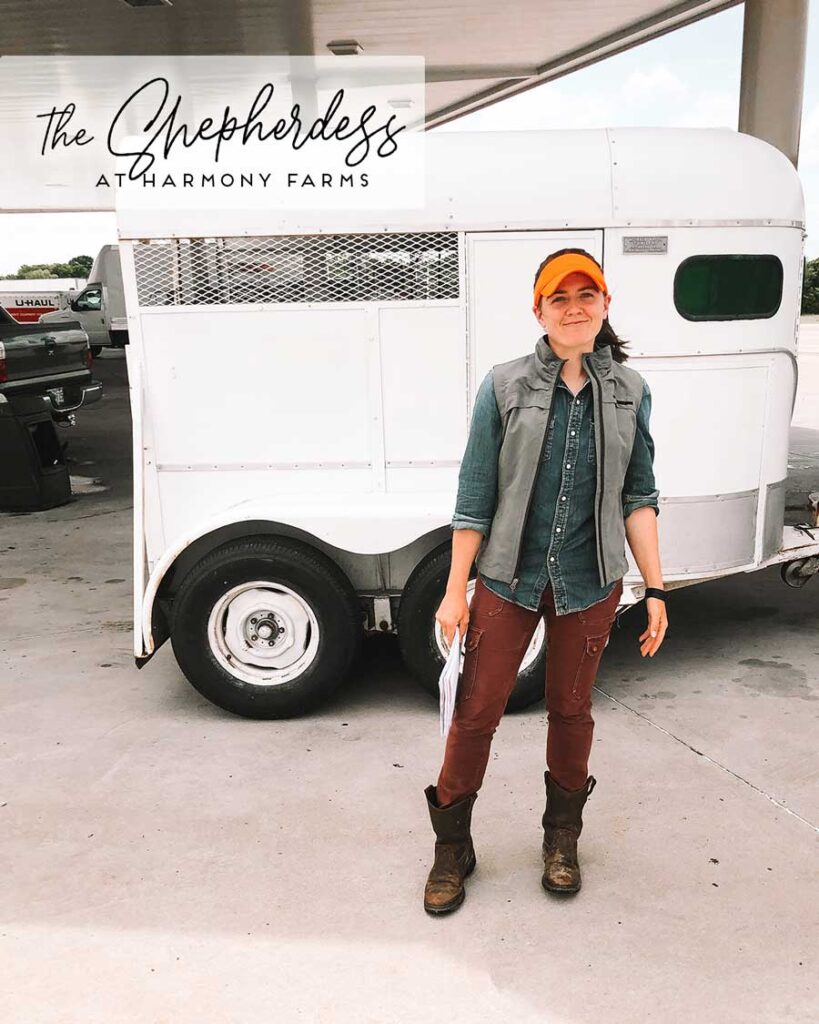
Let’s start with the good news: all 2025 lambs have been safely delivered to their new owners (with a few more stashed in freezer camp)! It was a huge pleasure to meet so many of you and put these lambs into good hands.
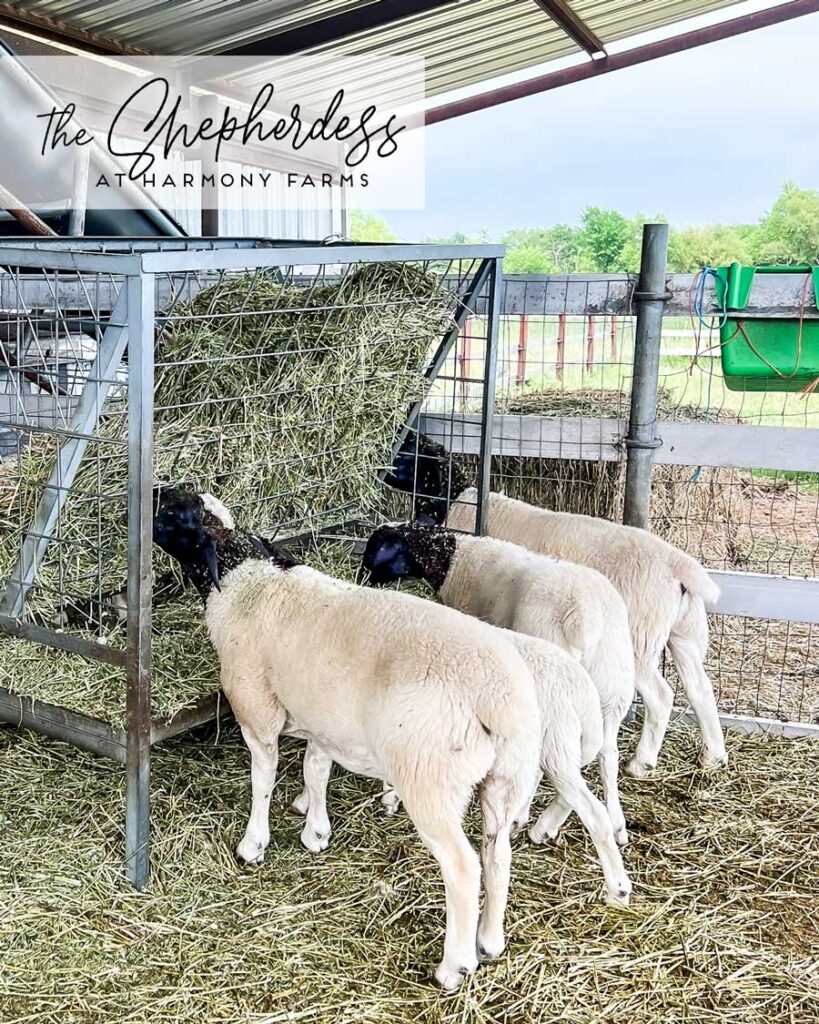
The last handful of early-spring lambs are weaned and looking great! As always, my lambs are weaned into a clean pen (for 2 weeks) and fed alfalfa hay before rejoining the flock. This allows the ewes to dry off and the lambs to adjust to all forage in a controlled environment with quality feed.

Bad News:
Now I guess I’ll get to the sad news. Back in January my rams broke out of their “seasonal confinement” and spent enough time with the flock to breed a few ewes. Lambs born in May and June always fail to thrive on pasture (parasites), so I avoid lambing in these months… however 5 sweet surprises popped up on pasture this month – and I was in love. 🥰
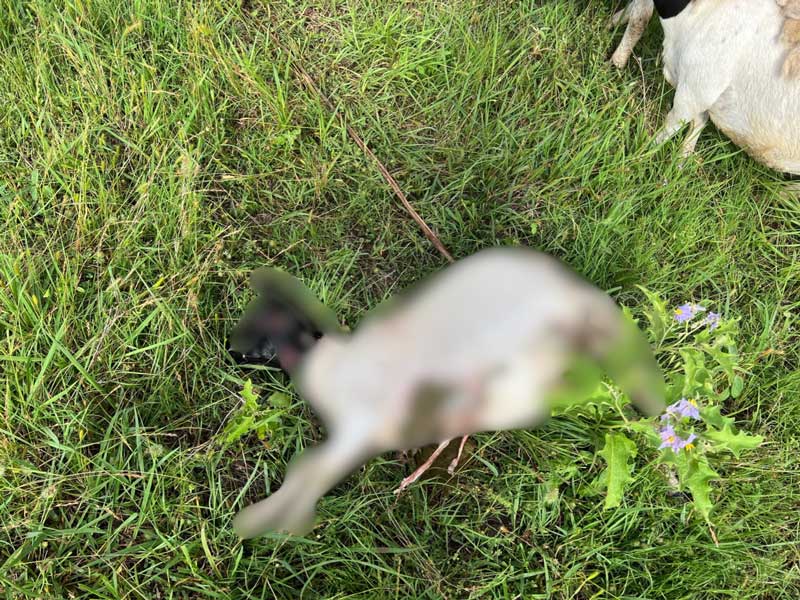
Unfortunately, however, last week we had the first predator attack in 3 years. A pack of dogs or coyote (we have both) came through and took out all of the newborn lambs overnight.
One lamb was left half eaten, another found dead, and the other three were completely missing.
The details:
This instance was honestly a logistical error on my part. When I have lambing ewes I keep them as close to the house as possible and make sure they are near the enclosure in case I need to shut them up overnight. Because this was not a regular lambing group I dropped protocol and maintained my regular rotation.
In May and June I graze the flock at the far end of my 30 acres, which is near the edge of the woods: the very worst spot for grazing when tiny lambs are in the mix.
About a day before the attack, one of the ewes gave birth at the edge of the woods. Presumably, the after-birth from that delivery encouraged predators even further.
It was a pretty sickening experience, but honestly could have been a lot worse. I had just weaned my spring lambs into a safe pen and the lambs that I sold were safely with their new owners.
For those who will likely ask if I have a Livestock Guardian Dog: we do have a large Pyrenees mix that roams the majority of our 30 acres. To her credit she was trying to get our attention the night of the attack. I have not had success bonding a formal LGD to the flock: my last Pyrenees was a wanderer and we lost him to highway traffic.
I hope that sharing some of these details will help you! Maybe you can use it to adjust or add to your own system to avoid similar losses.
In all, it was really sad, but thankfully (because they were surprises) I was not banking on these lambs for income. The Lord was merciful to cut my losses, remind me of why certain protocol is important, and give a dose of humility – which is always a good thing to grow in.

I will close on a positive note! The 3rd printing of my book, the Basics of Raising Sheep on Pasture, was delivered. THANK YOU for your supporting my self-published (not on Amazon) book. A special thanks to Redmond Agriculture and Lakeland Farm and Ranch for helping with the printing costs on this 3rd edition.
-the Shepherdess
P.S. Submission deadline for the Dorper Dream Flock Giveaway has been extended to June 15th. Read about how you can apply for the starter flock HERE!
“And we know that all things work together for good to them that love God, to them who are the called according to his purpose.”
Romans 8:28
NATURAL BEEKEEPING FOR BEGINNERS (with Dr. Leo Sharashkin)
CLICK HERE TO DOWNLOAD THE NATURAL BEEKEEPING FACT SHEET (PDF)
Did you know you can start a beehive without buying a single bee? Dr. Leo Sharashkin of Horizontal Hive is going to give a beginner level explanation of how to raise bees naturally: no chemicals, no sugar feeding, no antibiotics!
Beginner Guide to Raising Bees Naturally (no chemicals)
the Shepherdess:
Dr. Leo Sharashkin, thank you for joining us! Go ahead and give us some background. When did you start beekeeping?
Dr. Leo Sharashkin:
Thank you, Grace. From as far back as I can remember, even as a small child. My uncle was a beekeeper in Russia—he started in 1972, before I was even born. My favorite vacations were summers spent in his village, about 200 miles east of Moscow. He kept both vertical and horizontal hives.
As a kid, I was more into playing than watching bees—but I noticed something. The older my uncle got (he’s 86 now and still keeping bees), the fewer vertical hives he had. That’s because they require strength—lifting 70-pound boxes isn’t easy. But he could keep working his horizontal hives without hurting his back.
When we came to the U.S., I just wanted to have bees for our family. We weren’t finding honey like my uncle’s—rich, full of pollen and bee bread. If we have time, we can talk about how hive management changes the quality of honey. But I’ll just say: most people here don’t even know what bee bread is. It’s fermented pollen inside the comb, and it’s a superfood.
So we started keeping bees for our own use. And I’ve never bought a single bee. We went from zero to 50 hives just by catching swarms.
the Shepherdess:
Wait, all 50 hives came from swarms?
Dr. Leo Sharashkin:
Yes! Just using boxes like this one (holds up a small hive box). You hang it in a tree in spring, and bees move in—just like birds into birdhouses. Everyone knows how birdhouses work, but for some reason we’ve forgotten the same applies to bees. Put a box out, and bees will come.
Here in the Ozarks—zone 6—this is the time of year I hang out my swarm traps. Pioneers knew this, because they didn’t have FedEx to ship bees from Florida. But that traditional knowledge got lost when bees became something you could buy.
People think you have to buy bees, but you don’t. The best things in life come free—why should bees be an exception?
the Shepherdess:
That’s incredible.
Dr. Leo Sharashkin:
And I’ve never treated them with chemicals. No sugar feeding. Everyone around me said it wouldn’t work, that my bees would die. But my survival rates are consistently higher than those who buy package bees. Their bees make a honey crop, die in winter, and then they have to buy more.
So not only is natural beekeeping more rewarding, but it also puts a smile on my face. I even translated a book from Russian that got me started—it’s called Keeping Bees with a Smile. It explains how bees live in the wild and how we can mimic that.
There’s a robust population of wild honeybees surviving without treatments—even with all the parasites and pesticides out there. If wild bees can make it, so can ours—if we use hardy stock and work with nature instead of against it.
Interest in this has exploded. We can barely keep up—just today, we shipped 12 pallets of orders. Too much for a regular FedEx truck—they had to send a 26-foot box truck!
I do sell honey, and it’s premium stuff. But the real joy is when people buy equipment or even just download my free plans, then send me pictures of their kids eating honeycomb fresh from their hive.
The Shepherdess:
Scott in the comments says:
“Thanks to Dr. Leo’s free plans at HorizontalHive.com, I built 10 swarm traps this winter. Thank you!”
Now for the first question of the night:
“Have you heard of Flow Hives, and what do you think of them?”
Dr. Leo Sharashkin:
Yes, Flow Hives are essentially regular vertical hives—except the section where bees store honey is replaced with a special honeycomb made out of plastic.
This is not the direction I would go. First, it’s a fairly expensive setup. Second, I don’t even package my honey in plastic—only in high-quality glass jars. Over time, plastic can leach into honey, which is why in many countries, honey is never stored or sold in plastic—only glass. I wouldn’t be able to sell my honey for $50 a pound if I kept bees on plastic comb.
There’s so much that goes into doing it right, and the first step is to keep it simple and close to nature. Bees build honeycomb from wax and propolis—the resins they collect from trees. This natural comb has antibacterial properties and helps keep the hive healthy. Replace it with plastic, and you lose those benefits. Then you have to start medicating your bees to make up for it.
Bees are part of a complex ecosystem. The farther you go from their natural setup—using plastic comb, plastic foundation, or poorly insulated boxes—the more work you create for yourself to compensate for what you’ve broken. Bees in the wild live in tree hollows with excellent insulation. That’s what they’re adapted to.
Also, bees modify natural honeycomb to suit their needs—they’ll chew holes for ventilation or traffic. They can’t do that with plastic.
So, I don’t use Flow Hives. But if you have good experiences with them, please send me pictures and your story. I’d love to learn more. For me, I keep it simple and natural.
The Shepherdess:
Great. We’ll keep laying some groundwork before we get to the big questions—like how to attract bees.
Here’s a simple one:
“What are the advantages of keeping a hive on the homestead?”
Dr. Leo Sharashkin:
First and foremost, you get honey you know is real. Not many people realize this, but in America, 60–70% of honey consumed is imported, including from China—the largest honey producer in the world. I almost said “manufacturer,” because some of it isn’t even made by bees. It’s synthetic honey, formulated in labs to taste like honey.
In Europe, they say every fifth jar of honey is fake. And that’s in one of the most tightly regulated food markets in the world. Imagine what it’s like in the U.S.
And even among real honey, a lot is contaminated. Many beekeepers use chemicals and medications in their hives. Once you introduce those substances into the hive, they end up in the honey.
Search “pesticide residue in honey” and you’ll find tons of USDA and university studies showing American honey is contaminated—not just from crops, but from what beekeepers themselves put into the hive.
So, one major benefit of having your own hive is knowing your honey is pure.
Second—bees make the best pets. They don’t bark at night, they require very little upkeep, and they give you honey! The educational value alone is huge, especially for children. That was one of the most meaningful aspects of beekeeping for me.
The Shepherdess:
I’m almost embarrassed to ask this—but I didn’t know there was a difference between conventional beekeeping and natural beekeeping. Could you explain the difference?
Questions about Natural Beekeeping with Dr. Leo Sharashkin:
Absolutely. It starts with the bees themselves—and the type of hive you use.
In the U.S., bees were brought over from Europe hundreds of years ago. Since then, they’ve acclimated to the environment here. But there’s huge variation in their genetic makeup. Bees are incredibly adaptable from one generation to the next.
Genetically, honeybees have 40 times more recombination per generation than humans. This high genetic variation allows them to quickly adapt to local conditions: bloom times, climate, winters, drought.
Now, if you let bees live naturally for a few generations—no interventions—they adapt beautifully to their environment.
But in commercial beekeeping, it’s a different story.
Most bees sold in the U.S. are bred in southern states like Florida, where winters are mild. Bee breeders start selling in February, and they ship packages north to Michigan, Missouri, wherever. These bees often have queens from the Italian strain, native to the Mediterranean—a climate with mild winters and ten months of flowers.
So what happens? These bees do fine in summer, but they’re not in sync with northern climates. They don’t survive winter well, and the beekeeper has to buy new bees each spring. The cycle repeats.
Then there’s disease resistance. In the wild, if a new parasite like varroa mites shows up, bees either die—or the survivors develop resistance. That’s natural selection.
But in commercial beekeeping, they can’t afford to let 95% of their colonies die to find the best survivors. They have contracts—pollinating almonds, producing honey. So they treat all their bees, year after year, never letting natural selection work.
So today, 20 years after varroa mites arrived, they’re still a huge problem—because the bees have never been allowed to adapt.
When people ask me, “What do you do about small hive beetles? About varroa mites?”—I say, “I do nothing.”
Why? Because my bees came from the woods. They were already surviving on their own.
The Shepherdess:
It’s good. Alright, so we have a question here, and it’s a little bit long—let me see if I can get it out. David says:
“Dr. Leo, while acknowledging that many bees now are partially mixed with Africanized bees and that this makes them robust, is there any concern about the level or mix of that strain in wild swarms, and how would one recognize this?”
Dr. Leo Sharashkin:
Yes, thank you. Africanized bees are a cross between the European honeybee and the African honeybee. This was done in Brazil, and over time they migrated north through Latin America, into Mexico, and eventually into the United States.
The good news is that this strain—while very aggressive—cannot survive in the north. Even in Missouri, they don’t make it through the winter. So if you’re in zone 6 or further north, it’s not a concern. Even in zone 7—places like Arkansas, Tennessee, Kentucky—it’s almost not a concern.
The areas where you need to be careful are places like Arizona, Florida, and Texas—the far south. But even there, many beekeepers manage fine. I translated a great book from French called From the Earth, which shows how bees are kept in 23 different countries—including places like Mexico where the only bees available are Africanized. They can be kept productively; you just need very good protective gear and large smokers.
Of course, you wouldn’t want to keep very aggressive bees near homes or livestock, but they are healthy, productive bees. If you can keep them away from human activity, and if you don’t mind the intensity of interaction, it can be done. Many bees will swirl like a tornado trying to sting you—not very pleasant. I don’t wear protection when I harvest honey from my bees, but it’s doable.
Also, if you read the literature, you’ll find that some Africanized bee colonies are becoming more gentle over time. So you may not even be able to tell without a genetic analysis.
That said, I believe beekeeping should be joyful. So if you have a hive that constantly gives you grief—extremely aggressive or defensive—just requeen it with a more gentle stock. I’ve never had to do that myself. I actually like the mean hives because if they can defend themselves from me, they can defend themselves from bears, opossums—you name it.
The Shepherdess:
Yeah, good question here from Alan. He says: “What is your opinion on Top Bar hives?”
Dr. Leo Sharashkin:
Yes, I’ve kept bees in Top Bar hives, and they are excellent in the South. For those unfamiliar, a Top Bar hive supports the comb only from the top bar—a single plank of wood. There’s no frame structure surrounding the comb.
That’s both an advantage and a limitation. The advantage is that Top Bar hives are inexpensive and simple to build. They’re used in places like Africa where people can’t afford framed equipment.
But because the comb is only supported from the top, you can’t make the hive very deep. If the comb gets too long, the weight of the honey will cause it to collapse. So Top Bar hives have to be shallow. Because of that, I do not recommend them for cold climates. The depth of the comb is important for successful wintering.
Another consideration: with frames, once bees build and fill them with honey, you can spin them in a honey extractor—a centrifuge that removes the honey without damaging the comb. You can return that intact wax to the bees so they don’t have to rebuild it, which significantly increases productivity.
In a Top Bar hive, the comb is usually crushed and strained, so the bees have to rebuild it each time. That means more wax, which is great if you need wax, but less honey overall.
One more upside: when you don’t return used comb, you also avoid recycling bacteria or disease—so it’s more sanitary. But again, you’ll be harvesting less honey, and it’s slower.
So—go for it in the South if you want! But for northern climates, I wouldn’t recommend it.
Q: What are the three most important things for someone to know before starting hives as a novice?
Dr. Leo Sharashkin:
- Start with locally adapted bees – Natural beekeeping depends on using bees that are adapted to your specific environment. Commercial bees often require constant intervention (feeding, medication), while local bees are self-sustaining.
- Don’t fear bee stings – You can use high-quality protective gear and avoid stings altogether. Dr. Leo chooses to work without gear and sees stings as beneficial, even citing their use in apitherapy for conditions like arthritis and MS.
- Choose the right hive model for your physical capacity – Vertical hives can involve lifting 60–70 lb boxes, which can lead to injury. Consider horizontal hives if you’re concerned about back, hip, or knee strain.
Q: Do you have a few favorite plants for bees?
Dr. Leo Sharashkin:
- Recommends the book Honey Plants of North America – Includes detailed planting info and regional plant recommendations.
- Personal favorites:
- Sumac (Smooth and Winged) – Drought-tolerant, great nectar source.
- Blackberries – Excellent bee forage and food for humans. Both plants emerge naturally in overgrown pastures and are low-maintenance.
- Tip: Observe what bees are already foraging on in your area. Plants can behave differently in different soils and climates.
Q: What would you do to keep bees healthy during a drought?
Dr. Leo Sharashkin:
- Again, it comes down to local bees.
- Local bees anticipate nectar scarcity and adjust brood production ahead of time to conserve resources.
- Imported bees don’t self-regulate and will continue raising brood even when there’s nothing to feed them—burning through honey stores.
- If you’re working with commercial bees, you may have to feed them, but switching to local genetics can solve that problem long-term.
Q: Can swarms stay in a swarm box permanently?
Dr. Leo Sharashkin:
- No, swarm boxes are temporary. Within 3–4 weeks, the bees will outgrow the box and swarm again if not moved into a full-size hive.
Q: What exact hive box do you recommend?
Dr. Leo Sharashkin:
- 14-frame Horizontal Hive – Economical ($250), holds 40 lbs of honey, and uses the same European-style frames as the swarm trap.
- 20-frame Insulated Horizontal Hive – Recommended for northern climates (Michigan, Montana, Alaska). Double-walled with wool insulation for winter survival.
- Free plans and ready-made hives available at horizontalhive.com. Use code APRIL for 5% off.
Book Recommendations from Dr. Leo:
- Keeping Bees With a Smile – A gentle introduction to natural beekeeping, now in its 2nd edition.
- Keeping Bees in Horizontal Hives – Ideal for those interested in no-lift beekeeping methods.
RAISING DAIRY GOATS (for beginners)
Looking to raise Dairy Goats naturally and with no chemicals? This article is the guide for you! With the right management, dairy goats make an ideal milk source for a small-scale homestead operation.
CLICK TO DOWNLOAD THE TOP 10 TAKEWAYS PRINTABLE!
Raising Dairy Goats Naturally (Beginner Guide)
the Shepherdess: Tonight we’re going to be talking about raising goats, primarily with a focus on dairy. Much of this will also apply if you’re raising meat goats, and quite a bit of it overlaps with raising sheep.
Deborah Niemann authored this incredible book, Raising Goats Naturally, which I’ve been enjoying over the past month. Definitely grab yourself a copy.
Tonight, we’re going to be covering some frequently asked questions from beginners getting into dairy goats. We have a lot of questions lined up, so please pardon me while I jump right in. But before we get started, go ahead and drop in the comments where you’re joining us from—what state you’re in—and let us know whether you already own goats or if you’re just here for a beginner-level primer.
So, you touched on it a little bit already—the lifestyle drew you in. But why dairy goats? Why dairy goats specifically?

Deborah Niemann: Oh, I always say it was love at first bite. I had goat cheese for the first time in college, and I just loved it—but it was expensive.
So when we started talking about moving to the country, I thought, “I need to have goats so I can have goat cheese.” And I really thought that’s all I was going to get from them—just the goat cheese. That’s how badly I wanted it. I thought you needed cows for everything else dairy-related, and that we’d just be making chèvre—soft, creamy, spreadable cheese.
But after we got goats, I realized, oh my goodness, this milk makes amazing yogurt! At last count, we had made 18 different kinds of cheese. We’ve made buttermilk, sour cream—the only thing I’m not a big fan of is goat butter. But everything else? You don’t need cows for it.
Copper Deficiency in Dairy Goats
the Shepherdess: So what were some of your primary challenges as a beginner raising dairy goats in those early days?
Deborah Niemann: In the beginning, it was actually really easy. The first two years were definitely this magical honeymoon period where everything just went perfectly.
We made goat cheese, yogurt, kefir, goat milk soap—everything worked. The goats gave birth, the kids jumped up and started nursing. There were no problems whatsoever.
But then, after two years, I bought a little buckling and brought him home. Within two weeks, he died. When he went down, I rushed him to the university vet hospital, and he died there a couple of hours later. We found out it was worms. This was back in the early 2000s.
The vet told me I needed to be giving the goats a dewormer monthly. I really didn’t want to do that, but after losing an animal, you think, “Okay, this is terrible—I’ll do it.” So I gave them dewormer monthly. But then, four months later, two more bucks died.
Parasites became a massive problem, and we wound up with complete dewormer resistance. None of the dewormers worked anymore. All I could do was sit and watch the goats die. I tried everything—if someone said something killed worms, I tried it. All the different herbal dewormers—nothing worked. That was one of the biggest problems we faced.
The other major issue was copper deficiency. We had goats not getting pregnant, not staying pregnant, and giving birth prematurely. It was awful. The vets had no idea what was going on.
At the time, my oldest daughter was 16 and interested in becoming a vet. She did a lot of research for me and said, “Mom, I think our goats might be copper deficient.”
I happened to be teaching at a university at the time, so I went into the scholarly literature and found some emerging research on goat nutrition. It turns out goats do need copper.
I kind of feel like I started back in the dark ages, when everyone thought goats were just like sheep and didn’t need copper. That wasn’t true. And in our case, it was a triple whammy: the goats weren’t getting minerals, their feed didn’t have enough copper, and our well water had sulfur in it—a terrible copper antagonist.
the Shepherdess: Mm-hmm.
Deborah Niemann: So they had it as bad as they could get it. Finally, when one goat died, I told the vet I wanted her liver tested for copper. He said, “You’re wasting your money.” I replied, “Well, it’s my money.”
He came back and said the copper level should have been between 25 and 150—it was four. Four. I couldn’t believe she had even survived as long as she did. She left behind two kids who were only two months old and horribly copper deficient. One of them I struggled with for four years before she eventually died of mastitis and pneumonia.
the Shepherdess: When you found out about the copper deficiency, what were the symptoms that first tipped you off—or your daughter off—that this might be the issue?
Deborah Niemann: Copper is really important for coat color in goats. I had heard that, and someone even mentioned it to me back in the old Yahoo group days—before Facebook.
They said, “I think your goats might be copper deficient, because their coats are really faded.” The black goats looked orange, and my gold goats were turning white or cream. I thought, “Oh, who cares? That’s just cosmetic.”
What I didn’t realize was that if it gets worse, it becomes more than cosmetic. That’s a major sign.
Then they start losing hair in very specific places—like the tip of the tail, the bridge of the nose, and around the eyes.
As it progresses, you’ll see fertility issues: goats not coming into heat, having silent heats, not getting pregnant, not staying pregnant, and even giving birth prematurely.
the Shepherdess: Once you identified the problem, how did you go about fixing it? Some people in the comments are asking—if they think they have this issue—what should they do to supplement copper?
Deborah Niemann:
So there’s a couple different things. First thing I did was I got copper oxide wire particles. Some people refer to them as copper boluses.
the Shepherdess:
Mm-hmm.
Deborah Niemann:
So that’s what I started with. And then after a few years, Yvette suggested that I try MultiMin—and I did. What he didn’t know, and what I didn’t know, is that when you inject minerals into a goat, they pee out a lot of it within 24 hours.
So… three months after I gave this buck an injection of MultiMin—it was supposed to last six months—three months later, he was dead. I’m sitting there looking at him going, “I don’t understand. He’s not skinny. He doesn’t have worms. What is wrong?”
And then all of a sudden it clicked. I’m like, “Oh my goodness. He’s completely faded.” He was supposed to be this bright red goat, and he had faded to this light, creamy yellow.
That was one of my crazy stories from the early days. My daughter and I cut out the liver and sent it to a lab ourselves. It came back… the copper level was 15. It should have been between 25 and 150.
So that’s why I don’t recommend the injectable—because it doesn’t last long term.
the Shepherdess:
So you would do the copper boluses—which I actually have one on my desk right here—you’d do those instead?
Deborah Niemann:
Yes.
the Shepherdess:
Once or twice a year?
Deborah Niemann:
It depends on your situation. I always say, watch the goats.
First, we had to give them about every three months. Then we spent a couple thousand dollars on a water treatment system—a chlorine water treatment.
After that, we only had to do it every six months. And now, for some reason—completely unbeknownst to me—I hardly see copper deficiency symptoms at all. I don’t know why.
We’ll cover minerals, but just—
the Shepherdess:
Really quickly—did you increase the copper content in the loose mineral you provided?
Deborah Niemann:
Yes. That’s one of the things.
A lot of times people contact me and say, “I’ve got these problems.” And I’m like, “Well, that sounds like copper deficiency.”
And they’ll say, “Oh no, they’re getting a mineral.”
And I ask, “Well, what brand mineral?” Because I’ve seen everything from 30 ppm copper… to 300 ppm copper.
You really need at least 1800 ppm copper.
That’s really important. And you also need to have enough selenium in there. And zinc.
the Shepherdess:
This is going to be a section of its own, but you just mentioned you had resistance to all chemical dewormers available.
Did you just go through a period where natural selection kind of took its course—and then you ended up with a stronger, more resistant set of animals naturally?
Deborah Niemann:
Yeah. That’s what happened. We wound up with goats that were just naturally resistant. They were the ones that could survive.
We also started doing pasture rotation. And we started kidding in the dead of winter.
the Shepherdess:
Mm-hmm.
Deborah Niemann:
We’re in Illinois. There’s no parasite larvae on the grass in the middle of winter. There’s no grass at all—it’s covered in snow.
It was absolutely brutal and horrible. I had a blog at the time—like the old-fashioned diary-style blogs.
I’d be writing birth stories in January and February, like:
“So-and-so gave birth. It was 15 below zero.”
And people would comment,
“Why are you letting your goats give birth this time of year?”
And I’d reply:
“Well, because we have a problem with dewormer resistance. If my goats kid in April, they’re all gonna die from parasites.”
Tips for Choosing the right Dairy Goat Breed
the Shepherdess:
Wow. We’re going to touch on that a lot in the parasite section, because—guys—parasites are going to be one of your biggest challenges as a small ruminant producer.
But I want to get to some basics here. For those looking to start a homestead, maybe specifically a dairy herd, what breeds do they have to choose from? And what would your recommendations be?
Deborah Niemann:
I always tell people—it really depends on what your goals are.
I raise Nigerian Dwarfs now—that’s what I’ve had for 22 years.
I also had LaManchas for about eight years. Those are the ones without ears.
So the LaMancha and all the other standard-sized dairy goats give a lot more milk, but it’s lower in butterfat.
According to the American Dairy Goat Association, the breed average for Nigerian Dwarfs across their lactation is around 6.5% butterfat.
For Nubians, which are big goats with long floppy ears, their butterfat averages around 4.5%.
Most of the other dairy breeds are around 3.5%, and the really big bucket-busters like the Saanen and Alpine can be even lower—closer to 3%.
So there’s this inverse relationship:
What do you want more of? Butterfat or fluid milk?
Someone contacted me once who had a family of seven or eight kids. She said they go through two gallons of milk a day.
I said, “Okay, I love my Nigerians—but you want Alpines or Saanens. Something that’s going to give you a lot more milk.”
Because you’d have to milk a lot of Nigerians to get two gallons a day. And that doesn’t even leave you any for cheese, yogurt, or any of the other great stuff.
The cool thing about high butterfat is you get a much higher cheese yield.
When we had the LaManchas, we made cheddar using 100% LaMancha milk and cheddar using Nigerian milk—same recipe.
From 2 gallons of Nigerian milk, we had a round of cheddar that was about that high.
From the LaMancha milk, the round was only this high.
So it was almost twice as much cheese from the same amount of milk.
the Shepherdess: Gotcha. So when people are choosing a breed, they should really pay attention to butterfat content, note the variations between breeds, and decide what’s most important to them.
Deborah Niemann: Yes, exactly.
Common Diseases in Dairy Goat Herds
the Shepherdess: Alright, so when someone is ready to start their herd, are there any diseases they should ask the breeder about before buying a dairy goat?
Deborah Niemann: Yes. You want to make sure the herd has tested negative for CAE, which is caprine arthritis encephalitis; CL, which stands for caseous lymphadenitis—we’ll just call it CL for short—and Johne’s disease, which, weirdly enough, is spelled with a J. It looks like “John’s” but it’s pronounced “Yo-knees.”
These three diseases can be completely asymptomatic in the early stages. You wouldn’t know a goat had them just by looking, and they are all highly contagious—especially Johne’s. Johne’s spreads through fecal-oral contamination, so if you bring in a goat with Johne’s, it will spread in their manure across your pasture. The bacteria can survive for years, and it’s not just contagious to goats—it also affects sheep and cows. It’s a chronic wasting disease, so affected animals just get skinnier and skinnier. Some sources say you shouldn’t have any ruminants on that pasture for 4–5 years after contamination.
the Shepherdess: Do any of these diseases make the milk unsafe for human consumption?
Deborah Niemann: That’s an interesting one. Probably not. But there is a controversy around whether Johne’s might be linked to Crohn’s disease in humans. And here’s the thing: pasteurization doesn’t kill it. So for me, the big benefit of having my own goats is having a closed herd that has tested negative for these diseases year after year. People can argue all day about the science, but I don’t have to worry—I know my goats are clean.
the Shepherdess: That’s good. Alright guys, I see you dropping a lot of questions about parasites—don’t worry, we’re going to have an entire section devoted to that later. Deborah’s got a great story about reversing parasite resistance in her herd, so stay tuned. But first, we’re getting into some general beginner questions.
How to Eliminate Bad Flavor in Goat Milk
If you’re new here, we’re talking with Deborah Niemann, author of Raising Goats Naturally—excellent book, by the way. I picked it up last month and have really enjoyed it. There’s actually a lot of crossover info that applies to sheep, too.
Alright, one of the biggest questions I get: How do you avoid goat milk that tastes like a buck?
Deborah Niemann: That classic “goaty” flavor actually comes from a completely harmless skin bacteria in goats. It’s the flavor of a goat—not a buck per se.
The first key is to clean the udder thoroughly before you start milking. The second is to squirt the first few streams of milk into a strip cup. That’s just a separate container you use for the first couple squirts. You can feed it to your barn cats, chickens, or guardian dog—someone who doesn’t care what it tastes like.
In the beginning, I didn’t know this, and it was super confusing. Some days the milk tasted great, and other days it didn’t. Turns out, it just depended on how much of that skin bacteria made it into the milk.
Funny story—when my youngest daughter was working on her PhD in biological chemistry, she was assigned to create a milk filter for a dairy in Africa. In small farms there, the sanitation isn’t always great, and milk would taste bad—even though it was pasteurized. I asked, “Well, doesn’t pasteurization fix that?” She said, “Nope. Dead bacteria doesn’t taste any better than live bacteria.”
the Shepherdess: So bottom line: that bad taste comes from bacteria—not just the buck?
Deborah Niemann: Exactly. Now, bucks can make it worse—especially during breeding season. If a buck has been with a doe and rubs his head on her udder (which they like to do), all his stink gets on her. That smell comes from the buck’s head.
If that happens, you’ll want to wear gloves when you milk her—your hands will smell terrible, and the milk will taste just as bad. So while bucks don’t magically taint the milk across a fence, close contact during breeding can definitely affect flavor.
the Shepherdess: That’s really good (albeit gross) info. Thank you!
Okay, next question. You raise Nigerian Dwarfs—what kind of milk yield can you expect per doe at your farm? Whether weekly or annually.
Deborah Niemann: It really depends on the lactation curve. In commercial dairies, they freshen their cows or does annually because milk production rises after kidding, peaks around two months, and then gradually declines.
People often say Nigerians average a quart a day, and over a standard 305-day lactation, that’s about right. But at peak—around two months—my best milkers produce three quarts per day. That’s exactly what they need to feed triplets, which many of them have.
the Shepherdess: So between 1 and 3 quarts per day, depending on where they are in their lactation?
Deborah Niemann: Exactly. Right now, I have some does that freshened a year ago and are still producing, and some that just freshened again after two years. That way, we’ve got milk year-round.
the Shepherdess: Got it. Alright—we’re going to talk parasites and nutrition before we wrap. Nutrition is the big one. Obviously, nutritional needs vary from farm to farm. But can you share some baseline nutritional requirements for a dairy goat? Protein levels, volume of feed, etc.—for the total beginner?
Deborah Niemann: Absolutely. This is important, especially right now—I’m getting a lot of questions from people whose goats aren’t producing as much milk as they expect. And the first thing I ask is, “What are you feeding her?”
Dairy goats absolutely need alfalfa if you want good production. Grass hay alone has about half the protein and far less calcium. Milk production requires both. Alfalfa typically contains 16–20% protein, while grass hay only has about 7–8%.
You also need a lot of calcium—and alfalfa is again the best source. If you’re in the South, you could use peanut hay. Clover hay, lespedeza, and chicory are also good options. In fact, lespedeza is great—it’s a legume and has natural anti-parasitic properties.
Next, you want a 16% protein goat-specific feed. I look for one with at least 35 ppm copper and 0.5 ppm selenium.
Finally, a loose mineral is a must. Not a block. Not a tub. A lot of those blocks are 90% salt and almost useless in terms of actual minerals. Goats only need about ¼ to ½ an ounce per day of a good loose mineral. And beginners often get thrown off because they don’t see the goats eating it. But they don’t need to eat a lot.
People say, “Well, they lick the block all day!” And I say, “Exactly. That’s the problem.” They’re licking and licking and still not getting what they need.
For example, Purina’s mineral block has 1 ppm selenium, which is next to nothing. Their loose mineral has 50 ppm. So same brand—one’s fantastic, one’s basically useless.
the Shepherdess: That’s a really important clarification. Do you recommend any specific mineral brands for beginners?
Deborah Niemann: Yes. Two good ones are:
- Purina Goat Mineral – the loose version in a bag
- Sweetlix Meat Maker – specifically the “Meat Maker” formula in a bag
the Shepherdess: Awesome. And just to summarize, we’re aiming for 16–20% protein, preferably from alfalfa, and a 16% protein feed with proper mineral balance. Is there a recommended volume based on the goat’s weight?
Deborah Niemann: Yes—the standard guideline is 1 pound of grain for every 3 pounds of milk the goat is producing.
If the kids are nursing and you can’t measure milk output, just estimate based on body condition and how many kids she’s feeding. For example, I expect Nigerian Dwarf kids to gain about 4 ounces per day, so if that’s happening, I know she’s producing enough milk and getting adequate nutrition.
Pasture Access and Feeding Adjustments
The Shepherdess:
That makes a lot of sense. So do you raise your goats on pasture at any point during the year, and do you adjust your feed ration when they do have pasture access?
Deborah Niemann:
We’re in Illinois, so from about mid-April until the beginning of November, we’ve got decent pasture. We rotationally graze our goats—that’s our main strategy for controlling parasites. We use electro-net fencing to move them around the farm and keep the kids healthy.
The first time the kids go out on pasture, it’s actually on my front yard. No ruminants graze there for about 11 months, so when the babies go out, it’s completely clean—no parasite larvae whatsoever. That means they’re exposed very, very gradually. I haven’t given a dewormer to a kid in over 10 years since we started doing that.
The only goats that might need a dewormer are first freshening yearlings. They’re still young, their immune systems aren’t mature yet, and we’re asking a lot of them—grow babies, make milk, grow their own bodies, and fight parasites. I don’t hold it against them if they need help.
The Shepherdess:
So you’re on pasture about six months of the year?
Deborah Niemann:
Yeah, about six months.
Parasite Management Without Chemical Dewormers
The Shepherdess:
Let’s talk about parasites. If you’re new to small ruminants—or even if you’re not—you know this is a big one. You mentioned that your herd was resistant to all chemical dewormers in the early years. How did you manage without them?
Deborah Niemann:
Yeah, the chemicals didn’t work at all, so that option was off the table. I had to learn everything about rotational grazing—moving the goats so they’re not eating from their own toilet. That’s key. They’re not consuming worm larvae from the eggs they pooped out last week.
Does are most susceptible after they kid, so I don’t put them on pasture then. They stay in the barn during that period. Later, they and their babies go to the clean pasture we talked about earlier.
We also practiced mixed-species grazing. We had cows, horses, and pigs at the time. Since parasites are species-specific, when the goats left a pasture, another species would come in. If they consumed goat worm larvae, they’d digest them—those worms can’t survive in non-goat hosts.
The Shepherdess:
And for those new to worms, we’re mainly talking about the barber pole worm here, right?
Deborah Niemann:
Yes. That’s the one that causes the most loss because it causes anemia and can kill a goat really fast.
The Threat of Barber Pole Worm
Deborah Niemann:
Other roundworms usually just make the goat lose weight slowly, but the barber pole worm is a prolific egg-layer—one worm can lay 10,000 eggs a day. Now, they don’t hatch inside the goat, but they absolutely saturate your pasture in eggs.
That’s why you need to move them off that pasture quickly. For comparison, other roundworms might lay just a few hundred eggs a day. That’s nothing compared to the barber pole worm.
The Shepherdess:
Exactly. And unless you catch it early, the goats drop so fast—they die before you realize what’s happening. So your biggest strategies were:
- Rotational grazing
- Kidding in winter and keeping does off pasture while in heavy lactation
Deborah Niemann:
Exactly.
Nutrition and Parasite Resistance
The Shepherdess:
Did you find any nutritional strategies that helped with parasite resistance in your herd?
Deborah Niemann:
One of the few things we did right early on—by luck—was feeding alfalfa. A guy pulled into my driveway selling alfalfa, and I bought it without knowing the difference between alfalfa and grass hay.
But research has shown that goats on higher protein diets have better parasite resistance. So our alfalfa feeding probably helped keep more of our goats alive when the dewormers stopped working.
If you’re feeding only grass hay to your does, you’ll likely see lower milk production and more parasite issues. Bucks, however, need grass hay only.
The Shepherdess:
Because of the urinary calculi?
Deborah Niemann:
Yes. Many people think it’s only about balancing calcium and phosphorus, which is true for struvite stones caused by too much grain. But calcium stones are caused by feeding alfalfa to bucks.
They don’t need alfalfa—it can also cause zinc deficiency because calcium is a zinc antagonist. Bucks aren’t making milk or babies, so they don’t need all that calcium.
Herbal Dewormers or Dairy Goats: Do They Work?
The Shepherdess:
All right, I get questions all the time about garlic, DE, herbs—people are mentioning pumpkin seeds in the comments. Do any natural herbal methods have widespread effectiveness?
Deborah Niemann:
I tried all of those. I even grew my own wormwood—I had a big patch in the yard.
The thing is, some of these herbs do kill worms, but not enough. Historically, things like tobacco or wormwood were used because they killed 40–50% of the worms. We tested that—before and after fecals—and wormwood consistently reduced egg counts by about 50%.
If your goat isn’t heavily parasitized, that might be enough. But if the goat is already anemic and weak, killing 50% of the worms won’t save it.
The Shepherdess:
Exactly. Unless you’re willing to let nature take its course and let weak animals die off, these natural methods won’t save a goat in a critical state. They can help a bit—but they won’t pull an animal back from the brink.
Coccidia in Goats and Goat Kids
The Shepherdess:
Let’s shift to coccidia. Everything we’ve talked about so far mainly relates to the barber pole worm. How do you treat coccidia on your farm?
Interview with Deborah Niemann on Coccidia, Weight Gain, and Differences Between Goats and Sheep
The Shepherdess:
You’ve talked about coccidia prevention on the farm. Can you explain what coccidia is and why standard dewormers don’t work?
Deborah Niemann:
Coccidia isn’t a worm—it’s a parasite, specifically a single-cell protozoa. So, dewormers won’t kill it. You need a drug like Corid to treat coccidia. It has a completely different life cycle.
That’s why people often start prevention at three weeks old. If a kid is born into a dirty environment and ingests oocysts on day one, symptoms like diarrhea can appear by week three.
The Shepherdess:
So you used to treat routinely?
Deborah Niemann:
We did. If one kid got it, we treated them all because diarrhea spreads it. But then—about ten years ago—I fell and smashed my knee. My husband had to take over goat care. He’s an engineer and wasn’t comfortable guessing whether kids were nursing. So, he started weighing them.
What we found was eye-opening:
Kids gaining at least four ounces per day didn’t get coccidiosis. Since we started tracking weight, we’ve only had two cases in ten years.
The Shepherdess:
That’s amazing. So consistent weight gain is the best form of prevention?
Deborah Niemann:
Exactly. Four ounces per day is our benchmark. That level of gain gets Nigerian Dwarf kids to 20 lbs by 8–10 weeks, which is when we start separating them at night to milk the moms.
The Shepherdess:
What do you do if weight gain stalls?
Deborah Niemann:
We supplement. One of those two kids that ended up with coccidiosis had a mom who could keep up until week 3 or 4, but then just couldn’t produce enough milk for her triplets. One fell behind.
That’s why I cringe when people start separating kids at two weeks to milk the mom. At that stage, a doe can’t support both the babies and the family. Ensuring kids get enough milk is what I call health insurance.
The Shepherdess:
So, what if someone has a doe whose kids aren’t gaining—how do you boost milk production?
Deborah Niemann:
First, consider genetics. I worked with someone recently who had a Boer-Nubian cross. Even if her Nubian dam was a great milker, Boers just aren’t bred for that. Genetics play a huge role.
So, choose true dairy breeds, and buy from breeders who keep milk records.
Second, diet—make sure the doe’s protein intake is adequate. That’s essential for milk production.
Goats vs. Sheep: Key Differences
The Shepherdess:
You also raise sheep. For those like me who thought goats and sheep were basically the same—what are your top differences?
Deborah Niemann:
- Parasite resistance:
Sheep have much better parasite resistance. Especially heritage breeds like Shetlands and Katahdins. I’ve had almost no parasite issues with sheep, compared to goats. - Birthing:
Sheep are rockstars at lambing. Out of 250–300 lambs, I’ve only seen two or three births—and I’ve never had to help.
Goats? We’ve had 750 kids. While 95% don’t need help, I’m there because goats are divas. Sometimes a kid suffocates because mom didn’t clean the sack off. - Bottle Feeding:
Dam-raised goat kids resist bottles like you’re poisoning them. Lambs? They take a bottle immediately. - Personality:
Huge difference. Sheep are easier in so many ways.
Audience Q&A
Crystal:
Can you feed bottle lambs or kids cow’s milk instead of milk replacer?
Deborah Niemann:
Yes—whole cow’s milk is fine. Goat milk is usually around 6.5% butterfat, sheep milk is even higher—9–10%. Cow’s milk is around 3.5%, so for lambs, I’d probably use milk replacer unless you’re boosting the fat.
The Shepherdess:
I’ve added olive oil—1.5 tablespoons per 2 cups cow’s milk—and had good results with that for lambs.
Krista:
Can you make kefir with goat’s milk?
Deborah Niemann:
Yes, you can.
Krista:
Do all cheeses made from goat’s milk have a strong or “goaty” flavor?
Deborah Niemann:
Nope—it depends on the type of cheese. And if your milk is handled well, it shouldn’t taste “goaty” at all.
The Shepherdess:
So practices like stripping the first milk into a cup before milking—the standard clean technique—help with that?
Deborah Niemann:
Yes, that makes a big difference.
🐐 Goat Fencing Tips (Josh’s Question)
- Josh’s current setup: 4 strands of polywire, 6 inches apart, 3-joule energizer.
- Deborah’s tip: Switch to electro-netting from Premier One. It’s more effective for containing goats.
- The Shepherdess: Uses both solar energizers (for remote fields) and plug-in chargers (for closer areas) depending on location.
🐓 Do Chickens Help with Parasites on Pasture?
- Deborah: No, chickens don’t reduce internal parasites like barber pole worm. They’re great for reducing flies by eating maggots in cow pies (as per Joel Salatin’s method), but barber pole worm eggs are microscopic—chickens can’t find them.
🌱 Can Alfalfa Cause Bloat in Goats?
- Deborah: Fresh alfalfa or fresh clover (especially after droughts) can cause bloat in goats and sheep. Dry alfalfa hay is generally safe.
❄️ Cold Climate Suitability: Sheep vs. Goats
- Deborah: Adult goats handle cold okay, but goat kids are much more vulnerable at birth. They can’t survive being born in extreme cold (e.g., 10°F) without immediate intervention.
- Lambs, however, often survive freezing temps at birth with no help.
🌿 Natural Dewormers for Goats
- Copper Oxide Wire Particles (COWP):
- Targets barber pole worm (Haemonchus).
- Multiple studies show it’s effective.
- Sericea Lespedeza:
- Naturally kills both worms and coccidia.
- Needs to be fed daily (not a one-time dose).
- Available as pellets from New Country Organics ($70/50lb bag).
- Common in the Southeastern U.S.—may already be growing in some pastures.
🐐 Training Goats to the Milk Stand
- Problem: Goats fight milking if they’ve only been nursing kids.
- Deborah’s Process:
- During pregnancy: Put does on the stand daily with a little grain. No udder touching.
- After kidding: While on the stand, start gently handling the udder.
- If older doe resists:
- Lure to the stand with grain.
- Just rest your hand on the udder for a few days—let her kick.
- Once calm, begin a few gentle squeezes each day.
- Work up gradually.
💉 Chemical Dewormers and Milk Withdrawal in Goats
Pour-on: Applied topically along the back.
Avoid Injectables: Ivermectin and Cydectin have very long milk withdrawal periods (45 days to several months).
Recommended Pour-On:
Eprinex® (eprinomectin):
Approved for goats in Europe.
Zero milk withdrawal.
Kills internal and external parasites.
Administration Methods:
Injection: Under the skin with a needle — avoid for dairy goats.
Drench: Oral.
The Shepherdess: All right. Thank you so much for your time tonight, Deborah.
Do you have some closing words of encouragement? Maybe if you could go back to yourself in the early years of building your homestead—what would you say? Speak to those people just getting started.
Deborah Niemann: If I knew 22 years ago what I know now, I might not have wanted to get goats. I probably would’ve thought, Oh no, they can’t be grass-fed, and all those other concerns.
But honestly, I’m glad I didn’t know everything then—because I absolutely love goats. They are so personable. People ask me, “Why do you have goats instead of just sheep?” And I tell them, “Because they’re just such cool animals.”
Plus, they make the best cheese! I absolutely love chèvre—it’s so delicious. And the yogurt is amazing, especially from Nigerian Dwarf goats, because their milk is so high in butterfat. It’s like custard. In the winter, their butterfat can go up to 9 or 10%. We learned that during milk testing, and it’s just fantastic.
One of the biggest challenges today is that so much outdated information is still floating around online. You’ll find an article from a university like Purdue and assume it’s reliable—but the citations are often from the early 2000s or even the 1900s. The person who wrote it would probably be horrified to know it’s still live, and that Google is still sending people to it.
That’s why you’ll find so much contradictory information—it’s not that the new science isn’t out there, it’s just getting drowned out by the old stuff that never got taken down.
The Shepherdess: That’s a good one to remember. All right, friends—Raising Goats Naturally by Deborah Niemann. It’s a great book—pick it up!
Deborah, where can people find you and your resources online?
Deborah Niemann: My website is thriftyhomesteader.com. I also run a membership called Goats 365. Inside Goats 365, members get access to six full-length courses: one on goat parasites, one on nutrition, one on health and disease, goat basics, and more.
I’m always updating the content. Each course has about 5–7 hours of video, and every month I add more—usually in response to member questions. It’s really designed to help goat owners get reliable, updated, and field-tested information.
April 2025 Farm Update
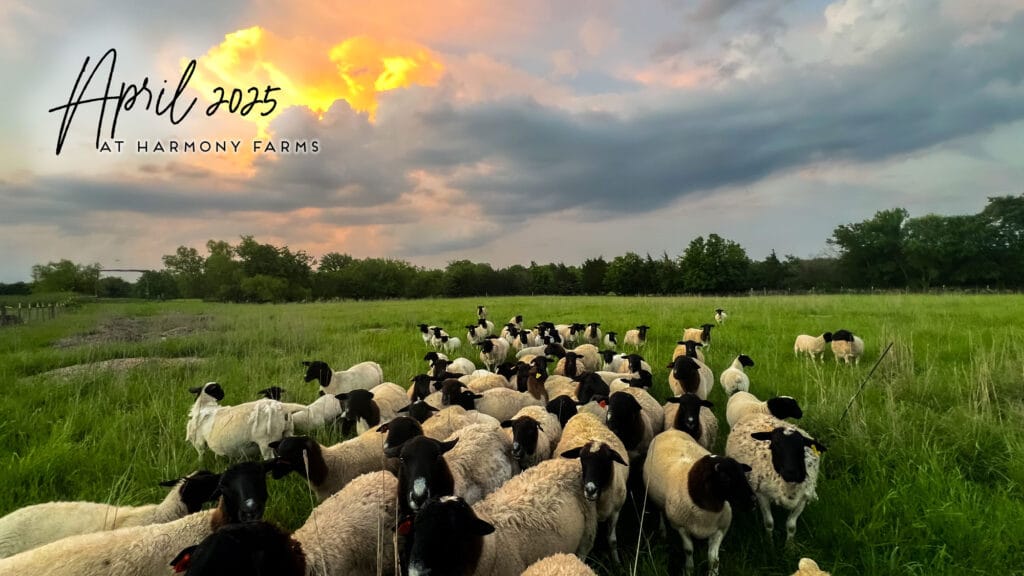
Looking to purchase Dorper Sheep? Join my waitlist for lambs:
Hi Friends,
I don’t know where to start with this update… this month has been PACKED!! I’ll do my best to recap it below.
First off: I have extended applications for the Dorper Dream Flock Grant through June 15th. For those who are still working through Raising Sheep 101, you have some extra time to finish the material and submit your grant application!
This project has been on my bucket list for a long time: A COOKBOOK! I took 5 f America’s best-loved recipes and made them with LAMB. It was so much fun!! Best of all: I am letting you download the cookbook for FREE. (tap the photo to find the download)


The flock is growing by leaps and bounds! I am prepping for buyer pickups this month. Many of these sheep will be at their new homes come June… while they wait on their new owners they are eating through the massive amount of grass that’s growing right now.
Completion prizes for Homestead Business Bootcamp Students!!
Another massive project behind the scenes is the Shepherdess Homestead Business Bootcamp. This is a 6 month coaching program where I help beginners in business lay the foundation for a 6-figure home-based revenue stream. We start from ZERO and build out a business plan month by month (for 6 months). Enrollment is closed for 2025. I plan to host another group in 2026, so tap the button below to be added to the waitlist!

And just for fun: an up-close from one of my bottle lambs. Despite being weaned, these little guys are always the first to run up and say “hi!”

And as a reminder: my book the Basics of Raising sheep on Pasture covers all of the basics of pasture management and sheep husbandry (250+ FULL COLOR PAGES).
Thanks for reading!
-the Shepherdess
“And let the beauty of the LORD our God be upon us: and establish thou the work of our hands upon us; yea, the work of our hands establish thou it.”
Psalm 90:17
Dorper Dream Flock GIVEAWAY!!
2025 Dorper Dream Flock Grant! I am giving one of you the chance to start your very own Dorper flock, with 3 sheep from my own farm! Keep scrolling for details on how to qualify and apply for the grant. What the winner receives:
Shepherdess Complete Starter Kit (32 Piece Supplies Bundle) Do you Qualify for the Dorper Dream Flock Grant?To qualify for an entry you must fall under one of these categories: 1. You have completed the course Raising Sheep 101 with a score of 85 or higher on all 5 quizzes. In addition to this, you need to provide proof that you have land suitable to raise 3 sheep and the lambs they produce (2+ acres recommended). or 2. Successful sheep owner for 12 months or more. You must have experience with at least one lambing on farm and an annual mortality rate of 15% or less.
PICKUP DETAILS: Winner will be announced on May 15th. Sheep will be Available for Pickup in Sulphur Springs, TX in June of 2025. What is Shepherdess.com?Shepherdess.com is a resource hub to educate, equip, and embolden beginner sheep farmers. At Shepherdess.com you will find free training, extended training, and sheep care supplies. These resources are designed to give you a strong start in sheep farming! This is not a random drawing. Applications will be carefully reviewed to ensure a good placement of these sheep. |
5 WAYS TO COOK LAMB (American Style)
📥 FREE Cookbook Download HERE:
How to Cook Lamb – American Style
I’m taking five of America’s most loved recipes and recreating them with lamb; lamb that I raised on my own homestead.
Homesteaders on small acreage are increasingly turning to lamb as a way to raise red meat. And with the price of beef cattle shooting through the roof, the idea is only becoming more appealing. Sheep are prolific, fast-growing, and thrive on pasture that would starve a cow.
But one of the most common questions I get is:
“How do you cook it?”
My answer: I substitute lamb for beef in almost any recipe.
Today’s post is a practical look at how I do that—with five of my favorite American-style recipes, and a few simple hacks to tone down the strong “lamby” flavor for the skeptics in my house.
I’ve put together a FREE PDF cookbook with all of these recipes and cooking tips. Download my free Cookbook HERE!.
Leave your favorite lamb recipes in the comments—I’d love to feature them in my next Chef-herdess cooking episode. (Special thanks to my dad for the clever title!)
1. Oklahoma Fried Onion Smash Burger
For the complete recipe, download my free Cookbook HERE!
This one is my personal favorite. Here’s how I adapted the classic beef smash burger:
Ingredients:
- Ground lamb
- Yellow onions
- Cheese
- French onion special sauce
Traditionally, these burgers are made with 80/20 ground beef. Since my pasture-raised ground lamb is much leaner, I mixed in grass-fed beef tallow. This not only adds the fat needed for proper cooking but also helps mimic that traditional beefy flavor.
Steps:
- Slice onions thin, salt them, and let them rest in a strainer for 45 minutes.
- While waiting, mix up the special sauce: Worcestershire sauce, mustard, and a (not-so-healthy) French onion chip dip. You can sub this out, but I follow the 80/20 rule: 80% healthy, 20% happiness.
- Add beef tallow to a hot pan and smash together equal amounts of lamb and onion.
- Toast your buns while everything cooks.
Result:
I meant to film a cheesy taste-test moment, but the burgers were devoured before I could grab the camera.
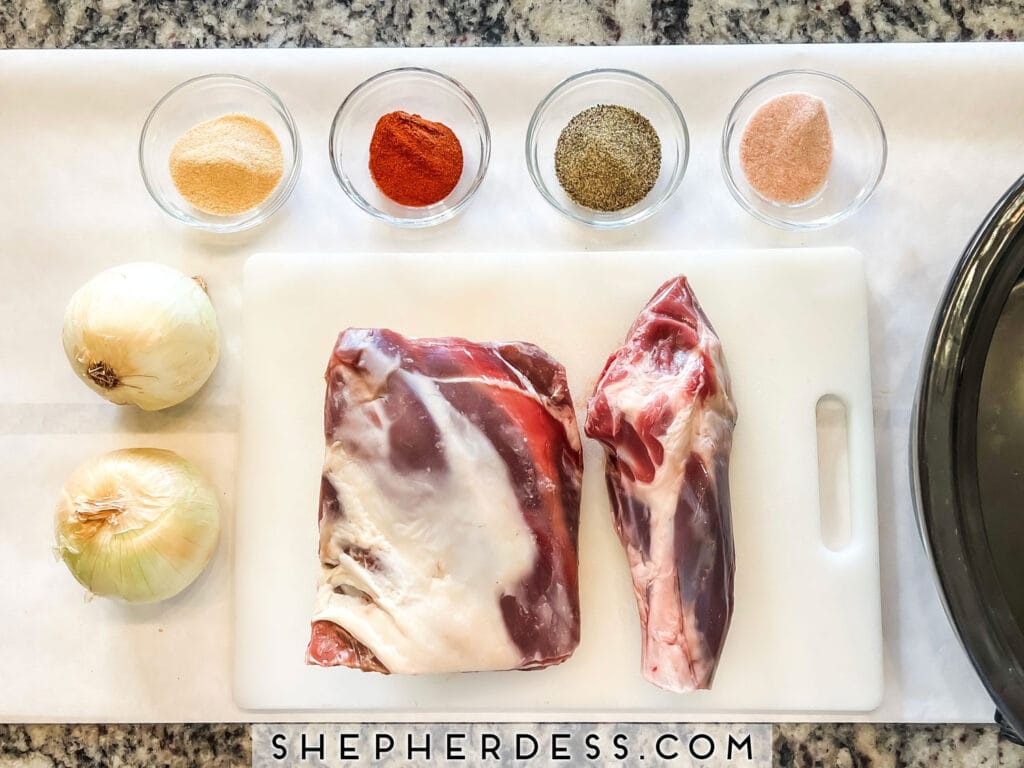
2. Slow-Cooked Pulled Lamb
Hands down, this is the easiest way to cook lamb—and it’ll rival any beef brisket or pulled pork.
For the complete recipe, download my free Cookbook HERE!
Ingredients:
- Lamb shoulder and shank (frozen or thawed)
- Salt, pepper, paprika, garlic
- 2 yellow onions (rough chopped)
- 1 cup water (2 cups if cooking from frozen)
Steps:
- Add lamb directly into the crock pot and season.
- Top with chopped onions and water.
- Cook on low for 3–4 hours or until fork-tender.
- Remove bones, save some onions, and mix in your favorite BBQ sauce.
Serve on a toasted bun, a baked potato, or both.
Note on flavor:
I raise Dorper sheep, which are hair sheep—not wool sheep. Since lanolin (a natural oil in wool) is what causes the gamey flavor many Americans dislike, my lamb has a much milder taste.
Bonus: Cooking lamb with garlic and onion tones it down even more.
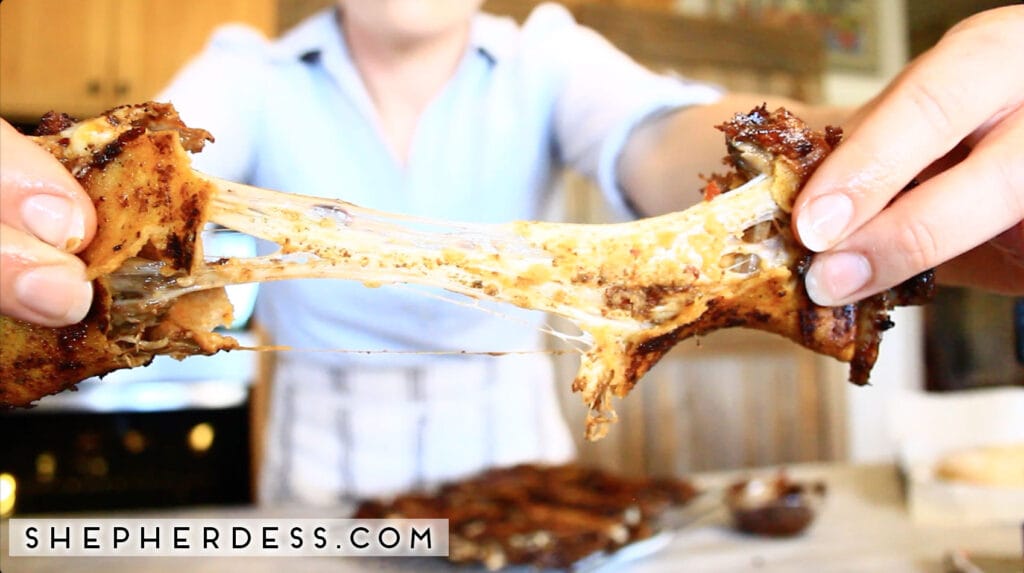
3. Birria Tacos (With Lamb!)
This was my first time trying Birria, and with 14 different spices, I was nervous. Traditionally made with beef in the States, Birria originated as a lamb or goat dish in Mexico.
For the complete recipe, download my free Cookbook HERE!
I used:
- Lamb shoulder and neck roast
- Salt, garlic powder, smoked paprika, Mesquite seasoning (for a rub)
- 4 types of chilis, onion, garlic, tomatoes, bay leaves (for mole sauce)
- 10 additional spices
- Beef broth, apple cider vinegar
- Mexican queso + Monterey Jack cheese
- Mini tortillas
Steps:
- Rub seasoning onto meat and let it rest.
- Boil chilis, onion, garlic, tomatoes, and bay leaves.
- Sear meat 3 mins per side, then add to Dutch oven.
- Blend boiled ingredients with spices and liquids for mole sauce.
- Pour mole over meat and bake at 350°F for 3 hours.
- Shred meat, separate from sauce.
To assemble tacos:
- Dip both sides of tortillas in mole.
- Add shredded meat and cheese.
- Fry on both sides in a hot oiled pan.
Final thoughts:
The cloves and peppers gave off a sweet, spicy aroma. The cheese pull was incredible, and the flavor blew me away—rich, slightly sweet, and no harsh spice.

4. “Marry Me” Lamb Tenderloin Pasta
This is the Shepherdess rendition of the viral Marry Me Chicken. I upgraded the dish by using lamb tenderloin, doubling the sauce, and adding angel hair pasta.
For the complete recipe, download my free Cookbook HERE!
Ingredients:
- Lamb tenderloin (marinated in orange juice overnight)
- Flour and spices for breading
- Garlic, sun-dried tomatoes
- Butter, oil
- Beef broth, cream, milk
- Angel hair pasta
Steps:
- Bread marinated tenderloin and let rest.
- Sear lamb 2 mins per side and set aside.
- In the same skillet, brown leftover flour mix with butter, oil, and garlic.
- Add sun-dried tomatoes and sizzle for 3 mins.
- Add broth, cream, and milk to thicken the sauce.
- Add lamb back to sauce for 3 minutes.
- Toss in cooked pasta and serve with lamb on top.
Result:
One bite and I was crying (maybe because it was so good, maybe because I was exhausted from cooking all day… haha!)! The loin stayed perfectly pink inside, and the creamy sauce tied it all together.

5. Loaded Lamb Omelet
I wrapped things up with a loaded breakfast omelet using leftovers from the week.
For the complete recipe, download my free Cookbook HERE!
Steps:
- Bake a batch of biscuits (because every good breakfast starts with them).
- Scramble 2 eggs in an oiled pan.
- Load the omelet with:
- Caramelized onions (from the smash burgers)
- Queso cheese (from the tacos)
- Shredded lamb (either BBQ or Birria leftovers)
Enter name or email to search contact
This omelet did not disappoint.
📥 Don’t Forget the FREE Cookbook HERE:
All five of these lamb recipes are available in my FREE downloadable cookbook.
Thank you for reading—and make sure to give the video a thumbs up before you head out!
March 2025 Farm Update
Join the waitlist to purchase my Dorper Lambs:
Hi Friends,
I have great news! THE DORPER DREAM FLOCK GRANT IS BACK FOR 2025!!!! Applications are open now (please be careful to read and ensure you qualify before submitting your application).

Thanks to everyone who purchased lambs last month: I am sold out of breeding stock for spring 2025. I have a few meat wethers available, but family gets first dibs. If you
are interested in the meat wethers (castrated rams, no vaccines, sold
alive, to be grazed and finished at your place), use the link below to
be added to the waitlist.

I weaned off some of my fall lambs last month. Splitting my lambing groups in two has been so great. It evens out the work load. I am now working with two moderately sized lambing groups, rather than one mega-group!

Once weaned, I will feed the lambs a quality alfalfa hay in a dry pen for about 2 weeks. This gives the moms time to dry off, and provides the lambs with a high-quality transition off of mom’s milk and onto 100% forage.
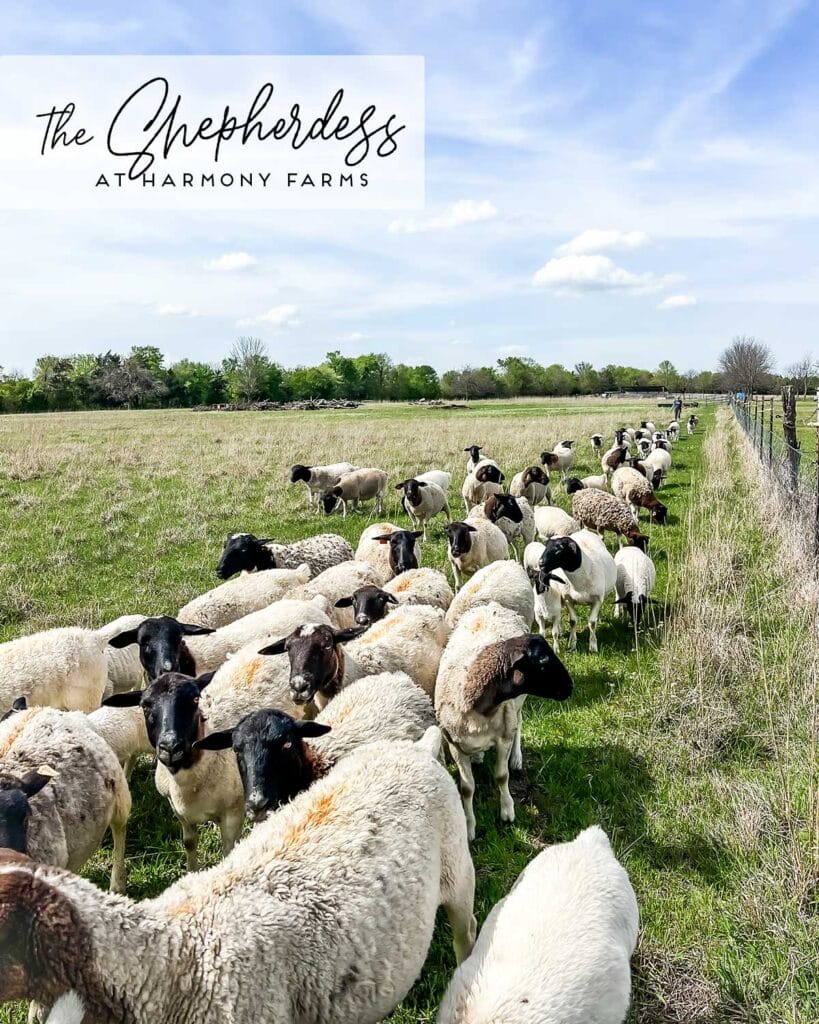
We had some erratic low-temps this spring, which put my pasture behind about 2 week. But with the warmer temps we are OFF TO THE RACES. It is going to be tough to keep up with all the grass – but no complaints about that problem!
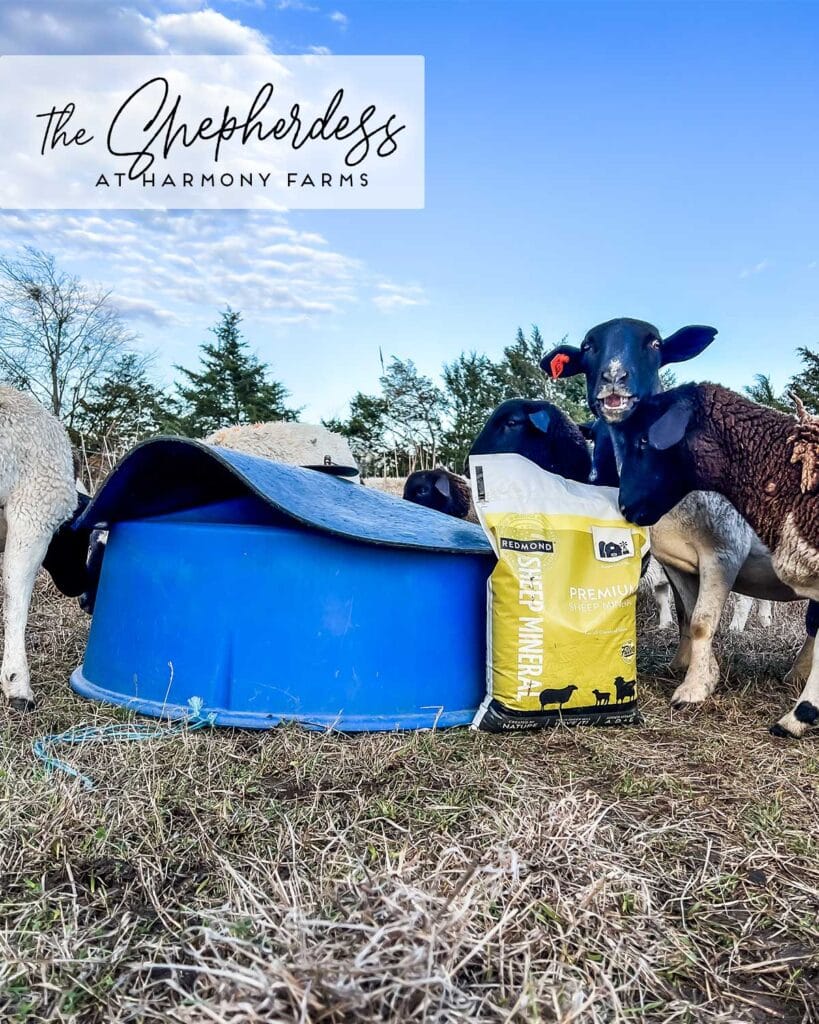
I am asked about my mineral program. I started using Redmond Livestock Salts about 3 years ago and they have been GREAT. Because we have so much rain, I invested in one of these bull-mineral feeders. It is covered and sturdy!
If you’d like to try the Redmond Sheep Mineral for yourself, I sell 5lb bags in my SUPPLY SHOP HERE. (Free Shipping on $75+)
And as a reminder: my book offers all of the information you need on the Basics of Raising sheep on Pasture in a photo-focused format (250+ FULL COLOR PAGES).
Be sure to see if you qualify for the 2025 Dorper Dream Flock Grant!
-the Shepherdess
“And let the beauty of the LORD our God be upon us: and establish thou the work of our hands upon us; yea, the work of our hands establish thou it.”
Psalm 90:17
$100K SMALL FARM BUSINESS PLAN TEMPLATE (for 2025)
CLICK HERE TO DOWNLOAD MY $100k FARM BUSINESS PLAN TEMPLATE
In this post I am going to break down my $100k farm business plan.
A simple 7-part business plan I created for myself 5 years ago.
3 years later in 2023, God gave increase to my effort and I was able to hit and maintain cash flow at $100k annual revenue.
Now I am operating on the basis of a 30% minimum net profit. That $100k boiling down to roughly $30k after costs.
I originally shared this business plan in December of 2020 to my then-18 youtube subscribers.
Today, I am sharing it in 2025 from the perspective of hindsight: Walking through
- The 7 original components of my business plan and how they evolved in real-time.
- Income streams I stacked within this agricultural startup to grow beyond that original $30K net profit goal.
- And at the very end answering the question: would your farm business survive without youtube? Sharing exactly how much money Youtube paid me this year with over 150k+ subscribers… which will probably be the most surprising part of this whole video.
My $100k Farm Business Plan focused on answering 7 questions:
- WHY?
The first of which was “Why do you want to be a farmer?”
This was a question coming at me right and left from those who knew me in real life, because farming was so diametrically opposed to everything I had done to that point, and proposed so much less money than a lot of the other career-paths I could have contributed my marketing skills to.
There were 2 main “whys” that have anchored my farming journey since day 1:
- Stewardship. From a standpoint of faith, I felt compelled to make the most of the 30 acres in front of me, and to manage it in a sustainable and regenerative format.
- The second was the statistic that the average age of the American farmer is 56 years old. Now this is concerning for obvious reasons, BUT my business brain recognized an opportunity in that demographic. I realized that jumping into farming as a 25 year old meant that the better portion of my competitors would be retired before I even hit 40… If I could establish myself in this particular trade at a young age, and accumulate these skills, I’d have not only food security on a personal level, but also a durable income stream for a good long while.
2. Who will buy my farm goods? (Market Analysis)
The Second question is “Who will buy your farm goods?”.
This is market analysis, and it is as simple as identifying 3-4 markets or groups of people that will buy the product you want to sell, THEN make sure you have easy access to those markets before you start to produce those products you have in mind.
At this phase in the game I constructed a list of 10 places I could sell grass fed meat at and it included:
- Friends and family.
- 3-4 farmer markets in the Dallas Metroplex
- Directories like Eatwild.com
- Building my own platforms (with what I knew of SEO), using them ultimately to build my own email newsletter list.
That last one on the list ended up taking off like a rocket, as I employed a specific strategy that I was accustomed to using in the retail apparel industry.
It was a waitlist, live launch strategy.
In short, I began marketing my product before it was ready to sell.
I setup an email list as a waitlist for sheep, then (the moment I started farming) I began to show photos and videos of my regenerative sheep farming process across social media.
I was clear on social media about what I had to sell: pasture raised Dorper sheep, and I was clear that if people were interested in buying my lambs, they could subscribe to my waitlist.
By the time I had my first lambs ready to sell, I had about 1500 people on this email waitlist.
AND using this strategy I have consistently sold out of my lamb every year for 5 years straight. All the other market streams I identified in this phase of my business plan are my backup, but this one sales stream has been so effective I have not needed them as yet.
Now back to the business plan…
- What are my resources?
The 3rd of 7 questions in the business plan is “What are my resources?”.
This resource evaluation ties to the reality that the fastest track to profitability is converting existing resources into a marketable product.
For me, in the context of growing pasture raised meat, this Resource Evaluation process looked like taking a mental inventory of not only the size of my land base, but things like rainfall, forage density, and even the human resource I had to help with this farming startup.
In order to minimize startup costs and ongoing cost of inputs, it is important to make sure your resources closely match the product you decide to farm.
It is also very important to NOT cling to your ideals at the expense of profitability.
- What are you Going to Farm?
Which brings me to the 4th question in my business plan, which is “What are you going to farm?”
Notice that this is very deliberately not the first question, despite the fact that for most people it is naturally the first consideration as they start a business.
Now as a side note, you do need to have a general idea of what you want to produce before you start your business plan: e.g. I generally knew that I wanted to raise grass fed meat.
But you also need to be flexible with the specifics as you flesh out this plan.
Which leads to a funny story for me: because in 2020 I wanted to be a cowgirl so bad and was so sure that I wanted to raise beef cattle that I was about to invest $20k in a herd of Aberdeen Angus heifers.
I was watching the auction and making calls to obtain this stock, but I am so grateful because the Lord really kept putting road blocks in front of me. And once I took the time to slow down and evaluate my market and my resources, I realized that sheep presented a better opportunity for me at a lower startup cost.
For example:
After studying my markets I realized:
- There was a lot of existing and well-established competition for grass fed beef in my area.
- Lamb was bringing a higher price per pound, both commodity and retail, and there were not as many people producing it.
- Texas being a massive sheep state, I realized if I built my flock with quality genetics I could probably sell as much breeding stock as I did meat.
- The cost of a starter flock of ewes was about 1/4 the cost of a starter herd of Aberdeen Angus heifers.
After taking inventory of my resource I realized:
- I could turn about 400% more cash worth of sheep on 30 acres than beef.
- Physically the size of sheep was more manageable for me as a lady, who was primarily leaning on the help of her two younger sisters as human resource.
So this is a real-time look at the importance of slowing down and evaluating your market and resources before making a final decision on the product you are going to develop and sell.
5. How much do I need to sell? (Aiming for $100k)
Question #5 on the Business PLan is “How many units of this one product do you need to sell to reach my gross revenue goals?”
From the beginning, it was my intention to diversify to reach $100k, but I wanted to make sure that if I needed to make it on the sales from any one enterprise at my farm, that the numbers did not look too unrealistic.
So I penciled it out and found that I would need to direct-sell about 230 lambs per year to earn $100k, which felt achievable based on all of the information I had gathered to that point.
Now I realize I just said “felt”. And I generally don’t like relying on feelings for much of anything.
BUT, there is something to be said for intuition.
When you get to this point and something in your gut says “I don’t think this will work at all” pay attention to that – and pray the Lord gives you wisdom.
When I was contemplating pulling the $20k trigger for that beef herd, my gut was gnawing at me.
But when I wrote the $11,000 check for sheep, there was total peace and enthusiasm.
It’s not science-y, but sometimes you gotta go with your gut.
I knew that going from 0-230 lambs per year was not going to happen overnight, in fact I did not want it to. I wanted to grow my flock incrementally in tandem with my markets.
Which brings me to question 6 in the business plan:
6. How long are you going to investing your business plan before expecting it to arrive at full scale?
For me, I said I wanted to give it 7 years before expecting good, bad, or otherwise out of it.
It has been said that the average person overestimates what he can do in 1 year, but underestimates what he can do in 5 years.
This long-term commitment before expectation of results is so antithetical to what we are being taught in this instant gratification generation, but making commitments and setting long-term goals and not quitting or expecting overnight success is so important.
I often think of the analogy of mushroom vs an oak tree:
A mushroom blooms and matures overnight, but it withers and is gone as fast as it came.
An oak tree takes 20 years to reach maturity, but has an average lifespan of 600 years.
So I always keep this in mind when things are growing slower than I want them to… and encourage myself that that’s not necessarily a bad sign – in fact, growing too fast often is.
- Where are you going to get the money?
Now the 7th and final question in this business plan is practical and that is “Where are you going to get the money?”
Once you decide on how long you are going to give your business plan to mature, you have to tally the costs of year over year operations and figure out where you are going to get the money to subsidize your efforts during the growth phase.
Now if you have done a good job of starting small and staying lean, expenses should be manageable.
For me, I still had my regular job that was paying the bills… and I used my savings to cover the startup costs.
Now a major blessing and something I give the Lord credit for is that once in year 3 I hit cashflow. Not profitability in year 3, but I hit and have been able to maintain $100k annual revenue within the farm business.
For 4 years straight my sheep have sold at the price I needed them to, and my waitlist for the sheep continues to grow.
Because I am using email newsletter marketing I have a close relationship with my customer base that enabled me to sell a variety of value-added products on the side, which further contributes to revenue.
Adding Additional Income Streams:
Now this brings me to the second topic which is additional income streams on my farm. I have built about 10 different income streams into my farm enterprise, using much of my previous experience in marketing.
Now to give some back story to my thought process going into farming, my goal was $30k net profit from my farm business. At this, I knew that I’d probably keep my job in retail and marketing to subsidize an additional $20k worth of income for myself.
However the Lord has opened up doors for me to shove all of my gifts in marketing and content creation into the direction of enriching and expanding the regenerative agriculture sphere.
Instead of splitting my time between farming and the retail apparel industry: I am 100% devoted to my farm and to providing resources that enable beginners to enter the realms of regenerative agriculture successfully, and resources that teach established farmers how they can modernize their marketing to be more profitable.
Each of these 10 income streams has contributed to my overall income and enabled me to focus entirely on agriculture. And yes, youtube ad revenue is one of them.
Which brings me to the 3rd topic and that is a question I often receive:
Does your Farm business plan rely on Youtube ad-revenue?
The answer is no.
In fact in the past year, with 158K subscribers and 3.5 million views, Youtube has only paid me $12,000.
Now I am thankful for that money, but in relation to the amount of time it takes me to make these videos, it’s not a lot (NAPOLEON $1 an hour).
AND, if youtube stopped paying me tomorrow I wouldn’t notice it much.
And that is because I have never made Youtube videos to earn ad-revenue. I have always made Youtube videos with the specific goal of adding subscribers to my email Newsletter list.
At present, through various strategies, I am able to convert Youtube Subscribers to my email newsletter list at a rate of 20% – which is the real gold and the real source of revenue for my business.
And once you are part of my newsletter community, I focus on treating you really really well.
In fact, that email list is one of the closest connections that anyone has to me on the internet.
Once you are on my newsletter list you get all kinds of free resources, I send monthly behind the scenes updates from my farm, I host free exclusive livestreams with special guests, and more…
“In the morning sow thy seed, and in the evening withhold not thine hand: for thou knowest not whether shall prosper, either this or that, or whether they both shall be alike good.”
Ecclesiastes 11:6
HOW TO START A FARM (from scratch) IN 2025
CLICK HERE FOR THE FULL LENGTH INTERVIEWS
“Hi Shepherdess,
My name is Cal, I’m 16 years old. I’ve been looking into agriculture lately, with a focus mainly on livestock. I like how you break things down simply and easily — it makes the whole process feel less overwhelming and easier to manage.
I’m still in school, but starting a small sheep farm or another kind of farm is something I’m seriously considering in the next few years, thanks to you.
If you’ve got a moment, I’d love to ask a couple of questions:
- What’s one piece of foundational advice you’d give to someone before diving into farming properly?
- How did you decide on the scale of your operation when you were starting?
- Are there any common mistakes beginners make that I should watch out for?“
Dear Cal,
Thank you for writing to me. You asked some really good questions, and I will answer them individually in a minute. But all of them have a very similar answer, and it goes along with a personal slogan I adopted when I jumped into farming five years ago: “Think big, start small, don’t quit!”
There are no limits to the plans you can make, but no matter what, starting small is going to be your greatest advantage—especially if you don’t have any previous experience as a farmer.
Taking a year to raise just 3 or 5 sheep before jumping in with a huge flock is going to put you way ahead.
Here are more in-depth answers to your individual questions, based on what’s worked for me and my friends.
The Most Important Advice Before Jumping into Farming
Pencil out your large-scale goal and know your numbers. If you can make your farm work on paper, you have a much greater chance of making it work in real life. If you cannot make your farm work on paper, there is a low chance it will work itself out in real life.
Don’t overcomplicate this initial planning process.
Start With Three Key Questions:
- How much do you want to earn as a farmer?
- What do you want to sell?
- How much will your market pay for it?
Once you have these pieces of information, it’s simple math.
For example: Say you want to earn $10,000 per year, you want to earn that money by raising sheep, and you find local markets will pay $200 per lamb.
$10,000 ÷ $200 = 50 lambs per year to meet your income goal.
Even if you are just raising animals for personal food, try to tie a goal to each animal before committing to it.
For example:
- Meat sheep: Figure out how much meat you want per year and how many sheep it will take to meet that goal.
- Dairy goats: Determine how much milk you need per year and how many goats are required to meet that goal.
Your business plan will grow as you go, but walking through this three-step process is critical before you spend a dime.
To buy a farm or start a homestead with no goals at all is like setting out on a road trip without a destination—it will be fun for a while, but at some point, you’ll wind up lost and out of gas.
Start Small: Scaling Your Farm the Right Way
Once you have this three-step plan penciled out, take the smallest step possible toward that large-scale goal.
If you have decided to raise sheep, start your first year with just 2-5 sheep. Once your lambs are born, work to find your first customer and make your first sale.
Big success almost always starts with small wins.
And on the flip side, if you find out you really don’t like raising sheep after all, you’ve figured it out before spending all your money and energy on 50 sheep—which is a much easier thing to do.
The way you do small things is the way you will do all things. So give the small things all you’ve got.
How I Decided on the Scale of My Operation
I simply started with what I had in front of me, which was 30 acres. I didn’t own the land (and I still don’t), but my family was willing to lease it to me.
I didn’t start with the goal of becoming a big-rig rancher and owning thousands of acres someday. I just wanted to be a good steward of the resources I had access to and make a business out of them.
Land Size vs. Profitability
Profitability doesn’t have anything to do with how much land you have.
For example:
- I interviewed an organic vegetable farmer who makes more profit on 1.5 acres than most commodity grain farmers make on 1,000 acres.
- I interviewed pastured meat producers who make more profit on 20 acres than most commodity cattle producers make on 200 acres.
Profitability directly correlates to your market and your marketing.
Both of the farmers I just mentioned have a direct-to-consumer subscription sales model for their farm products (called a CSA subscription). This retail business model allows small farmers to cash flow small plots of land far better than commodity producers on large acreage.
No Land? Try This!
If you don’t have access to land, here are some ideas:
- Start with what you have. My friend Nancy regeneratively grazes six grass-fed dairy sheep on just one acre.
- Diversify. My friend Nichole raises goats, pigs, bees, chickens, quail, winter wheat, and a vegetable garden on one acre.
- Rent pasture. My friend Teressa in California put out an ad on Craigslist and was able to rent 10 acres for her Boer goat herd.
Start with what you have—because more than likely, it’s all you need.
Common Mistakes Beginners Make
The most common mistake? Starting too big and investing too much money, without a clearly defined goal.
This isn’t just a beginner mistake—it can happen at any phase in the game. In fact, it happened to me.
My Biggest Farming Mistake
Despite starting small and making a plan, I got cocky. In my second year, I added cows and a goat herd on top of my sheep. I had no real plan for either the cows or the goats, so they rapidly began to consume all of my resources without providing a return.
It cost me a lot of time, money, and energy, and pushed me into a severe season of burnout.
But thankfully, rather than causing me to quit, the burnout humbled me into a new season of focus and carefulness. I sold my cows, kept a few goats as pets, and returned to my original business plan of just raising sheep.
Start small to grow your wins rather than magnifying your losses.
The Future of Farming: A New Opportunity
There is so much opportunity for new farmers today—but it doesn’t look like it used to.
High-input commodity farming is less profitable than ever and poses a risk to soil health, the atmosphere, and human health due to heavy chemical input.
- Wholesale prices for crops are no longer supporting farmers.
- The cost of inputs (fertilizer, seed, equipment) outweighs the value of the crops grown.
- Government subsidies are the only thing keeping many large farms afloat.
But a new wave of opportunity is opening for the small farmer.
What Consumers Want Now
Consumers are waking up. They are trading out grain-based diets for:
- High-quality meat
- Pasture-raised dairy
- Organic produce
These are the customers we must look for as new farmers because these are the products that can be grown without expensive inputs like combines, tractors, and massive facilities.
As new farmers, we need to focus on selling to customers who pay retail prices, rather than brokers who pay wholesale prices.
Final Thoughts
If you’re reading this, leave your best tips for Cal in the comments section.
And download my FREE “New Farmer Kickstart PDF” with all of the videos, interviews, and business planning templates I mentioned in this post.
-the Shepherdess
“He that is faithful in that which is least is faithful also in much: and he that is unjust in the least is unjust also in much.” Luke 16:10
20 bad things…
Hi friends, My (free) monthly livestream is tomorrow at 8pm CST! The theme it 20 BAD THINGS that have happened at my sheep farm (warning, not for the faint of heart); including how I treated the problems immediately and what kind of management I put in place to mitigate issues long-term.
I will be providing photos and instructions (some blood and guts involved), so feel free to skip this meetup if you aren’t ready for this kind of sheep info yet. However, if you are ready for the good, the bad, and the ugly; knowing about these issues ahead of time might save a life or two at your farm! Hope to see you tomorrow at 8pm CST! -the Shepherdess P.S. This livestream only accommodates 150 attendees, so log-in early if you want a seat! A replay will be sent to all registrants, so register for the replay. “Be thou diligent to know the state of thy flocks, and look well to thy herds.” Proverbs 27:23 |
[LIVE] DORPER SHEEP FOR SALE
Hi Friends!
PICKUP (or delivery): DFW area, Texas. Pickups are tentatively set for May. Delivery within 180 mile radius is available for $300. Further details below, please read thoroughly! First right of buy-back: The first and most important detail is that I ask for first right of buy-back on my sheep. If you purchase this Monday and (for whatever reason) need to sell them within the next 36 months, please email me and let me have the first opportunity to purchase the them back. What is available:
The genetics pool is the same for these rams and ewes, so buying to breed together is not advisable
About the Sheep: My sheep are pasture adapted, purebred Dorpers. They are 50% registered, however they will not come with registration papers. My sheep are bred to perform well on quality pasture in a rotational grazing system. They have been living on pasture almost 24/7 and are hardy; they do not need to be pampered with fancy barns, confinement-style management, or heavy feed rations. All of that said, please raise them responsibly, provide shelter for freezing rain and sleet, and understand that in certain circumstances feed supplement is good animal husbandry (in short, don’t starve them or let them freeze to death -haha!). As a note for 2025, during winter (while pasture was dormant) I fed a ration of 0.75 lb per head of DDG in place of alfalfa. This was done as part of a research project on various types of winter supplement. Because DDG is a grain-based supplement I want to mention it for sake of transparency, however it does not affect any of the pasture-based traits of these animals. These sheep are bred to perform on pasture with minimal supplementation. I’m excited to see you at 8AM (cst) Monday! Be sure to bookmark the links above. I will send one more email with both links on Monday morning. -the Shepherdess “He shall feed his flock like a shepherd: he shall gather the lambs with his arm, and carry them in his bosom, and shall gently lead those that are with young.” Isaiah 40:11
|