 by
by 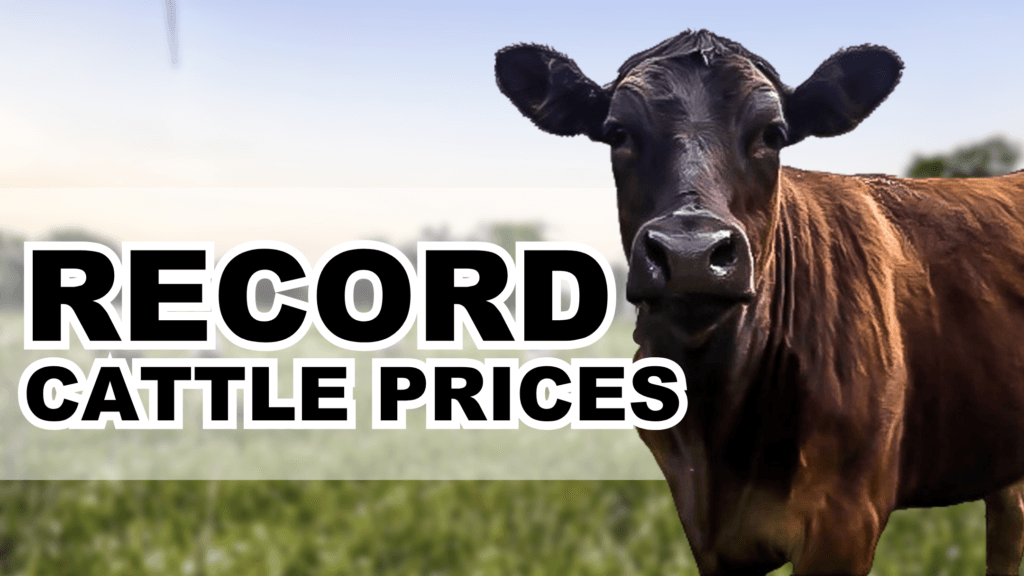
Hi friends,
The cattle industry is in a unique season right now. Record-high beef prices have many producers wondering whether they should expand their herds, get started in cattle for the first time, or simply wait to see what happens next.
In this episode, I sit down with my friend and regenerative rancher Karl Ebel, who has spent more than 20 years managing a grass-based cattle operation on over 1,000 acres, to discuss what is driving today’s cattle market and how producers can position themselves for long-term success regardless of where prices go from here. We talk through stocking rates, rotational grazing, winter feeding strategies, cattle selection, and why Karl views livestock as a tool for improving the land rather than simply a product to sell. We also discuss the practical realities of raising profitable cattle in today’s market and what beginners should know before making major investments.
Whether you’re considering your first cow or looking for ways to improve an existing operation, my hope is that this conversation helps you build a more resilient and profitable livestock enterprise.
-the Shepherdess
TRANSCRIPT
the Shepherdess All right, guys, good evening. I am not flying solo tonight. I am bringing you Mr. Karl Ebel, one of my favorite co-hosts. Thank you so much for being here tonight.
Karl Ebel It’s a pleasure to be here, Grace.
the Shepherdess You know, we probably would not be here on whole if it was not for Mr. Karl and his wife. But I was just thinking back—it was a really funny story. It was actually your son, Christian. He came to the door with your wife when we had just first moved here, and he brought us this big welcome basket. We were 15 miles away, but that was just kind of the community that welcomed us when we were here. So it’s a really neat story and a really nice start. All right, we’re going to get going tonight, but tonight we’re going to be talking with Mr. Karl, who’s been running a regenerative ranching for about 15 or 20 years. Are we right at 20 or am I undercutting you even there?
Karl Ebel A little bit more than 20.
the Shepherdess Okay, a little bit more than 20. So tonight we have a jam-packed night. We’re going to be talking about the cattle industry, and the cattle market. We are going to be talking about starting a herd, input costs, meat goats, and beef cattle. Thank you guys so much for being here. Mr. Karl, would you go ahead and just introduce where you’re at and what you’re farming, just simply?
Land restoration through regenerative grazing
Karl Ebel Well, I’ve been a friend of Miss Grace for probably six or seven years. We’re just down the road, probably 10 miles or so. We bought a pretty rough piece of property about 2001, and we started a renovation of that about 2003. And it’s been a great journey, and very satisfying. What the before-and-after pictures look like are quite amazing. In this area we get very high rainfall. The brush encroachment thing is a huge thing if you’re not watching that, and so that was a big part of what we did—pushed the brush back. In the early days we used some goats, and we moved more from the goats towards the cattle as we restored more grasslands.
the Shepherdess And what’s the size of the land base that you’re working on right now?
Karl Ebel Our place is a little over 1,000 acres, so it’s a full-time job for one guy that’s willing to roll up his sleeves, but very satisfying.
the Shepherdess If you’re a beginner shepherd on 30 acres or less, then I wrote a book for you: The Basics of Raising Sheep on Pasture. Available at Shepherdess.com with free shipping. Raising sheep on pasture requires a basic understanding of pasture management, breeding and lambing, and mitigation methods for common disease. I walk the beginner shepherd through each aspect, sharing through this book vivid pictures, easy-to-follow instructions, and personalized stories from my own journey with sheep. Available with free shipping at Shepherdess.com; you’ll find a direct link in the description.
I have an entire list of questions for Mr. Karl surrounding the record-high cattle market that we’re seeing today, and some questions surrounding his operation. I just want to let you guys know that this is kind of just my excuse to get him in for about two hours of conversation once every three years, so I’m going to be prioritizing my questions and we’re going to take questions from you guys as well. In terms of the goats, now you run the meat goats, what is the breed or breed cross that you’ve found the most success with?
Karl Ebel We have kind of a mixed breed with a very… Probably Boer. If you look at the herd, that’s when you would say it’s more dominantly a Boer. But there’s some Spanish in there and some other stuff that basically, if the mama goat is a good-quality goat with no real problems—feet, udder—and we put a good solid Boer billy across the mamas, we get some really nice kids.
the Shepherdess Because you are really pushing for that carcass for the commodity market.
Karl Ebel That meaty, real heavy carcass. You’re right.
the Shepherdess So, okay, I’m going to jump right in here with my questions, but I really want to attack sort of the cattle market that we’re seeing here. I think that February 2023 was the last time that I had you on the live stream. And at that time, I think prices on feeder calves were hovering… Where were we at?
Cattle price trends and market shifts
Karl Ebel Yeah, so I looked back a little bit in my records. It was good that you asked me some of that, Grace. I looked back in my records, and so here’s the striking thing: in the fall of 2020, we were getting $1.58 for that 500-pound calf. Then jump ahead to 2023, and we’re getting $2.15.
the Shepherdess Gotcha, so I was a little bit low-balling on that.
Karl Ebel Well, you probably had a 600-pound calf, which was $1.89, but for that 500-pound calf—which is kind of what my target is—yeah, $2.15. And we thought, man, we’re doing good. We finally have a little breathing room here. And of course, today, it’s just phenomenal.
the Shepherdess Where are we at today?
Karl Ebel In 2025, we were at about—for that same 500-pound calf, high-quality, good genetics—over $5.00, $5.40. So you’re going from in 2020, that same calf was about $750, and now you’re looking at a calf that’s $2,700.
the Shepherdess Wow. Did you ever think that it would get to this place? I mean, what are people’s thoughts within the industry in terms of the cattle?
Karl Ebel No, I never imagined it. I mean, I was thinking, well, you know, we might get up towards $3, and that would be nice. Then we’d have some breathing room, you know, but not $5 and something. But it’s just supply and demand. It’s the nature of what we do. And the weather—environmental climate, whatever conditions that pushing us towards, I think, if we had a bunch of rain, a lot of the guys would be saying, “Okay, I’ve got these heifers that are really good and they’re bringing good money, but now I’ve got the extra grass, I’m going to keep a few.” And the drought is still…
the Shepherdess So people aren’t extending their herds right now. That’s interesting.
Karl Ebel And there are some great guys that do a super job on summarizing the cattle market—what’s going on, kind of where we’re headed. There’s a guy at OSU that I really like, Dr. Derrell Peel. There’s some other ones too. There’s one at A&M and at K-State, and I was fortunate to see all three of them together at one time. But anyway, they give some great reports. Those guys are super at what they do, so I just kind of borrow and watch what they do, witness it kind of, you know, and apply that to what I do.
the Shepherdess So you’re talking in terms of management, pasture management, or are you talking in terms of predictions for the cattle industry with respect to those names you just dropped?
Karl Ebel It’s just a big picture of where is this going and where do I fit with my skill set and the resources that I have in my place? So as this thing evolves—and it’s going to change—what can I do to be in the right spot?
the Shepherdess Exactly.
Why finishing beef is less profitable in today’s market
Karl Ebel And we do a limited amount of grass finishing, we sell finished beef, but when a calf brings $2,700 at 500 pounds, you can quickly do the math—and probably some of y’all that are watching know this. I mean, you’ve got to get $5,000 for a finished beef to make it halfway exciting because you’ve taken him from 500 pounds to 1200 pounds. Now the resources that you’ve got to put into that animal are way more than it took you to get from zero to 500.
the Shepherdess And that’s the funny thing, because when we met six years ago, people were getting excited about finishing out a portion of their herd and direct marketing the grass-fed beef. And we totally flipped—you can hardly convince people that the margins are there because if you’re smart, you’re doing math, and they’re not. We’re just in a record-high cattle market. And I’ve got tons more questions about the market, but Mr. Karl works in a regenerative, pasture-based system for his cattle. And one of the interesting things that you really emphasized, or made me understand up front, was that you got into raising livestock by seeing the animals as a means of managing the land rather than vice versa.
Karl Ebel That’s right. That’s very important. I mean, when I was in my younger years, I did the cowboy thing and I loved it. And I was more involved in what, really, the whole grazing ecology was about. It began to really fascinate me, and I began to understand more about what was at the base of all this that I was enjoying. It’s a grazing land ecology—that is the resource. And that’s what we have to nurture and take care of and grow. That’s the soil that’s under that and the grazing ecology. That’s where we’re going to get the return in the long term. And that is not an easy thing for a lot of Americans. We want to put the effort in and we want to see the progress right now. But it’s a little bit of a slow process to rebuild and start building up soil health—all the different grasses, all the different forages that we need to establish—and then go into something where we really have a great resource. So that takes time.
the Shepherdess Yep. All right, we’re going to get into some questions, again, connected to the cattle industry. Some people here in the comment section are asking for guidance in terms of getting in. Those are all questions I have on my list tonight, and we’re really going to get to them, but Mr. Karl—for people who are just totally new to you—give us some context on your land base: when you purchased it, what was the history of the land, what it had been previously used for, kind of carrying capacity, improvements over time—little things like that that’ll help people to get a picture of where you’re at.
Karl Ebel So, in this area, it was almost 100% row crops, and mostly cotton. Cotton is very hard on the soil, and so they farmed it and they farmed it and they farmed it. They farmed it for well over 100 years. So there wasn’t a whole lot of nutrients going back. So the soil was quite exhausted. When we first got our place, there were jackrabbits. If you know what a jackrabbit likes, he likes a lot of bare ground, so he can really book it when the coyote’s coming. So a lot of bare ground. And so that tells you what the state of the soil health was—it was not really great. But slowly but surely, with rotational grazing—there’s a lot of regenerative stuff that you can do, but for me, that is the cornerstone of what builds what I’m doing with raising land ecology.
the Shepherdess That’s really good. All right. So let’s go ahead and go back to the list of questions that I have here. Now, you decided the last time you were on the show was 2023, you were at $2.15 per pound for one of the 500-pound steers that you were taking to market. Today we’re over $5.40, right? Now it sort of feels like, as an onlooker, we’ve had somewhat of a perfect storm—inflation, drought, we’re at record lows in terms of cattle inventory in the USA, tariffs, bans for screwworms. Is there any one factor that you would say is contributing more than another?
Karl Ebel Yes. So, you know, really, if the drought was not just there, keeping us on our toes, there would be more producers committing to that rebuild. We went through something a little bit similar to this in 2014, and the rebuild was pretty quick. But we had rain, and we had a lot of people that were willing to go ahead and say, “Okay, let’s go.” But now that the drought is hanging around, then that’s going to be one more thing. With any investment, anytime you add uncertainty, right?—because a lot of this investment is going to be on borrowed money, so then the risk is a little bit higher when they’re not real certain what’s going on—then they’re going to just kind of hold back a little bit, and I think that’s probably what’s going on now.
the Shepherdess So you would attribute a lot of it to just where we’re at climate wise. The drought is just causing people to be… They’re selling their heifers instead of keeping them back.
Karl Ebel If they had extra grass, they would be kind of looking at it the other way: “I’m going to keep them. I want to utilize this resource.” But if they’re like, “Man, if it gets dry, then I got to get hay and I got to do all this other stuff,” then it’s not going to come out very good.
the Shepherdess Well, yeah, because when you’re feeding your cows out of a brown paper bag, the profits kind of go out the window. So I mentioned some things. Am I overlooking factors? You mentioned the climate and some of the factors I mentioned—we got low inventories, tariffs, drought, import bans. Is there anything I’m overlooking in terms of what could be driving the market up?
Karl Ebel Not really. I think a little bit on the tariff thing, it was just a little bit of uncertainty. Really, after we’ve come through a lot of reiterations of kind of how that was going to be, the beef guys kind of benefited. Yeah, because the grain guys, you know, the row crop guys, they had countertariffs or whatever you want to call it. And so grain prices are down and they just…
the Shepherdess Because the global demand was sort of cut off with the retaliatory stuff?
Karl Ebel That’s right.
the Shepherdess Gotcha. Yeah.
Karl Ebel So the grain guys—they’re the ones that are going to be having a hard go here for a little while.
the Shepherdess Interesting. All right, so I’m going to go ahead and throw up a graph here—because I’m hitting the cattle market questions pretty hard—just as a matter of personal curiosity. So this is what we were looking at—a cattle market graph from, I guess it was, 2013 to 2022. I’ll pull one up that’s a little bit more recent here. Now, from 2013 to 2015, the cattle market was on a pretty steep ascent, I guess you could say. And then in 2016, it hit a really big crash. You were in the market, you were in the business at that point in time. What’s a little bit of context for what we’re seeing, basically, on screen here in 2013 to 2016?
Karl Ebel Well, again, it’s back to supply and demand. So when the numbers started building after the high prices in ’14 and everybody thought, hey, there’s a little bit of change to be made here. I’m getting back in. And they did, and they started building the numbers again. Well, then the favor shifts to the packers and the people that are selling the meat, and so they have the leverage, right? And so that’s what you saw when the market kind of hit the bottom in 2016.
the Shepherdess Now, explain that for somebody who doesn’t understand the industry or the monopoly. How would something like a packer have the ability to influence such a downturn as we see here?
Karl Ebel If they have really more beef than they need, they can pause. But the people that are raising those cattle and finishing those cattle in the feedlot cannot pause. They can pause a little and grow those steers a little bigger in the feedlot, but they can’t pause a lot. And the packers can kind of use that to their benefit.
the Shepherdess So basically, I mean, they have things like cold storage and inventories, you know, on the backside. So they’re able to basically leverage that ability to, I guess…
Karl Ebel Slow it all down, and then the guys that need to be making money on the production end…
the Shepherdess So you’re saying that in 2015 and 2016, we saw this horrible crash. You’re saying that the packers were able to leverage inventories to stay in the market, purposely or not. You know, you can’t say purposely, but…
Karl Ebel They just make a profit.
the Shepherdess Yeah. Interesting. So is there any parallel? I mean, we’re here 10 years later. Will history repeat itself? Are we at that risk? What would contribute to it?
Karl Ebel I would say that that’s a very good question, and the same guys that were predicting the markets they were predicting to rebuild when ’14 kind of came to the high, and they said, “Okay numbers are starting to rebuild,” and they were right. I mean, not every little, you know, peak and valley, but for the most part, they predicted it pretty close. And those same guys now are saying, “The rebuild hasn’t started yet.”
the Shepherdess So what metrics were they watching? Just herd sizes?
Karl Ebel Herd sizes, and they get numbers from the entire sales sheet, basically, of beef in the United States.
the Shepherdess Interesting. So they’re sitting there—the ones that predicted the crash that we saw in ’15 and ’16, really well—they’re saying we don’t have the climate right now to recreate this in ’26 or ’27.
Karl Ebel It’s not happening right now and it doesn’t look like it… I mean, it’s not like raising something that has a quick production time because cattle, that’s not the case. So it’s going to take a couple of years before we see, wow, yeah, it’s really started back the other way again. And they’re not seeing that right now.
the Shepherdess So, in context of that, another question that I had was imports. So I guess for some context here, I’ll build up with a couple more questions: did Trump ever put import tariffs on cattle specifically? I couldn’t really find any information.
Karl Ebel No, not really. There were a couple in the early days that were basically under tariffs for imports. Then there were some reviews done, and they removed them from the beef part of imports to try to keep a stable food, you know, try to help with inflation and so forth.
the Shepherdess So this is what we’re looking at here. This is a graph that I found from 2017, basically, to present day. They’re citing a 368 average for feeder cattle. But there were no import tariffs on cattle specifically. But in November of 2025, so just last year, Trump dropped tariffs on things like beef, coffee, another kind of exotic product. Was there any conversation in the community about that? Did it make a big impact?
Karl Ebel I don’t see that any of those particular measures made, you know, a big impact. What it did was the uncertainty. I mean, it doesn’t take you long to do the math. And there is the big portion of this beef cattle sector—these guys call it ‘running yearlings” or “running stockers.” One stocker is $2,700, and they need 200. Now, do the math on that and figure out—they’re going to be borrowing quite a bit of money. So uncertainty makes—and I would be too, I don’t know how they sleep at night—makes people really nervous and they’re like, oh, pump the brakes here.
the Shepherdess So those people that have to make the big investments financially, they would probably be the feeder or the stocker guys—which category?
Karl Ebel The cow-calf guys—mostly like myself—we hold our own yearling, but we don’t buy any. But the cow-calf guys—if he’s watching his numbers in his budget and inputs, his input cost increases a little but not tremendously. But the guys that are in the next section where you take this 500-pound calf, and you bring it to a wheat pasture or place to graze him through the summer—a lot of those guys buy those calves. So you can see the difference.
the Shepherdess Yeah, that makes sense. Because they’re not raising a herd, their inventories are just constantly a revolving door.
Karl Ebel And I would say—I’m just throwing a number out there, you know—60% of those guys are going to talk to a banker.
the Shepherdess Yeah, right. Those that are leveraged out the wazoo. Okay, so that’s a really good insight. So you came over in 2020, I think it was, and we had our first conversation on cattle. One of the first things you talked about was the imports from Argentina, just importing the full carcasses and cutting them in the United States and then marking them “Product of USA.” Do we still have that going on now or was that repealed?
Karl Ebel That is a good question. That was referred to back in those days as the cool… Whatever that bill was that they passed. And I know there was some more talk on revising that to protect some of our U.S. products that are made here, that are raised here, and so I’m not sure, to be honest. But I think maybe they have done a little to fix that so that the stuff that comes in from other countries is… Some of it is necessary because we have too much fat—I say too much, we have a lot of fat in our beef that we don’t want to just discard. So they bring in a lot—Brazil, Argentina—they were bringing a lot of lean beef and then we would blend those and then we would have something that would be a very good, very usable product.
the Shepherdess That brings me to—I think, what happened just maybe a week or two ago—when Trump allowed for, I think, it was like $800 million in trim from Argentina to be imported tariff free. A lot of people were throwing that around in a context that maybe wasn’t entirely accurate to be a little bit sensational. Did that at all cool the market? Do those kinds of things put the market at risk?
Karl Ebel I don’t think it had any measurable impact when you look at it, and that’s what these experts will—I mean, they go by the numbers, they’re like, “This is what we have for the amount of beef we’re processing; this is what these potential imports could represent bringing something else in. It’s not going to have a huge impact on it.” I would say the thing with Mexico probably has a little bit more impact. And it’s all based around this screwworm—this new world screwworm. That’s yet to be seen as we approach summer, what happened with that.
the Shepherdess Okay, that’s really good information. So you’re referencing those people in the industry that you follow for market information. Could you drop their names again in case anybody wants to go start following?
Karl Ebel Derrell Peel, and he does some good audio, so it’s a very good video broadcast. He’s just a great guy.
the Shepherdess Okay, great. So I think that gives some really good context. Well, one other question I had is just a straightforward question: are we at risk—and nobody can really answer this because they’re not really in the minds of these people—but are we at risk of, basically, enough imports being led in to produce a more favorable price for the consumer? And if that was something that was done, how would it impact the cattle market? Is that a question that can even be answered right now?
Karl Ebel That’s a good question. I don’t know… I mean, there are some countries that may have enough volume to affect that. Obviously, their exports are going somewhere now, and somebody else is asking for those exports, so they already have a market for them. Whether ours would be favorable enough to say, “Oh, we’re going to stop sending it over here; we’re going to send it to the U.S.” I’m just not sure. I kind of don’t think it would switch that big.
the Shepherdess Or maybe not that fast, at least. Yeah, that’s a good point. All right, guys, we are here with Mr. Karl Ebel, halfway through our hour. He is regenerative-ranching beef cattle, as well as meat goats. We’re going to start taking questions from the audience, but I’m just working through my list here because we’re at a really interesting and exciting time in the cattle industry for a lot of people. But we’re just painting a picture in terms of the context that is surrounding it. I know that a lot of you have listened to me—and really us in a lot of ways—talk about value-adding to your operation through just adding that finished beef or that grass-finished direct-to-consumer. We’re at a unique time where that’s just not playing out to be as profitable. A lot of people are just shifting their focus to the commodity market to capitalize on this time period. So in that context, you got a lot of people that are excited about getting into the cattle industry. It’s good because we need that, but in that spirit, you know, what kind of information, words of caution, or encouragement, would you give that first-timer jumping into cattle in 2026? What would you look him in the face and tell him?
Advice for new producers and managing a low-input grazing system
Karl Ebel I would say, you know, when you start, get some quality cattle that are going to finish at a very high-quality finish. And that’s going to be your product. And those guys that buy your calves—if you’re a cow-calf guy and you’re selling calves—those buyers can spot those good quality cattle in a second. And I would say precondition those cattle and background those cattle so that you get a premium price for them. And, you know, it just depends on what your circumstances are. But if you’re just taking them straight off of the mama cow and they’re balling and you take them to the sale like that, they’re going to hit you with a big discount because those calves now are high risk. And at the prices we have today, nobody can stand that much of a death loss at all, so they want good, solid cattle that have been weaned 45 days, 60 days, and have had proper vaccinations to make sure they’re not going to get sick.
the Shepherdess That’s really good. And I’m going to ask for definition of terms here on a few things in case we have newbies: you talk about preconditioning your cattle. Break that down. What does that process look like on your ranch?
Karl Ebel Very good question. It’s actually the biggest part of preconditions is planning. Because when that calf is about six or seven months old, you’re going to have to wean it. When you do that, he’s under a lot of stress: “I can’t get to mama. That’s what I’ve known for all of my life.” So fence line wean those calves if at all possible. Mom’s on the other side of the fence—they can almost touch her, they can talk to her, they can see her—and then where those calves are standing, when you wean them, you need to have some good forage. That requires a little planning. But in the fall, you might say, “Okay, I’m going to wean my calves”—I’m just picking a number—”October 1st.” So now when you’re in mid-August, or even before that, you’re saying, “Okay, I know I’m going to wean those calves in this paddock. I’m saving some forage in that paddock, so when those calves are balling and looking for their moms, all they have to do is lower their nose and they’ve got something good to eat.” If they got a full belly, man, oh man, they do so much better, and they don’t get sick.
the Shepherdess They forget their mom’s a little bit faster.
Karl Ebel But it takes a little planning.
the Shepherdess Yeah. So basically, your pasture management plays into every phase of the life cycle of that cow, and really of that calf all the way up to weaning.
Karl Ebel It does, Grace. You know, we talk about rotational grazing. Some simple polywire sets to carve off a piece where those calves are going to go down to that fence line to meet their moms who are in the next pasture over—take your polywire and just leave that out of your grazing. Don’t let any cattle in there. And then when you get ready to turn those calves in there, man, you’re way ahead of the game.
the Shepherdess All right. I’ve kind of answered this question already, but it comes through a lot to me for sheep, and the question is: is investing in quality cattle early on important or can I just make corrections down the road—start with low quality, build quality later?
Karl Ebel I did the same thing. I got—I wouldn’t say low quality—but I got some cattle that five years later, after I was better informed, I would have made different choices. I would’ve picked some higher-quality cattle. And everybody has an idea of the best quality, but I’m in English, Angus and Hereford. I lean more and more to the Angus, but they do a great job finishing. Those guys that are bidding on wherever you’re selling them, they can see them, they know they’re going to perform at the next stage when they’re grazing yearlings, and when they go to the feed yard, they’re going to perform in the feed yard. And so they pay you the premium for them.
the Shepherdess So that brings me to another question—again, sort of answered it—but what does a beginner look for when he’s shopping for cattle? What kind of questions does he ask? What does he look for in the operation? How can he make those wise decisions as a beginner and upfront?
Karl Ebel So the guys that are doing it—grazing—there’s a certain cattle type that is a little bit more efficient. Now, we’re not going to say we’re going to redesign the cow here, they’re just a little more efficient, and they’re going to give you a calf every year. So, if you’re just looking at a set of heifers, “I want to see the mama cow because I want to see their udders, and I want to see what these heifers are going to look like when they grow into cows for me.” So ask to see what the moms look like. Pay close attention to the udders. And ask that guy who’s raising them what percentage of calf crop that he weans. You need to be in the high 80s, around 90 percent. If he’s doing his business right, and those cattle are doing good—they’re efficient, and they’re doing a good job for him—he ought to be able to tell you, 87, 89, 90, whatever, somewhere around there, and then you know that if you take care of these cows properly, they can produce good weaned calf crop.
the Shepherdess So you want to look for good udders, you want to look for a good calf crop, and then would you ask about feed inputs at all or what would you do there?
Karl Ebel You can. That’s very helpful, Grace, because there are some cattle that have been selected that want to really lean into the grain finish ration. That is not exactly what I look for. I look for something that’s going to do really well grazing. And to be honest, I finished several steers and they finished very well. But the cattle that I’m looking for are going to have a little bit bigger girth because they’re going to be able to consume a little more forage. They’re not going to have real tall legs. They’re going to be a little bit shorter, moderate frame. My cows are probably somewhere in the neighborhood of 1,150 to 1,200 pounds, the bigger ones, and so they’re moderate. I mean, when everybody was just pushing for bigger, bigger, bigger, people would probably call my cow small. But they’re more of a moderate size. They tend to be more efficient. Almost all of the research that’s been done about taking a cow and what percentage of her body weight she weaned. Okay, that’s the calf. What percentage did she wean? So if she weighs 1,700 pounds, and she weaned a calf that was 600 pounds, and my little cows that are 1,150 pounds are weaning a 500-pound calf, start working the math a little bit there.
the Shepherdess Picture this: you are looking out over your 5, 10, maybe 20-plus acres. The sun is setting, and your flock is grazing across a green pasture. Something inside you affirms this is real wealth—at least when it comes to material things. You know how to take care of your sheep, your grazing system is improving your land, and you have a way to direct market each lamb that is born. This is how I feel when I look at my flock, and I want the same for you. So, I put together a free one-hour class that answers some of your most frequently asked questions concerning how I raise, rotational graze, and market my sheep for $480 per head. Go to Shepherdess.com/480, or simply click the first link in the show notes of this podcast to sign up and receive the free on-demand class. What’s more is that I will follow up over the course of three days, providing you with even more free resources—including a free ebook, a free grazing sheep kickstart guide, and a free marketing sheep kickstart guide. This information is worth paying for, but I’m giving it to you for free. Just go to Shepherdess.com/480, or simply click the first link in the show notes of this podcast for how I raise, graze, and market my sheep for $480 each.
the Shepherdess The math involves the feed that they’re consuming. You know, we’re going to get to the inputs, but what percentage of body weight do they typically consume?
Karl Ebel You know, I shouldn’t have that percentage on my brain. I just work in terms of what I know I’ve fed. In a situation where it was snow and ice, I know how many pounds of good hay that I’ve fed to those cows. They need about a good, you know, say 1,200-pound cow—if she doesn’t have anything to pick on or nothing, just the hay you’re bringing, you’re probably looking at about 30 pounds a day. Somewhere in that neighborhood.
the Shepherdess Okay, that’s good. All right, so just as a recap, in terms of the cattle that you choose, you’re looking for an English breed, something in the Angus. I think I’ve seen Hereford as well that would fall in the same category. A low line, which means you don’t want a lot of legs essentially. And then you want a big gut.
Karl Ebel A big girth. They say spring of ribs, so the ribs come out, and you can imagine, oh, that’s the processing component inside those ribs. Great. Now I’ve got this big processing component.
the Shepherdess And then 1,150 to 1,200 pounds is kind of where your sweet spot is.
Karl Ebel You could go a little above that, but I wouldn’t go much.
the Shepherdess And then, when you’re shopping for cattle, if you’re looking at those young heifers, you want to see their moms. And then you want to check the udders. What are you looking for in a good udder?
Karl Ebel You’re looking for a moderate size, nothing that’s pendulous, swinging. Those tend to have more problems. Something that’s well attached with teats, you know, not much bigger than your thumb, and something that’s going to be just well attached and not… There’s some more technical terms. You can go online and get more technical terms. I just can’t remember, but it has to do with how it’s attached.
the Shepherdess So, basically compact—nothing that’s swinging around or hanging down like a dairy cow, essentially.
Karl Ebel So what you do is, some people will say, “Yeah, but she doesn’t have much milk.” Okay, well let’s talk about the genetics of what you’re raising. So you’re raising a cow breed, a type of cattle that does well on grass. And they breed early. So now they’re going to have their calves on time in March. What comes in March is superb.
the Shepherdess Best grass.
Karl Ebel That’s right, the best grass, Grace. So now, okay, maybe she’s not this huge milk producer. Not a problem. Junior is going to transfer to the grass a lot quicker and use that efficiently. And so she doesn’t need to have the extra milk. And therefore, the resources in her body can go to reproduction, so she’ll cycle that much quicker. And the next time, your next year’s calf crop will be early too.
the Shepherdess And that’s just the tandem bike, essentially, of genetics and pasture management, because you can’t have one without the other. I mean, that cow that we’re talking about that’s working really well in your grass-based system may or may not. Well, yours performed pretty well, no matter where they’re at, to be honest. But if you were to bring something that was really grain dependent into your system, again, you probably have the difficulty there.
Karl Ebel You may have lower fertility.
the Shepherdess Yeah. Because you were talking, I was about to say, your cattle may not do as well on the grain feedlots, but you were just talking about how the buyers search your cattle out at the market because they know if they perform well on a pasture-based system, I mean, they’re going to…
Karl Ebel And the grade, I mean, I sold private treaty to a guy that was feeding in a feedlot—it was a mixture of grain and silage—and he said the calves I brought him did top-of-the-line.
the Shepherdess Outperformed. That’s amazing. All right, so let’s go ahead and get into the… Well, this is a question. If somebody’s looking to get into the cattle industry right now, would you recommend the new cowboy, you know, start his herd right now, or should he wait for prices to cool? What’s your opinion on that?
Karl Ebel I think that is a very good question, and I see where the guys are deliberating over some of that. And I think you’re probably going to have two or three more years—the next two are probably going to be really good, and there’s probably going to be a third one that’s going to be good. So, if you bought some heifers now and say, you know, put the bull on this May, June or whatever, you’re probably going to be getting back most of that money.
the Shepherdess So, say I went out and invested in a herd of cows, bred them. I could probably expect to have one good calf crop sale before the market starts to descend on that? I mean, just generally, if you were to give your best guess.
Karl Ebel That would be my guess based on, you know, what these experts—Peele and them—are saying.
the Shepherdess Right. And something that is very elementary, but the life cycle of beef cattle is just a little bit longer than something like a sheep or a goat, so you have to factor that in with the markets and all. It would have been better off to buy a herd five or six years ago when everybody was—
Karl Ebel Even two years ago.
the Shepherdess —liquidating. All right, we’re going to go ahead and segue into the input costs because your system is really something I want people to learn from as much as possible. Go ahead and talk about stocking rate on your land—how you manage that, and how you would encourage people not to just load it up.
How grazing management lowers feed inputs and improves efficiency
Karl Ebel That’s very good. So before you go into the cattle, it all starts with trying to do a fairly accurate assessment of what you have for a grazing resource. If you start stocking whatever pasture you have in a conservative manner and you watch what’s going on—how the grass responds to the cattle, how the cattle respond to the forage that they’re ingesting—you’re learning all the time. And then after the first year you’re going, “Hey, I could have had five more cows,” then you add, but don’t ever get ahead of your grazing resource, because then—the cattle. You’ve got them to take care of—you’re going to buy hay, they may overgraze, they may actually set your grazing resource back. So start conservatively. You can always add. You can always add when you say, “Well, man, I had grass left over.” And of course weather cycles are going to be throwing you a curve all the time, too. You might have had a real extra wet summer one year, and the next time, you know, got droughty on you. But if you have extra forage standing in the pasture, that’s insurance. If a drought comes, if something, you know, out of the ordinary happens, you’ve got something to fall back on. Even if it’s not great quality forage, you can supplement with some protein, and you can make it through the storm and keep those cattle in good shape.
the Shepherdess Now, in your operation—let’s just say it’s an average year, nothing too good, nothing too bad—what do you budget in terms of carrying capacity, cows to acres?
Karl Ebel I have about five acres to the cow. I’ve got probably 750 open acres. I’ve got what’s called savanna—some trees with grass underneath—and then I’ve got wooded areas that the cow really isn’t going to make much of a living there. But if you look at how many mama cows I have, how many yearlings I generally carry, and how many… The goats are kind of off by themselves because they mostly eat the brush and stuff, but I do about five acres to the cow. And where we live, there are people that stock much heavier. But all those people, in this area, are feeding a lot of hay. And so that’s what I’ve eliminated, and that’s what’s been really profitable for me. When I’m looking at my winter plan, I’m considering how much stockpile, so to speak, of what I have in standing forage. So going into the winter, I’m like, yeah I got plenty of standing stockpiled forage. Now, as you get into late January to February, the quality of that forage continues to go down. The weather has been working on it all winter. So you got to keep some protein going in those cows so they can do what they need to do. I’ve got to do my job. If I’m saying, you know, my cows have got to have a calf every year on time, I can do my job too.
the Shepherdess Right. And you answered the question that came next in terms of hay inputs. You don’t, on an average year, don’t have any to speak of at least.
Karl Ebel No, I keep about 40 round bales under a covered storage. We have ice storms here. We had one this year that lasted about five days. There was not a bite of anything for a cow except what you brought them. So those hay bales, I used about half—about 20 bales—to feed my whole bunch. And then it all melted and went back green again.
the Shepherdess So that five acres to a cow is factoring year-round feeding—you’re not bringing in a lot of feed inputs. Tell about the protein cubes that you’ll feed, and how you feed them in tandem with that stockpile.
Karl Ebel I use a high protein—they’re 38% protein—and the main component is cottonseed meal. You have to be a little careful. You don’t want to overfeed that type of feed, but it’s very efficient. Just to give you an example, if you’re eating a 20% range cube, you’re handling twice as many cubes as I’m handling. That means hauling, distributing, whatever you’re doing, you’re handling twice as many. And so if you look at it on a cost basis, those 38% cubes are roughly 50% cheaper than the 20% grain-based cubes. So both in cost, in labor, the amount that you have to handle, it just works out. It works out really well. And you can feed those cubes—if it’s a commodity feed that’s loose and it gets real muddy, you’re going to have to have a trough. Now, try messing with a trough for a hundred-something cows. You know, that’s a nightmare. These cubes, I can find a place on an old terrace next to a road or something that’s got some good turf, and I can feed those kit cubes and walk through.
the Shepherdess And that 38% cube is working in tandem with just the lower quality forage, but it provides—you explained it sort of simplistically to me—it provides just enough protein for the gut to do its thing with the rest of the dry matter.
Karl Ebel It does. They have to have the forage in some form or fashion for their rumen to perform properly. But as long as they have some forage, even if it’s poor quality, you can kind of adjust the nutritive value of what their total intake is by adding those and high-protein cubes.
the Shepherdess Now at what rate do you feed those?
Karl Ebel Through the whole winter, I’ll feed them about—and sometimes I feed them every day, sometimes I feed them every other day, sometimes I’ll feed them every third day—but if you took an average from about the first of October to about the middle of March, I feed about 2.8, 2.9 pounds of those 38s per head per day.
the Shepherdess So that would be, as you mentioned, when you feed just hay, they’ll eat about 30 pounds of hay per head. So about 10% of total daily intake would be this high protein. Okay, that’s really good. The question also that I’m coming up on here is, in your operation, what’s the cost of raising a cow in one year, here in 2026?
Karl Ebel Very good, very good. So it’s gradually come up—as everything else has as well with inflation—but right now for the national average, it’s over $1,000 per cow.
the Shepherdess For one year.
Karl Ebel For one year. So I’ve got—let’s just pick a number—I’ve got 10 mama cows, and I’m going to feed them, and I’m going to let them graze as much as I can. And I’m going to have other inputs whether it’s machinery, whether it’s property taxes—whatever it is—all the stuff that you have to pay to make your place run. And then you divide that operating cost by 10 cows or a hundred cows or whatever you have. And you get this number and the national average is about $1,050 to keep a cow for a year.
the Shepherdess So I’m rewinding my mind to those times when people were just getting $750 to $800 a calf.
Karl Ebel Very good, Grace, very good. That’s what everybody needs to be… I don’t think it’ll go back down there again, but it’s still, it’s not going to be where it is now. And so you need to be thinking about—even though, like now, nobody can mess up very bad, a cow-calf guy can’t, because the calf price is just phenomenal—but it’s just not going to stay like that.
the Shepherdess And when you’re talking $1,000 a year national average, those are your guys who have their systems down. When you’re just starting, you’re spending a good bit of extra money as you get your feet under you, and get your systems in place. So as a beginner, your per cow cost might be a little bit higher over the course of the year.
Karl Ebel Right. Well, part of it is when you first start to put the infrastructure in whether you’ve got to develop water, and whether you got, you know, your fences. Now, these poly fences are very cost-effective—you use the same thing—and so you can really cut costs, and open up your options for grazing a lot more. It’s a little more work, yeah. You’ve got to get out there, do the posts, and string the poly out, make sure to check it every day, and make sure it’s good and hot, but it gives you a lot more options and it gives a lot cheaper cost.
the Shepherdess Yeah, and I mean, you said it takes a little extra work, but sometimes I look at the work it takes to, you know, haul the hay out there over winter, or, you know, treat health problems that manifest as a result of not keeping your animals moving. I mean, I would maybe argue if somebody was to put that up and say, “It takes me too long to rotate my animals.” I mean, what are you doing because you’re not.
Karl Ebel Right. I would agree with you, Grace, and so the bonus with the rotation or with, you know, moving these animals is you’re going to get a little more grass production.
the Shepherdess Yeah.
Karl Ebel If somebody said, “Hey, I’ll sell you 100 acres, you know, for this price.” And somebody said, “I’ll sell you 100 acres and I’ll throw in another 25 acres, same price.” They wouldn’t pause, they wouldn’t hesitate. They know what they would take. So if you’re rotating the grazing and you can increase your grass production, your forest production by just 25%, that’s meaningful.
the Shepherdess That pays for itself. I mean, it pays for your time.
Karl Ebel Well, and you will see in the literature, you will see, on the internet, things like people claiming “double your stocking rate,” but be cautious. Try conservative, learn how it works, and you’ll see where you can increase. Maybe this guy that doubled his stocking rate has phenomenal soil health when he starts. Maybe I don’t, so I’m not going to say, “Oh, I’m going to double my stocking rate just because I’m rotationally grazing.”
the Shepherdess Yeah, that’s a very, very good point as well. Be conservative, but get excited at the same time.
Karl Ebel You can add anytime you want to when you see you’ve got extra resources.
the Shepherdess Good. All right, so you touched on $1,000 a year national average. Is that about your average?
Karl Ebel No, I’m probably somewhere around $500.
the Shepherdess Wow, okay. That’s great. And what is your highest input cost in your operation?
Karl Ebel Probably my feed cost—my supplement cost, Grace. You know, you want to put a good-quality mineral out there. Minerals are getting more and more expensive. I vaccinate all my cattle. If I treat one or two calves a year, then that’s about all I treat. If I have a little run—you know, some of you folks might know what pink eye is—pink eye is kind of a wild card because there’s some vaccines and things that you can do to minimize it, but it can still bite you. If I have a year where I have a little pink eye, I might treat 10 calves, but certainly not the stories that I hear from other guys saying, “Man, we had it ruin the respiratory and I lost so many calves, and treated so many.” I just don’t do that. I give them the vaccine, I do the preconditioning, and keep them healthy and give them what they need, and I just don’t treat that many calves at all.
the Shepherdess Yeah. All right, we’re going to go ahead. We’ve got two more minutes, but would you mind just doing a couple of minutes of overtime because we’re going to get to a couple of audience questions here. Would that work?
Karl Ebel Sure.
the Shepherdess All right, so Jim asks, “I’m taking over for an elderly man who has let things go, and this layout has several choke points that become deep mud pits every winter. It’s causing foot problems and makes for poor soil regeneration. I ordered a regenerative farming book called Salad Bar Beef, but I haven’t received it yet.” What other books or resources would you recommend to help improve the management situation here?
Karl Ebel The mud. This gentleman has a very good point that is often overlooked, and I call it mud management. And we’re in 40-something inches of rain here, so, man, I know where you’re coming from. It can be a challenge. It may be that you have certain areas of your operation that don’t get so muddy and have fairly good drainage. Or it may be, if you see a rain forecast—you know, depending on what your logistics are, sometimes you can’t move them—but I know when I’ve had to leave them in a place that was too muddy, don’t… When it’s going to be muddy, try not to confine them. Try to let them spread out and they’ll do a lot less damage in general. But those choke points, I know what you mean—moving them back and forth through there, and chop it all up. You may need another gate or two, another route that you can take them if possible. Sometimes the way they lay the land doesn’t allow that, but yes, that is a real challenge.
the Shepherdess So spreading out, maybe creating more choke points.
Karl Ebel Well, it just depends on the lay of the land really. I mean, some people just, you know, they have sacrifice areas and it’s like, okay, I’ve got some place that’s fairly high and well drained. They’re going to chop it up a little bit with the hoof action, but that’s where they have to stay when we have those events.
the Shepherdess Any specific resources or books or places that he should go for management?
Karl Ebel I don’t, other than just that basic premise, you know, if you can spread them out when it’s wet and so they don’t just stay confined. They can really tear some pasture up bad.
the Shepherdess Yeah. There is a very high-density rotational grazing that’s promoted, but you really cautioned me. You said, “When the climate is muddy like this, that high-density stuff will push you back in terms of your forage.” And explain exactly why. I mean, why do people want to avoid high density when it’s super wet like that?
Karl Ebel They’ll just chop it up. Now, where we live, we have Bermuda grass. And so, Bermuda grass, as long as it has fairly high fertility, you can really abuse it and just tear it to pieces and it comes back in summertime real good. But the native forages don’t. You put those cattle in there and it’s wet, and they stand there in a concentrated bunch—where you would want the hoof action for part of the year when it’s fairly dry—but when it is wet and they chop it all up, they’ll damage, they’ll kill, they’ll stomp them in the mud.
the Shepherdess Yeah. Jared asks, “Is Red Angus a good breed for a grass-based operation?”
Karl Ebel Yes, yes it is. I have some Red Angus.
the Shepherdess Yeah. All right, so another question is, “Anyone have any guidance as to mini cows or Scottish Highlands?” Hadassah’s asking that.
Karl Ebel Those are not going to be mainstream cattle; in other words, if you have those two breeds and you bring them and sell the calves from those two breeds, they’re not going to fit in a big program to move on through the traditional cattle-raising system. And so the buyers are going to back off a little bit from those. If you had something similar, if you had a good solid black Angus with a moderate to small frame, not the really small ones, then you’re going to get a premium price. The Highlanders—the ones with the long hair—I think they’re a pretty good beef breed. They’re horned cattle. So you have to take some precaution there, and sometimes they don’t fit with some of the cattle that don’t have horns. So unless you dehorn them at a young age, some of the buyers are going to back off a little bit there too.
the Shepherdess That’s a good point. Jim says, “Does that five acres per cow include all of your calf count, or is that just your breeding moms?”
Karl Ebel No, that’s the moms.
the Shepherdess But when you budget five acres per cow, you need to have a little bit of extra for once those calves are weaned?
Karl Ebel Well, you’re looking at what they call an animal unit, and so that’s really about a 1,000-pound cow with a calf up to about 400 pounds. That’s an animal unit. Now, if you had yearling heifers, if they weighed 750 pounds, you see, what you would do with that—I’ve got three-quarters of an animal unit, and that’s how you would do the calculation.
the Shepherdess Yeah, that’s a good point.
Karl Ebel Because I have my replacement heifers, and they just fall into that same calculation.
the Shepherdess Okay. That makes a good point.
the Shepherdess I think this is going to be the last question of the night: Susanna says, “Sorry for jumping in late. Can anyone give advice on how to get rid of Japanese grass in the grazing fields?” It’s cogongrass?
Karl Ebel That’s one that I’m not familiar with.
the Shepherdess Yeah, I’ve never heard of that one as well. She lives in Alabama. But what would you say? Any guidance for invasive species on whole and how to manage them?
Karl Ebel You can put grazing pressure on it with the cattle. I mean, trying to take a grass out when you’re trying to raise grass in general, you know your herbicides are going to be really tough because they’re mostly designed to kill grasses or broadleaf. So taking a particular grass out of the other grasses you have is really hard. If you can give it conditions that it doesn’t like—if it doesn’t like to be grazed close, try to put some pressure on it.
the Shepherdess So that’s a really good point. So get to know that grass and get to what it doesn’t like, and then give it exactly that. All right.
Karl Ebel One more point, Grace, as everybody is trying to look at the markets that we have now and trying to figure out where they fit—this is the time when maybe the direct marketing thing is not so attractive, but you need that skill set. Okay? So if you’re thinking, well, I kind of want to do the direct marketing, that is good. So learn all about it because there’s a lot of moving pieces to that direct marketing, as this young lady can tell you. So, get some real experience. Do one or two, you know, steers or whatever for your family and friends and figure out, I mean, here’s my finished product. Am I happy with that? Are my customers happy with it? And how did I get here? I’m going to have to move through these steps. I’m going to have to take it and have it processed. Then how am I going to transport? How am I going to market it, etc., etc.? So do it maybe in a little bit of an abbreviated way so when the time comes, and it is profitable—it won’t be long, you know, four or five years—you’ll think, okay, I have it figured out. Now I’m ready to shift. I’m going to pivot and get in where I need to.
the Shepherdess That’s a really good point. So whereas, you know, in 2020, it might’ve been tempting to establish an operation—it was 50/50, you know, 50% commodity, 50% retail—today, you know, 90/10 might be more appealing financially, but you do need to maintain sort of… Because when the market does shift—and it will—then you can just scale up a portion of your operation for those different climates, market-wise. Anything that you made notes on that you really think people need to carry forward that I didn’t touch on in my questions?
Karl Ebel Not really, Grace. You did a great job of trying to summarize and anticipate where this market might be going. It looked really good for the cow-calf guy. I mean, it took it 60 years to get to record prices, but we’re here. And of course put some of the money back into your resources. I have some creek crossings that I’ve repaired. I have just different things that have needed a little more attention, and now that I have a little bit more cashflow, that’s where I’m trying to put it back into my grazing resource so that when times are not quite as good, my grazing resources need to be strong.
the Shepherdess That’s really good. So putting it back into your resource because that’s sort of like your bank account for when the times are tough. All right, guys, thank you so much for joining us tonight. This was an absolute pleasure. Thank you so much for being here, Mr. Ebel.
Karl Ebel You’re welcome, I thoroughly enjoyed it.
the Shepherdess All right, thank you guys.
Karl Ebel Good luck, stay with it!
Leave a Reply