 by
by 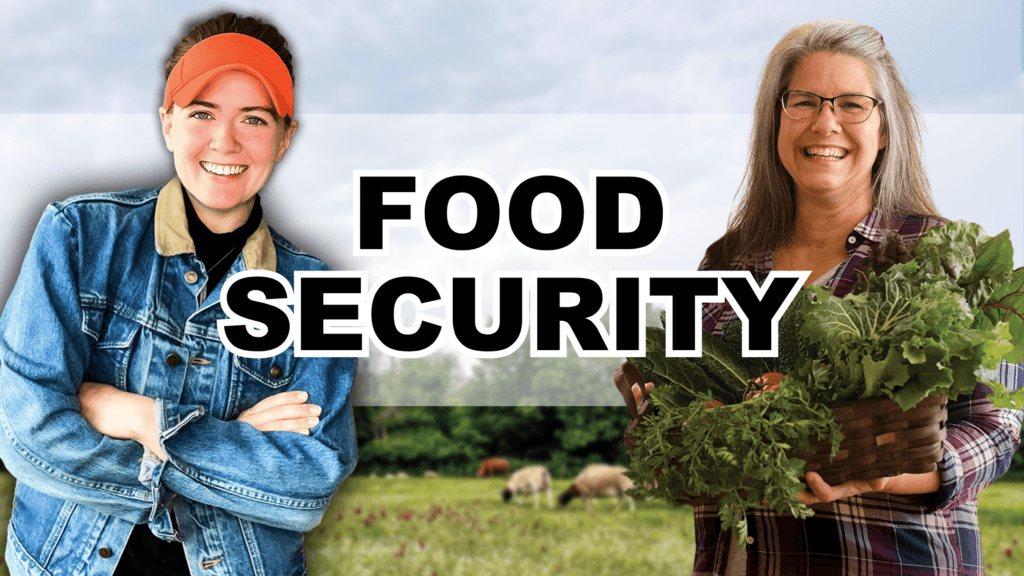
Hi friends,
For homesteaders, it is tempting to believe self-sufficiency is the ultimate goal. Grow everything yourself, preserve everything yourself, no outside inputs needed. In this episode, Angi Schneider of Creative Simple Living shares a better way.
Angi has built a homestead through different seasons of life, and what struck me most was how honest she was about the limits of doing it all yourself, and how much freedom she’s found in leaning on the people around her instead.
We talk through what real food security looks like, why burnout so often comes from over-complicating things, and why starting small might be the best advice in homesteading. We also dive into the very practical details of canning the harvest in a way that supports your family and fits within your capacity.
-the Shepherdess
TRANSCRIPT
the Shepherdess All right, guys, thank you for being here today. We are here with Angi Schneider, author of Pressure Canning for Beginners and owner of the online platform, Creative Simple Living. Angi, thank you so much for being here.
Angi Schneider Thank you so much, Grace. I am excited to be here with you.
the Shepherdess So I’m kind of hosting a series of podcast interviews, really on the premise that food preservation is probably just as important as food production. I don’t know if this is fair to say—because I’m all about food production—but maybe just a little bit more important than the production, because if you have access to food and you know how to preserve it, I mean, you can put a lot back. But I’m trying to kind of bring people along in this. I just finished my first pressure canning project: I canned about 700 meals with much help from your book, Pressure Canning for Beginners, and I absolutely loved it. So, thank you for that resource.
Angi Schneider You’re welcome. Thank you. That is an amazing feat to do 700 jars.
the Shepherdess That was encouraging to hear from you. So encouraging. But I wanted to read this excerpt because when I was getting into this book and just reading it, this was something that was super, super compelling. So it’s going to take like a minute to read it, but I want people to hear it. It’s in the introduction of your book and you said: “Some of my most comforting childhood memories are from Granny’s house. It wasn’t just the food or the back room. It was also the large kitchen that seemed to be always filled with people and with conversation. Of course, food’s primary function is to give us nutrients and energy, but there is another function that’s just as important. Food builds community. As an adult, one of my favorite things to do is prepare meals with my kids, and I found that conversation flows easily when our hands are busy. Because when we’re busy, we don’t have time for intense meal prep all the time. There are some nights we just need to open a can and heat something up. Afternoons when we find out that kids have invited their friends to stay for dinner or mornings when people are packing lunch for work and want something warm. When these times come, we just open a meal in a jar, and we don’t have to rely on takeout or pre-made foods from the grocery store. To me, the driving force behind canning is not to have hundreds of jars on my shelf. The driving force is to share those jars. I get to share them with my family as we end a hectic day. I can easily take meals to someone who is sick or just had a baby. And while I have always known that canning helped me practice hospitality, it wasn’t until Hurricane Harvey hit us in 2017 that we really understood how necessary pressure canning was. Before the hurricane, I went to the store to grab more coffee, and while I was there, I saw people grabbing tons of dry goods and water. It was an absolute madhouse, one that I did not have to be part of because I had a back room full of food. And after the hurricane, our area was without electricity for eight days. And during that time, we were able to use our home-canned goods and share with others.” That was so compelling for me, just to understand the why behind the effort.
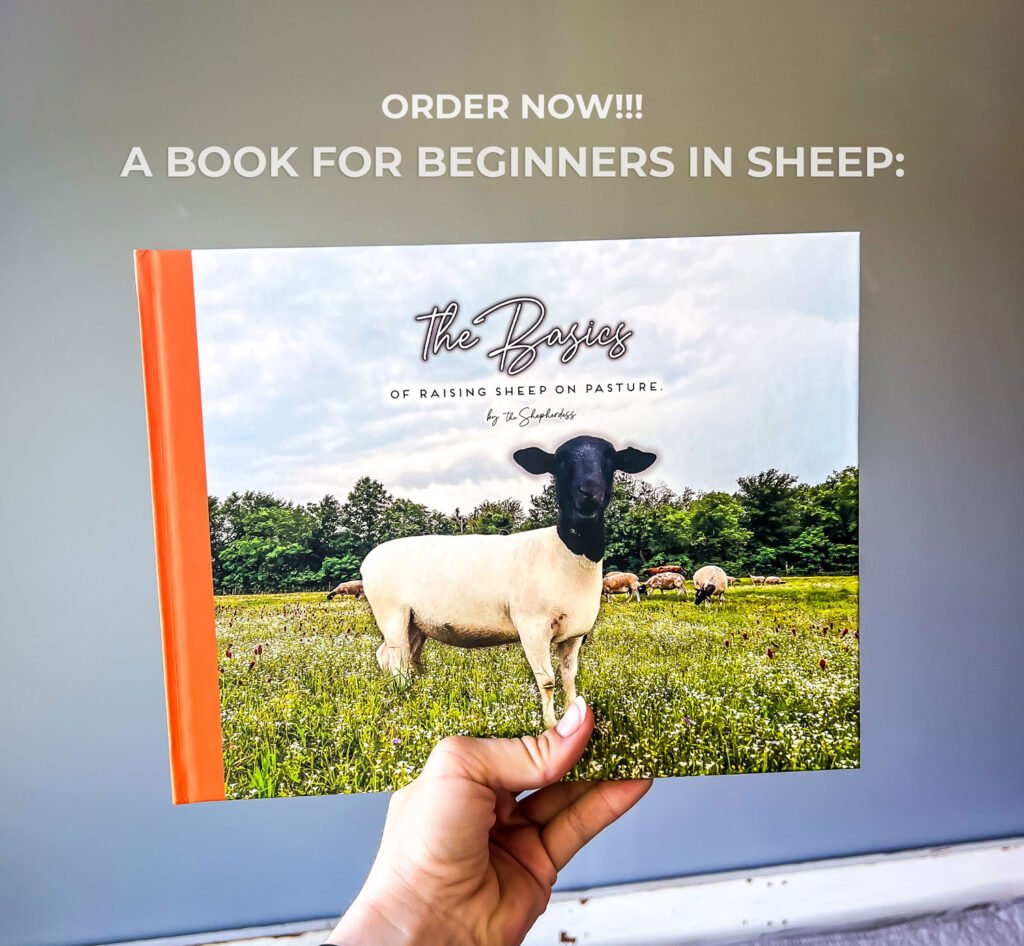
the Shepherdess If you’re a beginner shepherd on 30 acres or less, then I wrote a book for you: The Basics of Raising Sheep on Pasture. Available at Shepherdess.com with free shipping. Raising sheep on pasture requires a basic understanding of pasture management, breeding and lambing, and mitigation methods for common disease. I walk the beginner shepherd through each aspect, sharing through this book vivid pictures, easy-to-follow instructions, and personalized stories from my own journey with sheep. Available with free shipping at Shepherdess.com; you’ll find a direct link in the description.
the Shepherdess Let’s just go ahead and get to know you. I’m kind of going to walk through this interview in three steps. I’m going to get to you, I’m going to ask some beginner-level questions about food preservation, and then I am going to sort of get your strategies and systems that you have developed as someone much farther down the line. But let’s go ahead and start with it: where are you at right now? What’s a 1,000-foot view of your work, your homestead, and your efforts?
Angi Schneider Sure. We live along the Texas Gulf Coast between Houston and Corpus Christi. We have an acre and a half, and on it we grow vegetables almost year round. We have some fruit trees. I’m trying to plant more fruit trees, specifically native fruit trees, more and more every year. We have chickens and we raise bees. Those are the only livestock that we have. At one point, there were eight of us here at the house. We have six children. Five are now adults and have moved out. We’re now a family of three, so our life has changed differently. You know, we have a couple of grandkids now. And as a footnote—because it truly has impacted our life over the last six years—my husband in November of 2020 was diagnosed with stage four prostate cancer, and he will always be in treatment because there is no cure once it reaches stage four. And so it has left his mobility… The treatment is hard. So he is no longer working, he is at home, but he’s not able to do a lot of things that he used to be able to. And then last year, we moved his parents from Corpus Christi to our town so we could help take care of them. And so our life has changed dramatically since I wrote that book at the beginning of 2020. But one thing that has stayed the same is that we still grow and preserve food because it is part, in my opinion, of just being human. That’s what people do and have done since the beginning.
the Shepherdess Yeah, that’s so good. So in a lot of ways, the skills that you put back and the things that you learned up to this point—this 2020 seismic shift in your life—are still serving you.
Angi Schneider Absolutely. No skill goes unwasted. I tell my kids all the time. No skill go unwasted.
the Shepherdess Yeah, so good. So with respect to where you’re at right now—you’re on an acre and a half—how far back does sort of your homesteading journey go? When did you start in on food production, even if it was just gardening or what have you?
Overcoming pressure canning fear and building confidence
Angi Schneider Yeah, sure. So our very first food production was when my husband—when we were first married, we were actually living in Corpus Christi—and he found a dewberry patch, which is a wild blackberry here in South Texas. So he brought them home, and the only person I knew who had ever even had dewberries, the only place I’d ever had them, was at my granny’s house. She would make dewberry jelly. And so I called my granny, who lived like eight hours away, and I said, “Hey Granny, we found some dewberries. Can you tell me how to make your super-secret dewberry jam?” And she said, “Sure, honey. Just go to the store, buy a box of Sure-Jell, and follow the directions.” And I said, “That’s it? Like, there’s no other way? Like the secret, impressive way?” She said, “Well, you can add a whole bunch of sugar and just boil it forever, and do it that way, but that’s much harder.” I was just like, “Well, okay then.” So it’s a funny story, and I was disappointed at first, but as I have grown, I realized what my grandmother did for me. You know, she was kind of no-nonsense. I mean, she raised kids through the Depression, and she just was amazing. And so what she did was she gave me confidence. I can read, I can follow directions, I can do this. I don’t need some more hand holding. You’re not going to mess it up. There’s no danger—it’s a high acid food, you’re just going to water bath can it, you’re going to follow the directions, and so you just do it. You follow the directions and you do it. And so that was very liberating because then I just felt like oh, well I can can anything. Like, I can figure it out if I can read and follow directions.
the Shepherdess That was exactly true.
Angi Schneider Yeah, right? I think sometimes we make it so hard. Like we kind of gate keep it a little bit.
the Shepherdess Yeah, I interrupted you, but I am an absolute beginner just soaking in everything you’re saying, but what you just said was so true that you’ve got to just do it once and then there’s something in your brain It just kind of opens up.
Angi Schneider Yeah, yeah, I can do this. And I think it’s almost like anything—like the first time is the hardest, right? And same thing with pressure canning. I didn’t start pressure caning for a while, so after that we started growing some things a little. And over the years as our family grew, our garden grew. We didn’t give any chickens or bees until we moved to this property in 2011, but prior to that, we’d always kind of had a garden. I’ve always water bath canned. And then in 2008, my mom bought me a pressure canner. And it sat on a box for at least a year because I was petrified to can. And so the first time I did it, I walked around pacing. I made my people leave the house because I was afraid it was going to blow up, and it didn’t and it was fine. So now everyone’s comfortable with it in our house. It’s just what we do.
the Shepherdess Right. You obviously ended up writing a book about meals in a jar. What took you to that point of being terrified of pressure canning, to really seeing the value in this as being so high as to write a book about it?
Angi Schneider So I think the first thing was the first time I canned meat because we had had some venison and my husband had been hunting, so we canned the venison, and it was fantastic. Like I love jams and jellies, I love pickles, but they are not meals. They are ingredients. And I love you know canned green beans, but again, it’s not a meal. It’s something that helps you with a meal, but it’s a meal. So the first time we did meat, it was life-changing for me. At that point I realized I can do other meats too, and we can have some very easy meals—whether they’re full meals or just ingredients for meals that go together quickly—on our pantry shelves.
Shelf-life realities, food rotation, and making canned meals palatable
the Shepherdess Yeah, that’s really good. So the convenience aspect was really where it got you. So, I’m just going to walk through a couple of practical questions in terms of these meals in a jar or pressure canning in general. The first one is something that I have had a lot of questions about since I posted my video, and that is how long do these meals in a jar last?
Angi Schneider Okay, so in our house, until they’re eaten. Technically, as long as you follow a safe recipe and current safe guidelines, as long the jar is sealed, it is safe to eat. It does lose quality after about a year and a half—not anything that I think you’re going to notice unless you’re not opening it for 10 years. You know, if you’re rotating through, you’re not going to notice a quality difference, really. So as long as the jar is sealed, it is safe to eat.
the Shepherdess Now, one of the questions was—and I heard that it is good to eat for up to 10 years—it’s safe as long as it’s sealed. Is there any point in time in which the nutrients start to break down significantly?
Angi Schneider I think it’s gradual over time. You know, of course it depends on what you’re canning. Meat has different nutrients than tomatoes, so there’s nutrients in tomatoes that are actually better for you and more easily absorbed once they’re heated up, you know, the lycopene. So you are going to lose some Vitamin C and Vitamin B, but you’re not going to lose it any more than as if you had actually just cooked the food. Okay, so because it’s in an oxygen free environment, you’re also not going to lose it as fast as if it were just a green bean sitting on the counter. It’s going to lose nutrients faster because it’s an oxygen rich environment. So, to be honest, I don’t really worry too much about the nutrient value of the canned food because to me it’s all relative. We’re not only eating canned food. We’re not eating canned food that’s 10 years old. We’re eating it in a reasonable amount of time, and we also have a variety in our diet.
the Shepherdess That is a really good point. I mean, if you had to, you could, like you did for Harvey, you know, for those two weeks or whatever, but there is variety, and this is just more of a supplement in most normal cases. So with that, the rotation—do you have a strategy or a schedule in terms of rotating these meals out to make sure that you don’t have something that extends into that 10 years, unless it has to?
Angi Schneider Sure, where we keep our food… Now, we used to keep our food all over the house because every room was full of children and people. And so we used to keep it in boxes under beds and at the bottom of closets, and I had to keep an organizational list of where things were. So it was much harder then. But now I keep it all in one room, so it’s easier. When I clean that room—I probably clean the shelves twice a year—I pull things off, pull things that we’ve not eaten to the front so that we get to it, and I just rotate it like you would rotate your freezer, honestly. If you have a deep freezer, you’ve got to clean it out and defrost it once or twice a year, and I just use the same kind of method for that. And if things are not getting eaten, I do make a note. I just don’t do them again. You know, if we didn’t like it enough to eat eight jars in a year, then we’re just not going to do it again.
the Shepherdess Yeah. Right, that’s very practical, but that’ll solve a lot of your problems. When it comes to you at this season of your life, what specific strategies do you have in terms of preserving the harvest? Do you do this incrementally? Do you do this when you have time or when you catch a sale? What is kind of your strategy nowadays?
Angi Schneider Sure. I do all of the above. So if it’s coming from my garden, I try to deal with it right away. Like if we have a whole bunch of green beans come in, as soon as I have enough in the refrigerator for a load of green beans, I’ll go ahead and just do them because they kind of need to be done. Tomatoes are a little bit different in that I will usually freeze them before I can them. And the reason I do that is because it’s overwhelming because there’s so many of them. So we keep some out for fresh eating, and then we decide what we’re going to do with the rest. Usually if I can’t decide, I just take the core out, and I just throw them in the freezer. And when they start to thaw, the skin just peels right off, and it’s really fantastic. When you can them, you need to include the water that’s dripped off of them, and you can’t make diced tomatoes, but it’s fine. I usually use them for meals anyway, so it doesn’t matter if they’re softer than they would be if I had just canned them fresh.
the Shepherdess Do you have any sort of goals to have a certain number of meals put back or jars put back for a year or what have you?
Angi Schneider I do. I have loose goals. I know about how many cans of dry beans that we need, and that this is where I will do it in bulk. I’ll borrow my sister’s canner. We each have one that double stacks, and for both of our families, we’ll spend a whole day and we’ll go through and make batches and batches of a variety of pint size dry beans for the whole year. We’ll usually do that in the winter when there really isn’t a harvest to be canning. For things that come from the garden, I plant with an idea in mind, but then, like the green beans, if we don’t have enough to make it for the year, then we just go without. We just eat a different green. And so I think that as you’re working through the goal, you also should look at what you can eat fresh. So where we’re at, we can eat fresh, most of the year, something. So I really only need canned green beans for the really hot summer months and the few weeks in the winter that are between seasons in the garden. Now, if I lived up north, I would need more jars of green beans than that because we have a longer no-grow time. So I think that’s really important for people to think about what they need. So that’s what we do. We just do as we have it, and then we just go without when we don’t.
the Shepherdess That’s really good, because preservation really is, at its core, a preservation of abundance. I mean, it’s not as though you have to go out and hunt for new things or what have you. It’s just making the most of that abundance. The question, which is what I’m coming up on now—I canned 700 meals in a jar and I’ve got a little bit of prejudice in my house in terms of eating these meals because they don’t want to eat things out of a can—is there any way to get people to eat these where I don’t have to go sneak it in sideways in like a black market deal?
Angi Schneider Right. Yes, and I understand that problem. We had it too for a while. I think just starting with things that they like. So in my family, the carne asada—my family loves it. So even if I didn’t can carne asada, I can take a jar of venison or a jar of beef cubes or whatever, put it in the skillet, season it like carne asada, serve it over mashed potatoes, and my family is super happy. It’s super tender, it’s the way carne asada is supposed to be without all the time that it takes to cook that meat down all day long. So obviously we’re from Texas, we love Tex-Mex, so they also really love the chili con carne, so I’ll make small jars of that and my adult kids or teenage kids would take it to work for them. One of my sons, when he went off to college, asked me to make him that and our beef vegetable stew so that he could have it and not have to eat the dorm food. It made me feel really good as a mama. I was like, that’s all you need from me before you go to college? I was just amazed at that. “Yes, honey, absolutely.” But yeah, I think that realizing what they like, and kind of doubling down on that.
the Shepherdess That’s a good point because I think my problem is that nobody likes goat. So I’m trying to serve them canned goat, but maybe if I started differently and I made a fresh meal and used one of my cans of beef. Okay, so start that way and start small, and then start with what they love.
Angi Schneider Yeah, so I’ve never had canned goat. Does it have kind of a gamey flavor, like maybe venison would, or is it different?
the Shepherdess So I just popped one open and I can tell it’s goat, but it’s not like that nasty… It has a lot to do with how I harvest it a little bit younger, so no.
Angi Schneider Okay, because I noticed that canned venison does not have quite the same strong gamey flavor that maybe fresh venison does. I don’t think so.
the Shepherdess That’s a good point because a lot of people say that combining those gamey meats with things like garlic and onion—which is what I did some of my meats with was just the onion on top—brings down the gamey flavor. So maybe there is even an advantage to preserving those that way.
Angi Schneider Yeah, tomato will too.
the Shepherdess Oh, that’s a good one. One of the recipes I did in here was stroganoff, and I did that with the lamb. So that is really exciting to think of those ways because what I noticed with the Lamb that I canned was it was a lot more tender coming out than if I was to cook it fresh. So there was even an advantage above just cooking it fresh.
Angi Schneider And another one of my favorite ones is chicken. You can get like half a chicken in a quart size jar. I don’t even take the bone or the skin off. I just cut it up, stick it in the jar, and pour a little bit of water on it. I dry pack it—raw pack it is what it’s called. But I do add a little water because we usually use pastured hens and they’re not as fatty, so I add a little bit of water. And when you open that jar, the meat just comes right off the bone, and the skin can go to the dog. The bones snap in half. They are so tender. All that collagen has leached out into the broth in the jar, and it is fantastic. So that is another you can make into chicken salad, you can add it for a quick soup—I mean you can make anything with it. That’s another really fast one. I do like to have those kinds of things on the pantry shelves, especially as we go into hurricane season.
the Shepherdess I think that’s really something good to zero in on in terms of using specific types or specific cuts of meat. Obviously, it’s not going to be a great idea to can filet mignon. Those are better on the grill. But when you come into something like a stew hen or venison or something a little more tough, I did notice that the canning did sort of the work of a slow cooking process.
Angi Schneider Oh, absolutely. And I don’t like canned chicken breast because it’s kind of dry. I think canning is better with meat that’s a little bit more moist or fatty. If you do venison, I don’t usually, but you can add a little oil to the jar. It is an approved suggestion. Like chicken breast is just really dry, so when you can it, you put a breast and a leg and a wing and some of the back all in the jar together, and it just melds really nicely together.
Pressure canning vs. freeze drying for practical emergency preparedness
the Shepherdess That’s such a good idea. All right. Just a side note question: when I did post that video about pressure canning, people were asking me, “Do you have a freeze dryer yet?” Do you personally freeze dry anything yet?
Angi Schneider I do not have a freeze dryer. I mean, if someone wants to give me one, I am so willing to try it. I do think they’re expensive. I also don’t think that I need food on my shelf for 25 years. Now, as part of our preparedness system, we do have some freeze-dried foods that we keep back. So here’s the thing about freeze-dried foods: one is they need water to be cooked or whatever, right? So when you’re in an emergency situation, at least for us—because if we don’t have power, we don’t have water—water is at a premium. And so I would rather have jars on the shelves that already have the water added that I can just put in a pan. So for me in emergency situations, for our system, it doesn’t really work. They’re also expensive. They take maintenance, which I don’t want to do. I mean, I would be doing strawberries and bananas and candy in them. I don’t know that that would be doing eggs. I would be doing snacky foods for them, and I’m just not sure that that’s what I want to do. Anyway, those are just my thoughts on the freeze dryer. It’s kind of all the rage right now to have a freeze dryer, but I just think my hens are going to lay eggs next year, you know? I think my garden is going to produce something next year. And it may not be everything that we need, but it’ll be enough, or we’ll go without, or we will buy from the person down the road. I think that if the 2020 pandemic really taught me anything, it’s that number one, we can go without things. We don’t have to have everything all the time. And number two, we can find things locally that we truly need. If we need meat, if we need dairy, we can find it or we can go without. It’s really just not that big of a deal.
the Shepherdess Yeah, that’s so true and that’s really good. I was speaking with someone else along the same lines and they said, “One of the things you need to recognize or realize is that canning and freeze drying cannot replace community.” And at the end of the day, that’s what we need to cultivate as much as anything.
Angi Schneider Absolutely.
the Shepherdess Picture this: you are looking out over your 5, 10, maybe 20-plus acres. The sun is setting, and your flock is grazing across a green pasture. Something inside you affirms this is real wealth—at least when it comes to material things. You know how to take care of your sheep, your grazing system is improving your land, and you have a way to direct market each lamb that is born. This is how I feel when I look at my flock, and I want the same for you. So, I put together a free one-hour class that answers some of your most frequently asked questions concerning how I raise, rotational graze, and market my sheep for $480 per head. Go to Shepherdess.com/480, or simply click the first link in the show notes of this podcast to sign up and receive the free on-demand class. What’s more is that I will follow up over the course of three days, providing you with even more free resources—including a free ebook, a free grazing sheep kickstart guide, and a free marketing sheep kickstart guide. This information is worth paying for, but I’m giving it to you for free. Just go to Shepherdess.com/480, or simply click the first link in the show notes of this podcast for how I raise, graze, and market my sheep for $480 each.
Simple approaches to raised beds, fruit trees, and organic soil amendments
the Shepherdess So this does make a good segue into the gardening side of things. You helped me a lot with my first pressure canning project. I would like to start gardening. The reason I raised meat is because I’m such a bad gardener. But I’m going to ask you some absolutely basic questions that I’ve just had on my mind in terms of getting started with the garden. Just tell me, what does your garden look like right now, and how has that evolved over the years?
Angi Schneider Sure. We have about nine four-by-eight beds that we do. We have a combination. Most of our stuff is grown in what I would consider raised beds, but they’re not. They’re really tall, hugely raised beds. We still use our native soil. We don’t put barriers down in the beds. We just add stuff to it. At one point, we had 22 beds that we were maintaining when all the kids were here at the house. I had more help and I had my mouths. So we’ve kind of gone down from that. There were a few years that we only grew one or two beds because that’s all I had the capacity to do. Last year, I didn’t grow a garden at all. Well, I put it in and then we moved my husband’s parents here, and then I just let it go. I just could not deal, so we’ve been through all these different stages of gardening. And we do have fruit trees. We have some in our garden area, and we have some around the rest of the property. I really feel like if you want to grow food long-term, fruit trees are a fantastic thing to start planting. Even if you only plant one or two a year, you don’t have to plant a whole orchard, just one or two a year will be great.
the Shepherdess Quick question on the fruit trees: a lot of them take time before they’ll start producing fruit—what is that time frame, and what do you do for that?
Angi Schneider Sure. Most grafted fruit will only take a few years, you know, three to five years maybe. If you try to plant from seed, you probably are not going to know what you’re going to get, and it’ll probably take 20 years. So just buy a grafted tree. But some trees, like we have a couple of fig trees, and if you know someone who has fig trees, they can propagate them. You just cut a branch off, stick it in rooting hormones, stick it in the soil, and it’ll grow a new tree for you. And that will only take a couple of years. So some are very fast producing. Figs are fast producing. If you can grow citrus, citrus is pretty fast producing. Mulberries are really great. So if you can find native varieties, they’ll take a lot less care, which is why when we moved here, we planted like an apple tree, peach, plum, pears, and all these things, but they take a lot more work than my mulberry trees do.
the Shepherdess That’s a really good point. So you’re saying if I was to invest in grafted fruit trees, I could have fruit within three to five years versus the seedling 20-year process?
Angi Schneider Yeah.
the Shepherdess All right. So you sort of answered this a little bit: raised beds versus directly seeding into the ground—I gather that you do only raised beds, and why is this?
Angi Schneider I do just because, for me, they’re easier to maintain. I can mow in between the beds, you know, I don’t have to lay down… We’ve tried lots of different things for weed control. We’ve tried laying cardboard down and putting hay all over it, and that worked great when I had four teenage boys here. It doesn’t work so great with my almost 60 year old body, you know, so mowing is better for me to do that. I don’t think that there’s necessarily a right or a wrong way. I do think that over time if you can get to where you’re not tilling every single year, that that’s probably better for the soil. Unless you’re trying to eradicate some pests overwinter in the soil, then tilling’s great for that. So I don’t think you need to go buy $200 beds, though. If you’re just starting, you can get an inexpensive four-by-eight bed, or go get some cedar picket fence things, and some four-by-fours, stick them in the ground, and screw the fence post on there. It’ll be fine. It’ll be inexpensive. You’ll have to replace it in time. Wood, you have to place in time, but I think metal you also have to replace in time. And for full disclosure, we do some metal beds. We have a variety because my husband has trouble bending down and so we have a couple of beds that are really tall so that he can harvest some things that don’t require stooping to the ground. And as I age, we will probably move more towards those. It just depends on your season of life, but you don’t have to start big and expensive.
the Shepherdess Yeah, that’s a really good encouragement. So if somebody was starting with a little bit of ability to choose, I guess, financially, would you go for metal or wood? What would you say? Is there an advantage of one over the other?
Angi Schneider I don’t know. I have both and I like both, and I also don’t like both. Wood you have to replace probably faster. Metal in our area, it gets so hot here, so I have to be careful when I plant in the metal container. So I don’t really know. I think it’s going to depend on your climate where you’re at. I know other people who just love, love, love those metal containers. So yeah, I don’t know. I do know for accessibility, the taller metal one has been really great for us.
the Shepherdess That’s good. Now that brings me to the soil amendment strategy. Can I just go till up, you know, a bunch of soil in my yard, toss it in my bed, or would I be at an advantage to add a few things to it first?
Angi Schneider Well, you can do that first thing. You will probably grow something unless you live on the beach or in the Arctic or in the desert, or something like that, but it would probably be to your advantage to add some things. So we have a mushroom farm that’s like an hour away, and they have amazing compost. I love it when I can talk one of my boys into going with me to haul some compost. I think the best thing that I heard years ago was a quote from Cam Mather who used to write a gardening article for maybe Mother Earth News or I don’t know. Anyway, I have his book that he self published years ago, but he said, “It doesn’t matter if you have clay soil or sandy soil, the solution is the same. Just add more organic material (meaning things that break down), and it’ll eventually fix itself.” And I thought, oh, well, that’s easy enough: just start adding. So that’s what we do. So we will add leaves to our beds. We always mulch with something, you know, hay or leaves or whatever. We do have the chickens, so we do use the chicken litter. It has to be composted down. Goat does not have to be composted down, and neither does rabbit, so that’s really super handy. So sometimes I’ll just take a lot of that chicken litter, stick it in a bed, just put a tarp over it, not use it for months, and just compost it in the bed that we’re going to use next. But yeah, the more organic matter you can add to your soil, the better it’s going to be.
Avoiding homestead burnout through community and simplified systems
the Shepherdess That’s really good. Simple. All right, so as a beginner, how would you recommend that I get my garden started in a way that will prevent burnout and discouragement? I have tried to start a raised bed before, but 67 varieties and expectations are out the window. How it you coach a beginner past that kind of a pitfall?
Angi Schneider I would say: number one, start small. Smaller than you want to. Number two, just kind of figure out what your family likes. Grow what your family likes and will already eat. My family doesn’t like eggplant. I have never grown an eggplant because my family won’t eat it. Now there are some things that only grow for me. My family doesn’ t really like pickles or cucumbers, but I still grow them for me. I don’t obviously totally love eggplant, so I don’t grow it. It’s not worth growing it just for me. I think that you probably need fewer things than… How big is your family? How many?
the Shepherdess Right now I’m just single, so I’m just, you know, navigating skill acquisition.
Angi Schneider Sure, absolutely. So for tomatoes, you probably only need two tomato plants. You need a cherry tomato and a bigger tomato, right? You only need a couple of squash or a couple zucchini maybe. You only maybe need five or six green bean plants. You don’t need a lot. Now, I’m sure that you have people that you do dinner with that maybe don’t live with you, but they’re part of your larger family and friends, and so you can plant extra. But I would not do this whole, big massive garden at the beginning because it’s just too overwhelming, and I wouldn’t necessarily plan the first year on preserving any of it. I mean, if you have it at the end, then you can try your hand at preserving, but I wouldn’t grow 50 tomato plants with the idea that you’re going to put up a year’s worth of tomatoes because that would be really overwhelming. So I would just start small and focus on what you like, and once you get one or two beds done, then you just rotate them for the next season. You can kind of do this continual thing. Where we live, our break is kind of in the summer because it’s so hot. Only okra and basil really grow during the heat of the summer. So when those summer beds are kind of winding down, I add compost to them, I put mulch on them so that the soil is not bare, and then in the fall, we replant. At that point we’ll plant the cooler weather crops. Then as those start winding down in the spring is when we plant our spring and summer crops. We just pull things out and add things in. We don’t put everything to bed in the winter, and everything to bed at the end of every season. We just cover the bare soil with mulch until it’s ready to be planted.
the Shepherdess That’s a really good point, because I was about to ask, “Do you do anything to cover for the season or close your beds up?” But it sounds like you just keep them active. And is that also good for mitigating pests and so forth or not?
Angi Schneider I don’t know. I don’t know if it is or not, but it’s the climate that we live in. I think my strategy would be different if I lived up north where we would put the garden beds to rest over the winter. And we might have a hoop house over some of them so that we can extend the growing season. But I don’t do any of that.
the Shepherdess Yeah, that’s good. All right, so I’m going to transition here. We do see a lot of homestead burnout. You know, I felt some in myself just with what I’ve done, and I think it’s a result of just overcomplicating things. But ultimately, I kind of want to get your perspective on it. You’ve been in the game for a long while now. Where do you see people going wrong, maybe overcomplicating things, and what wisdom would you give to avoid that burnout trap?
Angi Schneider I think probably the main thing is that people try to do too much at one time. You know, there’s this idea in a lot of the homesteading community of being self-reliant and self-sufficient, and I think that that is a lie. I don’t think that people have ever lived that way. We’ve always lived in community and have helped each other. Last year, after 30 years of making bread, I decided that it was too much for me. I mean, I still bake, but I don’t make weekly bread anymore. And instead I buy from a little microbakery down the road. It was very freeing. It’s so silly, and it’s such a small thing, but once I made that decision and I didn’t have that pressure of, oh my gosh, I need to make bread because my daughter needs it tomorrow for her five hour long dance class, it was freeing to me. It was like this weight was lifted. And I thought, this is ridiculous that bread was weighing me down so much, but it was. So I think that as we look around our community, what can we support each other in? So I’m supporting her, right? She’s supporting me. Sometimes we barter, and sometimes I pay. I do the same thing with milk. I have no desire or capacity to raise livestock animals and have a dairy. I just don’t have the capacity within me. And so I have a friend that I support. I buy the milk from her, and I’m happy to do that. It’s fantastic. I think that we need to really realize if she’s buying milk, but I have the honey. She buys honey from us. It’s not necessarily reciprocal, but it’s community building. So I think people need to really think about not just… I mean, it was fun at the beginning. It is so fun being busy and having all these projects and these things to do, and we’re just so busy. But when you’re busy like that, 365 days out of the year, it is no longer fun, and it is burdensome. And so I think that we all have to have some margin in our life, and we have to think about our own mental capacity of what we can do. And not feel bad about it. I don’t feel bad at all about buying bread. At all. I know I could make it cheaper. I know I could make it just as good, but I don’t want to, and that’s okay.
the Shepherdess Yeah, that is really good. I mean, it’s so simple it’s often overlooked, but that is so true, because I think that you can’t really put a price tag on the freedom that it gave you—that one simple step. And it’s not to say that maybe some week you won’t choose to make your own this or that again, but for this season, it’s so needful. All right, this has been such a wonderful conversation and we could probably go on all afternoon, but I want to give you a chance to just go ahead and plug your own platforms and any way that people can stay in touch with you going forward.
Angi Schneider Sure. Grace, thank you so much. This has been so fun. I could talk food preserving and growing food all day long, every day. You can find me at CreativeSimpleLiving.com, and I’m on Facebook and Instagram at Creative Simple Living. I think there’s dots in between Creative Simple Living on Instagram. And my books: I have Pressure Canning for Beginners and Beyond, and I also have a book on preserving vegetables, which is The Ultimate Guide to Preserving Vegetables. Those can be found on Amazon, Barnes and Nobles, and wherever books are sold. If you live in the continental US, you can order from my website, and there’ll be signed copies.
the Shepherdess Wow, wonderful. And that website is CreativeSimpleLiving.com?
Angi Schneider Yep, that’s it.
the Shepherdess Perfect. All right, thank you so much.
Angi Schneider Great. Thank you, this was fantastic.
Leave a Reply