 by
by 
Hi friends,
My neighbor Karl Ebel had no farming background, purchased land that had been farmed into the ground, and turned it into one of the most intentional regenerative ranches I’ve ever seen. In this episode, Karl shares what that journey actually looked like: rehabilitating exhausted soil, choosing the right genetics, matching livestock to your land, and making the numbers work long-term. We also dig into your listener questions on herd size, winter grazing, multi-species pastures, livestock guardian animals, and getting started with cattle on a small budget.
If you’ve ever wondered whether it’s possible to build a profitable and fulfilling farm business starting from nothing, this conversation is for you.
-the Shepherdess
TRANSCRIPT
the Shepherdess I am here with Mr. Karl Ebel of Ebel Grasslands Ranch in upper East Texas. That’s where we’re from. How many miles away from me do you live?
Karl Ebel I think it’s just about 10 miles up the road to the east a little bit.
the Shepherdess It didn’t take you 15 minutes to get here. I teased, and I said that we should probably do it in the same room so that the people who came over from the YouTube video will actually believe that we are neighbors. So today we’re going to get a little bit of information on his operation. A lot of people ask me—and I guess this is somewhere I want to draw you in—is like, “How do I get started if I can’t afford land and if I don’t have any resources of my own?”
Getting started on a budget and finding land opportunities
Karl Ebel There are a lot of small acreage farmers that are on the edge of urban areas that really just don’t quite know what to do with their property. And they’re looking for somebody with a lot of energy that can handle the work. Maybe they’re retired, maybe they don’t have that much energy or whatever. There’s some opportunity there. And if you can demonstrate that you’re capable, you understand how to do it, and you’re willing to stick with it and see it through, there’s probably some opportunity there that people are not really taking advantage of.
the Shepherdess And you might have to be a young person that goes and knocks on some doors just to show your willingness. But I think that’s a really good point there.
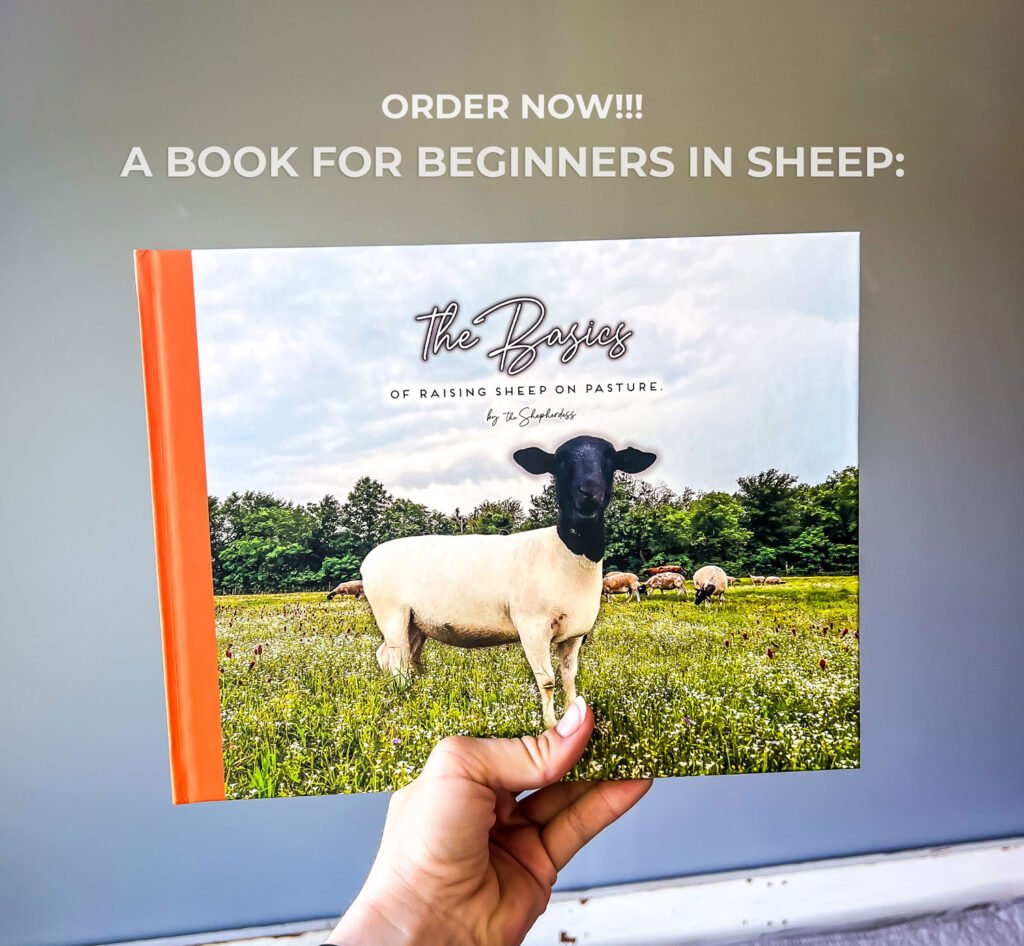
the Shepherdess If you’re a beginner shepherd on 30 acres or less, then I wrote a book for you: The Basics of Raising Sheep on Pasture. Available at Shepherdess.com with free shipping. Raising sheep on pasture requires a basic understanding of pasture management, breeding and lambing, and mitigation methods for common disease. I walk the beginner shepherd through each aspect, sharing through this book vivid pictures, easy-to-follow instructions, and personalized stories from my own journey with sheep. Available with free shipping at Shepherdess.com; you’ll find a direct link in the description.
the Shepherdess Okay, so I’m just going to get straight to it with some questions for Mr. Karl Ebel on his ranch. Mr. Karl, what was your background? Did you come from a ranching family?
Karl Ebel My immediate family did not have any background in agriculture. I had an uncle and part of my father’s family that were still on a farm and we would go visit the farm once every three or four years. It was just amazing to me as a kid. That was probably the first draw. After that I really never had any opportunity. We lived in kind of urban areas. But I was always drawn to it. And so I kind of did college for a little bit and then I had a pretty good job. And then when I was about 24, I decided I was going to go to Montana and work on a ranch.
the Shepherdess That was your first large scale experience.
Karl Ebel That was my first dive in head first, and it was fantastic. I loved it.
the Shepherdess So how long did you spend there?
Karl Ebel Two years, two winters. Yeah, I thoroughly enjoyed it. But I also had some other goals that I wanted to do. And then I got away from being immediately in touch with the ranching for probably 20 years. I worked off and on. I have a wonderful brother whose husbandry was just a really good source for me. And I would work with them on different ranches whenever I had time. But I was able to come back to ranching when I was in my early 40s. By then I had some fairly successful careers before that so I had enough funds to get in and have a place of my own.
the Shepherdess Yeah, so you were able to actually go straight to buying your land because you did have that bit of a career before you, and you had sort of some capital to get going with.
Karl Ebel That’s right.
Reclaiming exhausted soil and managing grass production
the Shepherdess When you bought your land, what was its previous use? And you’re a regenerative rancher—how would you have described it when you came into ownership of it?
Karl Ebel Like most of this area, this was cotton area. Cotton was king. Just about all this land here was under row-crop cultivation for over a hundred years. Now, if you pause a moment and you think about starting row crop farming in let’s say about 1860, this soil was phenomenal. They did not fertilize. They did that for about a hundred years with hardly any fertilizer. It must’ve been amazing soil. This was prairie soil here. But by the time we came, it had been very exhausted. Most of the families could no longer make a living with row crops. And so it was very marginal land. It was not something that could sustain a living. They were trying. And that was a mass exodus in the 1950s and 1960s. They couldn’t raise their families anymore. And so it was worn out.
the Shepherdess It was depleted to the place where it could not provide the living that it once did for so many who moved here? Is that right?
Karl Ebel That’s correct. That’s right, Grace. And so for lack of anything else to do, they just started running livestock, started running a few cows. They call it “go-back land.” Go-back land is just you don’t do anything. You don’t plant anything; you just let it go back and you put some cows there.
the Shepherdess Right, right.
Karl Ebel And so that’s what we started with. And we’re in about 45 inches of rainfall here. And so the woody species encroachment, the trees are constantly looking to come in and take over again. So that was very much happening on the property that we started with, and without some pretty quick intervention and trying to do brush control, and basically any way you could do it, it would have been taken over very quickly by woody species.
the Shepherdess We live about an hour east of Dallas-Fort Worth. Do you think that would be accurate?
Karl Ebel About an hour and thirty minutes, yeah.
the Shepherdess And then somebody wants to know how long it took you, essentially, before, you know, your investment-intensive period was over and it started to sort of float on its own.
Karl Ebel We went through a pretty intense grass-planting phase, and that lasted about three years or so, and we started with a small herd of cows—I started with 10 and then I would add another 10 two or three years later. And I just basically watched the grass resource and I knew that if it’s a newly planted stand of grass, we’re going to have to do this slowly and not put too much pressure on it. So as the grass would progress, I’d add a few more.
the Shepherdess So you managed for what your resources could sustain. You know, you didn’t just put in a bunch of hay and say, “I wanted 50 cows,” and, you know, you didn’t chuck in the resources. You worked with your resources.
Karl Ebel That’s a very good point, Grace. Because we’re people and we’re American and we want what we do to seem important and big and so we want to say more numbers—”I have more cows” or whatever—but pay real close attention to that resource because that grass is your resource. The cattle, the sheep, the goats, the livestock—that’s just something to offer you a means to harvest that resource. But the grass is your resource, and that’s what you need to focus on.
the Shepherdess So why regenerative? Was it something you initially went into thinking, I want to go make this land better, or was it sort of an evolution of mindset for you? How did it kind of come? You know, you were 45 when you bought that land.
Karl Ebel Basically, I want to make this better, and I want to try to eventually do this where this is my only job. And so I’ve got to get it improved enough so that my forage production is enough that it will sustain a living for me. So it was a long-term—I want to make this all better, and I want the grassland ecology to be better. I had traveled quite a bit, I’d seen some different grasslands, I knew it could be better, I wanted to do that. But in the short term, I still have to pay my bills, I still have to provide for my family. So that’s all got to be meshed together and work together.
the Shepherdess And for you, I mean, could you share a timeline? You’ve been at this for 20 years. Did it take you 10 years before that?
Karl Ebel Well, that’s a very good point. My wife was still working at the college about six years after we started, and at that point, we began our family. I was getting a little bit older, and we had to kind of make a decision for our family, and so we basically said, “OK.” she was going to spend her time with the family, and so that meant that income stream was going to stop. And so I was like, “You know, I think it’s progressed enough where I think we can do that. Let’s go for it.”
the Shepherdess So you sort of went out on a limb a little bit, but you cannot think that’s where everybody is in this particular line of work. With respect to going occupational for it, I have not heard a story yet where somebody was able to comfortably make that decision and, you know, it is going out on a limb. Somebody wants to know what cattle you started with.
Selecting the right genetics for grass-fed livestock
Karl Ebel My idea was Angus-based black cattle. They tend to bring a little bit better price here, but I must say I was not picky enough with the first cattle that I bought.
the Shepherdess That’s a good point.
Karl Ebel Focusing on something that’s grass-fed, focusing on something that is a good quality grass-fed genetics is important. Because once you start, it takes a long time to change what you already have.
the Shepherdess Yes. Right.
Karl Ebel So if you can start with something really good, man, you’re way ahead. I probably had 20 cows that were pretty good cows, but after I looked at it and studied it a little bit more, they weren’t really just what I wanted. And then I started really focusing on what I wanted.
the Shepherdess That’s a good question and a good point. And I think for so many people being here, who are just starting in, can you put a little plug in for genetics or, you know, how can we find good genetics? What should we look for? And well, I guess another question would be: do you think that your genetics that you have now, which are really good, play into an increase or uptick in profitability?
Karl Ebel It does. A lot of people, again, view what they’re raising in livestock as a resource. But let’s take a step back and look at the resource as the forage or the grass. So now, you’ve got basically these tons of forage and you’re turning them into a product. So, whatever you can do to increase dollars per pound, to me, that’s what’s giving me the most for my resource. So I can try to aim for, you know, there’s a lot of, say, bragging rights in high weaning weight. “Oh, I weaned calves that were so big.” Okay, but what did you get per pound for that? What’d you produce in grass? So if you’ve got grass-based genetics and you can produce something that’s high quality, and I mean, I’m Angus-Hereford Cross and both of those bloodlines, both of the genetics that I use are grass-based genetics—some of the older genetics. Some of the newer genetics are more leaning towards the grain part of it.
the Shepherdess And by older you mean like a pre-grain system.
Karl Ebel There were a lot of good grass genetics back in the 40s and 50s, and everybody in the last 30 or 40 years has leaned the other way, and they want bigger animals, and then they want…
the Shepherdess Big bones.
Karl Ebel And so, anyway, that’s the genetics that I go with.
the Shepherdess Yeah, so you started with Angus, but you’ve combined Hereford, but more than a breed, it is an eye for what, you know, like you called it old genetics. Is it an eye more than a specific breed?
Karl Ebel Well, an animal that’s grass-based genetics does well just on grazing, and those cows that are grass-based genetics will breed back for you better just on grass with a minimum amount of supplement because that’s what they’re designed to do. Typically, they have a little bit shorter stance, a little broader, so that—and I like to think of it as a grass processor—that expanded gut is allowing them to take a few more pounds of forage an hour or a day, and that puts that efficiency back into that animal.
the Shepherdess Somebody asked, “How do you find good grass-fed sheep and cows to buy? Where do you source your animals from?
Karl Ebel Yes, I talk to a lot of people. There’s some other groups. There is a National Grazing Land Coalition. That’s a really good group that’s across the whole United States, and a lot of those guys that are embracing these rotational-grazing methods and this grass ecology are on those sites. NatGLC. Each of the states also has one like Texas GLC, and Louisiana, or Kansas or whatever.
the Shepherdess And so they themselves would be sellers of the stock?
Karl Ebel There will be groups of people that would have seedstock within those groups. You can start asking.
the Shepherdess Yeah. With National Grazing Lands, I think the emphasis is forage resources as primary, and so I guess the cattle that will be coming from there would be as well. A good question would be: so sheep and goats—the smaller ruminants—are typically considered better forage converters. Do you think that is true and that you can be less picky about genetics with those?
Karl Ebel Not really. I think, of course, if you’re leaning towards, you know, a lamb that’s for meat, you want to go towards those breeds that are more geared for meat. And of course, sheep are grazers, and goats are primarily browsers. So sheep are going to compete with your cattle a little bit, whereas goats are not going to compete very much with your cattle. So depending on the piece of property that you have access to, that really is what you want to look at—your resource, again. Back to the grass—do I mostly have a place that’s got grass or some forage, or is it a little brushy? Maybe there’s a creek bottom or something that offers something for goats? But if you have clean pastures with just grass, then goats, you know, are not going to do the best there.
the Shepherdess Well that’s an interesting point because you’re large scale on the beef cattle now, but you started with goats.
Karl Ebel Yeah, because it was so brushy.
the Shepherdess Right. So again, you paired the animal that would do well to the resource.
Karl Ebel That’s right.
the Shepherdess Yeah. Somebody asked you: “How do you sell your products? How do you sell your livestock?”
Karl Ebel I sell mine mainly directly to larger cattle sales. I found markets that offer the best price for me. With my cattle, I do a preconditioning program that’s quite intensive. When you do those and you have them preconditioned, weaned from their mothers for 60+ days, you get a premium for those calves. You can do direct marketing and you can realize quite a lot of additional profit there. But with what I have to take care of, I don’t have the time to do the marketing and to do the extra steps to get that extra profit, but many people do it. It’s a lot of work to make sure you get your customers lined up and your market and so forth.
the Shepherdess Yeah, that’s a good point. And kind of the direction I’m going is direct marketing, but it is a time-consuming thing. And I was thinking the other day, you know, there’s a lot that we need to consider as far as our systems, and matching our systems as much with our human resource as we do with our natural resource, really.
Karl Ebel You don’t want to burn out, you know. You’re trying to make it pleasurable. You don’t mind working hard cause it’s going to be hard work, but at the same time you want it to be enjoyable.
the Shepherdess And I think that’s something I’m coming to understand is that, yes, let’s consider our forage resource, but let’s also consider our human resource with respect to our systems overall. Because I think I have this set of ideals, you know? It would be ideal if I could move my sheep once a day and this, and this, and this. But I came to the point where I’m like, they’re fine moving twice a week, and that’s a better match.
Karl Ebel There you go.
the Shepherdess And that’s a better match for my human resource. So I hope that encourages someone out there who might be finding themselves adjusting their ideals.
Karl Ebel I’m just going to make one comment: that’s a really good interval on your move, because the length of time after that parasite is… The parasite thing is huge with small ruminants. So the parasite needs about five to seven days after it’s expelled with the feces; the eggs take about five or seven days to hatch. So if you’re moving them twice a week—
the Shepherdess That’ll do it.
Karl Ebel That’ll do it.
the Shepherdess And that’s encouraging because that’s primarily what pushes me with the management-intensive grazing into it—is just that the sheep do struggle a lot with that. I talk about it a lot on my YouTube channel—and some people don’t understand it because they live in South Texas where it’s really dry—but it has a lot to do with where I’m at. We get above-average rainfall if I’m right?
Karl Ebel We get 45 inches, and a bunch of it comes in the time of year when the parasites are just going nuts.
the Shepherdess Justine: “Shepherdess, do you have goats? I was going to start buying goats first to clear the weeds, thorns, etc.” No, I don’t have goats. I’ve got my hands full with sheep. So I’ll probably not do goats at the moment. Jimette says he never ranched before. He got a beginner farmer loan from the FSA. He says, “The local authority is leasing 100 acres for an affordable price. Grass is six foot tall. How many head would you recommend? I was thinking of getting 50 cow-calf pairs, imported blacks. What’s your opinion?” Can you give an opinion on that?
Karl Ebel Yes, 100 acres, and the rainfall is one thing that I would key in on. If you’re in 30 inches of rainfall, I would not start with 50 cows. I would start with 25, and then you can add as you go. And you’re going to have heifers coming off of the cows that you pick. You can build your own stuff—if you like your genetics and you want to keep with that.
the Shepherdess Andre says, “What do you think about finishing cows on grain?”
Karl Ebel I think it’s good. It has its place. I’m a bigger proponent of grass-fed, but the grain-fed stuff is good. I, as a forage-based beef producer, realize a better profit from doing it on grass.
the Shepherdess That’s a good point, that’s a really good point. That goes back to growing with your resources as well, because if somebody was to bring in 50 cows on a piece of barren land, it might be cheaper to feed them a little bit of grain.
Karl Ebel You won’t have any choice. They’ll fall apart.
the Shepherdess Right. James asks, “How did you deal with the tree encroachment? Much of our property has been left to rest for five to seven years and has a lot of mesquite growing on it, but we want to have animals graze.”
Karl Ebel Okay. I’ve cleared land extensively in many different ways. If you can use a chainsaw and there’s a herbicide called Remedy or Relegate, and you mix that with diesel—whatever live tree you cut off with that saw, or whatever you cut it all, you poison that stump with that diesel-and-Remedy mixture and that’s the end of it. It’ll kill it.
the Shepherdess So that’s your recipe.
Karl Ebel Yeah, and so you can do it with heavy equipment too. It depends on your time frame, really, and how much time you can devote, and how physically fit you are because it’s quite a lot of work, but I’ve cleared several hundred acres.
the Shepherdess Somebody asked, if you don’t mind sharing, how much acreage you have, if you don’t mind divulging that.
Karl Ebel We have a little over 1,000 acres, and probably 750 of that is what I would call open pasture. And then we have some, what’s kind of a savanna, which is oaks and grassland. And then we have some wooded areas that are creek bottom with big mature timber in them. But about 750 is open pasture land. And with trees nearby, those open pastures—that’s what those woodies are trying to spread into—so it’s a continual process.
Predator control, low-stress weaning, and multi-species pasture dynamics
the Shepherdess Somebody says, “What about livestock guardian dogs? Would you do dogs or donkeys?” I’ve heard the donkey thing and I’ve been curious about it. Have you heard of it?
Karl Ebel I was very reluctant at the beginning to get a guardian dog because when we started I had little toddlers, but I have totally enjoyed the guardian dogs. We’ve had nine or ten over the past 15 to 20 years. They’ve never had an aggressive moment with anyone—guests, family members, or anybody. And without those dogs, I would not be able to raise goats. You’re turning these goats loose in big pastures. There’s coyotes, bobcats, and all kinds of things.
the Shepherdess Because you’re working on a huge amount of acreage compared to…
Karl Ebel If you have something that’s right next to your house, and you have maybe a family dog that’s making the round a little bit and leaving its scent, you might be okay if you have like a mesh fence that the coyotes can’t get in through easily.
the Shepherdess Yeah, just a small-scale perspective on that is that we have 30 acres, and if we can keep them within, I would say, well, let’s just say our house is set right in the middle of the 30 acres. And as we get to the 20% outer edge, we begin to have enough trouble to where we got to bring them back.
the Shepherdess Picture this: you are looking out over your 5, 10, maybe 20-plus acres. The sun is setting, and your flock is grazing across a green pasture. Something inside you affirms this is real wealth—at least when it comes to material things. You know how to take care of your sheep, your grazing system is improving your land, and you have a way to direct market each lamb that is born. This is how I feel when I look at my flock, and I want the same for you. So, I put together a free one-hour class that answers some of your most frequently asked questions concerning how I raise, rotational graze, and market my sheep for $480 per head. Go to Shepherdess.com/480, or simply click the first link in the show notes of this podcast to sign up and receive the free on-demand class. What’s more is that I will follow up over the course of three days, providing you with even more free resources—including a free ebook, a free grazing sheep kickstart guide, and a free marketing sheep kickstart guide. This information is worth paying for, but I’m giving it to you for free. Just go to Shepherdess.com/480, or simply click the first link in the show notes of this podcast for how I raise, graze, and market my sheep for $480 each.
the Shepherdess What do you think about donkeys?
Karl Ebel The thing is about donkeys, I’ve heard probably 50% have had a negative experience. The donkeys can get aggressive. They can actually pick up the sheep and thrash them, or the kid goat and thrash it and hurt them. Or you get one, I’m going to say, you know, two or three donkeys out of 10—and this is just what I hear people talking about who tried a donkey—two or three out of ten would be like, okay, yeah, they’re good, but you got quite a few to go through to get those two or three.
the Shepherdess Somebody says, “What do you feed during preconditioning?”
Karl Ebel During preconditioning? The key I find to preconditioning is save some pasture right where those calves are being weaned, and do what’s called a fence-line weaning so those calves are on good forage with their moms just across the fence. Any animal with a full belly is going to wean much healthier than something you’ve locked in a dusty trap, and you’re trying to wean them, and they’re breathing dust, and they’re not familiar with the feed. But I also supplement them with just a little bit of creep feed in troughs right there where the fence is, where those calves are congregating to bawl at their moms—I put some feed in those troughs, and over about four or five days they gradually start to figure out, hey this is pretty good.
the Shepherdess Yeah, that’s neat. And that’s as much about stress levels as anything with respect to getting a good, I mean, I wouldn’t initially think that that would impact body condition, but stress does.
Karl Ebel It impacts everything, it does. Absolutely, Grace. It is just like us.
the Shepherdess Right. For humans it does horrible things, so…
Karl Ebel Immune system, and so yeah, that’s huge. We wean about a little over a hundred calves a year. In the last 10 years, I might treat one calf a year when I’m trying to wean them.
the Shepherdess That’s good.
Karl Ebel It’s very good.
the Shepherdess That’s really good. So Jeremy Hammer asks, “What is your opinion for the number of sheep to cows per acre ratio with rotational grazing?” It’s a bit of a broad question, but…
Karl Ebel It is. I have a friend of mine who’s experimenting there in Kansas, and he’s running the cattle and the sheep in the same pasture at the same time. He’s gotten his guard dogs used to that. It takes making sure that those cows are familiar with those guard dogs. Their natural instinct is to drive those guard dogs away. So you’ve got to make sure they’re conditioned before you mix the two together.
the Shepherdess More so than the sheep, the cows will drive them off?
Karl Ebel Yeah, because they see this dog, and if they’ve never been around guard dogs, they’re like, “No, you ain’t getting by my calf,” and they’ll drive them away.
the Shepherdess That makes a lot of sense.
Karl Ebel Anyway, it takes a little while to get them conditioned. I run mine separately because I’ve experienced calves that got excited and so forth because the dogs don’t know. And so I run my goats and my cattle separate.
the Shepherdess Yeah, I did try the multi-species thing on a small scale last fall. It worked until I had to start supplementing them for winter. And then the sheep ate everything I put out for the cows and vice versa. I had to separate them. Now I’m trying to put them back together, but the cows are jumping the fence really bad.
Karl Ebel So you got to get one more line up…
the Shepherdess Yeah, I’ve got to string up another one. Somebody asked, “Did you get into livestock management as a passion or because you saw it as an opportunity for profit?”
Karl Ebel Definitely as a passion. As I was mentioning before, when I was 20-something, you know, I left everything I knew as home and everything I knew as a living, and I went and worked on a ranch. I just found it the most amazing adventure you could have. So that’s my passion. But at the same time, let’s be real, we have to provide a living for our families and so forth, so now I’ve got to turn this passion into a way that I can navigate and make a living for my family.
the Shepherdess Oh, did you answer “what is your opinion for the number of sheep to cows ratio?”
Karl Ebel I really don’t know. I can tell you this: it’s about six to one, and that’s just based on body size and forage intake. But the thing with the sheep and the goats is one more thing of a limiting factor is where are you going to kid those ewes or those mama goats out, okay? Because kidding can be very intensive if you want to be real successful. So if you say, “Wow, I could run 150 ewes,” you could, but one of your limiting things may be that in the kidding time, are you willing, or can you physically—you may have other obligations or whatever, or you may not have a shed that’s big enough to get them out of the freezing rain or whatever. So when you’re kidding or lambing, that’s going to be one of your limiting factors too.
the Shepherdess Okay, that’s good. All right, so yeah, the six, and then “what breed of guardian dogs did you buy? I heard Great Pyrenees bark all night,” is what Justine says.
Karl Ebel I like the temperament of the Pyrenees, I’ve done the Akbash. I like the temperament of Akbash, which is a short hair; he looks sort of like a white lab. So the Akbash is good, and the Pyrenees is good. I have a Maremma. Of course, Maremma is an Italian, it’s just the Italians got to have their big dog compared to the Frenchman, you know, he’s got the Pyrenees. Maremma is a very good dog as well. I like the temperament. I have also used Anatolian. They—and it may be the particular dog that I have—he’s a little bit more assertive with young animals. I didn’t like that quite as much, but he’s doing a good job now.
the Shepherdess Which breed was that? I missed it.
Karl Ebel The Anatolian. But the Maremma, the Akbash, and the Pyrenees would be my pick.
the Shepherdess Mike Eon says, “What do you feel is the max area each dog could cover as far as acreage?”
Karl Ebel If I get in big pastures of a hundred acres, I want two dogs. If I’m in something like 30 acres, one dog is plenty. So you can kind of extrapolate from there. And if I get into really big pastures in the 200-acre size, then I want three dogs.
the Shepherdess Okay. I thought they moved with the flock.
Karl Ebel They do, but what happens in those big pastures, the flock can separate, and so you see a lot more dynamic movement where you need another dog in one area or another to cover.
the Shepherdess All right, so somebody here says, “How do you get your sheep to go in the pen every night?” I don’t put my sheep in a pen every night.
Karl Ebel But you could easily with a bucket of feed. I mean, a lot of what I handle my livestock with is a bucket of feed. And you don’t have to give them much, but everybody likes a candy bar.
Getting expert help and managing winter forage
the Shepherdess That’s a good one. Gilbert asks, “What kind of resources do you use for creating a grazing management plan, resource evaluation plan, pasture conditions, future weather forecasts, etc.?”
Karl Ebel There’s several really good resources. The NRCS is available to each and every person in the United States. You just simply have to call and visit with them. They have some good people on their staff. And if the person that you happen to get on the phone is not specialized in the question that you have, they can put you in touch with somebody, and they’re a great bunch. They work with the National Grazing Land Coalition, they work with other grazing groups, and they are a very good resource. They also do—for all of you who are starting these projects—they do cost share. They do technical advising, but they also do cost share on some of the projects—fences, waters, brush control, and some other stuff. You can get cost share. You have to apply, and it’s a government entity, so you have to fill out some paperwork, but it can be very rewarding. And I will say those guys helped me tremendously in the early days when I had some real projects to get through some economic times that I was right on the fringe of. I don’t know if I could have done it without some of their cost share.
the Shepherdess So, you would recommend they head over to NRCS to get some resource consultation, essentially?
Karl Ebel Yes, resource consultation, and ask them about the cost share on the projects that you would like to do. There’s also another real good group that I’ve worked with in Ardmore, Oklahoma, the Noble Foundation. It’s now called the Noble Research Institute. They are a super bunch of people. They’re very, very good at what they do, and very realistic about their advice on livestock. They do almost all free consultation. They will come out if you’re in a certain radius, it is limited to a certain radius, but real good guys, and they actually have an advice line, a hotline, you can call. You could find it on the web, the Noble Research Institute. They have a hotline for questions. And if I run into like, really detailed stuff with my feed or whatever I’m doing, and I’m like, I have not found the real answer to this question, I go to them. Man, they’ve answered it one way or another every time I’ve called them. And they’ll call you back within an hour with a specialist. They’ve got a staff of PhDs and other guys that are great. They really are.
the Shepherdess So one of the things I wanted to touch on was that you don’t feed any hay over winter. Is this exclusively because of the native grasses you’re working with, or could I build a pasture that would do the same thing for me?
Karl Ebel You can, to a certain extent, build a pasture without the native grasses, but it’s the difficult months and where we are—heavy rainfall. So you put some cold, freezing, frost conditions on the forage, and then you turn loose a deluge of rain, you’re taking the protein and the structure of that plant is just going to go to the ground and it’s not going to be available for those cows. So in this area, we have Bermuda grass, Bahia grass, and Dallas grass. And those three grasses are the introduced grasses that most people have planted over the years. Bermuda grass stockpiles, and we call stockpiling forage, and that is what you do for your winter forage. So when you stockpile it, which one lasts the best? So out of the introduced species, Bermuda grass lasts the best, Bahia is probably second, and Dallas grass is the poorest. Dallas grass has a great forage, super forage. But when you put two or three hard frosts on it, and then a rain, it’s just not very good anymore.
the Shepherdess Somebody says, “Have you utilized the Kerr Foundation in Poteau, Oklahoma?”
Karl Ebel The Kerr? No, I have not. That may be another very good resource. The one I use in Oklahoma is that Noble Foundation, that Noble Research Institute.
the Shepherdess I was going to ask, you just got done with kidding, but how does your calving fall in line with that?
Karl Ebel Same time.
the Shepherdess Same time, that’s crazy. Well, the kidding was hands-on intensive. You showed me the kidding barn. Is the calving a little bit less intense?
Karl Ebel For my mature cows, I don’t do anything but basically try to get a birthday for most of the cows so I know what their performance is. And then I’ve got a group of heifers that can be… Heifers.
the Shepherdess Yeah, just the first timers. Yeah. All right, so Annette and Joe ask, “Are you using hard electric or solar electric chargers? If solar, which one have you found to be the best? We are off grid and don’t want to waste money on subpar systems.”
Karl Ebel I don’t use solar. I use a 12-volt marine battery with a charger. There are several good ones—the StaFix, the Patriot, and what’s the New Zealand one?
the Shepherdess Gallagher.
Karl Ebel Gallaghar. Yeah. But when you size that fence and you think, okay, this is what the design people are telling me on the paperwork—put another 50%. And when it’s hot, you’re doing what you need to do.
the Shepherdess That’s good advice.
Karl Ebel If those animals contact that fence and they’re not getting a good belt out of it, you’re just not doing yourself any favors.
the Shepherdess If it’s not, it really will increase your workload. I’ve made a bit of a mistake with the weak charger, and I’m upping it. But yeah, what he says is right. I’m herding sheep way more than I need to right now. All right. So, “How many sheep can I have on 10 acres?” Can you answer that question, you know, broadly?
Karl Ebel So on 10 acres I would start with probably… If you’ve never run sheep before, I would start with 10 ewes and I would see what this entails. And if you’re going to do rotation, you’ve got some other challenges out there—you’re trying to provide water while you’re rotating them, you’re learning about fences, you are learning about how sheep behave. There’s a lot of different things. So I think I would start there, and then the second year, if you think, man, I have loads of forage, it’s really not that big a deal to up it another five or whatever you need to do.
the Shepherdess Yeah, that’s a really good point. I think that the risk of burnout with just overloading or overstocking is worth starting small.
Karl Ebel Especially when you’re starting and you’re kind of learning as you go, don’t make it so stressful on yourself.
the Shepherdess Justine asks, “Do either of you sell baby sheep or cattle?” I guess she means breeding stock. You did a private sale for me because we’re neighbors, but do you do that broadly or would you do it broadly?
Karl Ebel Yeah, I would. I would do heifers. I have several heifers that I sell in the fall. The fall time would be the time to get in touch with me.
the Shepherdess Definitely. And I can vouch for the genetics. He did give me three of his best, but they are doing really well on my grass right now. So maybe by fall you’ll have a couple of people interested.
Karl Ebel Well, we’re going to be doing another grass-finished steer, and we have a harvest date in June and we have another harvest date in September, and those animals are looking like they’re going to finish real good.
the Shepherdess And you have a source… Well, your brother, actually, USDA grades them a bit.
Karl Ebel He’s not in that business for the USDA. He’s an NRCS range specialist, but he has experience with a lot of university—
the Shepherdess Grading?
Yeah. And so he knows very well where they fall in the grade, and that’s going to be really helpful.
the Shepherdess I’m going to try to ask one more question from my sheet that I felt like was a really good one. So there’s a quote by Alan Nation, and it says, “Grassland agriculture is the most profitable form of agriculture when it is structured and managed correctly.” Now, this was a quote that was made 30 years ago. Do you feel like it’s relevant in today’s world?
Karl Ebel I think it’s very relevant, but you also have to take the resource that you’re looking at, which is the land and the rainfall where you’re located in different areas. I mean, if you go to the Midwest—Iowa and the Corn Belt, where there are huge yields on their row crops, I mean that’s kind of a judgment question there. If you take where we live, this used to be full of row crops. There are no row crops here anymore. That tells you this is marginal land. Why? Everybody went broke doing row crops. It won’t do row crops. So in this case where we live, I would say the grazing thing is yeah, it’s the top, but that may not be the case for every location.
the Shepherdess I have a friend. She’s in Colorado and she struggles with the irrigation issue. And she can’t grow grass as prolifically as we can here. So I do think that’s a good point that that grassland agriculture comment needs to be taken in context where you’re farming, and what your landscape looks like.
Karl Ebel The irrigation thing is huge.
the Shepherdess Yeah. All right, so Rachel says, “What is the most important piece of advice you can leave for aspiring livestock farmers?”
Karl Ebel You need to have a passion about what you’re doing, and you need to see a way ahead for it to be economically successful. The passion that drives you is grazing land ecology. Grazing land ecology is everything from the health of the soil, the grass plants that are there, the livestock that live there, and the wildlife that lives there. To me, as you can tell, it’s a passion. It’s fascinating. It’s an adventure. There is no limit on the challenges that are there for us to improve it. And it’s just fascinating to me. But that’s what has to drive it really.
the Shepherdess It does. We’ve got to think about the economics, but at the end of the day, I think you’ll probably have to work harder at this than you will at anything else you could choose to do. And it’s like what you said, you’ve got to have a passion for it.
Karl Ebel One thing about the economics: you were asking about the hay, and that’s one thing that makes my program very economically successful because I don’t have all the equipment, the time, the fertilizers—the long list of stuff that goes into the time it takes to produce hay. I don’t have to do that. I can do other things to improve what I’m doing. The other thing is if you get in, say, a 30 acre, or if your acreage gets a little bit bigger, and you’re almost going to have to have—depending on how much upkeep you have on your property—you may have to have a tractor. There are some tractor models—some John Deere tractor models—that don’t lose their value. Okay, so you’re looking at your economics and you are saying, “I’m going to need a tractor, but I know this tractor is going to depreciate over the 20 years I own it,” there are some models of tractors that don’t depreciate. They actually appreciate. Those are the 40 series, the 50 series, the 55 series John Deere. There’s also a 7,000 series and an 8,000 series. So just chop those numbers down, and when you’re looking for a tractor—these are older tractors, but if you buy them today, you probably can sell them in 20 years for what you pay for them today.
the Shepherdess That’s a really good pro tip there. Mr. Ebel, thank you, sir, for being here.
Karl Ebel You’re welcome. Very good. I’m glad I could be here with y’all.
the Shepherdess I enjoyed this so much. We’re going to end this here. Thank you, guys. Thank you everyone.
Karl Ebel Have a good evening.
Leave a Reply