 by
by 
Hi friends,
Did you know my very first business was on eBay back in 2004, when I was just 11 years old? Those early years of hustle taught me a lot about selling from home, and I’ve spent years since then learning and refining my shipping practices into the refined system they are today. In this episode, I’m sharing the practical side of getting products out the door: the supplies, the packaging, the tools that save you time, and how to handle something tricky like shipping frozen meat.
If you’ve been looking to creatively add an extra income stream to your farm in an intentional and simple way, this conversation is for you.
-the Shepherdess
TRANSCRIPT
the Shepherdess I’m extremely excited about this particular class. Thank you for being here. But Shipping Products 101. This is going to be the basics of shipping both perishable and non-perishable goods. It’s going to talk a little bit about efficiency and some items that you need on the most basic level. The story basically is—some of you guys know, some of you may not, but most of you probably do know—I have been in digital marketing. I’ve been selling products and shipping products out of my garage and from a home base since 2004. I started my first business on eBay in 2004 as an 11 year old, with the help of my parents, who were very much overseeing an underage person on the internet. Got to put that disclaimer in there. But basically, that’s when it started. A lot of the stuff I had to learn just through sort of a difficult school of hard knocks. But once I sort of honed in on this marketing, knowing how to ship sort of thing, the opportunity became limitless with respect to home-based income streams.
And that’s really why I’m excited, because when I jumped into farming, I knew that I had the capacity, through farming, to also run… Some people would call it a side hustle. I feel it’s very, very tightly integrated into my farm business, but whatever you want to call it, I knew I would be able to diversify and generate income streams off of my farm in various ways to where I didn’t have to be too nervous about relying too heavily on any one thing. And I really want to encourage people in that level of diversity. So tonight we’re going to talk about basic supplies to manage a small-scale shipping operation. We are going to talk about time-saving tech, things that I would recommend that you put in place once you’re shipping maybe 30-plus orders per week. And then we’re going to go into perishable goods in case you do want to ship your meat products across the country. And then we’re going to talk about what to charge your customers as far as shipping.
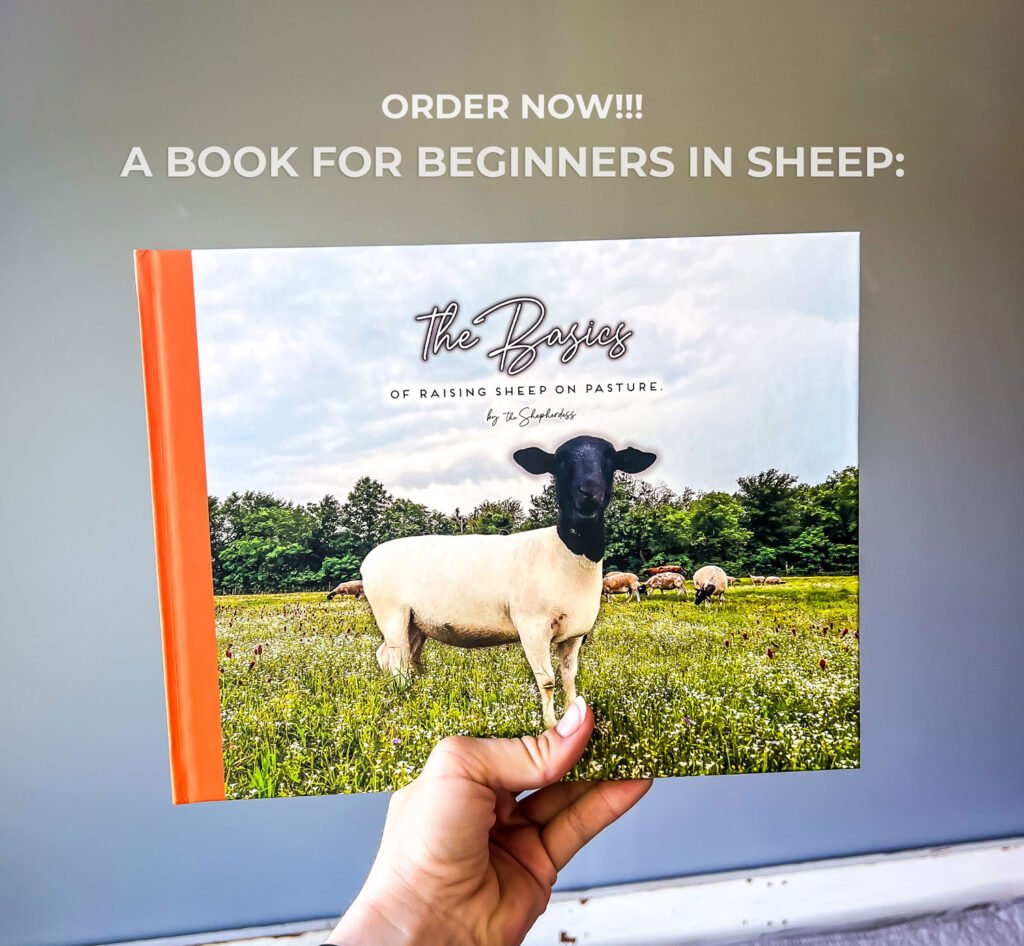
If you’re a beginner shepherd on 30 acres or less, then I wrote a book for you: The Basics of Raising Sheep on Pasture. Available at Shepherdess.com with free shipping. Raising sheep on pasture requires a basic understanding of pasture management, breeding and lambing, and mitigation methods for common disease. I walk the beginner shepherd through each aspect, sharing through this book vivid pictures, easy-to-follow instructions, and personalized stories from my own journey with sheep. Available with free shipping at Shepherdess.com; you’ll find a direct link in the description.
Establishing your website and steering free social media traffic to it
To preface this entire class—this is in the context of internet marketing. In the Shepherdess Masterclass, I teach you how to build a newsletter. I teach you how to build the website. I teach you how to add e-commerce to that website. And then I teach you how to use Facebook, Instagram, and videos on YouTube to begin welcoming people basically into that house that you have just built. I’m very specific and very deliberate in how I have laid each of these elements, and how I recommend that you lay them. Because when we’re on the internet and when we are on social platforms—whether it’s Facebook, Instagram, or YouTube—every single one of those platforms owns us to an extent, and they own whatever following we build on them. So I always tell people build your newsletter first, and use those platforms that don’t belong to you to begin encouraging people to platforms that do. The second platform I encourage you guys to build is a website because again, that is also a platform that you own. And then building e-commerce into your website so that again, you can begin taking people’s credit card information.
So I walk you through all of these classes. If you are in the master class, I walk you through how to launch a newsletter. I walk you through how to build a website. Each of these classes are about one hour each. I walk you through how to sell products on that website. And then if you guys want to segue into social media, I teach you how to advertise on Instagram without paying a dime for Instagram ads. All of the traffic I teach you how to generate for yourself is organic, which just means you don’t pay for it. It just means it’s free. And that’s the best kind of traffic for a lot of different reasons. I teach you how to advertise on Facebook if you want to do that. And I also teach you how to build videos and build a strategy that will grow a YouTube channel.
The main point of those three social platforms that I just mentioned—your newsletter, your website, and your e-commerce platform—you’ve got to find people, okay? You’re going to build those platforms. They are going to look so good. They’re going to be so shiny. You’re going to have a lot of really high quality content, but it’s going to be crickets unless you can find an audience to grab hold of and direct towards your platform. And that’s why I really encourage you to go to Facebook, Instagram, and YouTube. Because those are the easiest ways to get free traffic, as far as I found. A lot of people have issues with social media and I completely understand it, but whatever you do, you need to just find a big group of people and find some way to filter them toward your platforms. And that’s why I teach those social platforms.
But before you dive too deep into thinking about products to sell or even investing money in inventory, you need to put in the grunt work on some of this tech stuff. And that is, in my opinion, unless you’ve established yourself really well in a local market. Because here’s the thing: it takes time to develop a newsletter, a website, and an e-commerce shop. But by starting early, you can have them established before you become too busy. I launched my farm newsletter even before my farm products were ready to sell. I launched a farm website well before my farm products were ready to sell. And I was able to key people in on the growth of my farm and key people in on the process. Then once that process had come to a completion and I had products, they were ready to purchase. I guess I should make that the three P’s. Key them in on the process. Once your products are ready, they will be purchased. Lord willing, you know. God gives the increase. But that might be a sticker next month at Shepherdess.com.
Adding shippable products to your business and connecting local booths to online sales
All right, but these are going to be two classes in the Shepherdess Master Class bundle. But why shipping? Shipping allows you to earn money without leaving home. Plain and simple. It allows you to stack variety and increase the value of each customer that you bring into your business. Whether it’s a farm business, whether it’s a handmade business, et cetera. Because it ties back to a principle—and I’m constantly preaching this principle—of stacking enterprises, but primarily stacking products into your business that will appeal to the same kind of person. The important principle here being that let’s just say it’s your goal to earn an extra $10,000 this year through this side hustle that you’re developing, whether it’s farming or a website side hustle. It’s going to be a lot easier to serve 10 customers that will spend $1,000 each with you throughout the course of that year rather than 1,000 customers that spend $10 each. And the way that you do that is by knowing your customer, knowing their interests, and then finding ways to stack into serving them. Basically be really service oriented. How can you serve the person who’s giving you their attention? How can you serve them with additional products?
All right, so this is a total precursor to shipping products in hopes that it will kind of get your juices flowing on what products can be shipped. Because if you don’t have products, you really have no reason to learn how to ship 101. But to know how to stack your farm income, you need to ask yourself, what is a low-ticket item, maybe $50 or less, that’s going to be shippable and that will appeal to the same people that are interested in my farm products? And just a way that this kind of ties back to me: I sell sheep. That’s my primary enterprise. People became very interested in how I was grazing and taking care of my sheep. And they began asking me for book recommendations. I’d give them my book recommendations, but after people just kept asking me and asking me, I thought to myself, is there a way that I can get distributorship for some of these books and begin selling them direct, and make a little extra money, while I’m creating these resources for people? And the answer was yes, and people began to respond to that.
Another thing I want you to really grab hold of is just to start small, and I always tell people about this. While it’s really exciting to think you might be able to grow your farm business enough to earn $100,000 a year and quit your day job, wouldn’t it be equally exciting if something that you put maybe an hour or two into per day could start earning you an extra $300 a week, $300 a month, or what about an extra $10,000 a year? So through the tools that I give you—building a website using WordPress and WooCommerce—it only costs $80 per year. Using the methods I teach you to organically drive traffic to that website through Facebook, Instagram, and YouTube, it costs $0 a year. So basically for $80 per year, you have just opened a storefront on a digital highway that has basically 4.9 billion potential customers on it every day. And I really want to encourage this because this is the lowest cost, lowest risk way, in my opinion, to build a business or build a side income in today’s world.
And as much as I talk about the digital platforms, I want to remind you guys to stay plugged in locally—to stay frequenting your farmer’s market, have a booth there, support the vendors there, build relationships there, but understand that you probably have time to build both a local and an online presence. In fact, both complement each other really well. If you sell at a farmer’s market, you can have a business card that will take that customer who may not be ready to purchase there. It will put a business card in their purse so that later they can double back, they can check out what you’re doing on the internet, and they can become a customer at a later date because you have multiple ways for people to connect and engage with your product.
Basic packaging materials for home printing setups
All right. Thank you for sticking with me on that 15-minute precursor here to Shipping Products 101. All right. So the basic supplies that you are looking at, let’s just start at the base level. You’re shipping one to 10 packages per week. We’re going to start with the bare minimum on shipping supplies. And I like to call it efficiency, but some people just tell me I’m a cheapskate. I look for the best prices and I hunt down the best quality supplies. So I’m going to direct you towards what I’m using and you can rest assured they are the best that I have found on the internet. All right, so we’re going to start out with some elements that you want to just have on hand as you are shipping products. This is going to be the most basic set of elements, most obviously a business card. Your business card should have the following information on it: your brand name—which is your farm name—your phone number, your website. If you do not have a website yet, add a link to one of your social media pages. And my favorite source for all of these is psprint.com.
Within your packages, most obviously, please include an invoice. These are printable through WooCommerce. And if you hear WooCommerce, just know that it’s the platform on which I teach you to build out an e-commerce website. After you finish that website, you’re going to find a section called the plugins section, and simply install Print Invoice and Delivery Notes. If you choose another website service, you’re just going to have a print invoice option right there. This is one of my favorite things to do. It is absolutely free and it goes a really long way, especially if you’re starting small and you’re on a budget with respect to the kind of packaging materials you can invest in. Write a note to the customer. Write a note on their receipt and just say thank you. It goes a long way to have people on one side, write you a note, on the other side. I know it because I’ve experienced it. And I know it because people tell me, they encourage me and they say, “I really appreciated that note that I received on my invoice.”
There are three primary mailer options. Again, these are going to be hyperlinked. Polymailers for apparel and non-fragile or bendable goods. I use these for things like my shirts. Sometimes I will ship books in these, but I make sure to wrap them in bubble wrap. I prefer the bubble mailers for the books. And you can also ship semi-fragile goods in the bubble mailers. And then you have the stay-flat mailers for photos and note cards and things that are easily bent. Box options: the standard box, and a box for perishables. I want to introduce you guys to Green Cell Foam as an insulated box shipping option for you. You’re going to be directly linked to Green cell foam, and this is what I am currently using to ship frozen products. Tape and a tape gun, more than anything. This is going to be linked for you to the direct place where you can purchase these. And then you have bubble wrap. These are the basic accessories that I have at my shipping station. And then dry ice. Know that dry ice is available through probably 9 out of 10 local grocery stores. You do need to call them and ask them for it. You need to make sure it’s in stock. For example, today I went to buy dry ice and it was sold out at one of the locations that I had gone to shop for it at. So make sure that you purchase it the day that you’re shipping your products and that you call ahead to your local grocery store. It’s about $1.49 per pound at my local grocery store. And I also called a local dry ice company to cost compare. It was Tyler Dry Ice for anyone who is in the Tyler, Texas area, but it was about the same price.
On hand, I have up front, as my suggestion for base level shipping supplies, is a shipping scale. This costs only about $20 or $30, and it’s going to allow you to print labels from home, and have that accurate weight to put on those labels. When you are shipping labels from home, obviously… Raise your hand, guys, if you have had experience printing actual labels that you can just tape onto the package and drop at the post office—you don’t have to wait in line. But let me know, that is going to be a game changer if you do not. But shipping labels, basically, when you’re shipping one to 30 packages per week, I recommend that you use your standard printer for labels. Again, WordPress and WooCommerce, those platforms I teach you to build the website on, has an excellent shipping plugin called WooCommerce Shipping and Tax. This is going to plug you into commercial shipping rates, which means you’re going to spend less printing your own labels on postage than you will at the post office. A discount is anywhere from $1 to… $3 is about the average savings, but when you’re talking about 1 to 30 packages per week, that’s a pretty significant savings over time. So this shipping plugin is going to plug you in to the commercial rate and it’s going to allow you to print those USPS labels for your orders. And these prepaid labels will allow you to bypass standing in line at the post office. You can just drop your package with the clerk and run back out the door.
Sometimes you may take orders off your website through social media, and you need to use, at this point in time, USPS Click-N-Ship if you take orders through social media. This process is the same. You input the address. And print it right there on usps.com. But I wanted to make the differentiation that if you’re selling on social media and you’re taking payment somewhere that’s not your website, you want to make sure and use click and chip to print those labels at home.
Picture this: you are looking out over your 5, 10, maybe 20-plus acres. The sun is setting, and your flock is grazing across a green pasture. Something inside you affirms this is real wealth—at least when it comes to material things. You know how to take care of your sheep, your grazing system is improving your land, and you have a way to direct market each lamb that is born. This is how I feel when I look at my flock, and I want the same for you. So, I put together a free one-hour class that answers some of your most frequently asked questions concerning how I raise, rotational graze, and market my sheep for $480 per head. Go to Shepherdess.com/480, or simply click the first link in the show notes of this podcast to sign up and receive the free on-demand class. What’s more is that I will follow up over the course of three days, providing you with even more free resources—including a free ebook, a free grazing sheep kickstart guide, and a free marketing sheep kickstart guide. This information is worth paying for, but I’m giving it to you for free. Just go to Shepherdess.com/480, or simply click the first link in the show notes of this podcast for how I raise, graze, and market my sheep for $480 each.
High-volume tech tools, in-box marketing, and frozen meat logistics
All right, so we’re going to move into some tech that’s going to help you once you trip over into that threshold of 30 to 100 packages per week. These are going to be just a couple of tools to increase efficiency on a larger scale. This is going to be probably one of your best investments once you get up over that 30 packages per week threshold. It is a thermal label printer. Basically, the primary reason I recommend this printer is the cost of ink. If you guys have bought ink cartridges, you’ll know that they’re about $30 each, but this particular machine uses thermal technology, which means there is no ink involved and it will quickly pay for itself. This machine is about $300, which is why I do recommend it once you’re really consistently generating sales online and printing a lot of the labels yourself. But it’s $300, but that’s about the price of 10 or 12 ink cartridges right now. So it really will pay for itself. And the second reason is simply time. The label prints out, cut to size, and will stick straight to the packages you are shipping. I’m going to link to the label printer that I use. And these label printers last a really long time. I’ve been in business with one of my brands for… We bought the first one 14 years ago and we’ve only replaced it twice in 14 years, so it really should last you about five or 10 years.
Another wonderful tool that I really enjoy—I’ve been using it, again, for 14 years—is the Endicia shipping app for your desktop. This is about $20 a month. It’s difficult to explain it here, so I really won’t confuse you by going into detail on it. I’m just going to point you in the direction of the tool. But it is a desktop app that will allow you to paste. You guys see right up here the address and click Validate, Prepare for Printing. Just within two clicks, you will have your label. Endicia will replace Click-N-Ship once you have moved on to this mid-level phase of shipping 30-plus packages per week. And the Click-N-Ship, which is free, is time consuming with respect to a way to print labels. So when you’re using a free service, I always tolerate a little more grunt work, but it is always really nice to find a faster option. And that’s exactly what Endicia is.
All right. Use packaging to market. Use packaging as a marketing tool. I’m going to give you two quick ways that I have done this, and hopefully it will stimulate your brain as far as ways that you can do it yourself. But here are some in-package marketing ideas. And basically the goal here is to give your customer a next step to take to keep them engaged with you, and engaged in what you’re doing. And this is all just doubling back to that value-adding principle: remember that it’s going to be easier to serve 10 customers that spend $1,000 with you than it will be to serve 1,000 customers that only spend $10 with you. And that’s really what you want to focus in on here. What can you include in your package that might nudge your buyers towards the other products you have to offer on your website? Or make them aware of something they had no idea you had to offer. There have been so many times when I’ve said, “Oh yeah, I do a monthly meetup, FarmerMeetup.com,” and people are like, “Wow, do you really? I had no clue that you did that for free.” So a simple printable I include in my packages—it just prints out on my printer, and it goes into each package and invites them to my free monthly live stream.
The second one is a brochure. This is professionally printed. A little more expensive, but very well worth it. And it points people to the other products that are on my website. And again, this will go into the package for the sheep care supplies that I sell. But each code will take the customer straight to the product page. If you want to test out what a QR code is, basically just pull up your phone’s camera and the QR code is going to take you straight to the product page. I enjoy using QR codes, and they’re becoming more popular with the public to where people know exactly what they mean. And you’ll see if you put a QR code, say at your farmer’s market booth with a direct link to your website, you’ll see people already pulling out their phones and cameras. So it’s a neat little tech thing. And in the e-book, I’m going to go ahead and put a link to the plugin where I generate all of these QR codes straight off of the WordPress website that I teach you to build. So you’re going to find that in the e-book.
Shipping perishables is basically all of the same thing, but there are two really important things that you need to do differently. We’re talking frozen meats primarily. I have no experience shipping vegetables. I have no experience shipping… We’re just talking frozen meat right here. So, keep it all in context. But number one, you want about five to ten pounds of dry ice per package. And again, it’s available through your grocery store. Do not store dry ice in your freezer. It will cause your freezer unit to malfunction. It’s way colder than your freezer is and yeah, you don’t want to learn the hard way that the dry ice will kill your freezer. Some of you may actually have already known that. But dry ice should be purchased really the same day, and used the same day as you ship your frozen meat products. I want to make sure that my frozen meat products are frozen solid before I ship them. And that’s going to help with the process of getting them to the consumer absolutely frozen.
Depending on the season and your location—this is something I really mention under the radar—you probably want to run some test shipments before you would rely on shipping without dry ice. If you’re shipping in the dead of winter and you’re shipping from frozen zone to frozen zone, second-day air, there are people who will sometimes avoid the dry ice, but be very, very, very careful with that and run some test shipments before you consider shipping without dry ice. You want to use UPS Second Day Air for all frozen meat shipments. UPS Online has the same kind of account that Click-N-Ship has, and that is an account that I use to create labels for UPS. Again, that’s going to give you some really good commercial rates and discounts when you apply for that UPS Online account. And you can also schedule pickups for the boxes through that UPS account. So, well worth the effort to put that infrastructure in place.
Comparing shipping rate strategies and building a business with deep roots
A question I get all of the time is: “What should I charge for shipping? How should I set that up on my website?” There are three options. The first one is calculated costs. You give the consumer a precise cost plus the cost of your shipping materials, and it’s going to vary from product to product. Shipping costs are going to be here, there, and everywhere because you are being very precise about it. It requires you to calculate the precise weight of each shipment, and that can be actually done through various services within your website. It takes a little bit more to set up if you want to go the calculated costs route. I’m just going to put it up as a disclaimer: I do not go the calculated costs route. I have been—for the past 15 years of selling products on the internet—using primarily one of the following two methods, and number one is flat rate. At the moment, I charge one shipping price regardless of the item on my site. So when I charge shipping, this is the method that I use. I like free shipping and I use free shipping mostly. I’m going to talk about that in the third.
But when I charge shipping, I charge $10 flat rate for any item and any order quantity in the USA. And what this does, from a marketing perspective—this is kind of a marketing thing—it will often encourage the buyers to buy a little bit more if they are interested in more items. It will kind of encourage them to, “Okay, well, I’m spending $50. If shipping’s flat rate, I might as well just tack that other product on there. It’s going to bring my overall cost down.” People’s minds just kind of work in that way. And it’s also predictable, which is an important thing for consumer trust. If they keep adding products to their cart and they see that shipping prices continue to fluctuate, there’s just that element of unknown, and there’s a lot of psychology in e-commerce and consumer behavior. But it’s just been found that flat rate, for me anyways, has always encouraged consumers. But nothing encourages consumers quite like free shipping does, and this is my favorite method. What’s more is that with the dominance of Amazon, most consumers expect free shipping, or at least they’re spoiled by it from your competitors. So I like to add free shipping whenever I can. There are obviously products that are just too heavy and I can’t, but free shipping for me is most frequently used. I have to add the cost of shipping into my product prices and run that through my product margins to make sure I don’t compromise my profitability, but when I can, it has proven to be a very good move for me.
And what I mean by factoring the price of shipping into your products so that you can offer that free shipping—an example is I offer free shipping on all books and stickers at Shepherdess.com. So instead of pricing my books at $30 and adding that $5 shipping cost at checkout, I price them at $35. Instead of pricing that sticker at $3.50 per sticker and adding $1.50 shipping at checkout, I just price my stickers at $5 period. The cost of shipping is still covered, but customers are happier knowing, again, what to expect. They’re not hit with the price of your product and then hit again with a shipping price at the end. It’s all-encompassing, and then I can market free shipping on all books and stickers right there. And it adds a little bit of a push for that purchase, again. On some of my sheep care supplies, the profit margins are a little lower and I can’t necessarily afford free shipping unless the customer spends $75. So for my sheep care supplies in particular with the lower profit margins, I set that threshold at a minimum spend of $75 and then they get free shipping. So keep that in mind. It can be used as a tool to encourage people to buy just a little bit more and spend just a bit more at your shop. So, keep all of those in mind.
All right. So we have basically sort of exited the Shipping Products 101. As I create all of these marketing classes and as I teach them all, I really want to encourage you that it’s going to take time to do whatever you do. It’s going to take time to break ground. Sometimes we see these overnight successes, and to be honest, guys, there’s no such thing. If you ever see an overnight success, understand that there were years of experience behind that person, and that any success that you experience will probably require the same thing in the background in your own life. So in one of my internet-based side hustles, it took me a full year of just hammering it out 18 hours a day. Well, that’s a bit of an exaggeration, but a significant time period every day to make just a thousand dollars. That’s all I earned in the first year. At that same side hustle in year two, I put in the same amount of work—I worked super hard. And in that second year, I earned about $10,000. Success is often a snowball. So in year three, I earned about $90,000 at that same side hustle with that same amount of work that I had put in the two previous years. Each year required the same level of input and generated different results. So do not be discouraged.
If you guys are Christians and you read your Bible, I would highly recommend that you read the book of Proverbs because again and again it talks about diligence—putting in the work, and I will always go back and read that when I’m feeling discouraged in business, and realize, just be diligent, be consistent, and be faithful in whatever you believe you’re supposed to be doing. I have a sibling who is in the process right now of building his own business, and we talk a lot about business. And one of the things I talk to him about is: What do you want in a business? Do you want a mushroom? Do you want something that’s going to pop up overnight and be very vibrant and impressive for a short period of time? Or do you want a business with strong roots? Do you want something that’s going to dig deep and provide shade and shelter for people for years or decades to come? Because a lot of times when we wait for results, we get impatient because, again, we don’t get that mushroom. We don’t plant the seed and then see the results the next day. But you really need to produce quality, just be diligent and ultimately—I’m speaking from my Christian perspective here—ultimately, some days I come to the end of the day, and I see nothing for my work, but I just have to trust in the Lord to give the increase because that’s who it comes from.
So do not quit, guys. Keep at it, and be faithful. Let me see what the rest of my… Oh, my slide here encourages you to join my monthly small farmer virtual meetup, which is a place to share skills, resources, and encouragement. That is the conclusion of Shipping Products 101, guys. If you have any questions, leave them here. Otherwise, I will allow you to move on with your evening. Thank you. Thank you guys very, very much.

Leave a Reply