 by
by 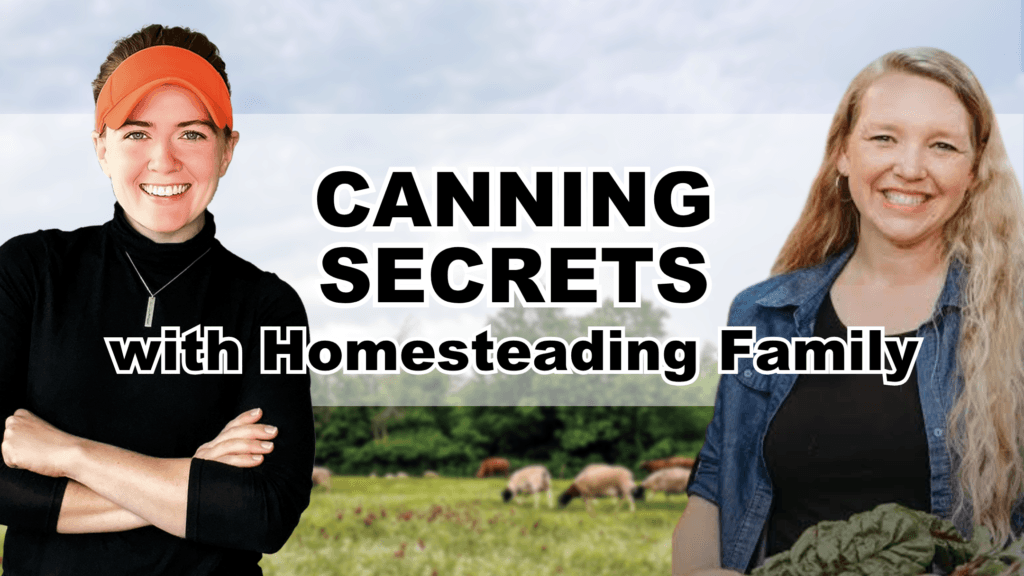
Hi friends,
Before sitting down to record this episode with Carolyn, I had already spent hours watching her videos while canning my first 500 pounds of meat. I learned so much from her wealth of experience, so I loved getting to chat with her in real time about all things canning, food preservation, and sustainable homesteading.
In this episode, we are diving into the different uses of water bath versus pressure canning, the small mistakes that lead to failed seals and siphoning, plus the mindset shift she recently made around food preservation as a whole. Carolyn shares why she is no longer trying to replicate a grocery store in her pantry, but is instead shaping her diet around what actually grows well on her homestead and is simple to preserve.
If you’ve ever felt overwhelmed by food preservation, or you’re just getting started, this conversation is full of tested advice to give you a clear starting point.
-the Shepherdess
TRANSCRIPT
the Shepherdess All right, so we are here today talking with Carolyn at Homesteading Family. I am so excited to have you here today, Carolyn. Thank you for joining us.
Carolyn Thomas Yeah, I’m super excited to get to be here. This is fun.
the Shepherdess So I just finished my first pressure canning project. I canned about 500 pounds worth of meat, but when I was approaching that project, I was just searching YouTube for how to pressure can meat. And I found your videos and just started binge-watching them. They were so, so helpful. So I’m excited to have you on here. I think we’re going to tackle this in sort of three phases: number one, I want to get to know you and where you are in the country, and what your operation looks like. And then I’m going to ask some beginner questions about canning. And then I’m going to go ahead and ask you about your own personal food preservation systems and processes now that you have several decades of homesteading under your belt.
Carolyn Thomas Yeah, that sounds like fun.
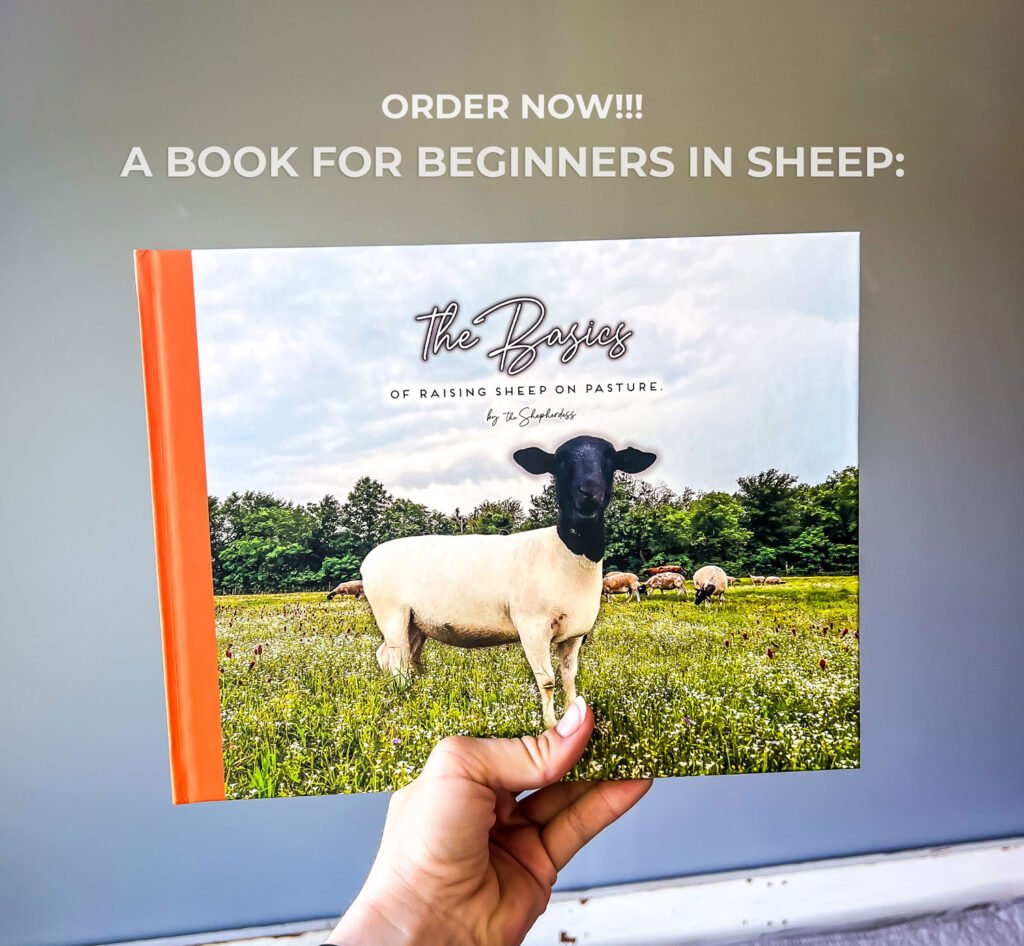
the Shepherdess If you’re a beginner shepherd on 30 acres or less, then I wrote a book for you: The Basics of Raising Sheep on Pasture. Available at Shepherdess.com with free shipping. Raising sheep on pasture requires a basic understanding of pasture management, breeding and lambing, and mitigation methods for common disease. I walk the beginner shepherd through each aspect, sharing through this book vivid pictures, easy-to-follow instructions, and personalized stories from my own journey with sheep. Available with free shipping at Shepherdess.com; you’ll find a direct link in the description.
A look inside a 40-acre Idaho homestead
the Shepherdess All right, so let’s go ahead and start out. Give us a 1,000-foot view of where your homestead is now, what you grow, where you’re located. Just familiarize people.
Carolyn Thomas Oh, okay. So we are up in the very far north of Idaho. We’re literally just a couple miles from the Canadian border. So we are cold. I’ll just say it. We’re cold. We’re kind of in the mountains. We are in this great little, like, river valley, so we have this microclimate that is colder than everybody else around us. So, we were colder than cold. But it’s just a gorgeous spot up here. We were on 40 acres, and I think we’ve been here for about eight years now on this piece of property. And so we have been working hard to kind of bring it up to what we need it to be for our family. We have a large family. We have 11 children. Three of them are out on their own. One of them lives in a little off-grid cabin here on the property with her husband. And the other two are very close by in a local town. And so, you know, right when I thought kids get older and they leave, I realized, yes, but if you have raised them eating really good food, they kind of don’t necessarily want to leave the food production because they’re like, yeah, we tried the grocery store. That’s not what we’re used to. So we’re still producing a lot of food and just loving it. But yeah, we kind of do a little bit of everything—we have beef cows, we do a dairy cow, we have dairy goats, we have sheep, we wave geese, turkeys, chickens, egg layers and meat. Like we just kind of do a lot of that. We do a lot of gardening, vegetables. We’ve been adding a lot of flowers to the mix and just revamping the orchard that was already here, which needed a lot of TLC. So we’re excited. The next year or two, we’re expecting to start getting a lot of fruit in. And then I do a lot of herbal medicine. So, I have my herbal gardens, and I grow a lot of what we use here on the homestead. So it’s kind of just a little bit of everything. And because we have such long winters here, we have to do a lot of food preservation on the other side if we’re going to get through the winters without having to go to the grocery store and get everything from the grocery store. So there’s always a lot of food preservation kind of happening around our house. So it’s fun. It’s a little wild with this many kids. We’re always doing something fun. There’s always something new going on. There’s a lot of, you know, rambunctiousness at our house. We’re kind of a wild group, but we just have a blast doing it.
the Shepherdess That’s neat. So going back a little bit, so you are fairly new—I guess it would be new for the homesteading timeline—on your 40 acres, but your experience goes way back before that. Where were you at before the 40 acres?
Carolyn Thomas So we had another property we were at up here in North Idaho. We were there for, I don’t know, about five years, maybe. And that was a gorgeous property, but we were just leasing that. We didn’t buy that. So we had fallen in love with the property and really hoped that we would eventually be able to buy it, but it just wasn’t going to work out that way. Before that, we were in Tennessee, and then before that, both Josh and I came from the Southern California area, the mountains of Southern California. And that’s really where our homesteading experience started. We both had family, you know, my mom used to garden. She had chickens. I was raised on horseback. So was Josh. But he was raised a little bit more on riding cattle. And being out in the countryside, I was raised a little bit more urban than that. And so it just was a great combination for us, and it made a lot of sense when we started homesteading. It was just kind of what you do—like of course we’re going to have a garden in our backyard. And I think it took a lot of years before we even thought we were doing something called homesteading. We just were doing what seemed right to do.
the Shepherdess Right, right. So you came from Southern California to the long winters of northern Idaho. It was a slow transition because you popped around from Tennessee upwards there. Talk about those long winters. And I’ve been recognizing that food preservation is probably just as important as food production. Do you have any personal goals in terms of self-sufficiency? Like what percentage of food you like to put back for that particular time period? How has that evolved for you? What did that look like?
Growing what works and preserving what matters
Carolyn Thomas Yeah, I think when a lot of us come to homesteading, we think self-sufficiency, like I want to produce everything that I need. And that’s definitely where I started when I started transitioning into a little bit more of the homestead mindset and then away from just like, oh, we just have a little garden in the backyard. I was like, oh, we’re going to live in the middle of nowhere and produce everything we need. And it took a few years for me to realize that’s not actually a picture of anything healthy. That’s what you do when you’ve been injured by society and you want to go hide from all of your fears, right? And so now Josh and I like to say that the goal for us is community sufficiency—that we don’t have to produce everything because the reality is there’s always seasons where life goes sideways for you personally. People get sick. You have an accident, you break an arm, you have a job loss—there’s all these different things, and you don’t want to be the only person you have to depend on. Like, that’s a really weak system right there. Instead, we love the idea of community sufficiency. So with that said, there are things that we’re like, hey, you know, we don’t grow this as well, and we have this great farm down the road who does. Let’s go support them. But, for the most part, we just try to do more of what we do well, and then produce more and preserve more of what we do well. But then what I’ve found to be a real key to this is instead of trying to replicate a grocery store in my basement where I can be—or my pantry, you know, my pantry’s in my basement—where I can be like, I can have whatever food I want at any given time of year. Instead of doing that, I found the number one key to good food preservation that doesn’t take over your life is to change your diet to what you can produce. And so that’s the easy thing to change: instead of when you’re meal planning, thinking, what do I want to eat this week, looking around at what you have and saying, “Hey, what do I have available that I can turn into an amazing meal?” And then learning how to be a little bit more creative cook so that you don’t end up tired of the food that you have. So with that, I feel like there’s a really balanced approach that I have found after years and years of doing all the hard things the hard way, of being able to find this method of just, like, well what do we grow really well here. I mean, we’re in Idaho, come on. We grow potatoes. Like we can grow potatoes, but also all the other root veggies—you know, carrots, parsnips, and beets—all of those things grow really well. And so instead of saying, “What do I want in the pantry?” I start going, “What do I grow well? And what is the easiest and most practical for me to preserve well?” And so then I start shaping my diet around that. Now, like I said, I spent a lot of years trying to make my pantry look like a grocery store. I preserved everything, and I exhausted myself. I got to a point where I’m like, “I don’t think I want to do this for the rest of my life. I feel like I’m a slave in my own kitchen.” And I started thinking, like, historically, they didn’t have time to make every single recipe in the Ball Blue Book, you know, and to put it up. It just didn’t work that way. So how did they do it? And it’s like, well, they could grow what they could grow, they preserved what preserved well, and then they ate everything else in season they could as long as they could. And so I said, “Hey, let’s try it that way,” and it was a game changer for me.
the Shepherdess Now I want to dial in on that really quickly, that particular shift, because I think that’s where a lot of people fail to make the transition, and they just quit instead. Can you outline what that looked like for you? Just really practically, like I used to do X, Y, and Z, and then I just dropped it for this more sustainable, kind of… More details there.
Carolyn Thomas Oh yeah, absolutely. I mean, I can remember the time that I tried to can kale because I had kale in the garden, you know, and I had extra, and I was like, “Well, you need greens in the winter, so I should can this stuff.” And it was actually a breaking point for me because I was pregnant. For something like kale, you pressure can it—it takes forever to pressure can something, and I hadn’t started it until evening. And so I was literally up at, like, 11:30 p.m.—long past my bedtime. I like evening hours, but not that late. I want to be tucked in bed with a book long before that. Then to have them finish in the pressure canner, get them out, I was so exhausted, and the next day I thought, okay, I should see what this is like. And I cracked one open and it was just this slimy, disastrous, gross mess. And I was like, “Why did I even bother?” It was so awful. So it really kicked off this mindset that there are things that aren’t worth it. We just don’t do it. So I started dropping those things out first. The things that I saw were still sitting on the shelf at the end of the season. Like, “Okay, we obviously don’t like this, and I’m working to try to use it, so why am I bothering to can it in the first place?” So I dropped those out, and then to really get down to this matrix of like, what grows well… Because, you know, all of our areas are different. You’re in Texas. You grow things well that I couldn’t even touch. I’ve tried okra here multiple times. I will get one sad little stick—we even tried it in the greenhouse one year—one sad little stick with like two little okra pods on it, which does nothing, right? And so it’s like, you can grow that well, but maybe you have problems with some of the other things. I can grow broccoli like nothing else because it loves this cool weather. So, honing in—what wants to grow here? That makes your gardening easier because you’re not fighting nature all the time when you’re like, “What’s happy here?” And then when you then cross-reference that to what’s easy to preserve, and let me say canning is not always the thing that’s the easiest method for preservation. I love canning. I still can 800-plus jars of food a year, but that number is starting to shrink now that freeze drying is on the scene. And I’m leaning more and more heavily into root cellaring and common storage where I literally don’t have to do anything besides pack it away. So for me, you know, it’s just those fussier bits—we start dropping those out, and we start looking for more practical methods. Again, shaping your diet around what you have is the key to all of this because otherwise, you’re going to find yourself just still going to the grocery store even if you have a pantry filled with food. Instead, you have to shop your pantry, shop your root cellar if you have one, shop your freezer, do that first, and then meal plan around that.
the Shepherdess Yeah, and I think that it’s so important to touch on in terms of the seasonal eating, or eating what you can grow, because we have societally adapted to this, you know, eating avocados in the middle of, you know, who knows when or where, but that is really, really, historically not how people have survived. And I think that’s a really, really good mindset to hone in on and adapt to as a sustainability mindset. I think I see a lot of homesteaders get into it, and I’ve felt it myself—it’s not what you expect because the mindsets aren’t there. And then rather than doing what you did—making those necessary adjustments to keep going—they quit. And it’s a discouraging cycle to watch or even feel, as well. But that moment of crisis you come to, and you’re really explaining it well in terms of how you transitioned.
Carolyn Thomas Well, they say that homestead burnout’s about six years, you know, and you understand that when you get into it. At first you’re excited because you’re learning all the skills and you’re like, it’s so fun to pull your first loaves of sourdough bread out of the oven. That’s so gratifying and your family loves it and then you’re, like, okay I’m going to learn food preservation, and you get into that. So you have this excitement that carries you through. But the thing that happens for so many of us is we take on this belief that when I learn a new skill, I now need to practice that skill every year. Like every year from here on forever, I am just stacking skill on top of skill on top of a skill, and maybe I’ll get more efficient at it so I won’t have to work so hard, but in general, I’m just adding more and more. And for me, I had to go, “I can’t live that way.” I literally will run out of time in a day and, you know, I want to enjoy my homestead too. I want to have tea parties with my daughters in my herb garden. I want to pick flowers. I want to spend the time making a great gourmet meal that’s totally not practical just because I love getting to do that occasionally with all these great fresh produce items that I’m producing. But if you get into this mindset of I have to do more, I have to do more, I have to do more, all of the sudden all the enjoyment factors go away, and you’re literally just starting to check off tasks. And then homesteading is not about the people. It’s not about relationship. It’s about the connection that you feel to your food, to the people, to the land. Now it’s just about getting stuff done, and none of us survive that well. Because it just is soul killing, right?
the Shepherdess Yeah.
Carolyn Thomas And so it’s like you have to figure out that, you know, hey, just because I learned the skill, there’s value in learning it. Now I know how to do it. It doesn’t mean I have to do it every year. I can still go back and go buy this thing from somebody else for the time being. And then if the world falls apart, I know how to do the skill. Right? I’ve got it in my back pocket, but I don’t have to do it all the time.
the Shepherdess Right. I mean it brings to mind an analogy, it’s a biblical one, but essentially pruning is necessary to bear more fruit. It’s so antithetical, sometimes you have to cut things out of your life or your schedule or your routine in order to bear more—to do more. And I think that is what you’re just saying here. You don’t have to do it all, in fact it’s better off if you cut some stuff out.
Carolyn Thomas Yeah, you’ll love it a lot more, and so will your family if you’re not stressed all the time.
Water bath canning, pressure canning, and food safety
the Shepherdess Right. All right, I’m going to go into just some really super practical questions, beginner level about canning. These are the kinds of questions that I was running up against myself as I was going through this process for the first time. But go ahead and explain quickly what is the difference between water bath canning and pressure canning, and use cases for both.
Carolyn Thomas Okay. So, you know, a long time ago, when canning just kind of became a thing, we used to think that it was appropriate to just put food in a jar and get that jar to seal, and then we could stick it on our shelf. What we realized over the years after that is that that is actually not enough, and the reason for that is because there are things that are alive that can get into your jar too. And when you have living things in your jar—that could be bacteria, mold, or, you know, like enzymes count in there; I know that’s not technically a living thing, but, you know, any of those things—they keep changing the food and they can grow and do things inside that jar. So what we learned is that we have to process the food when it’s inside that jar in order to sterilize it. And yes, we love our food enzymes when we’re getting fresh food, but if your food is sitting in a jar on the shelf, you don’t want the enzymes working away on it, right? It’s just breaking them down. And so we started realizing we had to process that food. Well, processing it means bringing it to a certain temperature that we can make sure that can kill off everything inside that jar. It needs to be totally sterile. But we have this other thing that’s going on, and this has to do with the pH scale of food. So when you’re thinking about the pH scale, you have this really high acid numbers—things like lemons or vinegar, pickles, or things like that. They’re really on the high acid scale. It feels a little backwards though because high acid foods are way down in low numbers. They’re like a two or a three. So when we’re talking high acid, we’re talking these really low numbers on the pH scale. And then some of your food goes up towards neutral. Almost all of our food is kind of acidic, it’s on the acidic side, but you can go all the way up to low acid foods, and those are getting closer to that seven on that scale. So what’s important to know, though, is that these other things that can be in your jar—these other living things that we don’t want in there—exist in the pH scale too. So if you have food that’s way down as acidic as something at a two, molds can survive. And so yeast can survive way down there in acid numbers too. But bacteria cannot survive an environment that is that acidic. It actually can’t survive until it starts getting to about a 4.6 on the pH scale. And by bacteria, we’re also talking about bacteria like botulism, you know, which is one of the big things we’re really concerned about because if you get botulism, you’re probably not going to walk away with just having stomach flu symptoms. You’re going to end up in the hospital or worse. And so what we need to make sure we’re doing is killing off all of these things. Molds and yeast and all of the stuff that can survive in high acid environments are really easy to kill with boiling water. They die super fast. They’re easy to kill, so all you have to do is boil them for a little bit and they die off. That’s why we have water bath canning for high acid foods because bacteria can’t even survive in those foods, so it’s not a concern. So we can just kill off everything by water bath canning the foods that are high acid. But that bacteria starts to be able to survive at a 4.6 on the pH scale or less acidic, meaning a higher number, right? Again, it’s confusing, I get that. So we need to do more to kill off bacteria than we do molds and yeast because they just don’t die as easily. So we pick it up to a higher temperature, which is about 250 degrees Fahrenheit. The only way to do that in a home setting is with pressure. So that’s why we have pressure canning, is for anything that is 4.6 or less acidic—higher on the pH scale—we have to pressure can those to be able to make sure we kill everything off that could be inside there. And then as long as you’re using the right method for the right food, you have food that’s going to sit on your shelf for years.
the Shepherdess Yeah, that’s really good. So the high acid foods being things like tomatoes, vinegar-based brines, that type of stuff, and then the low acid foods obviously being things like meat—what would be some other common low-acid canned…
Carolyn Thomas Yeah, vegetables. Any of your vegetables, and most of your sauces. Things like that. The one thing I do want to say is tomatoes, the modern variety of tomatoes, can often sit right on the edge. And so we have this other little thing for foods that want to sit way too close to that 4.6 on the pH scale for comfort. And that’s we just add acid to it. We make it acidic enough that we can water bath can them.
the Shepherdess And that’s done through what methods? Just adding a little vinegar?
Carolyn Thomas You just add lemon juice, vinegar, or citric acid. You know, any good, approved recipe is going to tell you exactly how to do that.
the Shepherdess Okay, so what are the signs that canned food has gone bad?
Carolyn Thomas Yeah, so you’re going to have the obvious ones for something like mold or yeast if that’s in there. It’s going to start bubbling, the lids going to start bulging, you’re going to mold over the top—all of that means you had a failure in your canning. That will not happen if you can it properly. The real challenge with when you’re getting into bacteria is that you can’t often tell when something has gone bad because of bacteria. Especially with botulism—you can’t see it, you can smell it, none of those things. Here’s the thing I have to say though, is that if you have followed the proper method and you followed a tested recipe, it is completely safe. You don’t have to think, is this safe? Is it not safe? I’m not sure if it’s safe. If you have an appropriate recipe, it will be safe. And so that’s something you can take a lot of comfort in, in this, it’s not hit or miss. That’s why the safety recommendations that we have through the National Center for Home Food Preservation, which is here in the United States—it’s the government office that helps us make sure we know it’s safe—those recommendations are proven safe. And so when you follow those, and you follow these tested recipes, then you can just be like, “Okay, I know it’s safe.” When it’s not safe is when your jar doesn’t seal. If you have a jar that doesn’t seal, if you have the jar that breaks, then it’s not safe. Don’t need it if it’s been sitting on your shelf. If you have a drawer that’s sitting on your shelf, and it was sealed when you put it there, and then for some reason—this can happen if your storage area gets really cold and starts to freeze—you can lose a seal. Until the moment that that jar unseals, that food is safe. And then once it does, you don’t really want to eat it after that.
the Shepherdess Picture this: you are looking out over your 5, 10, maybe 20-plus acres. The sun is setting, and your flock is grazing across a green pasture. Something inside you affirms this is real wealth—at least when it comes to material things. You know how to take care of your sheep, your grazing system is improving your land, and you have a way to direct market each lamb that is born. This is how I feel when I look at my flock, and I want the same for you. So, I put together a free one-hour class that answers some of your most frequently asked questions concerning how I raise, rotational graze, and market my sheep for $480 per head. Go to Shepherdess.com/480, or simply click the first link in the show notes of this podcast to sign up and receive the free on-demand class. What’s more is that I will follow up over the course of three days, providing you with even more free resources—including a free ebook, a free grazing sheep kickstart guide, and a free marketing sheep kickstart guide. This information is worth paying for, but I’m giving it to you for free. Just go to Shepherdess.com/480, or simply click the first link in the show notes of this podcast for how I raise, graze, and market my sheep for $480 each.
Troubleshooting common canning challenges
the Shepherdess Okay, so can food be safely recanned if that initial seal doesn’t take? So I had a batch—I think it was a particular sauce—it came out of the canner, they cooled down, and two out of five just weren’t sealed. What do I do at that point?
Carolyn Thomas Yeah, so first of all, you have 24 hours to find that your jars didn’t seal. So as long as you find those in the first 24 hours, because some of those jars, when you pull them out of the canner, they can take a couple hours to actually seal. So as long as you find them within 24 hours, they’re safe to get into the refrigerator, and then treat like a fresh food. So you can just eat them fresh if you want. In some cases the food is just fine if you re-can it. But when we’re talking recanning, we mean you have to dump it out of the jar, reheat, and you have to start from very beginning. Don’t just stick a new lid on it and pop it into a pressure canner. What you have to think about though is the quality of the food. So some food like a meat or a bone broth—it is not ruined at all by re-canning. In fact, it might even get better by that extra processing time. But if you’re talking peaches or green beans, you’re going to end up with mush. It’s going to be awful. It even starts to push canning safety in that case because you can turn it into such a thick mush that it’s like the heat can’t move around in the jar well. So I really like to say, once you understand the pH part of canning, everything else really can be pretty common sense. Look at it and go, “Is this going to turn to a mushy disaster that nobody’s going to want to eat?” If that’s the case, have it for lunch that day. And if you have a few jars, have it lunch and dinner and just eat it off in the next couple of days rather than trying to re-can it.
the Shepherdess That’s really good. All right, so another question from first hand: so I opened a can of broth yesterday and there were just these little tiny flecks of rust on the underside of that lid. Is that normal or safe?
Carolyn Thomas So, sometimes there’s things on the lid that look like rust. It’s rarely rust because of the coating that is on the lids. Not that it can’t be, but usually you’re going to see that if you have acidic pickles, and they’ve been stored for like five years. It’s rare to see that now with the new lids that they have out there, but there can be all sorts of discoloring and different things like that. And again, I go back to if you’ve used a tested recipe and the right method, then all of those little bits of discoloring, things that kind of look funny, or maybe there’s something on the lid—those are all totally safe. Things do turn color when it’s out of the liquid, and that’ll happen. Sometimes you’ll be canning—and especially with high starch foods—sometimes the foods will actually suck up the liquid so the top of those foods are no longer sitting under the liquid that they were canned in, and that’s absolutely fine. But the reality is those foods that are sticking out of the liquid can start to turn colors a little bit and they look a little funky. They’ll be fine. You just go ahead and use them like normal, and usually they taste great. And once you mix them back into the jar, you usually can’t even notice it.
the Shepherdess Okay. I’m still alive after 48 hours, so I think it was safe. I just wondered if it was a common thing, and if I needed to worry any further.
Carolyn Thomas Did you look up the symptoms of botulism poisoning? Because I can say in my early years, I definitely did that. I was like, “Am I done?”
the Shepherdess I know, I didn’t. Well, I had the feeling it was rust and—this is like a terrible admission—but I have eaten things out of rusty containers before, and not died. So, you know, it was like, I’ll take my risk. I need lunch. So another question I had was about removing the fat. So I had a lot of fat on certain cans or cuts of meat that I processed. I just left it, and so there is a pretty significant fat layer. What kind of risk do I need to be watching for in terms of those things? Is leaving that much fat too risky? What do I have to be watching for in those cans?
Carolyn Thomas Yeah, that’s a great question, and I think there’s a lot of confusion around this because sometimes when we get these national recommendations, it’s just like, “Just don’t.” That’s what it’ll say, and you’re like, “But why and what happens?” Sometimes I think it would be really helpful if they gave a little bit more explanation of the why so we could make wise decisions about things. But with the fat, this is definitely one of those areas. It is great to start by trimming your meat if you can, but even if you were to totally trim it, you’re still going to end up with some fat in there, especially if it’s a well-marbled meat, you know? And so there are two things that are issues to watch out for when we’re talking about canning meat and that fat, or even broth. The first is that if you get some of that fat on the rim of your jar, and you don’t get it off, it can interrupt the seal. So it can keep your jars from sealing properly, or you can lose a seal later when it’s on the shelf. Now, I get around this really easily by just wiping the rims with a little bit of white vinegar. It just really helps to cut that fat. And try to can cleanly. Use your funnel where you can. The other issue with it is that fat, even when it’s canned, will go rancid. And in fact, after it’s been canned, it’s more likely to go rancid quickly because it’s been through this high heat process. And so what you’re dealing with now is the potential for a food that is very safe, very healthy, there’s no bacteria in there, no anything, but the fat that’s come to the top can go rancid while it’s on your shelf. So in that case, I usually say, just try to use something like that up a lot more quickly. You know, you’re talking probably six months, depending on your storage. You know, if your pantry gets warm in the summer, that’s going to cause it to go rancid more quickly. But again, rancid—you can usually smell. You open it up and it doesn’t smell good. And it’s like, maybe I don’t want to eat this because rancid fat’s not going to make you throw up, it’s not going to give you botulism, but it is a carcinogenic material, and so you do want to minimize consuming that for sure. Plus, it doesn’t taste good.
the Shepherdess I was going to say, not pleasant. And the other thing I had was some siphoning on a couple of jars. My question was, if it’s got a lot of fat in it and it siphons and it spills over, will that increase the likelihood of disrupting the seal?
Carolyn Thomas It definitely can. Again, because you’re just lubricating your jar. And again, it might seal right off, but then three months down the line, all of a sudden, it’ll come unsealed. And this is really important to talk about because this is exactly one of the reasons why you don’t want to store your jars with the bands on, or at least, tightened. Because if that jar comes unsealed, you want to know. But there is something that’s called a false seal. And if you leave those bands on, in the right weather conditions, because it’s got the pressure down on it, it can actually reseal the jar, but you don’t know it’s been sitting on your shelf unsealed. And so it kind of gives you this false sense of security. So when they’re out of the pressure canner and they’re cooled, just pop those bands off, and that’s going to just give you this whole level of safety and security. And if they are the thing that’s holding your lids on at that point, then you’ve done something wrong in canning because those lids are on there so securely after you’ve canned it that they’re not going to come off.
the Shepherdess That’s good. So I’ve heard this mostly from freeze-dryer advocates, but I’ve heard people argue that there’s just this significant nutrient loss when it comes to canned food. Is that true? Is there a point, you know, if it’s been on your shelf for two years or what have you, at which you’re at more risk of losing those nutrients? Build that out if you have any information on it.
Carolyn Thomas Definitely. Yeah, they like to say in the food preservation world that after you can food, you’ve got about 60% of nutrients left. After you dehydrate it, you have about 40% of nutrients left. Of course, after you freeze dry it, they say you’ve got about 99% of nutrients left. I actually looked into all the studies in freeze drying, and I’d like to say it’s a little more accurate to say maybe 95% to 96%, but it is higher. But there is significant nutrient loss when you can something. People are always asking me, “How long does canned food last?” And I always say, “There’s two issues here: there’s how long it lasts safely, and then there’s how long it is nutrient-dense.” And these are two very distinct issues. Your jars of food will last, safely, as long as you have an intact seal on your lid. And I have had people tell me they’ve eaten food that’s 40 years old from their grandma’s pantry that was still safely canned. You can do that. The reality is though, you know, after about a year, that you’re starting to lose nutrition really quickly. So yeah, it’ll fill your belly. It might even still taste good, but there’s probably not going to be a lot of nutrition left when you get to those 30 year-old canned peaches. Probably let’s aim for about a year, maybe max two years.
the Shepherdess That’s actually really good information there. You can eat canned food that’s decades old, but your optimal time period is probably two to three years if you were to be generous?
Carolyn Thomas Yeah, definitely. You know, a lot of that depends on the storage. If it’s stored somewhere where sunlight is hitting it every day, you’re going to lose your nutrition in probably a month. If it is back in a dark pantry somewhere, then you’re going to extend that a lot longer.
the Shepherdess That’s really good to know. That transitions me into my next question: for you personally, what’s your rotation schedule look like? How are you deliberate about getting those foods rotated?
Carolyn Thomas Yeah, for us, the first part of rotation is labeling, and this is so easy not to do. I’m always talking to my kids about this. Yes, we can tell they’re green beans without writing what they are on there. I get it. But you have to at least write the year, and that is so that we know how old it is. For us it’s really simple: if I already have a year’s worth on the shelf, I’m not going to preserve anymore. We’re going to use that up first. If we have some left from last year and we’re putting a new batch on, we’re always going to make sure what’s left of the old batch is up front, and we are just going to use that first. So I just try to make it really practical. This is not where you’re going to put up your pantry for the apocalypse, right? Don’t do it with canning. It doesn’t make sense. It’s too much work for one. Plus, if the apocalypse happens, you need all that nutrition, right? That’s when you go buy a freeze dryer if you’re trying to put away that kind of a pantry. For me, my goal is just to make sure that we’ve got enough food until the next growing season comes around. So that makes it pretty easy because I’m always saying, “What did I preserve too much of this last year and I can do less of?” And so I’m always trying to find that sweet spot where I am starting to run out of food in the pantry right as the fresh food comes in. That is like key number one, and then number two: label it with the year, and then make sure you put the oldest one up front.
the Shepherdess So essentially, it’s pretty simple: label it, and then if you have something left over from last year, make note of it, and don’t do more of it than you need for the year to come.
Carolyn Thomas Yeah, unless you have a very specific reason. I know like years where I’ve had babies on the way. You know, I’m going to put up more applesauce. I’m going to put up some of the things that the baby’s going to be eating a little bit of. So sometimes you have a specific reason, but in general, the goal—and again, this goes back to the conversation we were having earlier—the goal is not more, and more, and more every year. The goal is enough. The goal is to make sure I have enough to take care of me, and maybe enough to help out some friends or some family. But if the goal is just more, and more, and more, you’re going to work more, but you’re also going to waste more because nobody really wants your extra pickles that you didn’t eat last year. Right? It’s just the reality. It’s not particularly a gift. Like, “Here are my old pickles that I didn’t eat. You want them?” So there are other ways if you need to put up food for hedging against the future, which we do. But a lot of that looks a little bit more like bulk grains, beans, and some freeze-dried food that’ll last a little longer. But canning really isn’t your best method for that.
Balancing canning, freeze drying, and food storage
the Shepherdess That’s very, very good information. The next question will be in terms of actually getting this stuff into cans, and preserving this stuff: do you batch it or do you harvest incrementally? What does it look like to put those 800 jars on the shelf every year?
Carolyn Thomas Yeah, we tend to do large canning days on the weekends or preserving days—whatever it is we’re going to do—and then smaller batches in between. So once you get proficient at canning and you’re not having to focus on it so much, now I’ll be like, hey, I’m just going to run a batch in the pressure canner before breakfast. You know, I can get the jars filled and in there. For us, green beans are another one we do can every year. We have a real divide in my household: you’re either a canned green bean person, or you’re a freeze-dried green bean person. And everyone in my house has very strong opinions, so we still do both. But sometimes you can run those really quickly because they’re a pretty simple project. And so I’ll do small batches through the week, but usually I’m kind of gearing up for like, hey, this is going to be the plum jam day, you know? And the plums are all ripe. Let’s do 90 jars of plum jam. Usually I am not planning. I’m just like, how much can we get done in a day? Either we run out of plums or we run out of time. So I like to kind of semi-batch it, but I don’t want to do days where I’m trying to do a huge amount of winter preserving all in one day. It’s like one or maybe two foods in a day, and then we’re done. And we wait until the next week.
the Shepherdess Just a practical question here: what is your favorite pressure canner to use on a regular basis?
Carolyn Thomas I love my All Americans. I love them so much. But I will say that I just finally broke down and tried the Presto electric pressure canner because they have finally come out with actual safe methods which I’ve been a real stickler for because, like we talked about, the importance of that temperature to kill off bacteria, right? And if you don’t know what temperature your machine is pressure canning at, then you really don’t know that your food is safe. So I’ve been very slow to adopt the new electric pressure caning methods until they could prove to me that their methods were totally safe. Presto and Nesco have both come out with machines that I’m like, okay, I feel good about these. I’m okay with these, and I’m good to recommend them. And I will say that if you are nervous about pressure canning, that Presto electric canner makes it so easy because it literally says, “Now do this, now do that.” It walks you through every step and it does mean that you don’t have to babysit your canner in the kitchen too. So I do like that. That’s good.
the Shepherdess I did that. I had both, but I bought an electric canner and it just felt like training wheels. I was like, I can do this. I’m just taking like little tiny baby steps forward, so that was a really neat little tool. What size and capacity do you use for your All American? Do you use that for the larger batches or what?
Carolyn Thomas Oh yeah. I think I have seven different pressure canners, so I have all different ones. I guess I’m a junkie, I collect them. But I have the giant 941 where I can literally fit 19 quart jars inside of it, and can them all at once. So we use that when we’re doing big batches. I love that thing. But in general, I use one of the smaller ones that just holds seven quart jars at a time, and that works really well. What I have found is that having multiple smaller canners running at the same time is actually better for the workflow because it gives you time to prep your jars and keep them warm instead of having to do a giant batch.
the Shepherdess That’s a good one. All right, a couple more practical questions here and then we’ll close it out. I’ll let you plug some of your resources. But the next question is liquid loss in jars—most common causes. Let people know upfront what they might be doing wrong if they experience that.
Carolyn Thomas Oh yeah. So that’s called siphoning, usually, when that happens, and that’s where the liquid that’s inside your jar—where it’s supposed to be—comes out of the jar in canning. You know, the most common reason that that happens that I have found is too quickly taking your jars out of the canner. And this is a step that a lot of people forget, but whether you’re using a pressure canner or a water bath canner, when your time goes off, and you take the lid off, you need to let your canner sit for five minutes with the jars in there. And what’s happening is that you’ve just created this really pressurized system inside your jar, and you need to give it a moment to equalize with the outside pressure once you get it out of that canner. Otherwise, it creates a system where it’s literally pushing the liquid out of the jar. So just let it sit for 5 minutes in the canner—no heat, no lid, let it just sit there, and then remove them to the counter. So that is the one thing that I see the most. The other, though, is your head space. That is important. Actually make sure you’re getting your headspace correct. Good resources and good recipes will always tell you what the head space should be. And head space, for anybody who’s brand new, is the space that is inside your jar, but it’s above the food. So it’s that empty space that’s in your jar. And that is important so that you don’t end up having the siphoning problem, but it is also important to make sure you get a really strong seal on that lid.
the Shepherdess That’s really good. Do you find that it’s too much or too little headspace that causes the problem more frequently?
Carolyn Thomas It’s actually both. It’s pretty obvious to understand why too much is just too full, and so it’s like pushing it out because it’s too full, but actually, sometimes too little can also create the problem because again, you end up with this different pressure thing going on.
the Shepherdess Okay, so coming to the question that everybody’s probably going to be asking in the comments already, and that is freeze drying. So what do you freeze dry now that you used to can? What will you never return to in terms of the convenience of freeze drying over canning?
Carolyn Thomas Oh, wow. Okay. There are quite a few things for us. Well, I never canned them, but eggs. I freeze dry eggs like crazy. They are so amazing in the winter. They are great, and they’re just really easy to do. They’re a great way to preserve them, and they preserve them really well for a long time. As far as what I’m not canning or freezing would be berries. Those go in the freeze dryer every single time now. We just love them. I can sprinkle them into cakes, into muffins, into just about anything, and they just come back to life. They are amazing that way. And I love that we can preserve them without a lot of sugar, because usually, you know, if you were going to can berries, you’d be really talking jams or preserves. Yes, you can do those low sugar, but they require lots of off-the-homestead items, like you need to get a fruit concentrate or something else. I just love this because it’s not adding sugar, and it just gives us this great quality product. But then another thing that I now split between canning and freeze drying that I used to do entirely in canning is convenience meals. I do love having some that have been canned because they’re instant ready. You know, you just dump them into a pot and heat them up. So I love that. We do loaded baked potato soup. We do a salsa verde chicken. Like, we have all of these amazing recipes that we do canned, but it is really nice to have things in the freeze dryer too, because they are so lightweight and they’re not stored in glass. So if you’re going to go camping, or you want to send something for lunch to the kids who are going into work or something like that, the freeze-dried food is just amazing for that.
the Shepherdess That is really good. Okay, so you just referenced—and this will segue into you plugging your resources—but you just referenced recipes like those convenience meals. Do you offer those yourself and where can people find them? And then just feel free to plug any other resources from there.
Carolyn Thomas Oh, awesome. Yeah, well we have a full canning class that actually walks you through every single step of doing this—both the water bath canning, all the safety stuff, and all the pressure canning. But what’s really fun in that class is I actually do over 20 video walkthrough recipes where I’m like literally in the kitchen doing every single step on video so you do not get lost anywhere, and we do a whole bunch of these convenience meals. I think there’s like eight convenience meals or something that we do. When you say convenience meals, that kind of denotes, like, cheap fast. These are the kind that your family is going to beg for. They are so delicious. So we have that, and then also one thing is that we do put out a monthly magazine. It’s actually physical, like it gets mailed to your mailbox. If you’re in the United States, that’s the Homestead Kitchen Magazine. And what I love about it is in every single one, we have a whole section of new preserving recipes, but what’s really cool is that every single recipe is tested by a master preserver to certify that it is a safe, tested, approved recipe, and all the methodology is approved so that you can be 100% sure that it’s safe. So, that’s a lot of fun. That’s Homestead Kitchen Magazine, and we’ll get you all the links so that we can get you guys direct access to any of those things.
the Shepherdess All right. I’m going to close it out here before I have another allergy attack. This is ridiculous. But this was so wonderful, and let people know about your YouTube channel as well. Did you plug that because that has been a huge resource for me in my beginner canning journey.
Carolyn Thomas Oh yeah. There’s like over 600 videos on the YouTube channel now, and that’s just Homesteading Family, if you look it up on YouTube. And yeah, there is education on everything over there. We just talk about all sorts of things.
the Shepherdess All right. Well, this has been such a pleasure. Thank you so much for joining us. It answered so many of my questions. I know it’s going to be a huge resource for others. So thank you.
Carolyn Thomas Thank you.
Leave a Reply