 by
by 
Hi friends,
What if you could raise grass-finished beef cattle and keep your annual cost per cow well below the industry average? That is exactly what 20-year regenerative rancher Karl Ebel has built, and in this episode he is sharing how.
We cover breed selection, quality seed stock, stockpile grazing, year round pasture management, and how to think about your land as your most valuable resource rather than the animals on it.
If you are hoping to add cattle to your operation or already farming and looking to cut inputs long term, my hope is that this conversation gives you a practical framework to build from.
-the Shepherdess
TRANSCRIPT
the Shepherdess All right, guys, tonight we are talking low-input cattle ranching, and also, we’re going to tie in a talk in equal measure about moving through the ruts. There was an interesting article that came out in the Stockman Grass Farmer publication about a six-year cycle that beginner ranchers tend to hit. It was two years of this honeymoon phase where you’re just kinda living your dream, two years where reality sets in, and then two years later, a lot of people are out of the industry. Now, Mr. Ebel’s been in for 20 years, so it’s a question we’re going to get to a little bit down the road, but I think that you might have some encouragement for people. Mr. Ebel, thank you so much for being here with me tonight.
Karl Ebel You’re welcome. It’s my pleasure.
the Shepherdess I am in Upper East Texas. I am farming Dorper sheep primarily. I’ve got a couple of cows, and my sister runs chickens. Mr. Ebel, what do you run?
Karl Ebel So I have a beef cattle place also with meat goats. We run predominantly Angus with Hereford cross and black baldy cattle, with very much a focus on small or mid-frame cattle that are grass-based cattle that are efficient and low-input cattle.
the Shepherdess Guys, to be honest, if it was not for Mr. Ebel and his wife, I would not be doing what I’m doing today. Three years ago it was this May, I said, “I think I want to raise some cows, but I don’t really know where to start.” And he came over for three hours straight and answered questions about cows. I put out my first video about cows and it was incidentally at your place as well. And his wife wrote to me and she said, “Don’t stop doing this. You are doing something incredible.” So I am extremely grateful. Tonight you’re going to get an education that honestly a lot of people will pay for. One of the things I really want to harp on tonight, guys: I am on 30 acres, and Mr. Ebel is on 900 acres. I’ve learned basically probably 80% of what I know from him, and a lot of the principles scale up and they scale down.
Karl Ebel Very much so. It’s not such a big thing on what size, but try to do the best you do with what you have.
the Shepherdess Right, exactly, and that’s one of the biggest and most encouraging things.
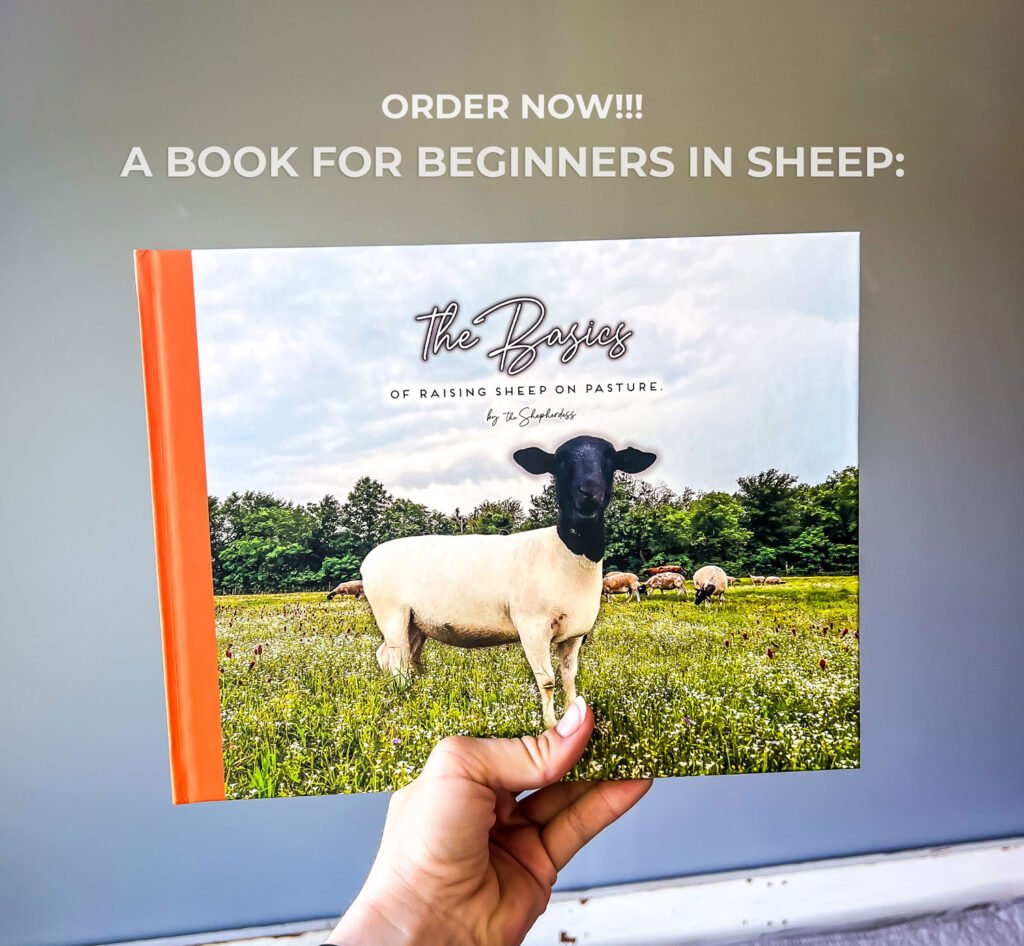
the Shepherdess If you’re a beginner shepherd on 30 acres or less, then I wrote a book for you: The Basics of Raising Sheep on Pasture. Available at Shepherdess.com with free shipping. Raising sheep on pasture requires a basic understanding of pasture management, breeding and lambing, and mitigation methods for common disease. I walk the beginner shepherd through each aspect, sharing through this book vivid pictures, easy-to-follow instructions, and personalized stories from my own journey with sheep. Available with free shipping at Shepherdess.com; you’ll find a direct link in the description.
The six-year ranching reality and why beginners stall
the Shepherdess I think we are going to segue into the first question, which is reflective of the fact that we all kind of hit ruts. And you will, if you’ve been in this for any season of time. But like I mentioned, this month at the Stockman Grass Farmer Magazine, which is a publication by Joel Salatin, stated that many first-time farmers and ranchers go through, again, that six-year cycle. Two years of honeymoon, two years for reality, and two years to get out. So you’ve been ranching for 20 years now. And I think one of the things I most appreciate about Mr. And Mrs. Ebel is that they’re so transparent about their struggles, even 20 years in. And it helps me to go to your place and say, “Okay, I’m not doing anything wrong because I’m having these struggles.” But let’s just say in your first six years, did you face really any mental, emotional, physical challenges that just felt…
Karl Ebel Sure. And I’ve changed careers several times in my life. One thing I learned from my mom: when you start something new, view it as an adventure. Adventures have a lot of variation. They have unseen circumstances. And when you view it as that, these changes that you have to do, these adjustments you have to make, are not such a shock. You’re in an adventure, so it’s normal.
the Shepherdess Yeah. How would you encourage anyone that may be hitting those ruts? For example, guys, tonight, I had to treat like 25% of my flock for bloat. And if you guys are praying people out there, maybe you could pray for my sheep tonight because about five of them are laying on their side outside right now. But what happened was last night, I did this really good thing. I was really excited and I was going to use the front yard and the backyard and all the extra grass in there because we’re out of grass on pasture. Well, it was beautiful for about five minutes. I went inside to eat dinner and the sheep found the chicken food, and they ate through about 90 pounds of it before my dinner was done and I got them out. So pray for my sheep that they will not all die. But more specifically in those first six years, how did you prepare yourself to jump into this? You kind of jumped in with both feet. What were some preliminary things that made it a little bit easier?
Karl Ebel One of the biggest things is—and this sort of approach that I use, and that Grace uses, is a regenerative sort of an approach—the land that we manage is not in exceptionally good condition when we start. You’re regenerating the productivity in the land. That’s a gradual process. A lot of the agricultural land in the United States is not in great condition. It took 150 years or so to get it in that state. You’re not going to change it overnight. So it’s a slow process. Know that when you start. And as you see the improvement—and you will after three, four, five years or whatever—soak that up. It’s big. You’re doing something really important, really neat. So soak up the good stuff, and it’s going to get hard, and just know there are some things in this line of work that are very unpredictable. The weather is probably your biggest variable that you don’t have any control over. It’s hard to plan for. You plan the best you can and it doesn’t work out so well. But knowing that you’re going to have to make adjustments… A lot of people say, “Oh, what mistakes did you make?” But I view it as what adjustments did you have to make as you went through this adventure? And even though I’ve been on my place for 20 years, every year is different, and every year has to be adjusted, and you’ve got to just be able to do that a little bit.
the Shepherdess All right, let’s give a little context as far as what breed you’re running, and did you choose it in collaboration with your desire to go grass-based?
Karl Ebel Yes, very much. So I wanted a breed that was efficient. I wanted something that when I converted my resource—my resource is grass and forage—I would have a product that brings the premium. So in choosing the Angus breed, I think that definitely does both of those things. I can grass finish the steer and get a very nice premium if I take them all the way to a harvest. And they’re good moms and they’re gentle cattle. When I go out to work with the cattle, it’s fun. I don’t have cattle that are hard to handle and not very fun to be around. And so that disposition is very important for me. Efficiency, the moderate frame size, I would say—some of you listeners may be familiar with the frame score—so my cattle are probably in the order of a 4.6 frame score. I’ve used some bulls that are probably slightly smaller than that. So it’s going to take a while, of course, over time, but gradually my cattle will get just a little bit smaller. Where I am now is about where I want to be, maybe just a tiny bit smaller, but not much. That cow in good flesh is going to weigh about 1150. The cattle industry went, to me, extreme in size for many years and a lot of cattle are in the 16, 17, 1800-pound category. To me, that’s just not efficient.
the Shepherdess That was one of the first things you talked about when you came over to my place, was the need for… My mindset as a beginner was, I’m just going to go to the sale barn, I’m going to get a couple of cows, see how they do, but that was one thing you really harped on for me wanting to go into a grass-based system.
Karl Ebel That’s right, Grace, that was a very good decision that you made. Because when you start to build your cow herd, that cow herd is going to be with you for a long time, and it doesn’t cost you that much more for the premium that good cattle will bring. It doesn’t cost you much more to get some decent seed stock to start with, and to get some cattle that have good dispositions and are fun to work around.
the Shepherdess Right, right. A lot of people will ask, where did you get your initial seed stock, and where did you think to look in that respect?
Karl Ebel Well, part of my learning curve was I wasn’t as selective in the beginning because I wasn’t… Of course, 20 years ago some of this grass-based stuff was not nearly as fluent and popular as it is now. So you can get more information on it now. So I didn’t select as well as I should have. Well, it took me 10 years to get some of those early cows moved out of my herd after they aged out. They stayed until they, you know, aged out, but it took a while. And if I would have started with exactly what I wanted in the beginning, it would have happened much quicker. But the other thing about getting through the tough parts or the ruts—network with other regenerative ranchers or farmers. You’re not in the majority. And so even if you have neighbors, you’re probably not going to get a lot of interaction on these subjects. And they may even look at you like, “What’s he doing? Regenerative? I don’t know about that word.” So get in touch with some other people that do that. Grace’s group, or there’s some grazing groups. There’s the National Grazing Lands Coalition. Each state has a grazing lands coalition, and all the people involved in those groups, they’re regenerative people.
the Shepherdess It is so encouraging even just to spend a day at your place, whether it’s just to drop by or to ask questions. Somebody asks here, “What were the biggest physical challenges you had going into this, and what should a new rancher know before starting?” So two questions.
Karl Ebel So, the physical part of it, if you’re going to be low input, is a big part of it. I would say just from the journey that I’ve been on, the adventure that I’ve been on, most of us Americans in the 15 to 50 year old range, where you’re pretty much in your prime, are capable of much more than you think you are. And I would encourage you to challenge yourself. Some of these biggest challenges—it may be building a fence or there’s so many things in this business that are challenges, physically—but those tend to give us the most satisfaction when we meet those challenges. And physically, you’re capable of doing a whole lot more than you really think you can, probably.
Having a grass farmer mindset and protecting the resource
the Shepherdess With respect to the intensive rotational grazing—which is the rotational grazing that you did for the cattle up front—what did your system look like initially on 900 acres? I guess some context would be, you started with goats and how many?
Karl Ebel That’s a good question, Grace. Of course, the place that we bought was full of brush, and the grass forage base was not very good. So we had a resource—brush. Well, cattle don’t use brush very much, as far as percentage wise. So we said, “Hey, you know, let’s start with what we have,” which was brush. And goats are browsers. Goats are about 80% brush and broadleaf, and, say, 20% grass. So we started with about 650 goats, and we ran those for a couple of seasons, and then gradually picked what we could see was going to be some of the best moms out of that. These were all started off as kid goats, and of course they grew. And by the time they were done, they were going to be young moms. They got bred, and that was our first herd of mother goats. So the goats, slowly the numbers went down. And as we did various improvements, planted different native grasses, started a rotational-grazing plan, then we slowly introduced cattle. I think I was doing about 10 or 15 heifers a year for the first five years probably, and then we kind of paused. We did some other things, and we had some droughts and some other weather stuff that we were dealing with, and we kind of ramped it up again from there. But one really important thing that a lot of producers, livestock people, kind of need to relook at is you’re a grass farmer. The resource that you have, the sun acts on the solar panels of these grass plants—that’s the energy source. And the resource is the grass—the grazing, the forage. Grazing ecology is your resource. Don’t ever lose sight of that because that is the gold in what you are able to produce. If you mistreat that, it’ll come back, but it’s a foundation of what you’re doing. And the cow, the beef is just taking that resource and turning it into a product that you can sell attractively, that is in demand.
the Shepherdess Yeah, I think a lot of times the first questions we ask are, “How many sheep can I put on here?” We start with the animal or the stocking rate. And it’s really, you need to start backwards.
Karl Ebel Assessing that forage base is very important because that’s the key to your success. And I would say stock conservatively with your core herd of cattle. If you have 10, think about, well, I could probably have 12 or I could probably have 15 instead of 10 because when those cattle have calves, the calves that you raise turn into yearlings. Now you have something that can, I call it, take the swing. The swing of weather and rain—whatever you’re getting to produce the forage. Those calves can be sold any time. You can put more weight on them, they can get more valuable, and that’s how you can make more money. Or if you get in a drought, or if you have another problem, you can sell them and you can protect your resource and keep it continually improving. I like to think that my grass resource, my forage resource, is continually getting a little better as we regenerate the land.
Managing multi-species herds and eradicating pasture weeds
the Shepherdess Julie asks about chickens and sheep together. We have no problems running our chickens and sheep together, Julie, and we have been running them together about three years. Julie also says that she was thinking about going with sheep until she saw one of the videos I made about trouble when weather changed from warm to cold. And that’s constant weather in Colorado. “Do you think I could still keep sheep surviving in that type of climate?”
Karl Ebel I have a very good friend that runs sheep and cattle together in the same pasture. Intriguing operation. It’s a rotational-grazing thing. They have a lambing shed, and they lamb out all those lambs under cover. And this is in Kansas, probably pretty similar as far as weather extremes to Colorado. So you need to keep them under cover when you’re lambing them out. One good late-season freezing rain or ice storm or something can decimate your lamb or goat kid crop in one night. So just keep that in mind. But you can do it. And I’ve known people that did goats in Montana year round as well.
the Shepherdess And Julie, I think that you could probably find a locally adapted breed. There’s something called a Navajo Churro. And there are sheep that are just locally adapted that may not struggle as much. I posted that video, and it had a lot of different factors. These lambs were born off-season, I had my ram break out, and so don’t be too scared. It’s just a matter of making adjustments like you were saying. All right. “Is the Texas Grazing Land Coalition an active group?”
Karl Ebel Yes, very active. And I am not leading any of the chapters, but I interact and go to many of the field days, speak at some of the field days. It’s a great bunch of people, really. And they’re all learning, asking questions, comparing notes: “You tried this? How did that do?” I mean, it’s just fascinating.
the Shepherdess Jessica asks a question we’re all asking: “How to get rid of goat weed? It’s taking over.”
Karl Ebel That is a good question. So there’s a lot of different opinions on herbicides. If you’re regenerating, if you’re restoring a piece of property that’s in really rough shape, you’re going to have goat weed, and the seed is viable for I don’t know how long, 50, 100 years? So if you disturb the soil or you have a place especially where the soil is bare, you’re probably going to have goat weed. And so, if the goat weed gets bad enough to cause a canopy and shades all of the sunlight out, the grass is not going to get any underneath, and a lot of it’ll die. The grass will, if goat weed gets that thick. I use herbicide applications where the goat weeds are bad. It gets better and better. Over the years, I use less. Places I used to use some, I don’t use it anymore. And the last thing I want to do is sit in a tractor and spray herbicide. Going in circles just all day long. That’s not fun. I mean, and you’re spending money on all these different things. But to regenerate some of this land, we’re on a fixed time scale. We only have one lifetime, and if it’s going to take 20 years to really get it like you want it, you can speed that up. You’re speeding up succession that would normally happen; you’re speeding that up by using, I mean, very cautious applications of herbicides. There may be brush, goat weed is a big one, but there’s some other stuff. And I use the herbicides, but I use them very cautiously.
the Shepherdess And with the goat weed, you have to do something about it. Last July, I came to a place where it was really overwhelming. And to be honest, it was probably on 50% or 60% of my pasture. I paid somebody to mow it. But whatever you do, you do have to beat it back somehow.
Karl Ebel Yes. You can mow it, you can mow it. The cost-effectiveness for spraying versus mowing—it’s cheaper to spray.
the Shepherdess Right, right.
Karl Ebel And goat weed is easy to kill. You can actually use… They sell 2,4-D in a very small container, and you don’t have to have a license to buy it in a quart bottle. And if you’re not spraying a lot of acres, you can buy a little sprayer thing for your ATV or some other vehicle, and you can spray with a little 15 gallon sprayer if the goat weed gets to be that thick where it’s actually hurting your forage base.
the Shepherdess Erica asks a good question: “Currently we are looking to transition our boer goats into grazing browsing pasture only for food. Currently we give them supplemental feed once a week. Can we move them straight on to pasture or do we need to wean them off of their supplemental feeds slowly?”
Karl Ebel That’s a good question. They, like most livestock, will be conditioned to getting their nutrition from a certain source. Over time, they will transition back to brush or browse or wherever they’re getting their nutrition from. But do it gradually. Don’t just go cold turkey. So you can do it on a sliding scale over a three-month period when the browse is really good. I mean, you’re talking into April, May, June—high protein. They’re already naturally going for it. So that’s a pretty easy time to do it. And they’ll be like, “Hey, yeah, this is what we were supposed to be eating.”
Maximizing market premiums and minimizing operation inputs
the Shepherdess Jordan asks, “Hey, I have a question: currently running a fiber flock, but moving into a hair flock for meat. How would you recommend selling stock as I grow my brand regionally? Livestock auction or market to slaughterhouse? Ideally, I’d like to sell entirely meat shares, but I know it will take time to build the brand and customer base.”
Karl Ebel That’s a very good question. It depends on the amount of time that you have—would be my answer—because I’ve approached it from both possibilities. And yes, you get a premium. Ms. Grace here does probably one of the best jobs in marketing that I’ve ever seen. And she does it all herself. I mean, fantastic. But it takes time.
the Shepherdess It does.
Karl Ebel And so with the other stuff that I have to do, it’s a little bit too much for me to do that. There’s some other ways that you can get some premiums. If you want to sell those direct market, if you sell the whole animal or half the animal when you harvest, it makes it very simple. And it’s less time consuming than having to make all the cuts and sell all the cuts individually. That’s the way I do my grass-finished beef, and I found, I don’t get to have all the profit probably that Grace does, but I don’t have quite as much work and I do get a nice premium.
the Shepherdess Let’s talk a little bit about that, because you would sell under the category of the commodity market, if I’m right, commodity cattle. But you’ve been very careful about selecting good markets—doing your research on the ones you do take them to. Can you talk a bit about that? Did you get intentional about that?
Karl Ebel Yes, very much so. Basically, it’s just keeping my ears open—talking to other producers, and “How’d you cash sales go?” “Oh, well, this is what I got. This is where I sold.” You do that a bunch of times and you start finding out “this guy sold his…” If you precondition those calves, then they bring a premium. That’s already a premium. It takes a couple of rounds of vaccines. It takes a certain protocol for weaning the calves from their moms. They have to be weaned so many days, but you can tag on. If you got this, let’s say, price per pound, you know, for a 500-pound calf, we’re in the $2.45, $2.50 category now. So preconditioned cattle that have been weaned for more than 45, more than 60 days, you’re talking a 10 to 15-cent premium. Run the numbers, but to me, it’s well worth it. And the calves are a lot better off. They’re way less subject to being sick and dying from some pneumonia or some respiratory disease than, you know, just taking them off the mom, putting them in the trailer, and hauling them to the sale. So the preconditioning thing can give you a nice premium.
the Shepherdess So, preconditioning. Break it down for someone who is entirely new. What does that involve versus taking them off of mom, taking them to sell?
Karl Ebel Okay, so when the little calves are anywhere from a month to three months old, you bring them in and they get their first set of vaccinations. That’s some sort of a respiratory combination vaccine and some sort of a blackleg combination, and any of your local vets or co-ops or whatever that sells vaccines can… it’s not that hard to get those two vaccines. So that’s what they get the first time. At that time, those calves, steer calves, would be castrated. At that time, they would be tagged and you might give them a pour-on just to make sure they’re all good. Because after that, they’re going to go back out on pasture with mom and they’re going to finish growing and they are going to grow up until it’s time. They’ve been with mom for six to eight months, something that somewhere in that neighborhood, then they need to be weaned. And so they need to be weaning from their mom. It’s not that hard. They’re ready for that. When they’re, say, 300 pounds or bigger, they’re ready to do that. And they can do that. You want to have something good for them to eat. When you wean a calf, don’t just stick him in a dusty old lot breathing dust because that’s a recipe for trouble. Put him someplace, save a little spot of grass. You fill his belly, he’s going to be happy. He’s going to do good.
the Shepherdess This is in the context of low-input cattle, but we had one of the worst droughts in 100 years in 2022. Do you think it topped 2012’s drought, if we’re honest?
Karl Ebel It was pretty close, yeah.
the Shepherdess It was pretty close, so the second worst drought. Now, let’s talk first on a non-drought year, what do your inputs look like year round with your cattle?
Karl Ebel So, just kind of a generic way to do a comparison is if I have gross sales from my products, then I ought to be able to say, “Okay, if gross sales represent this number, then my inputs ought to be this percentage if I’m doing an economic type low-input deal.” So mine run about 46%. So of my gross sales—that’s all the income that this livestock produces for me—my inputs are roughly about 46%. Now, keeping in mind the only time I hire someone to help me is when I work cattle, or if I have a very special job I might need a pond construction or something that requires a bulldozer, but in general I don’t hire much outside help at all. So I’m doing all this myself. It’s not just totally consuming. I have two young boys, you know, and my family, and I spend quite a lot of time with them. So I am just trying to give you a relative idea of what it takes for me to do it and what that means for my bottom line, my inputs.
the Shepherdess Right. So in a typical year, the rancher buys the cows he wants, feeds them all that they need to feed. Do you have to be mindful of this 46% margin? How do you have to be mindful in your overwintering strategy?
Karl Ebel Absolutely. You have to be mindful. So I’m just going to hit a few of the high points that I’ve kind of learned over the years. Minimize whatever equipment that you can minimize. So, if you own this piece of property, or even if you lease it and you want a good relationship with the owner that you’re leasing from, everything that you put in for improvements to the land—whether it’s regenerative stuff that’s building the soil, the grazing ecology, a watering facility or fences—everything you put into that land pretty much is going to appreciate the value. Equipment on the other hand is the opposite. All the equipment you buy is slowly bringing down the money, the dollars you invested. So try to minimize all the equipment inputs that you can. And one of the biggest things that I kind of decided I wanted to try to do early on was to eliminate having to produce hay. Have all the equipment—the extra tractors and all the rakes, balers, diesel, and everything that goes with that. So I tried to propagate to regenerate, restore native grasses so that I can stockpile forage and get away from using hay. Now I do keep hay. If you have an ice storm in northeast Texas and there’s nothing for those cows to eat for 10 days and the temperatures drop, you got to have something for them. So I keep a small number of bales in a covered storage. The last big storm we had was two or three years ago. They’ve been in storage for seven years. But they were just like they were when I put them in there. If you put hay in a covered storage, it lasts a long time and the quality stays good if it doesn’t get rained on.
the Shepherdess So the context of yours is a year-round grazing system. Your goal is to not feed any hay. I mean, we have emergency situations, you have your stockpile. Explain exactly how stockpiled grazing works and what kind of planning goes into creating that year round grazing system.
Karl Ebel That’s a good question. It’s not that complicated. What you need to do, this goes back to what is my resource. My resource is the forage and these different types of grass that I have. I need to get to know what my resource is. I need to get the details. When that grass grows and provides the most nutrition—a lot of different times the different grasses perform at different times of the year. So find out when they perform the best. When should I be grazing those? Why would I be rotating on pasture when it’s not quite ready when I’ve got another forage that it’s a better time for it? And the same with stockpiling. Some of the forages stockpile really well, some of them moderately well. So when I go into winter, I’ve got some forages that are good forages, but they don’t stockpile worth a hoot. I’m going to graze those first. I don’t want the weather taking all the goody and just washing it down the creek because you get a frost, you get a freeze, the cell walls of that plant break down. Once they rupture, the goodies inside, the nutrition inside, becomes soluble and the rain can wash it right out of the plant. Now, some of the native grasses and even Bermuda grass stockpile fairly well, but then some of the native grasses hold that nutritive value much better. So I want to save those for December, January, and February when things get tough.
the Shepherdess Now, you kind of coached me on it one year. I had an excess of warm-season grasses. They basically, by January, had lost their nutritive value, but it’s still fiber. How do you combine the cubes, the supplementation, to utilize something that may not be optimal?
Karl Ebel The way I view the supplement is—and it’s just totally simple economics—I need the cheapest price for the best protein that I can provide for my cattle. And I need to have ready access, and I need to be able to handle whatever that protein supplement source is effectively. I use cottonseed cubes. They’re 38% protein. And when you go and you look at a bag of those versus the old 20% range cube, you say, “Oh, but the cottonseed cubes are so expensive.” But they’re not. They’re 50% cheaper in general. They’re 50% cheaper than the range cubes if you do it on a percentage protein basis. They’re cheaper. So put your pencil to it. It’s not that hard to do. And find out what source of protein is for the price you’re paying and work that equation.
the Shepherdess Yeah. That was one of the first questions I asked him. And there’s this saying that you have that echoed in my mind, it was “protein percentage for price.” Just those three words. And it helps me, when I’m looking at those options, to run the cost based on protein and not necessarily…
Karl Ebel It does. Some of it is how much time do I have? People use lick tubs or they use things that they don’t have to put out very often, maybe once a week or every 10 days. If your property is away from where you live and you love what you’re doing, but you can’t be there a lot, that may be a viable way to do that. But if you can be there and you’re active every day, then you can get the price down quite a bit, quite a bit more efficient.
the Shepherdess This is a good question: “In 2016, this was six years ago even, an article by Beef magazine cited the average annual cost per cow at $900. Roughly, at your farm, what is the average annual cost per cow?
Karl Ebel Well that is a very good question and that also should be something that all beef producers are aware of—what you’re talking about there. Stop a minute and think about that $900 because in many of the years that have happened since 2016, our calves did not bring but $750 or $800. And every cow in your place is probably not going to have it—even if you have a good calving percentage of 90%—so you see where the math is going on this. It’s big stuff. That means probably more than half of the beef producers—if the average is $900—are in the red consistently. You can do it a different way. You know, taking out some of these equipment costs and managing your forage with a rotational plan that boosts your production and boosts the regenerative part of what you’re doing for that grazing ecology are two of the biggest things that you can do. And so in 2016, the cost to keep a cow was, what Ms. Grace is talking about, $900, and I was doing it for about $325 to $335 a cow. Now, the point that drove home when she asked me this question today is this year with all of the supply chain conundrum and trying to get feed mixed—sometimes you call and “no, we don’t have any, we didn’t get the ingredients”—and the prices obviously all went up. So now my cost is about $400 and somewhere around $475. So in the last two years, I can honestly say input cost across the board, about 25% to 30%. And I skipped some of the ones that doubled—fertilizer and some of other ones that doubled—but 25 to 30% comfortably, you can say pretty much above what it was two years ago. From 2016, it kind of knocked up just a little bit, but the last two years has been the big increase.
the Shepherdess Picture this: you are looking out over your 5, 10, maybe 20-plus acres. The sun is setting, and your flock is grazing across a green pasture. Something inside you affirms this is real wealth—at least when it comes to material things. You know how to take care of your sheep, your grazing system is improving your land, and you have a way to direct market each lamb that is born. This is how I feel when I look at my flock, and I want the same for you. So, I put together a free one-hour class that answers some of your most frequently asked questions concerning how I raise, rotational graze, and market my sheep for $480 per head. Go to Shepherdess.com/480, or simply click the first link in the show notes of this podcast to sign up and receive the free on-demand class. What’s more is that I will follow up over the course of three days, providing you with even more free resources—including a free ebook, a free grazing sheep kickstart guide, and a free marketing sheep kickstart guide. This information is worth paying for, but I’m giving it to you for free. Just go to Shepherdess.com/480, or simply click the first link in the show notes of this podcast for how I raise, graze, and market my sheep for $480 each.
the Shepherdess So, basically the baseline for being able to cut those costs is the minimal equipment and the minimal overwintering feed by, basically, managing your land resource.
Karl Ebel Yes.
the Shepherdess Okay. And I’ve been to your ranch before—let’s just give people an idea of what kind of equipment that you do keep on hand for 900 acres and 250, 300 cows.
Karl Ebel So I have one tractor and that is kind of a moderate size—90 horsepower tractor—that can do basically whatever I need to do which is pretty much spraying a little bit. That’s probably the biggest thing that I do as far as something that takes, you know, a month or something like that. Obviously small road repair, just various tasks that you would need a tractor for. But I do most of my feeding with a big ATV and a little trailer that has a cube feeder on it. And the reason I like that is because where we live here, when it starts raining and it starts to get muddy, you can’t drive a pickup in the same spot twice or you’re going to go down. So that ATV rig lets me take protein to those cattle anytime I need to. If it was a place that had a lot of rock in the soil or, and it wasn’t boggy, I’d probably do an old pickup. But this four-wheeler rig, this ATV rig, works really well for me.
the Shepherdess All right, so I want to double back to the fact that the cattle market is seeing an upswing. Is that helping or are the inputs canceling it out?
Karl Ebel Somebody asked me that the other day. I think, of course, we had similar prices to where we are right now in 2014. They were a little higher, actually, price per pound in 2014 than they are now. Not a lot. But I would say we’re a little above, kind of apples to apples, with the increase of price, we’re a little above where we saw our increase of inputs, if that makes sense. So we’re in a bit to the good, even after we had to pay for all those extra input costs, we’re still a little bit to the good with the cattle prices where they are now. Here is one really important point: in 2014—and these guys, these ranchers, are friends of mine—I saw a lot of brand new pickups and I saw a lot of brand new tractors. And I was like, you know, generally speaking, these cattle cycles, they go way up high and everybody does well. They’re not going to last forever. Put some back because they’re going to be some other stuff that’s coming.
the Shepherdess That’s a good point about the cattle cycles. I wish I would put that on the list, but I’m going to try and get through the questions I have tonight. So a question I wanted to ask before we rush on: is low-input year-round grazing systems a regional benefit, or have you heard of success with stockpiling in colder climates?
Karl Ebel Absolutely. A lot of it depends on snow cover, if you’re that far north. I mean, they use these regenerative practices where you’re trying to graze as much as you can to regenerate the soil in a rotational manner to protect and utilize the plants to their highest possible amount. But the low input, yes, I mean, it’s very much a part of the regeneration, right? If you look at it from a step back in grazing ecology, you’re trying to build the soil, you’re trying to build the plants, the ecology that’s there, and as time goes on, that just gets stronger. Well, your bottom line just gets better and better.
the Shepherdess All right, so Kelly asks a really good question here. She says, “What kind of grasses are you recommending for goats?”
Karl Ebel So, goats are primarily browsers. If you have brush and broadleaf plants, that’s going to be the best for the goats. If your resource in your pasture is predominantly grass, maybe sheep would be a better fit. And if you’ve got some areas that are brushy or that are weedy, and a lot of the forbs—forbs is a fancy name for weeds—a lot of these broadleaf weeds, or forbs, are really good for goats. They do really well. Sheep do well on them too. But goats are browsing specialists. And I like to make a comparison: a cow is roughly 80% of a grazer, 20% of the browser, you know, brush and broadleaf. A goat’s opposite that. The goat is 80% broadleaves and brush and 20% grass. That kind of makes it neat to have cattle and goats together, right? Because they’re not competing that much with each other. They each kind of focus more on their own resource.
the Shepherdess All right, Chris asks, “Does anyone have hawk issues with their pasture chickens?” Chris, yes. Just get a dog and they’ll fight them off. Do you guys ever run pasture chickens?
Karl Ebel We don’t run the pasture chickens, but it’s the same with the goats. Yeah, the Hawks, the red-tailed Hawks—when you’re kidding, you can watch them, man. They’ll get in those trees and they’ll wait for a break. And if that dog is there, they won’t chance it.
the Shepherdess All right, Chris. Yeah, Chris says, “We have a hawk’s nest directly across the road,” and let their chickens range. He finds the rooster does a great job of pushing the chickens under cover when the hawks start flying. That’s a chivalrous rooster. All right, Samantha: “We have tons of sagebrush on our property. Before I start trying to grow pasture, would you recommend that we have them feed off of the sagebrush before removing it?” Goats, I’m assuming.
Karl Ebel Yes, and also—and of course I’m not familiar with your rainfall or what condition the soil is in and so forth—I would try to find a grazing-type specialist person that might be one of these grazing groups. A couple of phone calls and you’ve got some pretty good resources that you can pull from locally to find out. So it sounds like if there’s a lot of sagebrush that goats are going to be a pretty good fit. And I don’t know the history of the pastures where you are. Have they been grazed very much in the past 10 years or what they’re like right now may be a steady-state kind of condition for what they really are. Or they may have been managed improperly and grazed too hard previously and they would respond very well to a rotational-grazing plan. Does that make sense? I think it’s just looking local and you’ve got county extension agents. Some of them are really good at some of this stuff. And you’ve also got the NRCS folks. Some have some really good grazing specialists. But if I was going to make a decision on what I wanted to run and a long-term plan, man, I’d make a few phone calls. You might get a couple that are not that great to work with, but you might get some really neat ones.
the Shepherdess Yeah, I’d look at how you could get rid of that sage brush with an animal. And then even if you had to sell that animal or transition out of it, it may be more cost effective than machinery to actually take care of it.
Karl Ebel Well, when you’re trying to regenerate or restore some of these ecologies, try not to tear the soil. I mean, a lot of times the brush gets so bad, the first thing people do is go get a bulldozer. But when you start shoving that stuff all over the place, you’re tearing up a bunch of soil ecology when you do that. Sometimes you have to. It just gets so bad. But if you can help from doing that, your response is going to be much quicker.
the Shepherdess All right. Rourke says, “We have been rotational grazing here in New Zealand for over 60 years. We run Wagyu cattle. What are your thoughts on Wagyu versus other breeds of dry beef in the USA?” And we’ll start with that one and then we’ll go to the last part of his question.
Karl Ebel Okay, I think it definitely has some potential. I know some people that raise Wagyu. The time from when they finish—because the beef that we produce has to be finished so it’s good and it’s tender and it tastes good—for a wagyu, it’s considerably longer. So when you start to talk to the Wagyu people, put that question to them: “How long do these cattle take to finish?” That’s definitely a big part of if you’re trying to sell a finished product, and your time frame is going to be another 30, 40, 50% longer to get your finished product, it may be a premium product and you may get extra money for that. It may work out real good, but just remember it may take you longer to get them there.
the Shepherdess That’s true. “Will the market for Wagyu beef continue to be good as inflation decreases disposable income for the masses?” That’s a very good question.
Karl Ebel That is a good question. I think you hit the nail on the head. The premium is there and even in the grass-finished beef that we do, the premiums are better when the cattle prices are lower. Does that make sense? I think it does. So to answer your question, as inflation digs in, as cattle prices get higher and people feel their wallets tighten up a little bit, yeah, that puts some pressure on the Wagyu product.
the Shepherdess Yep. Jessica asks, “When do you wean calves?”
Karl Ebel My calving season starts about March 1st, and goes basically through to June 15th. Most of them are done in 30 to 60 days. So that’s the calving season. With this drought, we weaned September 15th, but typically I’ll wean about October the 5th or 10th or somewhere in that neighborhood.
Drought resilience, herd longevity, and assessing the full-time dream
the Shepherdess One question I did not get to yet was the drought. Did you decide to buy a few more inputs or shrink your herd, or did you have the natural resources to sail through?
Karl Ebel A combination of all three. That is a very good question. But because my stocking rates were somewhat more conservative, I had some room to maneuver. And I had some time to wait for a recovery, right? So I had some pastures that I was going to stockpile. And when did it start raining, like October?
the Shepherdess It was just before the first freeze, about a month or so.
Karl Ebel Yeah, we didn’t get a good normal like late summer when we get some real growth, but I had enough leeway and enough capacity in my conservative stocking rate where I could adapt to that. I had to give a little more protein supplements and some of the forage was a little bit rougher, but it’s fine to do low-input cattle. It works good. And you want to be cost-effective and you want to be efficient. Give those cattle what they need to reproduce for you. Body condition score is paramount. So watch when you go out there and you know it’s getting dry, “man, you know, they’re just probably not getting just exactly what they need to be,” watch the body condition. When she calves—and for me, that’s coming up in another two weeks—she needs to be in a five body condition or better. And there’s a breaking point. If they slide over into the high fours—4.7, 4.6—if you look at them… There’s plenty of good websites that show you the picture of these cattle, what to look for in their ribs and their hips and their spine to fairly assess their body score condition, but she needs to be in a five or better when she calves in order for her to breed back. Because not only are you affecting her ability to raise that calf if she’s poor—she’s not going to breed back. Now you’re going into the next year. You plan on having income. That’s what I look at. I had land notes to pay and I’ve got to have income. I can’t let my cow herd—what cattlemen call—fall apart because I didn’t give them enough. What they need to have nutrition wise is my responsibility. That’s what I have to do for those cows.
the Shepherdess All right, Benjamin asks, “Grace, what are you going to do with your sheep that are down with bloat right now?” Benjamin, there were about five out there. I gave them a one-cup solution—I read it in Storey’s Guide to Raising Sheep, which is available at Shepherdess.com, guys—it is half cooking oil, half water, and two tablespoons of baking soda. Now, have you ever treated goats with bloat, and what do you do?
Karl Ebel Goats? I’ve treated cattle, I’ve treated several different… Whether they ate noxious weeds, poisonous weeds, whether they ate different stuff. Yes, I’ve treated cattle for bloat and it’s basically the same recipe: mineral oil, baking soda, and then, you know, you tube them, get the stuff. If you have one of those collapsible bottles, get the stuff down them, and hope for the best. Hope that dissipates the gas, the bloat. Yeah, because everybody, I think probably most of these viewers know that the bloat causes pressure and it cuts off that area. I’ve watched them before. It’s horrible. I mean, the different noxious weeds, they eat those weeds and they just stand there with their eyes bugging out because they’re so bloated. You let the gas off of them. When you tube them, you can let the gas out of that same tube and that helps the bloat.
the Shepherdess Oh, that’s a good point. Now, somebody said they actually punctured the rumen.
Karl Ebel You can puncture the rumen. There are some times where you have some pretty severe results from that. I prefer to take the tube and you can take a piece of PVC pipe and put it over the tube just for the short way through that animal’s teeth because they’ll try to try to chew on that tube. But you get that rubber tube with a blunt end down into their stomach, and it goes through the PVC pipe so it can’t chew on the tube, and you can hear the air coming out. It’s better than punching a hole in them.
the Shepherdess Yeah. Tim says, “How do you determine the best time for breeding? And I’m assuming that is cattle.
Karl Ebel Plan on what you want for a calving season. When do you want to calve? If you’re here, typically our really ugly winter, icy, nasty stuff that you don’t want a calf dropped in ends about March 1st, something like that. And so for me, that’s the optimum time. When they’re calving, they’re pretty much… I mean, my heifers, I keep an eye on, but my cows, they don’t need any help. And they do it all by themselves. And I don’t need to spend the time watching them. I want to calve at any time when it’s going to be good for them. So that’s how I picked my calving season.
the Shepherdess So basically, determine when in your region the grass is good and work backwards gestationally. So nine months backwards from the good grass.
Karl Ebel Pretty much. So I’ll put my bulls in about June 1st and I get a March 1st calving season.
the Shepherdess All right. “Any recommendation for help in soil recovery next to starting a rotational grazing system?” So beyond, she’s dealing with large patches of bare land. What more can she do?
Karl Ebel So, when I started and it was in rough shape on my place, I had to make a decision. So I don’t want to put a bunch of inputs in there, but I can’t take 60 years to make this happen. So I, what I call, jumpstarted some of the ecology, and we’re fortunate in this area to have access to chicken litter. It’s from the chicken houses, and it’s very cost effective and it has some very good micronutrients and some other benefits besides just granular commercial fertilizer. So that’s what I did—I used some chicken litter to jumpstart some of the grazing ecology. And after a while… So 20 years and I’ve put three applications on and I haven’t put an application on in seven years or something like that. It’s not to say that if chicken litter price came down and my productivity started to fall off a little bit, I might put some more on there, but so far right now, it’s slowly come back on its own with rotational grazing.
the Shepherdess All right, “So, quick late response to the question about the cold weather sheep,” says Chris. He definitely recommends seeing what is indigenous as best as he can. So basically, buy a local breed. All right. A question that I really want to get to tonight before we close it out, and this is in respect to sort of the financial planning. If you’re going to jump into ranching, especially if you’re going to jump in… I don’t think it matters what point in time you jump in. But you need to think these things through. You started ranching when you were 45. You had had a career before that and it did pretty good. So did you have a lot of financial pressure bearing down on you in those early years?
Karl Ebel Yes. So both my wife and I were outside the ranching part for several years. We saved our money. We bought our first piece of property to start with, and my wife kept working. She worked at a college, but we had our two boys and we had to make a decision that she wanted to spend more time with our boys at home. So then she had to leave her job. Now the only income we had was income from our ranch. And at the same time, a neighboring piece of property came up for sale, and it made our total acreage big enough to sustain a living for a family. So we got to purchase this property and we got a land note. So yes, there was some financial planning involved. We had a little bit of savings. But I must say for probably close to 15 years, it was watch the budget on everything. And the planning was everything. The assessment of what your property will produce is very important. It’s great, you know, you have to have a vision on where you want it to be. But on an annual basis, when you have to meet your bills and you have to make whatever you need to provide for your family, you still have to assess where you are right now in a realistic manner. And that way you won’t get two years down the road and it’s like, “Man. I can’t make it.” You know, and then it becomes very scary and very frustrating. You know, there’s going to be enough weather patterns thrown at you, enough odd things thrown at you. Do a proper assessment. Maybe you work part time and do your ranch or your farm part time too, and that’s great too. You can enjoy that just as much. Or maybe you say, “Yeah, I think I can make the jump and I can do it full-time.” But the assessment is very important. And back to your resource: what can that grass, what can that resource provide for me? And if I can do some really neat marketing like Grace does, and get those products where they’re worth more money, super great, but that assessment is really important.
the Shepherdess I think it’s really important to be realistic. I mean, you see me on YouTube and I try to reiterate this time and again, but considering a safety net, setting a plan. For me, I started out and I was like, if I have to keep my full-time job for a full seven years, I think was my thought. I feel like this is worth it enough to pull doubles and do that. So you need to sit down and you need to figure out how much it’s going to cost you to do what you want to do, how much you’re going to earn, and then probably factor in a lot of years of variables where you earn about half of that to be honest.
Karl Ebel That’s a good point. Know that the markets are cyclical. And if you can hit that middle ground and save some money when they’re high, then you’ll be all right.
the Shepherdess Right. All right, guys. Thank you, Mr. Ebel, for staying with us tonight. Thank you guys so much.
Karl Ebel Thank y’all.
Leave a Reply