 by
by 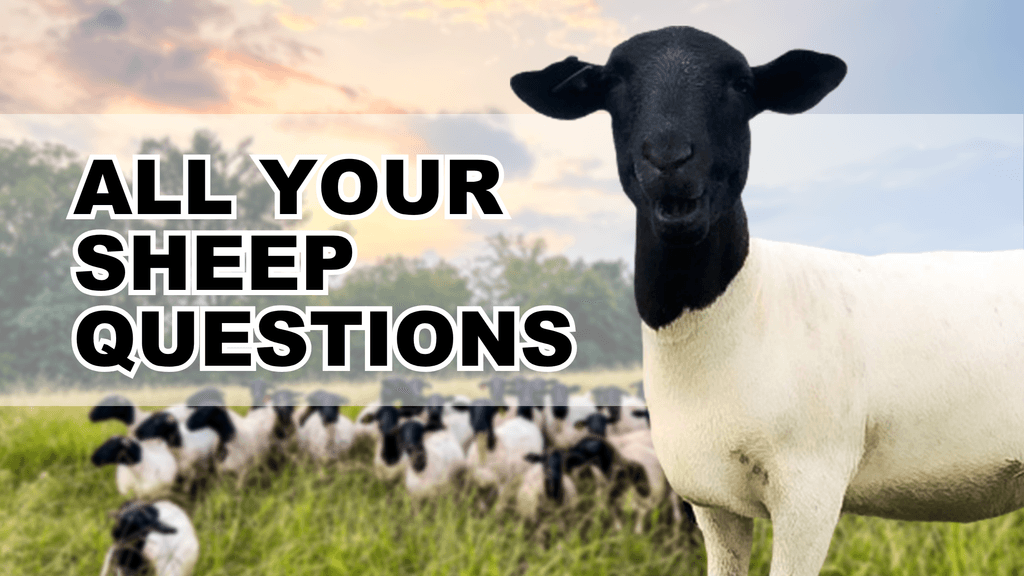
Hi friends,
If you have a list of sheep questions a mile long, this episode is for you. I hosted a live Q&A through my Virtual Small Farmer Meetup, and we worked through dozens of questions from shepherds in every stage of farming.
We cover the basics of getting started beginners, like how much land you need, what size flock to start with, and how to prep your pasture before your first sheep arrives. I also dive further into the differences between sheep breeds, why I chose dairy goats over dairy sheep, and what it costs to keep a flock fed and healthy.
No matter what stage of shepherding you are in, my hope is that this episode saves you some trial and error.
-the Shepherdess
TRANSCRIPT
the Shepherdess All right, guys, thank you for being here. We are going to be talking about everything sheep Q&A. Now, I want to encourage you guys towards preparedness, but one of the things I do not want to do is encourage you towards tinfoil hats and concrete bunkers. Those are things typically associated with homesteading and really getting back to this way of life. The context of it is typically doomsday. We’re prepping for some type of end of the world, but the reality is that what we’re trying to do here is getting back to just a little bit of self-sufficiency, a little bit of back to the land which was a way of life 60 years ago. You know, until 60 years ago, what is labeled prepping or apocalyptic now was a way of life for thousands of years. The way we’ve been living for the past 60 years is not normal, OK? Relying on a farming population of 2% to feed an entire nation and beyond is not normal. Having 80% of our meat supply completely controlled by four companies, that is not normal. Losing soil at a rate 10 times faster than that of replenishment is not normal. Having a food system that relies on the use of one billion pounds worth of cancer causing pesticides is not normal. And having 300 million people tied to a single power grid is not normal. So today, we are meeting up to encourage each other back to a sense of normalcy.
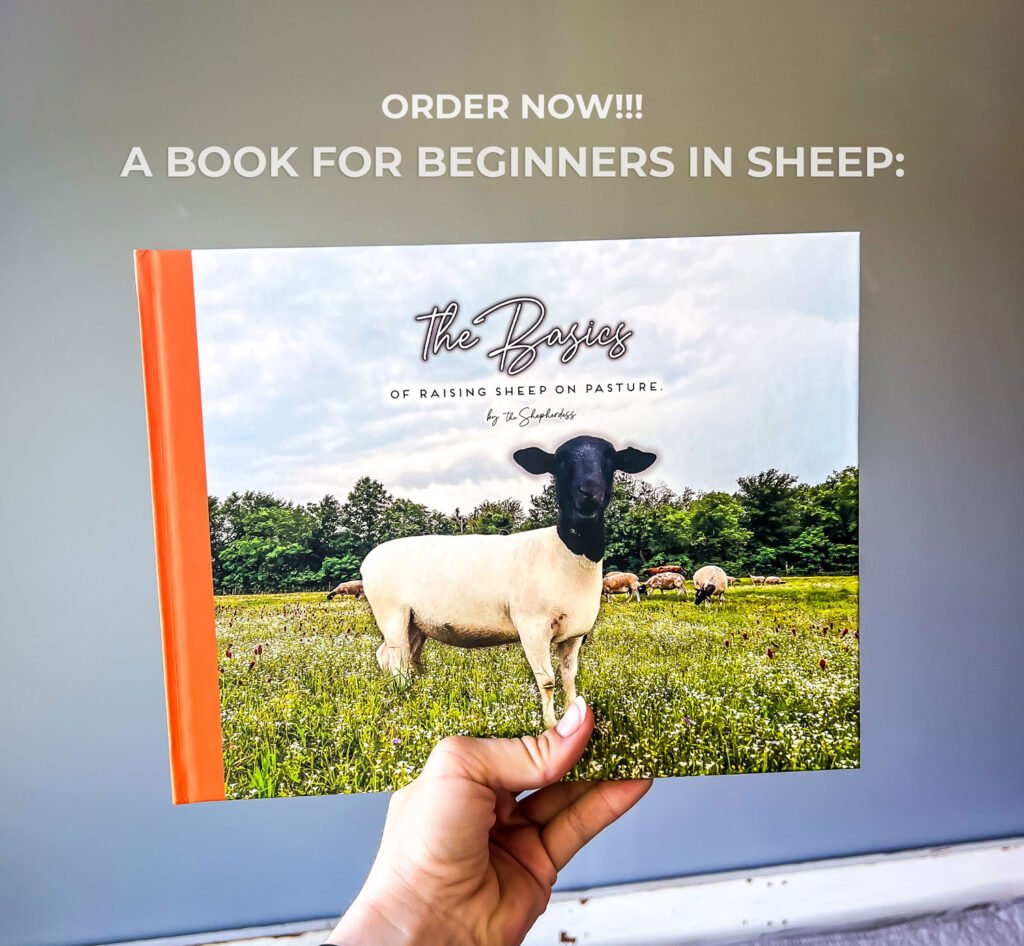
If you’re a beginner shepherd on 30 acres or less, then I wrote a book for you: The Basics of Raising Sheep on Pasture. Available at Shepherdess.com with free shipping. Raising sheep on pasture requires a basic understanding of pasture management, breeding and lambing, and mitigation methods for common disease. I walk the beginner shepherd through each aspect, sharing through this book vivid pictures, easy-to-follow instructions, and personalized stories from my own journey with sheep. Available with free shipping at Shepherdess.com; you’ll find a direct link in the description.
I’m going to go ahead and jump right into it because I have about 30 questions, and I hope to get through them all, but we will see how far we get. All right, Jason’s in Louisiana with ten chickens and one livestock guardian dog, which for you guys who have been following the underlying livestock guardian dog drama at my farm—the reality that I haven’t had one for five years and also the reality that it’s been a bad year for lamb losses because of it—I am now the owner of a livestock guardian dog. This was the most amazing thing that has happened to me in I don’t know, I’m going to say at least in the last four months, but I was really, really, really not wanting to get a puppy again as a livestock guardian dog. I got a puppy last time. He was a chaser. He was relentlessly chasing my flock, and then he decided to chase traffic one night, and we tragically lost him. And after that happened, I realized I just probably needed to do a middle-aged dog next time. Something that was not going to ruin my life.
And last month, I was just praying about it, and a five-year-old Great Pyrenees pops onto my Facebook feed. She had been with a flock, and I went and I picked that thing up. She walks right into the middle of the sheep, sits down as though she’s been… Well, obviously she’s been doing this her whole life, but it was such an exciting moment for me because she is absolutely perfect. She’s huge. She’s calm in temperament. So for those following the drama, I do now have a livestock guardian dog, and it is a very, very happy day for me. So she’s like, I don’t know. Right now, I just feel like she’s the best dog ever. I’m going to be sharing a Facebook post about her, but she likes my sheep more than she likes me. That’s the thing. And my first livestock guardian dog, it liked me more than it liked my sheep, which was initially flattering, but when it comes to a livestock guardian dog, that gets really old. They’re on your back porch instead of in the middle of the flock taking care of things. So anyways, that was the update.
Preparing your pasture, shade, and water systems
All right, let’s go ahead and get into it. I’ve got the first question of the night here from Keith Curry. He says, “I’m in Alabama. I have two and a half acres right now, and I was wanting to raise just a few sheep for meat production. The pasture has been cut like a lawn up until now. Do I need to let the grass grow taller before introducing my first ewe?” So Keith, if the grass has been basically mowed as a result of overgrazing too many animals on there for too long, if it was me, I think a season of rest would be absolutely fine and only advantageous for that land base. If it’s been mowed simply mechanically or just with a lawnmower, within just a couple of months, you should have plenty of grazeable forage. So Keith, I would go at it from this perspective: I would go at it essentially prioritizing finding just the right sheep. So take your time in doing that. It sounds like you don’t need to rush into this process, so take you time in finding a good set of sheep.
But if your land base was mechanically mown versus overgrazed with animals, it’s going to be in a better condition than if it was overgrazed with animals for this reason: when you mow mechanically, the forage goes back into the land base as essentially mulch. So you will get essentially 25% of the value of that forage that was chopped off goes directly back into the ground rather than going into the animals and being removed from that land. So mechanically mowing leaves a lot more nutrition on the land than overgrazing with livestock with the caveat being the livestock leave manure behind, but even if you are overgrazing with livestock, they don’t leave enough manure behind to compensate for overgrazing pretty much ever. So keep that in mind.
All right. New Valhams Farm asks, “What do you do for shade in the summer? Portable, affordable, or go all in? And what about a watering system?” So for shade and the summer, if you guys want to go to YouTube—and if you’re making notes tonight, I’m going to be referencing a lot of YouTube videos because I’ve made full length videos on a lot these topics—but if you go to youtube and search sheep shade DIY, this is a portable, affordable option for you that we kind of invented here to solve our shade structure need. Now, I’ve seen some people take this idea and really ramp it up. They have taken the shade structure that you’ll see on that video, which is very portable, a little bit flimsy, and they have put it on a wooden frame. So this is a great option to kind of upgrade and get something midway between affordable and a little more reliable. But shade structure DIY is what you want to search on YouTube and you’ll find my video there for it.
And then what about watering systems? And I’m going to go ahead and drop a resource if I’ve got it here on a watering system. But my watering system is pretty simple. I actually don’t have the resource, but it’s polyethylene tubing in 250 foot lengths from DripDepot.com. So Drip Depot has 250 foot lengths of polyethylene tubing. I will buy it in tandem with the plastic hose fittings, and it’s super cheap. I’ve got main spigots at my house and my land base is 30 acres, so it’s pretty small comparably. I’m not sure what you’re working on. But it allows me just to set up those 250 foot lengths and get them going all over my property into the various paddocks from the spigots that I have at basically the center of this land base because my home and the spigots are placed just right in the center and therefore, can branch out like that. So DripDepot.com. 500 foot lengths of polyethylene tubing with the associated fittings to make them essentially extra long hoses. They’re very cheap. It’s worked so well for me.
All right, so Gareth Curtis asks, “When you first started, how did you find land? And did it have a house on it, or did you live someplace else? So Gareth, if you know my story, and if you guys have been on my channel for a while, you know that I am actually working with family land. So I’m living on the property itself. We moved from the city to the country in 2017, and we bought 30 acres. It was originally uninhabited, but fenced very well. We fenced it for sheep, bought sheep, and you really need to probably go watch the rest of the videos for what happened after that because there were a lot of highs and lows. But we do live on the land, and I don’t know that I would be able to raise sheep unless I lived in some proximity to where I could check on them at least once a day. A lot of people will email me and ask about land leases, the fact that they have maybe the opportunity to lease 100, 250 acres, but it’s maybe 20 minutes from their home. They’ll ask me, “Should I buy sheep, or should I buy cattle for that lease?” My answer is always buy cattle. You’ve got any kind of a 20 or 30 minute drive to get to the land base, always buy cattle in my opinion.
The reason being is that cattle can fend for themselves in terms of predators. Cattle will get out. They’ll get on to the road sometimes, but sheep will probably at some point definitely get out onto the road. And if you’re 20 minutes or 30 minutes away from a sheep break, it’s going to cause a lot of problems for you, and you’ll probably lose your lease. I don’t know, speculative, but it’s a pretty big potential if you ask me. So that’s a long answer to whether you live on the farm or someplace else because Gareth, I’m guessing that you are potentially considering living remote from your sheep. Crystal Kristoff asks, “How would a setup for 10 sheep look different from a setup for 100 sheep?” Crystal, not a lot different. In fact, when you watch my videos—especially the ones on electric fencing or rotational grazing, installs like that—they’re scalable. So I’m doing it on 30 acres, and the tools that I use, the way that I’ve set it up, can be scaled down to three acres. It can be scaled up to 300 acres.
So in terms of the setup, you’re just looking at quantities of materials. If you’re raising 100 sheep by yourself, you probably want to get a little bit smart about handling systems. If you’ve got 10 sheep, a small pen is going to be just fine. So setup is not a whole lot different. I’ve got a lot of videos on my channel about electric fencing setup. I’m working on a huge one. I hope to post it in the next month and a half in terms of setting up an electric fencing system overall, but watch that video and understand that it is scalable in terms whether you’re working on three acres or 300. This was one of my favorite questions of the night, and The Bariatric Travelers asks, “What is your favorite way to eat sheep?” OK. Wait for it. This is literally my favorite way to eat sheep. This is sheep liver. And this is my all-time favorite way to eat sheep. I eat six capsules every morning with my coffee. If you are on my email list, go back and find the email called Hair Sheep for Hair Growth. Sheep liver is far above beef liver in a lot of the… I don’t know if you call it micronutrients. Nutrient-density-wise, it is exceedingly higher than beef liver in iron, selenium, B vitamins. So my favorite way to eat sheep is their livers.
I have a Five Ways to Cook Lamb video, and it’s delicious every other way. But in terms of everyday consumption, I love their livers. Hair growth has been incredible, skin quality, and nails since I started that. But a year and a half ago I started eating sheep liver every single day, and it’s become like a religious ritual for me. I’ve been sharing the sheep liver with my balding friends, and they’re like, “My hair is growing back.” It’s not even a joke. So try it out. I freeze dry my own livers and I fill my own capsules because it’s super hard to find sheep liver. There’s only one source that I have found for sheep liver and it’s not raw. I freeze dry my sheep livers and encapsulate them myself, and I do it raw. So this is full of raw, uncooked liver. I can do that because it’s for personal use. I don’t sell these. I just do it personally for personal use myself, but having the raw material and source there… I don’t know. Raw food has benefits.
“What is the best for milk?” That was Norman Kirby’s question, and I thought it was funny because somebody replied to this question on social media and they said, “A goat.” I would have to agree with that person who replied to Norman when he asked what is the best for milk. The reason being is that I raise dairy goats alongside my sheep rather than having added to my flock some dairy sheep. And this is because the milk yield in dairy goats is higher, the breed and genetic pool are wider for dairy goats over sheep. Essentially, I can get the same yield off of one really good goat that you would off of two or three dairy sheep. So that is why I’ve chosen to do dairy goats. But if you are looking for information on dairy sheep, they have their own unique advantages. Go to YouTube and search Dairy Sheep. I’ve got about four or five videos. I’m going to drop a couple of breed suggestions here for the dairy options. You’re going to be looking at Awassi as a dairy sheep breed, Finn Sheep, and then Lacaune. And those are the top three breeds that you’re going to want to research and potentially look into yourself if you’re looking for dairy sheep breeds.
Selecting breeds that fit your farm and budget
And I just put a video up on my podcast channel, which is Shepherdess Live on YouTube. I’ve created a separate channel for some of the long-form live stream replays. And I go through the sheep-versus-goats advantages and management nuances that you’re looking at in terms of those two different types. And then I walk through a little bit more in detail in that one hour presentation why I chose goat milk over just simply raising dairy sheep. So if you want to kind of deep dive on that, search sheep versus goats, and you’re going to find that. All right, White Dorper versus Black-headed Dorper. This is a question that I get a lot. Essentially they are the same animal, but every single place that I’ve been to that has raised both side by side have the same answer in terms of the general difference between White Dorper versus Black Dorper. The White Dorper has just a slightly larger carcass and a slightly lower fertility.
People are going to counter that statement about lower fertility saying that sheep fertility is a management issue, and I would largely agree, but in asking people who have owned both, it’s a general consensus that it takes less to make a more fertile Black-headed Dorper than it does a White Dorper entirely. But they’ll also say the White Dorper has just a slightly meatier carcass. So keep that in mind as you’re shopping for yourself and considering those options. Okay, this was a question from OCC Plumbing and Restorations. And this is a difficult question to answer, but I’m going to do my best. It says, “How much does it cost per year to care for your sheep?” So now that infrastructure is in place, the ongoing expenses for sheep involve feed, it involves human resource, and it involves basically vet care. Whether I do it myself or I take them somewhere to get their problems addressed. And when I say problems, I’m looking at things that primarily I’ve learned to take care of myself.
But all of that is factored in, and the wide and broad range is it takes anything between $50 and $250 to raise a sheep over the course of a year. I know that’s super, super broad, but feed inputs—some years I can graze pretty much entirely through the winter. We have such a surplus that I’m hardly buying hay at all. This year we’re looking at a drought and I’m not entirely sure what I’m going to be looking at in terms of feed inputs. If we don’t get any rain here by the end of September, I’m probably looking at a significantly higher amount. So, $50 to $250. And I know that probably does not help or answer your question in any specifics, but again, I’m going to reference a video that I made called The 15 Costs of Raising Sheep. And in that video, I go through not necessarily the dollars and cents, but I go through the costs that you’re going to need to put on a piece of paper and find your own unique costs, whether it’s land costs, handling systems, veterinary care, medical supplies, whatever you decide to do. I give you the 15 costs associated with everything from infrastructure to annual maintenance on a flock, and those are going to be things you need to put your pencil to in your region and get an idea regionally.
But having an understanding, you’re going to find through that video, are the 15 different costs there. But ongoing, your biggest ones are going to be feed and if you’re me, feed and vet care whether you hire a vet or do it yourself. And I know that there’s a lot of people that may not resonate with the reality that there are veterinary-style expenses is probably what I need to say more. But veterinary-style expenses just simply means if your sheep needs a dewormer, if your sheep breaks a leg and you need to set it, whether you do it yourself or you take it somewhere. You can set a leg at your own farm, just get some education. This was a gross one, but this is actually in my book, The Basics of Raising Sheep on Pasture, which I have not plugged yet tonight, but free shipping for the book at Shepherdess.com.
In chapter 12, which covers the gross things I’ve seen as a shepherdess, this one was an absolute doozy and this was a rectal prolapse. And let me tell you, I tried to address this one at home. I did my best. My dad was there. He had the sheep held down, and I tried to try to go at it and stitch her up all by myself. I’m sorry if this is too graphic for YouTube. You’re going to have to go to the private live stream and get some more details on this or buy the book. But you’re going to have little random things like that. And if your flock is big enough, sometimes the sheep will die before you can get it and treat it. That’s totally fine. There’s no judgment for that. But when you have a small flock on 30 acres, you’re essentially doing dishes looking out your back window at a sheep with rectal prolapse, and it’s super hard to ignore that until it dies. So I had to just go out and try to fix it as best I could. Didn’t really work. I took it to the vet for about $140. They put a fix in. And because that’s not a heritable issue, she was back to producing, and thankfully did produce a lamb the next year that covered that cost pretty good.
So those are kind of a little bit of a long answer to that. But there are going to be things that pop up and whether you decide to treat them yourself, let nature take its course and it dies, or you take it to a vet and decide that that’s going to be the cost of a learning experience, you’re going to have to budget in a little bit for that into your annual expenses. All right. I’ve got one more question from the pre-submitted questions, which are getting priority tonight, and then I’ll hop over here to the comments in the live stream. OK, so the last one is from Savage Mark, and he asks, “What are your thoughts on Australian whites?” And again, I was able to go to Australia and actually film an operation with some excellent Australian White sheep. She runs the direct-to-consumer meat business with this breed. She absolutely loves them. She says that the meat is softer in the Australian white sheep than the Dorper. She’s raised both, so her flock is really a Dorper base and she bred up and ultimately bred a primarily Australian white flock through crossbreeding.
So the carcass on those things was excellent. It was just slightly smaller than a Dorper but still very, very suitable for a direct-to-consumer meat sales business. So from what I saw, go to YouTube and type in Australian White sheep, and one of my videos should pop up there. Watch that for yourself. That’s going to kind of really give an objective look because she raised both, and she outlines why she likes one better than the other. And it was primarily meat quality. So I’ve never tasted or had it firsthand myself. The only thing I would add is that it was Australia, and I was filming Australian Whites in Australia. The genetic pool over there is going to be really, really good because that’s where the breed originated, has been developed, et cetera. I don’t know that the genetic pool of Australian Whites in the United States is broad enough yet to get the kind of sheep I saw over there.
So go watch that. It’s Macyntire Brooke Lamb on YouTube. But keep that in mind. The only drawback is because that breed is native to Australia, you may hit some limitations in terms of just how well it’s been developed or rather not been developed in the United States so far. But if you want to jump into that process and develop the breed and be part of that, then that may be an option for you here. Elizabeth says, “What size of a flock would be good for a beginner? For example, how many ewes and a ram?” And I always say start with three ewes and one ram. I know that’s really small, but in your first year, if you manage them well, it’ll double or triple. And in the second year, you can keep all your replacements. You’ll immediately have a flock of six or nine. In the third year, fourth year, the math adds up.
But what happens when you do the reverse? You buy 30 sheep as a beginner, unaware mostly of the challenges associated. That flock doubles or triples from 30 to 60 or 90. You’re suddenly swimming in lambs, you have more losses than you want to admit, and you get burnt out, decide to quit farming sheep. That was our experience, except for the last part of deciding to quit. But essentially, I say buy three to four ewes and a ram as a beginner, no matter how much land you have, because that’s going to be the best way to learn without the burnout. You can always buy 10 more the next year if you really love it and you have no problems.
But when we started, we started as a family who had never really raised anything beyond chickens before. We bought about 30 or 40 sheep. They rolled out of the trailer. It was a beautiful experience probably for the first four months. At five months, lambs started dropping, absolutely beautiful. Lambs started growing up and getting worms. We had no idea in terms of rotational grazing or managing parasites, et cetera. Almost all of our lambs died the first year. Almost all would probably be an exaggeration. I’d say maybe 40% or 50%. It was really discouraging, and we had to kind of walk uphill to learn a lot of the principles that would have been far easier learned with a flock of maybe 10 or less. I’m not saying you have to start as small as three or four, but 10 or less if you’re an absolute beginner.
How to handle dry spells, land limits, and shearing
All right. Ai says, “What is the lowest amount of land that you would recommend for a small flock?” Six or eight sheep. You asked that question in the perfect timing because I just posted a video on YouTube about how one of my friends, Nancy Andrews, raises six dairy sheep, and all of their lambs—so a flock that swells to about 12 head—on an acre and a half in the suburbs. So she does a great job. She’s working this acre and a half with plantings and pasture improvements and she’s raising dairy sheep, six of them, on an acre and a half. She is probably doing the most on an acre and a half in terms of sheep in a healthy way that I’ve ever seen. So go to that YouTube video that is published and live right now. Nancy really unpacks her pasture management system and how she keeps six sheep on an acre and a half. But that’s about what I would look at: maybe an acre or acre and a half as the minimum.
All right. So Nidia asks, “With the drought in Northeast Texas, the grass is pretty much dead and not recovered from earlier grazing. Should I continue to rotate my sheep or is it better to dry lot and provide hay until we get some rain and the pasture recovers?” So Nidia, if you are going to feed hay, I would feed it in a bale grazing fashion. So I would keep rotating them, but I would just feed hay across the pasture that you’re rotating them, and keep that fertility on the land. Then once your rain does return, the extra fertility from that hay that you are buying is going to be absolutely maximized because you have fed it to them across your land rather than in a single dry lot where that fertility may go largely to waste.
We had the huge mega drought of 2022 in Texas, and when I would bale graze, it was so dry and there was so little forage that I didn’t have to hardly set up the poly tape, you know, electric fencing paddocks. They would just migrate to where those new bales were. So I just set out the bales at intervals across the property during that drought, and that’s how I bale grazed. It was very low maintenance, and I was so much more grateful that I kept them moving and kept that fertility moving across the land base than if I would have just had them on a dry lot and had all the nutrients kind of going to waste there. So I hope that helps.
Picture this: you are looking out over your 5, 10, maybe 20-plus acres. The sun is setting, and your flock is grazing across a green pasture. Something inside you affirms this is real wealth—at least when it comes to material things. You know how to take care of your sheep, your grazing system is improving your land, and you have a way to direct market each lamb that is born. This is how I feel when I look at my flock, and I want the same for you. So, I put together a free one-hour class that answers some of your most frequently asked questions concerning how I raise, rotational graze, and market my sheep for $480 per head. Go to Shepherdess.com/480, or simply click the first link in the show notes of this podcast to sign up and receive the free on-demand class. What’s more is that I will follow up over the course of three days, providing you with even more free resources—including a free ebook, a free grazing sheep kickstart guide, and a free marketing sheep kickstart guide. This information is worth paying for, but I’m giving it to you for free. Just go to Shepherdess.com/480, or simply click the first link in the show notes of this podcast for how I raise, graze, and market my sheep for $480 each.
Ai says, “Do you recommend that new owners shear their own sheep—learn from a professional first, then give it a crack—or just always hire a pro?” So I raise a hair sheep, but I do have about eight that I just like to give a little bit of a haircut every year. I just went to YouTube and watched probably six hours worth of shearing videos. I watched those guys do it over and over again. I got a little of an idea of where they started with the shears and where they ended. It was pretty ugly the first couple of times I did it, but now I can shear a sheep pretty efficiently in my own opinion for somebody who’s never been at professional classes. So get a good pair of shears, watch a lot of videos, and do your best as a beginner at your own risk. The first time I did shear a sheep, I nearly cut my own finger off, so you do need to understand that there are some risks associated with that. I lost a bit of blood that day, but it was the first and only time. So it’s worth it to me to be able to have that skill and to know how to do it. And it really feels satisfying to know how to do it, despite the fact that the first one took me like an hour to shear. It’s a lot faster now, but just knowing how to do it yourself is worth it in my opinion.
All right. Tasha asks, “Is there a recipe for the sheep liver capsules in the email?” Tasha, it’s not really a recipe. It’s just straight liver. And I make these myself. I have a freeze dryer, which I love, and I will freeze dry the raw liver, I’ll grind it in the Magic Bullet, and I use a capsule maker from All-In Capsules. And I can do anywhere from 500 to 1,000 capsules a day, which I calculated was upwards of $700. So it’s fun. It’s a little bit of a Sunday afternoon hobby for me—decompressing through pill making of the healthy type. But there’s really no recipe. It’s 100% freeze dried liver. And it is one of the best things I’ve ever added to my health regime. I eat it raw. I freeze dry it raw. A lot of people cook it before they eat it and consume it, and that would be my recommendation here to the public, but I eat mine raw at my own risk, and it’s absolutely fantastic. So many nutrients in that, it’s not even funny.
All right, Ethan Johnson says, “If people would please tag me or whatever. I can’t read the comments at the moment since I’m at school.” He says, “I lost a ewe to her choking on feed. I know that you run on only pasture, but is there a solution that you know of? I’m honestly terrified of feeding without watching them like a hawk now.” Ethan, I’ve never had one that’s died of choking. I have had them foam at the mouth when I do give them feed, and it’s been more in the ones that I haven’t vaccinated for the CDNT, which is kind of the bacterial overgrowth that happens when rich feed is introduced really quickly. So they have choked a lot and they have foamed at the mouth quite a lot, but nothing’s ever died. This may or may not be something you want to do, but do try to give them that CDNT vaccine if you want to continue to feed them because that will really subdue a lot of the bacteria that is boiling over.
If you watch it and it chokes and it just appears as though it choked from just having that frothy reaction in its gut and died of that, the CDNT vaccine will probably subdue that reaction. So give that a thought. Guys, tag Ethan if you’ve ever had a spontaneous choking death on your farm, which actually sounds tragic. So, I’m sorry about that, but you are not alone. Rebecca says, “I’m still working on getting sheep. I live in McAllister, Oklahoma. I’m new to the state, and I’m hearing it’s going to be really cold this winter. What is the lowest temperature that a Dorper can manage? I have a barn if needed.” So Dorpers, in my experience, are not really temperature sensitive. Mine at least will grow a little bit of a thicker hair coat over the winter. And as long as they’re in a largish group, let’s say 10, 20 or more, they can group together and really withstand a lot of the cold. So Dorpers, in my experience, have not been extremely temperature sensitive. I’ve left mine out on pasture in the low teens and I’ve seen people leave them out on pasture in snow.
Processing meat at home and choosing heritage breeds
The thing that you want to watch out for, Rebecca, is freezing rain or exceptionally sleety, wet snow because while they are really, really resilient to cold and dry cold, the wet is probably what gets them and hits them. So if you have a barn and you can see on the forecast there’s going to be freezing rain, I just move them into that barn overnight just to cut your losses and probably avoid… You know, you may not lose a sheep, but you may have some problems with secondary things like infections, pneumonia, or just a weakened immune system from that kind of exposure. Edmar says, “Do you process your own sheep when needed? Do you have a tutorial?” So Edmar, on my YouTube channel, I do have a video called Butchering a Lamb for the First Time. I’ve since done it several times, and I will butcher things like culled ewes and things that I will be eating personally. However, if I’m going to sell to the front end, I need to have a USDA inspection. And so that’s when I will take them and have them processed at a USDA inspector.
And it’s really non-negotiable. I can’t process on-farm and then sell the meat to other people. I can sell the lamb to other people and then if they want to, you know, privately hire me to do that slaughter process, they can. I don’t offer that or don’t do that, but that’s a loophole that you can be a custom butcher of sorts on a private treaty basis. But I do know how to process my own sheep, and I will process for personal consumption. So go on to YouTube. And that is another one in the pipeline in terms of posting is just a closer look at how it goes for me now. I still don’t have a ton of experience, but I think that helps people sometimes in terms of seeing that you don’t have to have a ton of experience to skin and get a living animal into an edible product. So I’ll keep that one in the pipeline as priority.
All right. Angela says, “Do you have any feedback in regards to the Barbados Blackbelly and crossing with Dorpers?” I don’t have any personal or firsthand experience. I do know the Barbados Blackbelly is a very, very hardy heritage breed, and that’s going to contribute a ton of hardiness to anything that you cross it with. The black belly is one of those breeds that people will really have a lot of success with if they don’t want to deworm or if they want a very, very low-maintenance flock. The carcass size is a lot smaller. So if you were to cross it with Dorper, you might get something right in the middle, meaning something with a bit of a thicker carcass and a less parasite-sensitive sheep. So it would be an interesting cross worth giving a try, Angela, if you have the opportunity. If you don’t like it, you just breed up or choose the one that you do like for the long term.
Kim says, “Do you breed registered Dorpers to sell as seed stock plus the commercial Dorpers that sell for meat only?” Kim, I used to do this. But I have found for myself, personally, the commercial Dorper and just running a commercial operation is a better route for me to go. The registered operation was great for boosting the bottom line in terms of registered sheep selling for up to five times more than a commercial sheep. However, my commercial sheep do have a reputation now and I am able to earn a premium on commercial breeding stock just through marketing, meat sales, and diversity there. Personally, it’s just more profitable for me to focus on really having a good commercial line given all the diversity that I’ve woven into my marketing. That’s within my specific context. So that’s a little bit of an explanation on where I’m at. I used to, and it was a great way to boost the bottom line, especially in those early years. But now I have transitioned pretty exclusively to just running a quality commercial line.
Manji says, “Do you think frozen tubes taken from the US to Morocco would be usable for AI? This is a 14-hour trip plus the extra two hours to my farm. I’m trying to breed the Blackbelly…” Yeah. Manji, I don’t have any experience with artificial insemination, so maybe somebody who does and they could tag you with information. But I do know people import stuff from worlds away, so I don’t know that the distance would be an issue. Christina says, “In reference to the shears, do you use the electric shears for shearing your sheep or the scissor looking shears?” I will use the electric shears. I use Premier One, I think it’s the 4000 shearing machine. It plugs into an outlet, so I do have to bring the sheep a little bit closer or use a generator to shear those sheep at the shed. And then I use the Spitfire cutters and a nine-tooth comb. I think it’s the Apache comb. If you’re going to Premiere One to shop right now, just keep those things in mind if you want my setup: 4,000 shearing machine, the Apache, nine-tooth comb, and the Spitfire cutter. I think I got it right there.
And it’s very important that you do that specific combination, especially if your sheep are not a fine-wool sheep. Typically when I go to shear my sheep, I’m just getting the ugly off of them. So it’s often a really matted coat, very, very bad. So that nine-tooth comb—it shears through really, really poor-quality fuzz, essentially. If you were to get any smaller of a comb or cutter, it’s going to get jammed up, gunked up, and stop after about a sheep and a half. So, take my advice on that. Jessica Jones-Carson says, “How do you separate the rams from the young and older ewes? How do you introduce a breeder ram to the young males?” Separating a ram from the young and older ewes during off-season, I will put him in a clean pen with hay, minerals, and a buddy. And that’s his prison while he’s not in production. And then in terms of separating the young and older ewes, right now, I have a group of older ewes that are on one side of the property breeding with one specific ram. And I have a set of younger ewes on the opposite side of the property in a paddock breeding with their ram, at least they will be. And that’s just how I separate my two groups.
I’ll keep them at a distance in two different paddocks. And I can do that pretty easily on 30 acres with no problems. In terms of how to introduce a breeder ram to young males, this is a good question because the older ones can become very aggressive towards anything male and anything new in that respect. A piece of advice that I got from an older shepherd was whenever you introduce a new ram or you put rams back together, put them in a very, very small pen to where they can’t get a running head start at one another. So put them on a really tight pen. And if they butt each other around, they’re going to butt each other around, but they won’t have the running head start that is often necessary to kill each other. I’ve heard of rams killing each other, so, small pen.
Lynn says, “My acreage is mostly forested with about four acres of open pasture. I’m in New Hampshire. Can sheep utilize a forest area?” Yes, sheep will utilize a forest area exceptionally well. They are grazers as well as browsers. Oh, Richard asks, “If it’s OK to ask Grace, how are those newlyweds?” Richard is asking about my sister, who was married in April. And she is doing very well. They are doing very well. They’re very grateful for the 30 plus coffees that you guys bought them in celebration of their wedding. And I think it’s okay to say this now, but she is expecting her first baby. So I did let the cat out of the bag on that one. I hope she’s okay with it, but she’s very excited. Pregnancy is going very, very well, so if you guys would just keep her in prayers for a safe and healthy delivery. We’re all so excited, but that’s how it’s going.
Christina asks, “Do you keep the skin like a cow in terms of when you butcher them? Christina, I’ve never kept the skins of animals that I have butchered, but I want to. I’m about to do a couple of culled ewes. We actually have a really good looking pelt, and I want to learn how to process the hides. So I may in the future, but I don’t have any experience processing the hides quite yet. All right, guys, coming to the end here on the private live stream. And then I’ll hop over and see if anybody has questions on YouTube and get to a couple of those before we close out. Ray says, “If I’m doing an accelerated breeding schedule (three lambing cycles in two years), do you give CDNT annually or in sync with the breeding cycles?” Ray, just give it annually, but that is a good question because I know that some people do give CDNT in tandem with the birth of the lamb (the boosters at least) so that the moms will administer sort of those antibodies to the baby.
Breeding challenges, ram care, and parasite control
So Ray, I do not vaccinate my sheep anymore. I used to, but I’ve taken that out of my program. Not because I think that it is evil to vaccinate for tetanus and overeaters disease. In a lot of contexts, it’s very advantageous, especially if you’re feeding a lot of rich feed, but mine just have not needed it. So go to White Clover Sheep Farms, and he is a pasture-based shepherd who gives the CDNT, and he gives them in time to get those antibodies to the new lamb. And if anybody has specific advice for Ray, tag him in terms of if he’s going to be lambing three times in two years, when he ought to give the CDNT and boosters to be most advantageous. Mitchell says, “I’m interested in getting quality Dorpers, but I’m in Virginia. Is it too much of a risk to go to a different state and a different climate to find stocks?” Yes, Mitchell, if you’re going to buy Dorpers from West Texas and you’re going to take them to Virginia, those sheep are probably going to shrivel up and die on you.
It’s always advisable, whenever you buy sheep, to take them either from a climate that is parallel to yours or from a climate that is wetter than yours. That’s when you’re going to have your highest success. Do not bring a sheep into a wet and humid climate from a dry and low rainfall climate, or they’re going to struggle quite a lot to adapt. And it may even take a couple of generations to get them to adapt to your humid climate. So if you’re buying Dorpers in Virginia, I would look for breeders close to Virginia. There is a breeder in upstate New York: the White Clover Sheep Farm. He breeds White Dorper. It may be quite a drive for you from Virginia, but if I was in Virginia, I’d probably make the drive for his sheep. They’re very, very good looking sheep. So maybe that’s a starting place for you.
All right. Veronica says, “When breeding Dorpers, do you recommend breeding the same type, or do you recommend another breed like St. Croix or any other? I’ve noticed that my Dorpers have trouble during delivery when they are pure Dorpers.” Veronica, that’s a good question. It really depends on your objectives. I’m pretty transparent about the fact that my Dorpers are more high maintenance, but they really meet my marketing objectives very, very well. They’re highly marketable, the carcass grows fast, and on grass I can get a good meat product for my meat business. If I was raising sheep, however, just for personal use or homestead use, and I wanted something that I could be a lot less hands on with in terms of making sure the parasites don’t overtake them or other things like that, maybe some lambing issues, I’d probably go for maybe a lower maintenance breed like the St. Croix or the Katahdin.
Another thing that you want to keep in mind when you’re going for these smaller breeds is an understanding of processing costs and fees. It’s anywhere in my area from $140 to $200 to process a single lamb. If you’re processing something like a St. Croix with a carcass size of 30 pounds and meat in the package of 20 pounds, and you are looking at a processing fee of $140, that’s $14 a pound just for processing costs. If you’re going to be processing at home and by yourself, the St. Croix is a good option. But if you’re going to think about even budgeting in processing costs for personal consumption, you’re going to be very burnt out with the small carcass size. But again, if you just learn those simple home butchery skills and you want a lower maintenance animal, the St. Croix, the Katahdin, or a cross of some of those more native heritage breeds, that’s going to be probably what I would recommend.
But for me, in my operation, I’m running a meat business; I’m running a breeding stock business. I’m super, super happy with my carcass sizes for the market and marketing that I’m trying to do. It’d be very hard to get those in any other hair breed at the moment. So I kind of eat the extra maintenance that Dorpers actually are. They’re more parasite sensitive and sometimes they do have more lambing problems, but I would argue that the lambing issues are probably things that you just need to cull out rather than tolerating and could be mitigated that way. But I do take a little extra care of them because they pay me back on the back end.
All right. Kirk says, “My processing fee is 75 to dispatch and dispose and 70 cents a pound for the cuts.” And Kirk, is that USDA or is that just a custom butcher? Okay, looks like that is all. We’ve got one more question here privately, and then I’ll hop over to YouTube real quick and answer a couple of those. But if you’re on YouTube and you’re watching this right now, just know that I am hosting my monthly live stream. You can register at FarmerMeetUp.com to join. You’re going to get priority in the Q&A, but tonight I’m streaming double to bring sort of awareness to this monthly meetup. All right. Annalise asks, “Does the Shepherdess have a Facebook group?” And yes, I do have a facebook page where I share a lot of these questions and answers over and throughout the month. And you’re just going to need to search Harmony Farms Dorpers or The Shepherdess on Facebook, and that’s where you’re going to find me.
Ai says, “Do you keep breeding rams together?” And the answer is yes. One will typically dominate and the others will fall in line behind him. Not had any kill each other yet. Came pretty… Well, it appeared pretty close. They just kind of knocked each other until they started to stagger, but no death yet. All right, guys, I’m going to come over here to YouTube really quick before we close out tonight. Mont Gerber says, “We are trying to deworm our feeder lambs with lye. I know the adjusted rate is a half teaspoon per gallon of feed, but I was wondering if there’s also a suggested rate per animal.” Mont Gerber, the maximum that I’ve given is about a third of a teaspoon per animal in a single dosage. That’s about the maximum I’ve given, so maybe that’ll help you with your 200 lambs. I’ve never dosed that many with it though. I pretty well just confined my use of lye to my goat herd, which is still less than 10. And I like to do that because I drink the milk, obviously, and I don’t want to chemically deworm and then drink the chemicals in my milk.
Two Crazy Kitos says, “Can you talk about the copper bolus? We have nine five- to six-month-old Katadins. We move them every four to five days, but we struggled with the barber’s pole worm a few weeks ago. One of the lambs had a fecal egg count of 13,000.” And for context here, a fecal egg count of 13,000, the vet will tell you to deworm at 800 or above. I guess you could look on the bright side and say that’s a very tolerant sheep, but it could pretty much pop off and die of worms at any time. So the copper bolus, I’m going to go ahead and grab one for you. I will give one of these to my adult sheep, but I have to really make clear on that. I will use a copper bolus on my adult Black-headed Dorper ewes, and every year, I’m going to give them a copper bolus. It’s going to just go in the back of their throat, straight down their throat, through the usage of this balling gun. And this is super good for parasites.
Black-headed sheep do need more copper than regular sheep. The reason the copper bolus is very specifically helpful, especially in contrast to the copper sulfate. The reason that you want to do the oxide wire particles is because this dissolves at a much slower rate and goes into the system over the course of months, rather than the blue stuff just goes straight in and it’s way easier to overdose. Another thing I want to mention to you: when you’re talking about giving this copper oxide wire particle bolus to Katahdins, number one, make sure that they’re not lambs because I think—just under the suspicion—I, for the first time this year, gave the copper oxide wire particle bolus to some lambs that were still around 60 pounds, so pretty small, and I think a couple of them actually died from this. I think I gave them copper toxicity.
It was a perfect storm because what happens is when a sheep has excess copper in its system, it will store it in the liver until a stressful event occurs and when a stressful event occurs, it will just pump that copper into its system. So, what happened was I gave this to some lambs. We had a very, very stressful season in terms of weather, and I think a couple of them died as a result of this. So don’t give it to lambs. And if you’re giving it to sheep, just make sure they’re fully adults. Savage Mark asks about my livestock guardian dog and says, “Can the livestock guardian dog get in and out of your paddocks since you’re keeping two flocks right now for breeding?” No. And that’s a really great question, Savage Mark. But the way that my land is set up, I have three cross-fenced pastures, and one of them is just exceptionally predator prone. And so I’m putting the dog in that one. And then the two front pastures are… I’m not going to say predator proof because when you say that, I’ll probably wake up to a dead sheep tomorrow.
But I’ve never had a sheep killed in those two front pastures. So I’m going to put the dog in the back pasture, which is the most dangerous, and then put that second group in a safe pasture. But the dog cannot get out of the paddocks. All right, HappyHomesteaders3282 asks, “Can you tell me the website for unpasteurized milk in my area? I got it from one of your past videos.” RealMilk.com is going to be the directory for raw milk suppliers nationwide. And that’s going to be the last question, guys. Thank you for those watching here on YouTube. I’m going to end the live stream for YouTube, goodbye. Join me at FarmerMeetup.com next time, and I’ll look forward to seeing you then. Thank you all so much for coming out tonight. I appreciate you, and I’ll look forward to seeing you guys next month.
Leave a Reply