 by
by 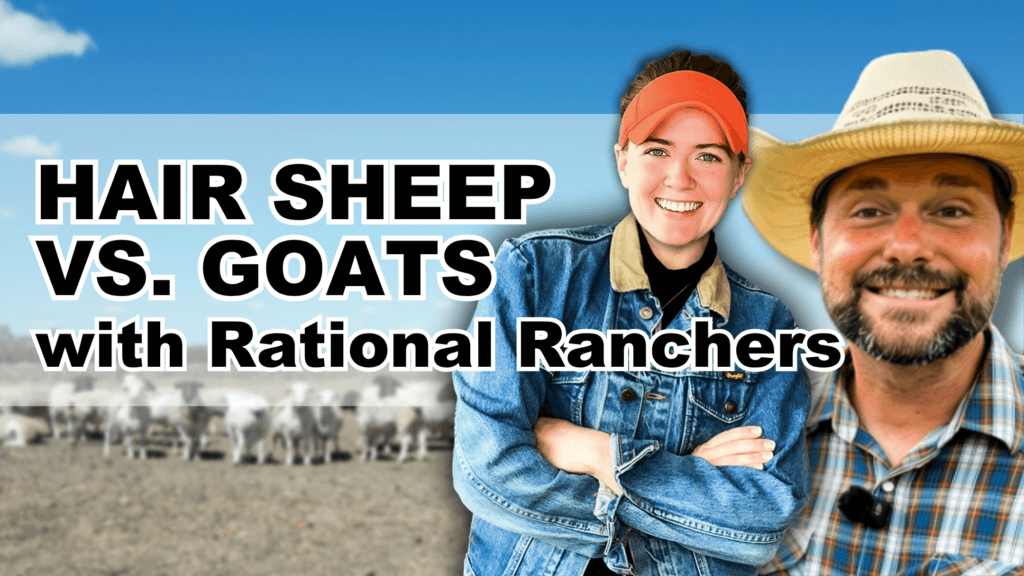
Hi friends,
This week I’m talking with Bowen Troyer of the Rational Ranchers. He runs commercial Katahdin ewes, registered South Poll cattle, and a new batch of Royal White sheep across two ranches in Arkansas and Missouri. We get into his take on hair sheep vs. goats, why he doesn’t run a blanket deworming program, and how rotational grazing shapes his approach to parasite resistance.
We also dig into something a little different: Bowen compares the price of livestock to silver and gold throughout history, and what that means for where he sees the market headed today.
If you’re curious about hair sheep, low-input parasite management, or what your flock might be worth in gold, I hope you’ll give this episode a listen.
-the Shepherdess
TRANSCRIPT
the Shepherdess All right, guys, we are here with the Rational Rancher, Bowen Troyer. Did I just pronounce that name right?
Bowen Troyer You did. Perfect.
the Shepherdess All right. I have seen this guy popping up all over the place. He’s got me thinking about chickens, silver, sheep, and—well, I’m already thinking about sheep—cows. I’m excited to talk to him today. We’re going to be talking through three different things, just getting to know you. We’re going to be talking about Katahdin sheep, some of the breeds that you raise, and then we’re going to be talking about these ratio videos that I’ve seen all over the place, and just a little bit of a summary on them. So thank you for being here.
Bowen Troyer No problem, thank you for inviting me.
Overview of the Ozark ranching operation
the Shepherdess All right, so go ahead and give us just a quick overview: let’s just start with where in the world that you are. Where are you ranching?
Bowen Troyer Right now, we’re in north-central Arkansas around the lakes areas. We’re by Bull Shoals Lake up here, and then we also have 140 acres in southern Missouri. We’re kind of spread out over two states.
the Shepherdess Now, are you on the border of Arkansas and Missouri to where that’s accessible, the land basis?
Bowen Troyer They’re about an hour and 15 minutes apart, the two ranches. So ideally, it would be a little nicer to be closer together.
the Shepherdess Am I getting my geography right in that Missouri and Arkansas do border one another?
Bowen Troyer Yes.
the Shepherdess All right. Okay, good. So go ahead and give us a 1,000-foot view of your ranching operation.
Bowen Troyer Yeah, we bought our ranch here in Arkansas four years ago, and we moved from central Kentucky down here. It’s about a 300-acre ranch. It is very rocky and poor soil like most of the Ozarks. We run South Poll cattle and Katahdin hair sheep, and then we actually just bought 20 Royal White ewes. We’re really excited about them, we’ll see how they do. And then on our ranch in Missouri, right now we’re just running cattle.
the Shepherdess And that ranch in Missouri is the one that’s a little bit more of a distance, so the cattle fit well there?
Bowen Troyer Yeah, we’re not brave enough to stick the sheep up there without somebody up there 24/7.
the Shepherdess Yeah, that makes a lot of sense.
the Shepherdess Picture this: you are looking out over your 5, 10, maybe 20-plus acres. The sun is setting, and your flock is grazing across a green pasture. Something inside you affirms this is real wealth—at least when it comes to material things. You know how to take care of your sheep, your grazing system is improving your land, and you have a way to direct market each lamb that is born. This is how I feel when I look at my flock, and I want the same for you. So, I put together a free one-hour class that answers some of your most frequently asked questions concerning how I raise, rotational graze, and market my sheep for $480 per head. Go to Shepherdess.com/480, or simply click the first link in the show notes of this podcast to sign up and receive the free on-demand class. What’s more is that I will follow up over the course of three days, providing you with even more free resources—including a free ebook, a free grazing sheep kickstart guide, and a free marketing sheep kickstart guide. This information is worth paying for, but I’m giving it to you for free. Just go to Shepherdess.com/480, or simply click the first link in the show notes of this podcast for how I raise, graze, and market my sheep for $480 each.
the Shepherdess So with the sheep, you kind of answered the question a little bit, but tell us a little about the breed or breeds that you run.
Bowen Troyer Yeah. The main herd is a hundred just commercial Katahdin ewes. We’ve been really impressed with them as far as parasite resistance and good sheep. We’ve had them now for four years. We did some heavy culling the first two years to kind of get where we wanted to be. We just started lambing, and we have three sets of twins on the round right now, so we’re pretty excited about that. We’ll be busy for the next few days, and then we just purchased 20 Royal Whites. They’re only three months old, so we’re going to see how those do. I know you’re big into Dorpers.
the Shepherdess That’s why I had you on. We’re going to have a little bit of a feud here starting soon in a couple of minutes. But yeah, we’ll talk about that later. With the Katahdin ewes you started, what is your primary sales stream? Do you just do commodity? Do you do anything direct? What’s your outlet there?
Bowen Troyer We’ve been fortunate enough to sell all the ewes as breeding stock right off the farm. There was a local butcher in town that we were supplying the rams to, but he got shut down. He might not have been quite above board with the USDA. But we also have Salem Stockyards, which is about 40 minutes away, and they have one of the biggest sheep and goat sales around these parts. So if we have some we can’t sell on the farm, we take them there.
the Shepherdess That’s good. So oftentimes when I am talking to people about Dorper versus Katahdin, I obviously don’t have the first hand experience with Katahdins. So I’m just going to ask you for some stats on your flock. I know every flock is different, and genetics are different, but about what is the size of the Katahdin ewes that you’re working with?
Bowen Troyer Generally, a good size one is going to be about 100 to 120 pounds for ours.
the Shepherdess And then you were talking about that you had sort of a relationship with a butcher. What are the size of the lambs, and how long does it take them to get up to a weight that’s actually profitable to slaughter? I mean, it’s not profitable to slaughter a 40 pound lamb. What size are you looking at, and what time does it take to get there?
Bowen Troyer We generally lamb this time of year, so in April, and then we start marketing our lambs for meat in November, and sell the majority of them in December and January. So seven to eight months for us to get them up to… Last year we averaged 90 pounds. So they are on the small side. I would love them to be a little bigger, but we’re also 100% grass-based and don’t use any grain, so that’s just all on pasture.
the Shepherdess That’s really good. That’s actually very good—90 pounds consistently from April to November. Now, that would be slaughter weight. Do you do the same with respect to just selling the commodity? To back up a little bit, you said you sell your ewes primarily through a private treaty.
Bowen Troyer Yes, ma’am.
the Shepherdess And then the excess males, you will use that commodity outlet. Am I right?
Bowen Troyer Yes.
the Shepherdess And then about what weight will you aim for to move those rams to the commodity?
Bowen Troyer The rams are about right around that 90 pound range. That seems to be the sweet spot for what people are wanting around here. They would probably go bigger, but once the grasses stop growing, we want to get them off the farm as soon as we can.
the Shepherdess Yeah, that makes a lot of sense. So even at the commodity level, you find it is most profitable for you to grow them out to that 90 pounds.
Bowen Troyer Yes.
the Shepherdess That’s neat. Okay, so when did you start ranching? Just to get a little bit of your history.
From hobby farm to full-time ranching
Bowen Troyer My wife and I purchased our first farm in 2008. I was working full-time, and she was raising the kids—she works harder than me. But in 2012, we moved to Kentucky and that’s when we started full-time.
the Shepherdess And the ranching?
Bowen Troyer Yes ma’am. We started with just commercial Angus and Kiko goats in Kentucky.
the Shepherdess So you went full-time ranching in 2012. In order to make that transition to full-time, what was required? Is there a background? Did you have to build up a nest egg? Did you have to make strategic decisions about expanding your land base and choosing specific animals? Walk through that specific journey.
Bowen Troyer Yes, so like I said, in 2008, we bought 66 acres in Ohio, and I was working for the government then. So I had a very good job, and we were saving up, and we bought a very dilapidated farm and put a lot of sweat equity in it. That was kind of our nest egg that we were able to sell that, and we had to move to Kentucky to find cheaper pasture. We partnered with my folks who were out in Arizona at the time, and we were able to buy that farm. It was 286 acres. We ran 100 commercial cows, and then at the peak, we were running 300 Kiko goats.
the Shepherdess And you bought in on the cattle in 2012?
Bowen Troyer Yes, ma’am. Well, from 2008, we had cows. On our farm in Ohio, we were hobby farming, just getting all our hard knocks out of the way.
the Shepherdess So you probably went through the big cattle boom of ’14 and ’15, am I right? Where everybody wanted to be a cowboy and was doing well?
Bowen Troyer Yes. We were running a bunch of feeder calves at that time, and we made a whole lot of money on the way up and lost a whole lot of money on the way down.
the Shepherdess Okay, that’s interesting. What’s that story there?
Bowen Troyer The short version is that I had an infertile bull, and the first year that we were full-time ranching in Kentucky, I had to sell off half of my cows to pay all the bills because we weren’t going to have a calf crop. So then I had a buddy that was doing feeders, and so I kind of joined him. That one year we ran 1,200 feeder calves through the farm. We kept doing it as we grew our cow-calf operation. And so by 2015 or 2016, we got out of the feeder calf business and just did cow-calf.
the Shepherdess Okay, so you basically supplemented for that infertile bull by bringing in those feeders and getting cash flow that way.
Bowen Troyer Yeah, we had to sell half of our cows to generate the money. I had just quit my job, and I was like, “What are we going to do?” So we just rolled the dice with feeders, and fortunately, it paid off. And the Kiko goats helped a lot through that time.
the Shepherdess So feeders and Kiko goats. At what point did the sheep come in?
Bowen Troyer We didn’t buy sheep until we moved here to Arkansas in ’22.
The goat versus sheep debate and parasite realities
the Shepherdess Okay, 2022. Now, you had been running small ruminants up to that point. Most people do either sheep or goats? What made you do both?
Bowen Troyer Our farm in Kentucky was very brushy and overgrown, and so the goats fit it perfectly. They really helped us clear the land and get the pastures back in shape. Whereas, when we moved here to Arkansas, it’s very open, with not much brush, and so we thought we’d try hair sheep. And if I had to vote, I would pick hair sheep every time.
the Shepherdess Now, what are the primary differences? This is a question I get a lot, and I don’t have the first hand of raising both. When it comes to raising sheep or goats, what are the primary differences you’d cite?
Bowen Troyer Sheep give up. Like, when you go to catch one to trim its feet and flip it on its back, for the most part, they kind of just relax and submit. Goats are absolutely… They will fight till they die. As far as fencing goes, I don’t know if we just had really good Kikos—they didn’t really pressure the fences much. We didn’t have much trouble with that. But whenever it came to working them, it was a wrestling match. We like the laid-backness of the sheep a lot more.
the Shepherdess So temperament would be the primary thing that you say.
Bowen Troyer Yes.
That’s interesting. Okay, so I know that hair sheep are better browsers on whole than the wool sheep. Do you notice any difference in how those Kiko goats and the Katahdins utilize your natural resource. Is one better or one worse than the other?
Bowen Troyer Yeah, I would say if you have any type of brush, raspberry bushes, you know, or saplings coming up, the goats did a tremendous job of just going to a tree or going to a thorn bush and clearing every leaf off of it. They’ll stand on their back two legs and graze anything up to six feet tall, whereas the sheep, from our experience, pretty much whatever they can get from knee-high down is what they are more foraging on. I’d say for clearing land, I’d recommend the goats, but if you have good pasture and everything’s kind of knee-high or lower, the sheep do a great job.
the Shepherdess Say somebody’s coming and looking for the answer for themselves—would there be any context in which you would choose goats over sheep or sheep over goats? They can only do one.
Bowen Troyer I would say just solely based on your land, what kind of forage you have for them, like the thorny, thick, dense brush, for sure go with goats. In my opinion, they’ll clear it up six feet tall. And if you’re open, not so much brush, I would go with the sheep.
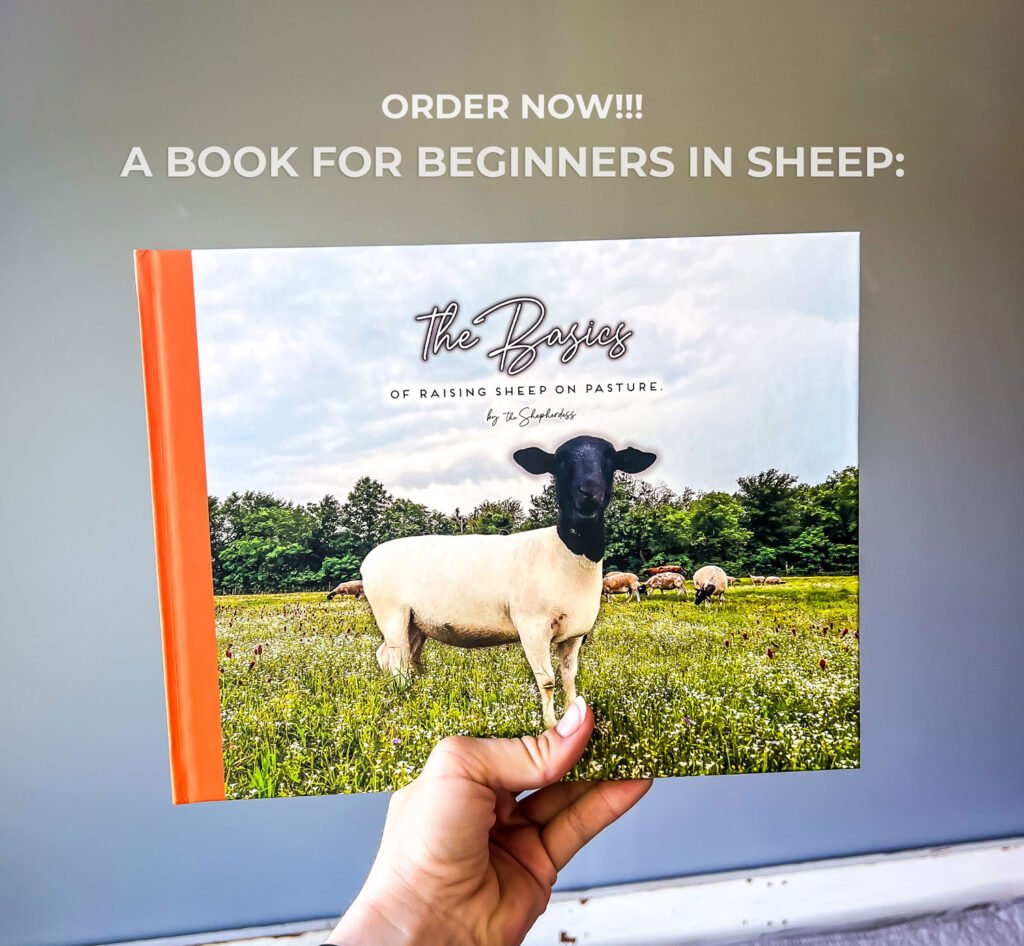
the Shepherdess If you’re a beginner shepherd on 30 acres or less, then I wrote a book for you: The Basics of Raising Sheep on Pasture. Available at Shepherdess.com with free shipping. Raising sheep on pasture requires a basic understanding of pasture management, breeding and lambing, and mitigation methods for common disease. I walk the beginner shepherd through each aspect, sharing through this book vivid pictures, easy-to-follow instructions, and personalized stories from my own journey with sheep. Available with free shipping at Shepherdess.com; you’ll find a direct link in the description.
the Shepherdess All right, let’s talk about parasite resistance really quickly. A lot of people will opt for Katahdins over Dorper because of that one factor, but then they get the Katahdins and think that means that they’re never going to have worms. I get people emailing me saying, “I bought Katahdins because they’re more resistant, but they still died of worms.” How would you speak to that person and encourage them with some ways that they can keep their resistant sheep alive?
Bowen Troyer First of all, I would say every sheep I’ve ever had, no matter the breed, is going to get worms. There’s no perfect one. I think as a rancher, it’s more your responsibility to manage them properly, it doesn’t matter if it was the most amazing parasite resistant sheep in the world—you’re going to kill it if you don’t manage it, right? So for us, we use rotational grazing systems and that seems to be the best for us. Just keep those sheep moving, and the parasites really don’t seem to affect them as bad. There’s still going to be some with parasites, but it seems to help a lot.
the Shepherdess So, what is your parasite management protocol? Are you no-dewormer? Do you use it just strategically at lambing, things like that? Where are you at, and what’s your allowance?
Bowen Troyer For our flock, where we are right now, we don’t worm anything in general. We just rotate them around. When we have that lamb or ewe that comes down with parasites, we’ll catch them, and put them in a lot. We use Cydectin which works really well where we’re at. And then we keep them locked up in the lot, get the weight back on them, get them healthy, and then take them to the sale.
the Shepherdess So you just cull them, but strategically, so you’re not looking at a dead animal on pasture. That’s good.
Bowen Troyer Yeah, we don’t worm the whole flock or anything, just whatever animal needs it, and then they get a one-way ticket off the ranch.
Capitalizing on niche cattle market trends
the Shepherdess Right. So remind me one more time, I think you said it earlier in the video: your full-time and your primary land base—where you’re at, not the one in Missouri that you have to travel an hour and a half to—is what size?
Bowen Troyer It’s 310 acres.
the Shepherdess Okay, and on that 310 acres, you just run your 100 sheep, or are you running some cattle on there as well?
Bowen Troyer We run the 100 ewes and then about 40 head of registered South Polls.
the Shepherdess Okay. Now tell me about the registered South Polls. What made you go registered?
Bowen Troyer In Kentucky, we started with some South Polls, and we really liked their dispositions and how good of a mom they were. They’re kind of a niche market. A lot of grass farmers and small homesteads are really looking for them. And when we moved here, we were able to buy a whole herd of full-bloods, and they’ve done extremely well for us as far as the marketing and selling side goes.
the Shepherdess When were you able to buy in on that herd?
Bowen Troyer I put my order in I think 2020, and then in 2022, we finally got the heifers. So it was a long process.
the Shepherdess Yeah, but it was probably a better time to buy obviously than right now.
Bowen Troyer It was extremely—like a third of the price.
the Shepherdess So, for perspective, if you’re willing to share, you bought in 2022 at what price, and then where are they at right now?
Bowen Troyer Yeah, we paid $1,800 a head for our heifers, and last year on our farm, we sold our heifers for $6,000.
the Shepherdess Yeah, that’s crazy. Now, you’re going on two decades, sort of, in the market. Where do you see where we’re at currently? Just, you know, off the cuff perspective. I won’t quote you or make you take responsibility for anybody’s financial downfall, but where do you see the market going in the next couple of years?
Bowen Troyer We’re actually making a video on it and going to put it out probably next week, but I really think the market’s going to stay up. With the age of the average rancher, and the herd size here in the US is shrinking, I don’t think there’s a short-term fix for the cattle prices. And even if we expand the herd greatly, it’s going to take three years for those animals to make it into the market. So my bet is that it’s going to stay high and maybe even go a little higher in the next few years.
the Shepherdess What are your thoughts on imports and the capacity for, you know, that particular policy to water down the market? Do you think there’s any risk there?
Bowen Troyer There’s always a risk. If I tried to guess what the government was going to do, I’d be wrong 100% of the time. Especially with our South Poll, that’s kind of why I stayed in a purebred niche kind of market. There’s a bigger buffer for us as far as that goes. Purebreds are always going to bring more money than a commercial animal. That’s kind of my thought. I think the commercial market will keep going up, but we’re kind of hedging our bet with the registered stock.
Tracking livestock value through precious metals
the Shepherdess Yeah, I think that’s very, very true. So I guess that segues into talking about these ratio videos. Give me some context on what they are, and what kind of encouraged you to make them, and give people perspective that way.
Bowen Troyer Yeah, probably since, I don’t know… My great grandfather was Amish, and I didn’t get to know him real well, but the stories I’ve heard about him, he was always a saver, and he liked silver. And so growing up in my early thirties, I started stacking silver and gold, and it just seemed like a fun thing to do. And then one day I was out with my sheep—I think my sheep to silver ratio video was the first one I did—and I was looking at the sheep and I’m like, “I wonder what they used to cost in silver.” So it was more of just the experiment and research on my end. And I just thought it was super cool that sheep, cattle, chickens—they all cost about the same in silver, no matter how far back you go. And the dollar value forum has gone through the roof, but in physical precious metals, especially in gold, it’s very consistent throughout thousands of years that one gold coin always bought a productive cow. And right now, gold’s about $4,800, and a good productive cow is right around the same. So it kind of just piqued my interest, and youTube seemed to like it so we went with it.
the Shepherdess And so with that, the thing I wondered was, have they gone up in ratio? I know silver’s gone through the roof quite suddenly. Gold has also been steadily, you know, ascending. Have they gone out in equal ratio or has it been a situation where at one point in time, they were severely off?
Bowen Troyer Yeah, as of right now, silver is actually undervalued compared to sheep or cows. I can’t remember off the top of my head. I think if the sheep price in silver would equal historical averages, silver would have to be like almost $600 an ounce. And for cattle, it was like $300 an ounce to get back to the historical equilibrium. So as a silver stacker, I like that because it looks like silver prices will go up.
the Shepherdess Well, the question that was going to come next: if somebody gave you $10,000 and you could only spend it on one thing, would it be silver, sheep, or cows?
Bowen Troyer Right now, I’d probably buy sheep. I think the potential is great, especially here in the Ozark. The demand for sheep is just insatiable. Since we started the YouTube channel, I’ve gotten emails every day asking if I have any ewes to sell. I did a video last week that the US imports 300 million pounds of lamb a year, and my best bet today would be to dive deeper into the sheep market and sheep business.
the Shepherdess What do you think—for you personally, just answer firsthand—what is driving demand? Is it homesteaders? Is it ethnic groups? Where do you see that the demand is going up for you?
Bowen Troyer For us, I would say for breeding stock, it would be the small homesteaders—people wanting 10 to 20 ewes on their ranch. But meat sales, 100%, it’s the ethnics that are buying all of our sheep for meat, and I think that’s pretty standard across the US.
the Shepherdess Alright, what does the future look like? Are you in ranching for the long haul? Do you have a plan to give it so many years and then get out? What are your thoughts for the future?
Bowen Troyer I love goals. My wife and I set goals every year. For our ranching goals, we are in it for the long haul. With that said, as long as our children want to participate in it. Our whole goal is to build a multi-generational ranch, and when our kids become adults, if they want to join, that’s great. If they decide they want to go be a plumber somewhere or something different, then we’re going to support them as best we can. And we might have to slow down and downsize the ranch a little bit once we lose all our help.
the Shepherdess Alright, well this has been a really fun conversation. Go ahead and plug your resources, whether it’s a website, your YouTube channel, or wherever people can get in touch with more of your content, and find you there.
Bowen Troyer We are the Rational Ranchers on YouTube, and like Grace said, we specialize in sheep, cattle, and goats here in the Ozarks, and then we throw in some precious metal talk every once in a while. So if you want to see some 40-year-old hillbillies making YouTube videos, watch our channel.
the Shepherdess All right, this has been a lot of fun. Thank you so much for joining me today, and I look forward to chatting more into the future.
Bowen Troyer Yes, thank you very much for having me.
Leave a Reply