 by
by 
Hi friends,
This episode of the podcast is jam packed full of my own experiences and best advice for every shepherd running a pasture-raised sheep program.
Whether you’re still in the dreaming phase or wondering if there is a better way to manage your existing flock, I walk through the three core areas that have made the biggest difference on my own farm: maintaining above average flock health, implementing an effective rotational grazing system, and building a simple strategy to market lambs directly for premium prices. You’ll learn the most common mistakes beginner shepherds make, the three biggest causes of loss within your flock, and how to work with your land instead of against it.
If you’re starting from scratch, I’ll help you avoid some of the mistakes I made. And if you already have sheep, I will help you simplify your system and get consistent results with less input.
-the Shepherdess
TRANSCRIPT
the Shepherdess Thank you guys so much for being here. We are gonna kick off the beginner shepherd crash course talking everything about raising, grazing, and marketing sheep for $480 each. I’m gonna be packing as much into the next hour on how I raise my sheep to maintain above average flock health, how I graze my sheep to minimize feed costs and maximize pasture, and how I direct market my sheep for $480 per head. And that’s without a farmer’s market. That’s without even leaving my farm.
Raising sheep for profit and food security
All right, I guess I’ll go ahead and introduce myself tonight. I am here in Northeast Texas, and I raise Dorper sheep on 30 acres. I raise it on leased land. It’s my goal and my dream to be a landowner one day, but for now I’m just leasing the land from my family and so grateful for that opportunity. Now I am in Northeast Texas, which is kind of closer to the Louisiana, Arkansas, Oklahoma area than it is to Waco or West Texas or some of those more characteristically dry Texas areas. So as a result, the climate reflects that. We receive about 47 inches of rainfall annually and a good bit of winter as well. And that especially compared to the rest of Texas. Now I raise my sheet in a regenerative pasture-based system, and my flock is made up of some of the best quality pasture-adapted Dorper stock in Texas.
Picture this: you are looking out over your 5, 10, maybe 20-plus acres. The sun is setting, and your flock is grazing across a green pasture. Something inside you affirms this is real wealth—at least when it comes to material things. You know how to take care of your sheep, your grazing system is improving your land, and you have a way to direct market each lamb that is born. This is how I feel when I look at my flock, and I want the same for you. So, I put together a free one-hour class that answers some of your most frequently asked questions concerning how I raise, rotational graze, and market my sheep for $480 per head. Go to Shepherdess.com/480, or simply click the first link in the show notes of this podcast to sign up and receive the free on-demand class. What’s more is that I will follow up over the course of three days, providing you with even more free resources, including a free ebook, a free grazing sheep kickstart guide, and a free marketing sheep kickstart guide. This information is worth paying for, but I’m giving it to you for free. Just go to Shepherdess.com/480, or simply click the first link in the show notes of this podcast for how I raise, graze, and market my sheep for $480 each. Now let’s get straight to today’s episode.
Now, in addition to bringing some of the best genetics to my farm to improve the initial flock that I bought, over the past six years, I have actively culled for the traits that are important to me and to my climate. Things like parasite resistance, good feet, and probably one of the most important, especially in the context of marketing, is a really good meaty carcass on forage only. And as a side note, I do raise Dorper sheep. Those are meat sheep, but the info in this presentation, it’s really going to apply no matter what kind of sheep you raise. And it really crosses over to goats as well. So keep that in mind if you’re here with a few goats on hand. But if I’m honest, sheep farmer is definitely not a title I would have ever expected to assume. I’ve actually been an entrepreneur for, well, the entirety of my adult career. And probably more specifically a digital marketer. So I was very much not a candidate for farming at all.
Where farming really entered the picture was eight years ago when my family and I moved from the suburbs of Austin, San Antonio, Texas, so deep South Texas to 30 acres in the rural East Texas. And pretty soon after that big transition, my family, who at that point had never owned four footed livestock before, bought 36 sheep to maintain an agricultural exemption on the land. We wanted, or rather my parents were looking for, just a low maintenance way to maintain that tax exemption, sort of that sheep would be a good option. They opted for sheep as being family friendly, which they are in terms of size. They’re much more family friendly than the larger cattle. And they thought that the smaller size of the sheep meant that on whole, these sheep would be an easier animal to raise, which they are not. Now, at this point in time, just for full honesty, I was really not into the farming thing. Okay? I was very resistant to the idea. I kind of buried myself. I worked remotely, so I just buried myself in my work and probably would have been voted least likely to farm by every member of my family.
And you know what, guys? If I’m kind of honest, I had a pretty bad attitude about the whole concept of farming and working the land and even looking at these sheep until 2020, when our food supply chain, I think, broke in ways that no one can or could ignore, and I woke up. And kind of as a side note, guys, it’s been breaking on repeat ever since. What we saw in 2020 is representative of a problem that’s way bigger than any presidential administration is able to fix. We need a continued groundswell of people who are willing to take responsibility for their own food security and to pour into the local food movement, okay? Raise your hand if you agree, if you’ve seen these issues and were impacted by them similar to how I was. Now this was a massive awakening taking place in me personally. And what happened at that point is that I looked out my front door at that 30 acres of grass, and I realized that I was living right in the middle of a personal solution to the food security crisis that we were seeing swirling around us. And I was really hit with, I can’t describe it as anything more than just a really weighty conviction that I was supposed to steward this natural resource to establish some means of food security for my family.
Why sheep over cattle on small acreage
But I still, at that point, I really didn’t want anything to do with sheep because the sheep had been a struggle to manage from almost the moment they arrived on our farm. They were either dying of worms, or jumping the fence to eat our neighbor’s grass, and it felt like a total mess. So what I decided to do at that time, I decided that I would raise grass-fed beef for food security, and I would just let the sheep finish dying, and then take over the whole property with my grass-fed beef operation. I felt like it was really, really a pretty good idea. So I began researching what it would take to raise the grass-fed beef that I had in mind, and I stumbled on “Salad Bar Beef” by Joel Salatin. Now I’d never at that point heard of Joel Salatin or regenerative agriculture at all. I think I Googled something like how to raise grass-fed beef as a beginner. And I think providentially, that book popped up in my feed, my Google feed first. But it was Joel Salatin’s book, “Salad Bar Beef,” that first introduced me and excited me to the concept of management-intensive rotational grazing.
And I was immediately captivated by all of the benefits outlined in this book: two times more grass in your first year of management; a self-fertilizing system, just through that even distribution of manure across pasture as you move your animals; healthier animals on whole, because they have reduced parasite loads, because you’re moving them away from their manure before they can graze over it again and become sick from it. And that was a big light bulb moment for me, because that was one of the main reasons all of our sheep were dying: the parasites. Every year we had dozens of beautiful lambs, and every year, by the end of summer, half of them would die of worms. We had a set-stock grazing situation: we weren’t rotating our animals in the way that we should have been. Everything was just kind of eating everything everywhere, leaving their manure everywhere, eating over the manure again and again day after day. And I realized after reading “Salad Bar Beef,” and being exposed to the concept of regenerative agriculture and rotational grazing, that specifically this grazing management—which really mimics the concept of true shepherding—was what was necessary to save those dying sheep. And so I looked out my front door, yet again, and I realized, once again, that I had a solution to the problem I was seeing. And I developed a really deep conviction that I had to do something about it.
Now, coming at this from an interpersonal angle where my heart change was taking place, but also my mind was approaching this from a different angle business-wise, because my business brain was still working in terms of thinking about farming for profit and thinking about at least making it a little bit of a side hustle while I built out some food security for my family, because, as I mentioned, entrepreneurship is very strong in my background. And so, yes, I was compelled by the crisis, but I also jumped into farming with a plan to profit from it from day one, because I knew intrinsically that profitability in my operation would be necessary for sustainability. And I started to put pen to paper comparing beef to sheep, and realized that within my specific context, sheep had the potential to earn me four times more than cows on my 30 acres. Keep in mind here the cattle cycle, I did these numbers at the bottom of the cattle cycle and now we’re at the top. So while the numbers don’t quite pencil out the same today, what it looked like back in 2020 was that raising beef on 30 acres could earn me something like $8,000 in revenue and raising sheep on 30 acres would earn me something like $31,000 in revenue. And that was the math that I kind of liked.
Now, as I mentioned, we’re at the top of the cattle cycle. Those numbers are different. It’s pretty profitable to raise beef right now, especially if you have a herd that was established from the cheap cattle six or eight years ago. But the real advantage to sheep is that despite market prices constantly cycling up and down, sheep have an unwavering biological advantage that allows them to cash flow better than cattle, no matter what market prices are doing. And just a quick run through here, this is because sheep commonly drop two lambs at a time. Cows typically only drop one calf. Sheep give birth five months after being bred. Cows take about nine months to produce and deliver a calf. Sheep only need four months before lambs are ready to wean. Calves typically need eight or nine months before they’re ready to wean. So basically, by the time a cow has been bred and given birth to a new calf, your sheep was bred, gave birth, weaned a couple of lambs, those lambs were able to go off to market, putting cash into your pocket, and depending on your system, your ewe has probably been bred again for a second time.
So in summary, with all of the research and consideration behind me, six months after deciding that I was gonna be a cowgirl, I became a shepherdess instead. I ended up buying that flock of sheep that I had such a bad attitude towards for two years, and I coordinated a lease agreement with my parents for their 30 acres of pasture, took over the entire farming operation, paid for the sheep fencing they had just installed, and really poured everything into managing the flock and building my farm business from that moment until now. Now the transformation, specifically within the first 18 months of the management, was incredible. Those thin ewes that were so sick, they gained back their condition. Rough coats, which were really reflective of unhealthy internals, became shiny and white and began to reflect just a really healthy improvement in health; and sluggish and sick animals that were really at death’s door perked up once again. And I think probably the biggest change took place inside of me, in that really the flock that I hoped would die over summer so I could start my beef operation—instead of dying, it really entered a new season of life by God’s grace under the management of somebody who was completely changed alongside them.
So, just some numbers here because this is what’s important, after my first 18 months of shepherding, the flock’s death rate went from something like 200% above industry average to 200% below industry average. Death loss basically stopped with the management that I’m getting ready to introduce you guys to here in the upcoming hour. This picture is a visual illustration of the difference in flock health. On the left you see lambs that are sick, overtaken by parasites, and on the right is a lamb crop that I just weaned. 18 months later, under new management—same genetics, same land, same climate—the only thing that changed was the management and application of basic husbandry principles, the ones that I’m getting ready to teach you in this next hour. The proof is in the pudding, and it was an amazing transformation to watch. Oh, and for me personally, my food security dreams came true on a farm business level, through the marketing methods that I am getting ready to discuss in the third section of this presentation. And through aggressive diversification, I personally was able to go full-time into agriculture by 2023, which was four years ahead of a seven-year goal that I had set for myself. And I developed a marketing system that allows me to not only sell my Dorper lambs for $480 per head, but it’s a marketing that allows me to diversify and cash flow the farm all year round by selling value-added products once my lamb is sold out.
Beginner sheep health: worms, coccidia, and lambing
So without further ado, let’s go ahead and get to the meat of tonight’s topic. Oh, I just made a pun—I didn’t even recognize it. Or I should have pretended that I had that planned all along. But yeah, let’s get to the meat of the content. Okay, the first section we’re gonna go through tonight is raising sheep for above average flock health. So there is a saying by an old Chinese warrior. I did kind of update it to reflect a little bit more of a Christian worldview, but the original saying, I think it’s by Sun Tzu, is, “If you know your enemies and yourself, you will not be imperiled in a hundred battles.” And I am going to do what I wish someone would have done for us when we bought sheep, and that is I’m going to introduce you to the three enemies of a beginner shepherd. These are the three enemies that killed half of our flock in our first two years of owning sheep. And those three enemies were the barber’s pole worm, coccidia, and lambing or post-lambing complications.
All right, enemy number one is the barber’s pole worm. What is the barber’s pole worm? Now, the barber pole worm is a parasite or a worm that sheep are exceptionally vulnerable to, especially in a pasture-based system. And that’s because the barber’s pole worm lives on the forages growing in your pasture. A majority of the parasite population lives about four inches or less on the grass blade. And the unfortunate thing about that is that that’s the sheep’s favorite portion to graze. Sheep love the short succulent forages. So that is why they become infected so easily is that even if you’re sending them out into a pasture that’s 18 inches tall, you’re gonna notice their heads close to the ground trying to scoop up all of those short and nutritious forages.
Now how does this particular parasite infect the sheep? Now, as you probably guessed, the barber’s pole worm, it infects that sheep as they graze the pasture, as they eat the forages, and those forages have the worm larva on it. Once the larva are ingested by the sheep, those larva latch onto the stomach, it matures, it begins laying eggs, and the eggs end up in the sheep’s manure and subsequently back on pasture. The eggs hatch into larva, which then crawl up the grass and the cycle repeats. It’s about a 7 to 14 day cycle, which is why rotational grazing becomes so important. Moving your sheep twice a week—even if you’re not able to go crazy Joel Salatin-style and do it every day—moving your sheep at least twice per week is going to do amazing things for their health. When the weather is balmy, typically spring and early summer, that’s when the barber’s pole worm is the most deadly to your sheep, and that is when diligence in your rotational grazing schedule is going to matter the most.
Now, how does the barber’s pole worm actually kill the sheep? Now, the barber pole worm, it kills your sheep by sucking all of the blood out of it. It latches onto the stomach lining and it begins feeding on your animal’s blood. And that’s just the plain and simple of it. They’re like a million mini-vampires on the inside of your sheep. And I apologize if this is too much for some of you, but kind of getting that visual picture is gonna help you to combat and to fight and to know your enemy. But that’s exactly what the barber’s pole worm does. How do you find out if a sheep is in that severe infection phase? You are going to be looking at the eyelids. That’s typically how I look at my sheep. If your sheep is severely infected, you want to check the eyes for anemia. It’s called FAMACHA scoring and you just simply pull down the eyelid and check for a really healthy pink color. So you can see here: the top one is a healthy sheep, totally fine. The sheep in the middle is at risk—need to consider some action on her behalf. And the one on the bottom is actually dead due to barber’s pole worm infection. So that is what you’re looking at.
Other symptoms include sluggish movement. So maybe you are moving your animals multiple times a week and you notice that there’s always that one lagging behind. You want to probably get in there and check her for some parasites. Also, severe infection involves bottle jaw; and what you’ll see is just the jaw becomes exceptionally sloshy and appears to be full of fluid—because it is. And that is called bottle jaw, you need to get that sheep taken care of pretty quickly or you will probably lose her. Those are the final phases of the barber’s pole worm. So when is the sheep at highest risk of dying of the barber’s pole worm infection? So barber’s pullworm presents the greatest risk to really two categories of sheep—and this is where we faced most of our losses as beginners. And that is number one: lactating ewes, and number two: lambs under 60 pounds. So if you notice symptoms in a lactating ewe or lambs under 60 pounds, you need to act pretty quickly or you run a big risk of losing them.
All right, so how do I treat for the barber’s pole worm? Prevention is the best cure, meaning that being in a good rotational grazing routine—so the sheep are constantly on fresh pasture and not grazing over their manure every day—that’s gonna be your greatest advantage. Also, if you pen your sheep for safety at night, just make sure there’s no grazing space, no little grass nibbles, in that night pen. You want to have a really good protein and really good minerals in their diet. And you want to consider… Actually, guys, the last one is holistic or herbal immune support. I’ve not yet found holistic or herbal immune support that is really effective against knocking out the barber’s pole worm. Make sure it’s used as a preventative because I’ve yet to find herbs that will cure a sheep.
But treatment becomes important when you examine those symptoms and it just becomes severe. And that is going to be your Prohibit dewormer. There we go. And it’s under the package name of LevaMed. That is what I use at my farm when something becomes severely infected. Now a lot of you guys may have watched that video on YouTube about using lye as a dewormer. Actually, it does work. It does work, and so do your own experiments with the lye, but consider that as an option for your sheep because I ran a fecal test using lye for the barber’s pole worm, and it did amazingly well. So that would be an option if you do not want to use the chemical. And just kind of as I touched on beforehand, in our experience, natural dewormers are better as a means of prevention than a cure. We’ve had little or no success saving a severely infected sheep with herbal or holistic remedies. Again, think prevention along those lines. I would definitely classify the herbal remedies as immune support rather than as disease treatment. But do consider that lye and do your own fecal testing. It’s very risky in terms of using lye. It can cause some internal problems if not administered with care and carefulness. And if you were to tell your vet that you were using lye as a dewormer, they’d probably tell you to stop listening to me. And I will tell you: do not use lye as a dewormer for your animals. It might kill them. But I did, and it’s all I use for my dairy goats right now. I have yet to fully move over there with the whole flock, but there you go.
So, when it comes to sheep, the bottom line is—and a common complaint that I hear about sheep is—that they’re always looking for a way to die. But I personally found that if you can keep the barber’s pole worm at bay, it’s actually really hard to kill a sheep. They’re incredibly resilient, but if they have thousands of tiny vampires on the inside of them, yes, they will die without hardly any notice. So keep the barber’s pole worm under control and you will have a very good chance of keeping all your sheep alive. But enemy number two is coccidia and the barber’s pole worm—that was a long one. I’ll go faster with the coccidia, but the coccidia is a protozoan that lives on your pasture, again, in the same conditions as the barber’s pole worm does. It also lives in dirty bedding. So, if you have your sheep in a barn or in a pen, coccidiosis and cocci thrive in that dirty bedding. So, if some feed falls on the floor of your barn or your pen and the sheep eats it off the ground, it’s gonna be exposed to that cocci. And cocci infect grazing sheep in the same way that the barber’s pole worm does, as a result of grazing or eating off of infected surfaces.
Now, once that cocci oocyst has been ingested by the sheep, it burrows into their intestinal linings and creates holes in the sheep’s intestine. And this intestinal damage keeps them from absorbing and processing nutrients properly. All right, so if your animal is infected, you’re gonna notice symptoms like stunted growth. Even though they’re eating plenty, they’re gonna be stunted. Persistent diarrhea, a pot belly that is disproportionate to very skinny legs—these are all indicators that your sheep has coccidiosis. Now the good news here is that sheep do develop immunity to coccidia (or cocci) at about eight months old; so if you can get your sheep to that age, most of your problems are gone in terms of this particular issue. Look for messy rears if you’re looking for a coccidiosis infection. We had a horrible year where the coccidiosis was subclinical, meaning that the diarrhea wasn’t present. It was just that big, huge gut and the super skinny legs—stunted growth. So watch for the subclinical stuff.
So prevention against coccidia is obviously rotational grazing. And a big, big one is ensuring that protein content, for those young and growing lambs, is really high. As an example here, twins or triplets, they’re gonna struggle more with coccidia than singles do because they are sharing the milk with a sibling rather than that single that’s getting all the protein-rich milk. So you’re gonna notice it in multiples, potentially being more of a risk—that coccidosis. And again, what I do is I do not hesitate to treat this particular issue conventionally if I observe it in my flock. And what I use is Toltrazuril. And what I’ll do is a preventative dosage rate: one dose at 1 cc per 5 pounds at six weeks. This typically does it. I give that a six weeks and it works and keeps the coccidiosis at bay, pretty much for the whole rest of my lamb’s life.
What I’m gonna do, guys, for you really quick is I’m gonna drop a handout, and this is gonna have all of the sheep supplies that I use on it. It’s gonna even include that dewormer that I talked about; it’s gonna include this coccidiosis treatment that I talked about. Download this, save it for later, review it after the class. I’ll make sure to include it in that follow-up email. But this is super, super important because this is actually gonna have the minerals that I talk about that are important to keep your sheep healthy, and worms at bay. So, there you go. Download that handout right now, but do be assured it’s gonna come to you in that follow-up email sequence that I want you to be watching for.
Enemy number three would be lambing complications, and that is typically the third biggest killer on a sheep farm. I’m gonna go ahead and buzz through this one since I have so much more to cover with the grazing and marketing sheep, but I want you to watch for three things at lambing. Number one is mineral deficiencies, selenium primarily. Make sure your sheep mineral has a minimum of 30 parts per million of selenium in it. On that supplies list, I’m gonna give you the sheep mineral that I use—click it, buy it, use it. Mastitis. Is something else you want to watch for. As an infection of the mammary glands, it prevents milk flow, and it can result in the lamb starving to death despite appearing to be nursing just fine. So what you’re seeing right here on screen: beautiful lamb, super attentive mom. She was suckling, but that lamb ended up dying at about 24 or 36 hours just because there was no milk flow through that udder.
And number three is inadequate colostrum intake in the lamb’s first 24 hours. This can be for a multitude of reasons, whether the mom is just too young, doesn’t produce enough colostum, too thin, or was previously sick. But long story short, I learned how to tube feed, and if I’m ever the least bit suspicious that a lamb has not gotten enough colostrum, I will supplement it. No questions asked. A lot of the big lambing outfits—they have big vats of colostrum. Any questions, they’ll just tube it with some colostrum. It’s just that important for setting a lamb up for a lifetime of success. If they don’t get a lot of good quality colostrum, they’re more likely to suffer.
All right, so guys, we’re gonna transition out of the raising sheep portion here of this presentation, but I want to add a bonus point—and that is just really starting small. It’s gonna solve a lot of your problems because we started simply with just too many sheep. As beginners, we started with 36 sheep and that was way too many sheep for a family that had never raised livestock before. Despite the fact that we had plenty of land to raise them on, that 36 sheep became 96 sheep at lambing. It’s just a whole, whole lot. So when I’m asked by beginners in livestock about how many sheep they should start with, my answer is always just start with three to five ewes and a ram, okay? If you take really good care of that flock, it’s going to double or triple within five months—being that sheep have a high twinning rate and five months is the gestation period. So as beginners, it’s way easier to go from 5 sheep to 15 sheep once they lamb, than it is to go from 30 sheep to 60 or 90 sheep once they lamb, and then hit a lot of losses just because it’s way too much to handle. So start small to grow your winds and shrink your losses.
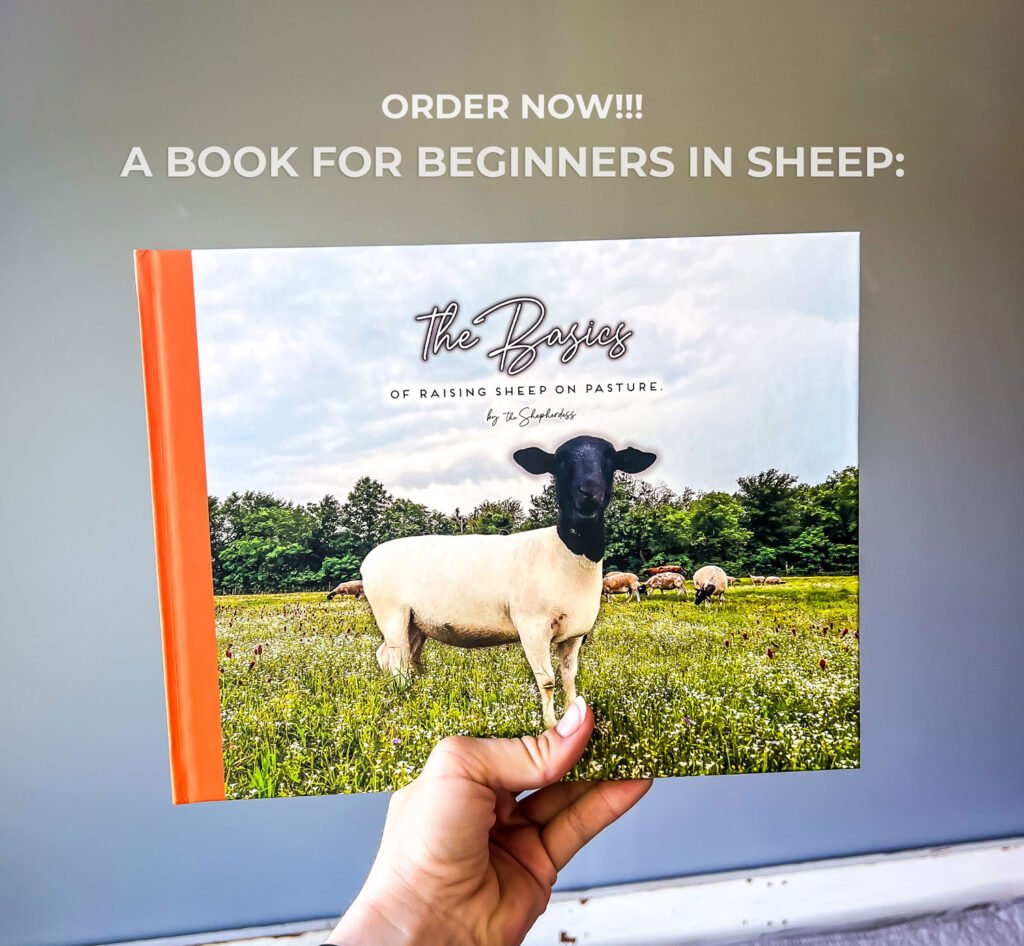
If you’re a beginner shepherd on 30 acres or less, then I wrote a book for you: The Basics of Raising Sheep on Pasture. Available at Shepherdess.com with free shipping. Raising sheep on pasture requires a basic understanding of pasture management, breeding and lambing, and mitigation methods for common disease. I walk the beginner shepherd through each aspect, sharing through this book vivid pictures, easy-to-follow instructions, and personalized stories from my own journey with sheep. Available with free shipping at Shepherdess.com. You’ll find a direct link in the description.
Rotational grazing to improve pasture and reduce costs
Section number two is grazing sheep to minimize feed costs and maximize flock health. Now I’m gonna give you an overview of my rotational grazing system for sheep, which was just the major breakthrough for flock health. Like I’ve mentioned already, when I started rotational grazing sheep, we stopped losing those animals in mass almost overnight. I was moving those sheep to fresh pasture daily, and they were no longer, plain and simple, grazing over their manure day in and day out. The bacteria-related diseases and infections—things like hoof rot, mastitis, things that are a result of just returning to the same loafing spots at all times—those things became almost non-issues because the flock was no longer returning to the dirty sleeping area every night. They were constantly on fresh pasture rather than laying on a buildup of manure. Something else I want to note is that I do not do any fancy or broad-based pasture plantings at all. What you see here is really what grows on its own, and my pasture really just keeps getting better and better year after year with good grazing management. Now, a caveat here is that occasionally I’ll use a bag seeder and I’ll sow maybe an acre or two of ryegrass and crimson clover, but not even that is super regular. It’s just an option when I want to.
Now my grazing system has two added benefits in addition to the flock health and land health. Number one is it really minimizes the feed costs, okay? I do not pour a ton of feed into my sheep. I overwinter, and if I’m really, really wise with my pasture, I only have to feed for maybe six or eight weeks of winter. Also, number two is that I actually spend less time caring for my sheep overall, which sounds crazy because I’m always moving them, but as a result of the improved health, I’m not treating a whole bunch of sick sheep all the time. So what you’re looking at here is the fact that when you rotational graze and you pressure the sheep into a small spot, they are forced to basically clean their plate. Not only is more grass growing on my land because of all the benefits of the spread of manure, but my sheep are confined and forced to eat all of the pasture, not just their favorite parts. So, instead of eating maybe 70% of the pasture in some sort of, you know, free-grazing situation where there’s no confinement, no pressuring them, they’re eating like 95% of pasture because I’m forcing them to clean their plate, and not just letting them eat their favorite part.
Now, both of these factors, again, less feed inputs in my system and more dollars in my pocket overall at the end of the day. Now, the best way I think to explain my grazing system to you guys is to answer some frequently asked questions about it. And the number one question I get is, “How frequently do you rotate your sheep to a new paddock?” I aim for a minimum of two times per week on average, meaning in the spring and summer, I’ll try to move daily or every 48 hours, and during the winter when the pasture is dormant, I’ll maybe move every 10 days. But I try to make it an average of twice per week. Question number two that comes through quite frequently is, “How long does a paddock rest before returning to graze it again?” So again, this is a general average but you want to aim for 45 days. During droughts, I obviously need to provide more rest. During seasons when we get two to three inches of rain per week, pasture recovers faster, and I can graze it before that 45 days mark. But as a general average, letting something rest for 45 days before returning to it is the goal.
What electric fence charger do you use? I use a 12-joule Cyclops fence charger as my permanent unit for this 30 acres. And it really packs the punch that you need to keep sheep in line. As a backup, I keep a Gallagher 4-joule solar charger. This is for areas of the property maybe my electric fencing doesn’t quite reach yet, or maybe my electrical fencing is down because a tree fell on it—like it is right now—and I have to pull out the solar charger for just temporary until I can get to sawing down that tree and freeing up my fence again. But this is a great little backup unit. It’s pretty expensive, but it’s lasted me a really long time. Okay, so what fence do you use to set up your temporary grazing paddocks? And I use a poly tape. Now, we started out with polywire, but I did switch to this tape because poly tape has five times the visibility of polywire. And I did this because we had a failed rotational grazing attempt with the polywire. They just pretended like they didn’t see it. So I gave them the benefit of the doubt, pretending they didn’t see it, upgraded to poly tape, and it works great. I use two strands placed at 6 inches and 24 inches above the ground, roughly. It’s essentially too short for them to sneak under, too high for them to jump over. That’s kind of what I think when I’m setting it visually, I’m like, “Okay, does that look about too high to them to jump over? Too short to sneak under?” And that’s my 6 inches and my 24 inches.
A question I get a lot is: What is your perimeter fence made above? And the perimeter fence is a six by six woven wire. This is a lot of fencing, but here’s what it does: I sleep really well at night because it keeps predators out, keeps sheep in, and keeps neighbors happy. And for small acreage, I find that this is really, really important because if you kind of think about it—I think you maybe watch Greg Judy, he’s running on huge leases, single-strand polywire—and essentially if Greg Judy’s sheep jump his polywire, which I don’t think they ever do, I’m sure, but if they do, they have 100 acres before they’re bothering the highway, or they’re bothering a neighbor. Mine don’t. They’re gonna jump that wire and go straight into the neighbor’s yard or straight onto the highway. So this perimeter fencing for small acreage makes for good neighbors, happy neighbors, and I don’t have to buy liability insurance for the fact that my sheep are on the highway when they decide to be disrespectful of my fencing. Which I don’t even know that you could buy insurance on sheep like that, but anyhow.
All right, as a bonus point here, as we round out the grazing sheep portion, guys, I want to again encourage you to start small. I’ve worked over the course of the last five years, little by little, to really improve the efficiency and the quality of my grazing system, but I started really small, okay? I started with this tiny solar fence charger from, I think I found it in my parents’ garage. I started with some really cheap step-in posts from the hardware store and some plastic reels. I think they were actually for electrical cords, but I started, I think, for a little under $250. And if that’s all that you can afford right now, is a cheap setup to see if this works for you, works for your sheep, just get your sheep moving. Put in the sweat equity upfront, and when you get the cash, make incremental improvements to your equipment. Buy a new reel one season, get a better fencing the next season. But get your sheep rotating and grazing right because it is so worth getting started as fast as possible.
How to market sheep for premium prices
All right, marketing sheep for $480 each. Yes, I market and sell my sheep for $480 each. And I’m gonna start this section by addressing some of the common questions again, and then dive deeper into what it took to build this kind of a customer base. The question I get most frequently is, “Where do you sell your sheep?” And the answer is my email newsletter list, which I accumulate subscribers for that list through strategic use of social media. Question number two is, “What kind of sheep do you sell?” And the answer is Dorper sheep. Dorper Sheep are hair sheep raised for meat. I sell premium quality animals which are purchased as breeding stock, but the carcass is so good that they produce enough meat to be very highly marketable as pasture-raised lamb. Question number three is, “How much time do you spend marketing your farm?” Now this is gonna surprise you, but if you want to make profit on sheep, you need to know it right up front: I market on a 3-to-1 ratio, okay? That means every one hour that I spend raising sheep, I am marketing sheep for three hours. And yes, that is a lot of time, but it’s so worth it to be able to work from the peace and comfort of my own farm. I do not need to go to a farmers market to set up and sit there for hours on end. It’s just not my personality type to enjoy that kind of a setting. And as a sales venue, I can market from the peace and quiet of my own home and earn an income from my flock through my email list.
So with those three frequently asked questions answered for context, I’ll go ahead and give you the full story here. Also I want to give you a heads up that I sell all of my sheep, including my meat, through that email newsletter list using my website to accept payments, and to actually facilitate the sales process there. So in 2020, I’ll go ahead and with that context, I’ll give you the full story. In 2020, when I launched into farming, I wrote my business plan and I found that I would need to earn around $400 to $500 per lamb to meet my financial goals as a sheep farmer. But I knew two things really, really right up front: I knew that I will not earn $480 per sheep consistently at the sale barn unless we’re in a really good market. And I knew, that number two, as a solo farmer, I would not have the energy to set up at a farmer’s market every week because when I started farming, I was still working my full time job, growing my farm on the side. I didn’t want to add a farmer market to it.
So what I did very early on was I started my email newsletter list for my farm and I used social media like Instagram, Facebook groups, and YouTube to add subscribers to my list. I started building my list almost the moment I started farming, and what I would do through this list was I would send people updates and engaging pictures from my farm, and then when it was time to sell something, that was when I would put the buy button in there. I’d keep them engaged through engaging pictures, stories from my farm, and then, when it was time for them to buy, they were really, really warm and ready to buy. It took time. It took time to build this trust and this relationship, but that effort really, really paid off. Here’s a little bit of a timeline. In year number one, I sold my lambs through my newsletter and through Craigslist for around $225 to $300 each. Now keep in mind that even though I started right away, I didn’t have enough subscribers in my first year to sell all of my sheep through my email list. I diversified, used Craigslist for what was left over. So never be afraid that you’re starting too early when it comes to marketing because you can never start too early.
But in year number two, I had built some serious momentum through my email list and I sold my sheep for an average of $580 each. Value was brought up because I had some registered breeding stock in there. And year number three, I once again sold all of my sheep through my e-mail list at $420 to $480 each, and this time I sold all my lambs within four minutes of opening reservations. Same story with my meat—I’ll sell my meat boxes at about $210 per box. It’s a 10 pound box. This factors in shipping, and these are all, again, sold through that email list where people are watching these sheep grow and be raised in a really healthy, beautiful setting, and they’re like, “I want to eat that food because that is a healthy environment. I want that food.” So it all kind of comes together there.
Now, here are the numbers that you kind of want to aim for in terms of those meat sales that I just mentioned. You want to aim for 100 pounds live weight. 100 pounds means that your lambs will come back, about 50 to 55% of that, in meat and bones. So essentially, if you have 100 pound lamb… I just took a bunch of 95 pound lambs, for example, up to the butcher, and they came back with about 40 pounds worth of marketable meat product. So your lamb share situation, you want to be charging about $240 per half lamb, or like I did, I just talked about my meat box situation—I did about $210 for a 10-pound box of a variety of cuts. It’s easier to market them that way because people are a lot more familiar with just, “Hey this is a 10 pound box of premium cuts. Here’s what you’re going to get: neck roast, lamb leg, shoulder roast, et cetera,” and they’re a lot more willing to pay for something that they understand than they are for maybe a half of a share, et cetera. It takes more education, if that makes sense. I go a little bit more into it in the marketing, but I wanted to give you that little primer here.
Now before jumping into lamb for meat sales, I personally did some local market research to see if my competitors were able to get the prices that I knew that I needed. And to do this I went to local farmers markets. And I did this before I started building my email list because I wanted to make sure that in the worst case scenario, I could go local and get the prices that I needed. And so I found at my farmer’s market that ground lamb was going for $13 a pound and fancier cuts for upwards of $25 and $26. So I knew that my local markets could sustain the prices I needed. So if you’re sitting there and you’re like, I don’t know if my local market will support that, do your market research. Make sure you follow up on those hiccups in your, basically, business plan, before you jump in. But know your numbers. Know that you need a sheep that’ll produce—that’ll grow to 100 pounds before it hits 12 months, that comes back as a 50% carcass yield from the butcher, and then go from there. And do remember that if you have a good quality sheep, selling both meat and breeding stock is an option. More than likely, you start that email list, you’re gonna have a waitlist for the females, and you’re going to be able to sell the males as meat. It’s a real two-edged sword in terms of raising sheep.
But I want you to picture this, okay? Set yourself here: 3 years from now, you’re looking out over your 5, 10, maybe 20-plus acres and your flock is grazing across a green pasture and you know that you can take care of these sheep. You know that your grazing system is improving your land. You now have an abundance of nutrient-dense meat in your freezer to feed your family or to market as a premium product. You have marketing streams that you can move this product through and healthy food to feed your family. This is exactly how I feel when I look at my flock and I want the same for you.
Common beginner questions about raising sheep
All right, here are the questions. Brett says, “I’m amazed at how you worked to get those prices for your lamb.” The neat thing is that the MAHA movement is kind of doing a lot of the work for us now. It’s never been a better time than now to get in the market with your pasture-raised product. Because now more than ever, politics are promoting healthy food. RFK Jr. has become a great marketing asset for us. So it is a good time to market to the MAHA movement.
Jose said, “How do you avoid inbreeding in your sheep?” And that is just to rotate out fresh genetics in terms of a ram. I will breed father to daughter for two generations. Stop it there, get a new ram, or get rid of all of the ewe lambs that he has fathered beyond those two generations. Margaret says, “Do you have your sheep processed in a processing facility?” Yes, Margaret, I do. I have a local U.S. Inspected processing facility. BJ said, “Full-time farmer retired with 88 acres looking to get 10 sheep, 10 goats for tree clearing and two calves. Can I run them all together daily rotation in between clean pastures?” Yes. They will run together just fine. The only thing is that I have goats as well, and I have struggles with containment on my goats that I don’t have with sheep. And my goats basically need that Premier1 electric netting to stay in the fence. David said, “Number of sheep per acre?” David, it just depends on what your rainfall is. I’m gonna tell you here at 45 inches per year, 100% grass-fed, no fancy pasture plantings, just letting them eat whatever is native, three sheep per acre is about maximum. And that kind of includes the lambs that they’ll produce as well. So it includes the swell.
Jason says, “How many sheep per acre is ideal?” Again, Jason, kind of use those numbers I just mentioned. Again, when people ask me this question, my answer is always start small because sheep will reproduce and you can save all of the replacements a lot more easily than you can de-stock, or find that you need to de-stock. If you bought too many. So just start small. Start with one sheep per acre. If you have a good source for sheep and you’re finding you have just too much grass, increase your stocking rate. It’s easy enough to do, but don’t overthink it. But do start small, Bill says, “What do you use for predator protection?” Bill, I pretty exclusively rely on my fencing right now. I just lost another dog. Pyrenees are wanderers. And can anybody attest to that? Yes or no? And we just live a little bit too close to a lot of traffic. And unfortunately we’ve lost about four dogs to that traffic. I tried to tether them, tried to pen them, tried to kennel them, cannot keep them away from that traffic, and I don’t want to commit to another dog without having some electric shock collar in place to keep them off the highway. So basically the woven wire fencing.
Kay says, “Wow, I’ve learned so much and I have a profound respect for you. I also feel like it’s time to accept that I am too old for this. I can’t eat them, but I feel like I would be a wonderful lamb grandmother.” Thank you so much for being here, Kay. Maybe you have a child who will take up the mantle for you. Teresa says, “If you don’t want to package and market the meat, how do you sell the whole lambs through your newsletter?” Teresa, it’s really easy through the website that I built. I will say I have breeding stock available, or I have half a lamb share. And through that website, that e-commerce website, I can control pricing and just price a listing according to what I need for that half lamb share or that breeding stock. But that’s how I do it. And it’s how I’ve done it since the beginning. I will tell people exactly what I have available through my newsletter, and then I funnel them to my website to accept payments. So it’s like having employees work for me 24/7. Sells product while I sleep. I mean, it sounds too good to be true, but that’s what happens when you have your systems in place, your digital systems in place. And that’s really what I go in depth on in the masterclass. I think it’s about 11 hours. I think the marketing is about 11 hours of training in there.
All right, question here: “Interested in your ability to prevent herd resistance to tick-borne disease and worms; also interested in the best grass seed to use. We’re in a hot, wet summer now, but my concern is maintaining pasture in winter with temps that go below 23 degrees Fahrenheit.” Okay, good question here, Brett. I’m gonna answer it in the parts that it is. So, tick-borne diseases and worms. Sidectin is really, really effective for the external parasites. Thankfully, I don’t have ticks on my sheep. I haven’t found ticks on sheep, even though I do live in Northeast Texas where ticks are really bad. Sidectin is a good solution for the external parasites. The best grass seed to use. I would go to White Clover Sheep Farm. I don’t know exactly where you are, Brett, but it sounds like with temps that go below 23 degrees Fahrenheit, you’re probably in a little bit more of a cooler climate. Ulf Kinslow at White Clovers Sheep Farm has a lot of good articles as to what he plants for his pasture. I would with his information because as I mentioned earlier, I primarily graze my sheep just on the native pasture. I will plant some red clover. I will hand broadcast some ryegrass every once in a while on a bald spot. But I just work with what grows naturally of its own and improves over time.
A question from James, wild James Almeida. He says, “When you pen your sheep, how long do you leave them there without grazing?” I’m gonna answer this question first. I, as a rule, do not pen my sheep. I leave them on pasture all night. I will pen them maybe if there’s a winter storm, freezing rain. Very, very rarely do I leave my sheep in a pen. So at the maximum, they’ll be left there for sleeping for eight hours. What is the length of my T-posts? And is it necessary for a wood post every couple of feet? This is a great question. I’m gonna try to answer this and try to remember it. I think we have our set at 10 to 15 feet between the metal T-posts. I don’t have any wooden posts. I’m going to say I have wooden posts maybe every 100 feet, but otherwise it’s just the corner braces that are wood. Question number three here is, “Contractors around my area claim they have experience in this. Maybe they do, but I doubt its rotational grazing. They recommend clearing the land with machinery and overseeding it to get it prepared for grazing, but that’s very costly.” That’s typically a recommendation that people will put forward for cattle because cattle are not naturally browsers. But if you have an area that has a lot of wooded area, a lot of brushy area, your sheep are gonna clear that. You just want to clear your land enough to get maybe a perimeter fence in there or some electric fencing in there. But I would avoid the costly land clearing process as a beginner. Try to see what you can get started with just your sheep.
Edmar says, “Have you ever heard about running chickens in the pasture so that they can eat the barber’s pole worm larva?” Edmar, this doesn’t work. Chickens will eat external parasites. So let me give a quick thing on this one: a lot of people hear Joel Salatin moving his chicken tractors behind the cows for parasite control. What Joel Salatin is talking about there is fly larva. You guys can visibly see fly larva in a cow pie. They’re little white worms. That’s what the chickens are eating out. But when it comes to barber’s pole worm, eggs or larva, chickens are not even gonna be able to get those if they could see them. And so the good thing that chickens will do is they’ll scratch apart the manure, but they don’t eat them, they don’t ingest them, and it doesn’t work quite as well as the cow pies and the fly larva that Joel Salatin is referring to there. Chickens also, when they scratch apart sheep manure… Sheep manure are like little balls. They’re not those big pies that stretch in all different directions. So that’s another factor. It’s just totally different species, so no, it doesn’t.
Kelly says, “Do you use the CDT vaccine?” Kelly, I gave up the vaccinations about three years ago just at my own risk. It’s been completely fine. CDT is still recommended for most sheep operations. It’s tetanus and overeaters disease. And I still think it’s a smart move for most people, in terms of the tetanus and overeaters disease, but I just chose to stop vaccinating about three years ago and have not lost a sheep to either issue since then. Deidre said, “Should a newbie start with ewes and lambs without rams? Will a ram get lonely when he is alone?” Good question. If you can find some ewes with young lambs to buy, I think that would be a great buying option. But there’s really no advantage to buying eyes without rams, with or without rams. Other than that, you can keep them from breeding until you really want them to. Will rams get lonely when they have just one? Yes. I’ll always keep him with a wether, which is a castrated male. So yes, you want to keep them with a companion. So I just do a castrated male.
Andres says, “How do you work the butchering process?” Andres, when you’re selling the meat direct to consumer, you do have to have it U.S. Inspected. And when you sell the lambs as halves prior to them being butchered, then you can do any kind of processor that you want, because technically the lamb belongs to the new owner, and as a result, they don’t have to have the U. S. Inspection. So you basically sell the lamb—it’s called on the hoof—and sell it prior to being butchered and you have a lot more flexibility in terms of your processing. Kelly says, “If you ever need to overseed, what would you do?” Good question, Kelly. I actually cover this in my book, The Basics of Raising Sheep on Pasture. And I talk about improving pasture quality without heavy equipment or machinery. And I go through the three things that I actually seeded on my pasture with success. Some of them required more impact than others. But essentially in this book, I walk through everything I was able to plant by hand with success, and it was only three things: it was the ryegrass and crimson clover, and then I had an oak grass that I had a little bit of success from. But the only reason I had success with this was because I had a small beef herd that was able to create some impact to get those into the ground as deep as a… typically they have like a seed drill or something to plant those oak grass, but those are the three things. And the book talks about the really specific animal impact that I had in those contexts to get it to come out, but ryegrass, red clover, and oak grass in very, very special circumstances.
Dom says, “How do you keep predators out?” My fencing does a really good job of keeping predators out. I still have to be really careful not to put my sheep in the woods basically, especially when they’re young lambs, but I have that six inch woven wire fencing and it does a great job of protecting my property from predators. Elena says, “What is your take on raising Icelandic sheep for the multi-purpose ability?” It’s a great homesteading sheep, but whenever you have a multi-purpose sheep, you’re going to notice lower performance in all of their purposes, I guess you could say. So for example, if you have a sheep that was specifically bred to be an amazing meat sheep, like a Dorper, you’re gonna get a lot of meat off of those sheep. When you have sheep that’s bred to an amazing dairy sheep, like a Nawasi or a Finnsheep, things like that, they’re gonna make a lot of great milk. When you have a multi-purpose sheep like the Icelandics, they’re just gonna make a moderate amount of wool, a moderate amount of meat, and a moderate amount of milk. And when you get a multi-purpose sheep, that’s honestly what you want, is just moderate in all of those things. That said, if I was just exclusively doing something for homesteading, I would be less adamant on, “I’ve got to get a carcass to 100 pounds by six and a half months,” and I would be more open to the multi-purposed animals. But because I want a marketable sheep and I’m marketing meat primarily, I focus on the high yielding carcass and I focus on the specific meat breeds. So I hope that made sense.
Oscar asks, “How do you deal with ticks?” Sidectin is good for external parasites. I don’t apply anything externally. Sidectine handles it for me, but I don’t have a lot of ticks, thankfully. That may be one thing that the chickens help with. My sister has chickens all over this place. I was like, “How many chickens do you have?” And she’s like, “Well, anywhere between 200 and 800.” That’s a joke, but anyways. The chickens will eat ticks. And so we don’t have any ticks. Maybe that’s why. Dan Smith says, “The lye seemed effective for you. Why not use it as a regular wormer?” Dan, this is a really good question. The lye is still really new. I just had my first successful case study with it on the goats last September. And so as a result of it just being new, I don’t have enough data to back it as a broad spectrum treatment for my flock. That said, I have applied it twice to my flock—great results—and it basically knocked out one of my quarterly dewormings. So I’m using it as a way to just wean off, but I’m not going to use it as a cold turkey. That’s kind of how I do anything in terms of a new protocol on my farm. And so it’s currently a wean-off rather than a cold turkey situation because I have a lot more sheep than goats. I have like four goats and a lot more sheep than that. And so making sure that everybody gets an equal amount of feed with the lye on it and so forth is a lot more tricky for my flock. So, a lot of different factors there that are keeping me from going 100% lye.
Veronica says, “How do I go about raising sheep when I’m surrounded by heavy brush and thorns? Any starting points?” Veronica, this is a situation where I would just get a good quality mower, whether you have to rent it or not, to just get that initial path for your electric fencing or path for your perimeter fencing cleared. I wouldn’t go full on land clearing, but if I just had an impossible acreage full of brush, I would use some sort of equipment, whether a… I don’t know. Leave in the comments, guys. There are probably some guys in here that would know how to clear brush or what kind of equipment would be necessary to clear the brush that Veronica is talking about, but I would rent that equipment and at least get a path cleared for my initial parameter fencing. “Have you explored adding guinea fowl, chicken, quail, or ducks to deal with the parasites?” I think I tackled that question. The chickens are really good for like the black fly larva and the ticks, and we have a ton of those, and we don’t have any ticks. So that’s kind of where it’s at. But I guess if anybody’s wondering, we have a lot of chickens on this place, but I still have to be careful about the barber’s pole worm. So if your question is regarding, “Do chickens help with the barber pole worm?” the answer is not really. Not really for sheep in the nature of their manure.
All right, so Marie says, “How do you provide shade and rain protection in a smaller paddock for say three sheep?” Good question, Marie. I actually have a shade structure for sheep and goats. Just go to YouTube and type in portable shade structure for sheep. You’re gonna find that; that’s what I use for three sheep. My mom invented it. It’s kind of an amazing little pop-up situation that I’ll drag around, or I did drag around when my flock was much smaller. Now my flock is larger to where I can make the paddocks larger and incorporate a tree at all times. When it comes to rain, if it’s raining and 70 degrees, I don’t necessarily worry about them having protection from rain. It’s just like a warm shower. So I’m like, “Hey, I like a warm shower of 70 degrees.” So I don’t necessarily worry about the rain protection when it’s 70 or 80 degrees outside, but when it is freezing rain, I have to get them under cover. I don’t want my sheep in freezing and wet conditions. So that helps. Make sure there’s a tree if it’s freezing rain.
Okay. Veronica says, “How do I treat PEM?” And I do not have any data or information for you on PEM or polioencephalomalacia. No, I don’t have any information for you on that, I’m sorry. Jason says, “Is there any known natural repellent for the barber’s pole worm?” Jason, again, the lye: there have been people who have claimed—this is just allegedly—they have mixed lye and water in one of those weed sprayers or crop sprayers and sprayed it over a one- or two-acre paddock, and then put their sheep into that paddock to graze. I don’t think it kills the barber’s pole worm on the grass, but that water and lye solution sprayed on the grass enables the sheep to graze it and get it inside of themselves, and these sheep farmers allege that it deworms their sheep through the grazing process. So, something to look into. I have not tried that yet. Tammy says, “How much land is needed per sheep?” About a third of an acre per sheep where I’m at. Again, it’s gonna depend on your rainfall. I have pretty high rainfall. A quarter to a third of an acre per sheep is sufficient.
Tammy says, “Thoughts on lespedeza pellets for deworming?” Tammy, I had not done the fecal egg counts on those, but I have bought some lespedeza pellets for my goats. Unfortunately, I just didn’t do the research for that to get you the numbers like I can for the lye, but I do hear it’s effective. I just haven’t heard the numbers in the drop in egg count, so I can give it to you firsthand. “What if I do not have enough land to let one paddock recover for 45 days? Any suggestions?” Ace, I would just designate what would be a hay lot. And if your land is not getting enough recovery, just put those sheep on a hay lot and feed them until your pasture can recover. I don’t know that this is necessarily best practice, but this is what you can do should you want to carry more sheep than your land can naturally support. Not something I necessarily recommend, but it is an option if you choose to use your free will and raise as many sheep as you desire, even though you may only have like two acres and you want to raise 20 sheep. That’s what you’re going to have to do. That’s an option, not a suggestion.
Veronica says, “How do you deal with smart sheep that don’t care about electric fencing, and how do you train them?” Ooh, this is good. Okay, you want to make sure of three things: Number one, make sure that your fence charger is hot enough. Okay, I referenced that 0.22 joule solar charger at the start of my journey. Pretty quickly my sheep got real smart—that was just gonna be a little flick on the nose and then they could run to whatever pasture area they wanted. So I had to update to that 12 joule fence charger. And, you know, it was like the difference between a little flick on the nose, and basically a nine millimeter in the nose. And that taught them to not be so smart. So that fence charger is going to be your best way to keep your sheep in. There’s always gonna be that one, and if you’ve done all of your diligence and there’s still that one that is disrespectful, I would get rid of her. It doesn’t sound nice, and it’s my last resort—I make sure that all my ducks are in a row and that my chargers are strong enough—but I’ve had a couple where it’s just like, I hear one out and I know which one it is. And I’m like, if it gets to be where I know which one is, I’m going to not deal with her leading the flock astray. So she does not get to be a part of the group.
Natasha says, “What are your thoughts on marketing sheep milk? Is it more in demand and premium pricing than goat’s milk?” It’s going to be really dependent on your area. And what I found with sheep milk is that it takes a little bit more consumer education than goat’s milk or cow’s milk. It’s naturally in less demand because people just are not aware that it is a thing. Sheep milk is more of a novelty. Now that said, sheep milk has so many nutritional advantages that if you’re good with consumer education, you can tell people, “Hey, this is like two to three times more protein per cup than cow’s milk. This has got two times more healthy fats in it than goat’s milk.” Things like that. I’m not giving you specific numbers, but there are serious advantages that if you can learn how to market it, you could really get a premium pricing. More premium than goat milk? I don’t know. More premium than cow milk? Probably not. People are more accustomed to drinking cow’s milk. But that’s my thoughts on marketing sheep milk. Know your advantages, know the nutritional analysis, and really go hardcore on marketing and promoting the nutritional analyses, the increase in protein content, healthy fats, because I know those are the two advantages of sheep milk, and then build your audience off of that.
Andre says, “Maremmas are not wandering dogs.” Good. Patrick says, “Are there weeds or vegetation that is harmful?” Patrick, so far I have not had… There are a couple of weeds at my place—I’d say the nightshade is harmful, and the goatweed in large quantities is harmful. All that said, I’ve seen my sheep nibbling on small quantities, and nothing’s died. If you are at a place where sheep have enough to eat otherwise and they’re not starving to death with only nightshade to eat or only goatweed to eat, then most likely they’re going to understand the toxic nature of those plants, and they’re gonna avoid them naturally. Shiv says, “What do you do about dog poop in sheep pastures?” Try to avoid stepping on it. I’m sorry if I misunderstood your question, Shiv, but that’s what I do about dog poop and the sheep’s pasture. Dom says, “Can I combine grazing and hay rotational?” Yes, you can supplement your pasture by putting out hay. A lot of people do that. Eric says, “Have you thought about a donkey for predator protection?” No, I had a really good counsel from a longtime shepherd up front early on in my journey, and he said, “You need to fight predators with predators.” If you choose something or an animal for predator defense, you need to fight predators with predators. He said, “I started out with a donkey, moved to livestock guardian dogs because my donkey got really lazy. He was good for maybe a year, and then started losing lambs left and right.” What stuck with me was you have to fight predators with predators, and should I seek an animal for predator protection, I’m gonna go for a dog.
All right, Amber says, “New sheep with a small herd. How can I tell if my ewe is pregnant?” Typically they don’t display signs until the very last 30 days. And in the last 30 of gestation, their udders will develop, drop, and look full enough to feed a lamb. Their backside will also start to protrude. Again, I get kind of visual with it in The Basics of Raising Sheep on Pasture, as well as in the master class on what signs to look for in pre-lambing. Essentially you want to look at their backsides, you want to look at their udders, and those are the ways that you can really tell that a lamb is coming within just a matter of days about the way that those areas are developing. Anything before 30 days pre-lambing, you just need to do a blood test or just keep track of when you added that ram, and just figure that unless she’s an infertile ewe that she bred within the first 17 to 34 days of having that ram in, and bank on lambs accordingly. Rich says, “We use burrows for protection. Any thoughts?” Rich, I say if it works for you, that is really good, but I kind of just go back to what that shepherd told me, that veteran shepherd, that is just “Fight predators with predators whenever possible.”
JP says, “So do you sell lamb shares, and what percentage?” No, JP, I don’t sell lamb shares. I either sell those meat boxes, which is 10 pounds of premium cuts, or I will sell breeding stock. So the premium cuts are super easy to sell because I can be like, “Hey, you’re gonna get lamb chops, you’re gonna get lamb leg, you’re going to get…” And I can explain to people cuts that they already know versus, “You’re gonna get a lamb share,” and they’re like, “Well, what’s that?” And I have to walk through, through, though. But if I can tell them they’re gonna get 10 pounds of premium cuts, it’s a lot easier to sell at a premium price. It’s just a marketing thing. Veronica says, “Any other fencing suggestions for rotational grazing?” Pretty much what I just mentioned here, just that poly tape, high power charger, and then I cover a lot of the setup in the grazing sheep portion of the master class, which is that eight videos that goes into how I set up my watering system, and all of my electric fencing. If you have a specific question, Veronica, I definitely will answer that, but those are my suggestions.
Leaf says, “What do you recommend for the pasture when the cold winter and pasture is dormant?” So Leaf, I’ll put a video up on my Facebook tonight or social media—Instagram or Facebook. Right now my pasture will be ready to graze in about three or four weeks, but I have my sheep on what I call my spring lot or my spring waiting lot. And it is a pretty good sized paddock, and it’s netted off with electric netting so they can’t jump to the pasture—it’s trying to prep for spring grazing—and I’ll feed them their hay on this paddock. I like to position this paddock in maybe a more depleted area of the pasture so that all the hay that I’m feeding during that extended period of time is going to improve the pasture, but that is what I call it. And they’ll stay here… I mentioned rotating them. They’ll stay in this spring prep lot for about two to three weeks. It’s kind of when I come to the end of my stockpile, and I’m giving every part of my pasture time to get ready for spring. That’s where it’ll be. And just check Facebook tonight, and I’ll try to post that right when I get off here to give you guys a good idea of what I mean by that.
Justin says, “Do you ever run your goat bucks with the rams? Do they get along?” Yeah, they do. My goat bucks have always been a lot smaller than my rams, so my rams assert their dominance, make them know they’re boss, and they get along just fine. So yeah, if you didn’t have a wether, you could put those guys together for company. “How do dogs escape the pasture?” They’ll crawl under, dig under, and find holes. I wish I could say how I knew those other three… They kind of just slipped out the front gate too. Those were how the other three found a way. Yeah, they did. Oh, the electric fencing. So with the Pyrenees that I had, the electric fencing, he just was smart enough to know how to get through it, and so just jumped through it. Veronica says, “How do I keep my sheep from suffering heat stroke in 120 degree summers?” Lots of shade, and lots of fresh water. Dom says, “Can I combine hay and rotational grazing? Yes, I think you already asked that, but yes, you can supplement your grazing with hay to extend the rest period, and get more out of your spatial situation. Again, it’s not a suggestion that you load your land down with more animals that it can naturally support. You’re going to run into a lot more health problems that way. But if you want to, again, just use your free will as a citizen of the United States of America, and you want to put 20 sheep on 2 acres, do that. But yes, you will have to buy in a lot more hay supplements, and a lot of feed supplements.
Jim says, “How do we contact you if we have more questions?” Jim, these live streams are the best ways to get your questions answered fast. I do answer questions at Sheperdess.com. It’s just the volume coming through there makes me a little bit slower to answer, but I do try to answer people as I can. Patrick, harmful plants, already addressed that. Margaret Johnson says, “Does your sister still keep chickens?” And the answer is yes. She has social media at Harmony Farms Chickens on Instagram. Veronica says, “When should you change rams?” I change rams when I want to keep the third generation. So I’ll breed a ram to his daughters and his granddaughters, but not that third generation, I’ll sell it. And that’s when I’ll change my rams is when I want to keep the ewes from that third generation. Dom says, “Do you recommend commercial ewes and a full-blood ram?” Dom, that’s what I have, and I love the product because it sells really well as breeding stock. Super, super fancy, and beautiful lambs that are still so productive with that commercial element in them. The commercial ewes have been cold. They are not kept and pampered because of papers, and that full-blood ram does have some really good bloodlines in him. I know a lot about him. So that’s what I do. But mostly I’m looking for performance over papers, but that just happens to be my setup.
“Do chiggers affect your sheep?” I don’t think so. They do scratch themselves sometimes, but they’ve never told me it’s chiggers. JP says, “Do you measure your sheep’s worm load?” JP, only through those visual indicators: things like if I’m seeing sluggish, bottle jaw, things that visually tell me the anemic (eyelids). Those are the only ways that I measure my sheep’s worm load. I don’t run fecals just because visually, I can tell from like a mile off, “Okay, she’s got worms and I need to figure out what’s going on?” “Can you eat a sheep that has had medication?” Bill, every medication will have on the back of the package a withdrawal period. You want to pay attention to that withdrawal period. Something like this Levamed will have what’s called a residue warning, and you want to make sure that you obey that residue warning. So this one says, “Do not administer to cattle within 48 hours of slaughter for food. Do not administer the sheep within 72 hours of slaughter for food.” Pay attention to those residue warnings on whatever you administer for your sheep, and the package will guide you. Justin says, “Can you test your pasture for barber’s pole worm?” Never found a way to do that, no. James says, “Forestry mulcher potentially if you have super, super bad pastures, and need to mow a fence line.”.
All right, guys, gonna make sure I try to get to all your questions, and get them all answered. David said, “Are you still farming 30 acres? If so, how many sheep are you running into that rotation?” I max out at about three sheep per acre. That’s kind of where my maximum threshold is if I don’t want to buy a ton of inputs, and if I really want to economically manage my resources. David said, “Skid steers with a chipper and grinder for clearing out your brushy pasture, and getting your fence line perimeter ready.” Justin has a good question here: he said, “I thought you said earlier in the presentation that you said to keep the sheep off the pasture at night, and then you said you leave them on the pasture night?” Justin, I aim to never take my sheep off of the pasture. That said, in times of inclement weather, they’ll go to the pen for safety and protection against freezing rain, snow, and ice. Those are the exceptions where I’ll put them in the pen. If I’m having a really rough time in terms of… Let’s just say this winter is a time in which I made an exception to the no pen rule. I had them grazing in an area where predators were bad. I lost two sheep in one month because there was some compromised fencing and predators were just sneaking in and getting them. In that pasture, while they were grazing that pasture, I would walk them to the pen after they were done grazing for the day, because I didn’t want to leave them overnight until I could get that area of compromise fixed. That’s the exception. Otherwise I aim for 24/7, 365, with the weather and predator exceptions when I have to.
Yes, Andres, thank you for clarifying that. I think that’s what Justin picked up on. I said, “Don’t let them graze when they’re penned.” Yeah, yeah, that’s really good. Just make sure your pen is a dry lot. Judy says, “What is the industry average of sheep deaths?” At lambing, it’s 15%. Dom says, “What does the average processor charge for sheep?” Mine is at $125 per head. Dom says, “What is a fair price for ewes these days?” I use the San Angelo sheep market report for a commodity commercial pricing on current pricing. So that is what I do. Deidre says, “Do you have equipment to weigh your sheep or do you use a visual?” Deidre, I have a really nice scale from Lakeland Farm and Ranch Direct and that weighs my sheep for me. That scale’s really important being that I do process a lot of my lambs for meat, and I need to know they’re ready, and that I’m getting a good carcass yield, and so weighing them prior to processing is an important thing for me. Teresa says, “How do you keep your sheep from getting fat on pasture only?” All mine are chunky. I just let them get fat. Kind of like running in a pasture-based system, they’ll use that extra reserve in the winter when the pasture is just a little more lean, and I just let them fatten up, and then it’s just prep for the lean months. So condition them well when you can, and then it’ll give them a little something to live on when the pasture goes dormant, and they’re eating crispy brown grass for a month or so.
Deborah says, “How long do you keep breeding your ewes?” Deborah, I noticed they start slowing down at about six, seven years old. Some of my really good ewes will go up to nine years, and what I mean by slowing down is I just mean that sometimes they have a harder time keeping weight on at seven years old. Sometimes they’ll have a harder time with being infected with mastitis, or little things that’ll just impact them more in their older age than their younger age. But my best ewes, I will just keep until their natural death. I’ll just take a little bit extra good care of them at the end. I want to keep them in my system as long as I can—the really good ones. But about six years, seven years is when they just start to slow down a little bit. Shiv says, “Dog feces contain Neospora caninum, which can cause abortions and reproductive issues in sheep.” Okay, Shiv, that’s good clarification there. My sister currently has a border collie, but other than that, we don’t have a dog in the pasture, and I’ve never experienced problems due to dog feces infecting my sheep, mostly just cat. I’ve had the toxoplasmosis once or twice in my flock.
Okay. Andre says, “If I sell on the hoof, is that directly to the customer or to the butcher?” To the customer. It takes a little more consumer education, but on the hook would be to the customer. So essentially you sell the customer a live animal, promoting that they could take that live animal to the butcher. A lot of people will do that for the customer, but essentially you’re selling your animal alive in order to circumvent the difficult processing red tape that exists. I don’t like it, but that’s a way of circumventing the need for a US inspected processor. Ethan asks, “Would ants irritate my sheep? They seem agitated by something, and I can’t figure it out. What’s bothering them?” Yeah, I’ve noticed my sheep get into an ant pile every once in a while, and it does cause irritation. Veronica says, “How much is a breeding ram from you?” Anywhere from $500 to $700 right now. Rich says, “A good cookbook for lamb?” Rich, I have a free cookbook called Five Ways to eat lamb, and that’s available through my YouTube video called Five Ways That I Eat Lamb. That’s my free cookbook. I’ve never purchased a lamb cookbook, but maybe if there’s somebody watching or listening that could drop it in the comments before we leave tonight, do leave the lamb cook book in the comments.
Andres says, “Question: working a full-time job, would you recommend getting USDA certified, or paying for a processor?” I don’t fully understand this question, Andres. I think you’re maybe talking about processing options. When you process, you have USDA-inspected processors and you have what’s called custom processors, which are not USDA-inspected, but any meat that you take through a custom processor, you can’t sell to the public. You just have to eat it yourself. But you want to have a USDA processor for meat sold to the public. So I hope that helps. Didn’t fully understand your question. All right. Okay. Dom says, “When are you gonna sell some of your lambs this year?” Be watching the email list, probably will be around September. In terms of the breeding stock, I save back a few ewes, and I sell them as bred ewes. And I get a little bit of a better price for that because people sometimes get a three in one, and they’ll pay a little more for a bred ewe. So I’ll keep my lambs, I’ll grow them out until September, and then I’ll breed ewes, and sell them bred. I sold some bred ewes last year, and it’s so fun to get messages from customers. One sent me one just a couple of weeks ago. And he said, “I just got twin ewe lambs out of this ewe that I bought from you last year.” He said basically three for his money. So I like selling my breeding stock like that because it gives people a really good head start, and more for their money, and a little bit higher price for me on the breeding stock. So watch the email list for that if you’re interested in that.
Bob says, “Do you shear? If so, how did you learn?” Bob, I watched like a million shearing videos on YouTube, and then I just bought myself a set of Premier1 4,000S shearing machines. Now, I don’t have but one or two that keep so much of their fuzz that it needs to be sheared, but I just kinda like it, and I like giving haircuts. So at the beginning of every year, I’ll just shear whoever needs to be. And it was pretty messy at first. It was like a wrestling match at first, and I’m still slow, but I just watched like a million videos, and bought a good pair of shears from Premier1 and I just have fun with it now. Again, one of the things that I did for my flock—and I’ll close it out here, I’ve got two more questions, and I’ll close it out—but quick story time. I bought a ram that really bred all of the fuzz out of my flock. When I first bought my Dorpers, there were so many fuzzy ones, my thought is that because they were commercial at some point in the bloodline, there was a Rambouillet, and so they had a lot of that fuzz on their back. But I bought a slick shedding ram and just within a generation or two, most of the fuzz was bred out of my flock naturally. I’ll just give haircuts to a couple of them.
Ace says, “Is there a specific time that you sell your sheep?” I think I just answered that. I’ll sell them in September, typically. At least that’s what I’m going to plan on doing this year. Had a lot of ewe lambs born this year, but what I am going to do is what I just mentioned: I’m gonna save them back, I am gonna grow them out to a good size, and I’m gonna breed them so that I can sell like two-in-ones or three-in ones to people. So they’ll be bred animals. Jason says, “Can you recommend a breeder in Virginia?” Jason, I know where Upstate New York is in relation to Virginia. I don’t know how far of a drive it would be for you, but I recommend to people in that particular region if they’re looking for Dorpers, go to White Clover Sheep Farm in Upstate New York. Some of the best looking Dorpers that I’ve ever seen, and they’re regionally acclimated. They’re commercial, nothing registered, but he does a great job, and he’s pasture only. So it’s worth a drive, even if it’s six or eight hours from you, to go to Upstate New York, White Clover Sheep Farm, get some of his stock.
“Do you use some sort of chute to handle the sheep?” Deborah asks. Deborah, I had a Lakeland Farm and Ranch complete handling system. The interesting thing is—I’m getting ready to make a video about it—my sheep have become so docile, they will essentially stand… They’ll just walk up to me and stand for their drenches. Sounds weird, but it’s exactly what happened last time I worked them. They don’t have that flightiness that’s necessary to work them through a conventional handling system. So I’ll just put them in a tight square pen, walk from sheep to sheep, and drench them. It’s just a result of them being handled every day and rotational grazing. They know me, they’re calm around me, and I don’t need a chute or handling system any longer. That said, Lakeland Farm and Ranch has amazing sheep handling products, and would be where I would recommend going if you have sheep that are just flighty and difficult.
Deidre says, “I feel God has blessed you for being so faithful, honest, and generous with what you have learned. Thank you.” Thank you, Deidre. I really appreciate that. That’s encouraging. Okay, guys, I think that’s the end of the questions. All right, thank you guys. Thank you for sticking around, and feel free to join the other two live classes I have in the next week. Gonna be a repeat, but if you just want to rejoin and enjoy the company again, you are welcome to come to those other live classes. Appreciate you all. Have a good night. Thank you.
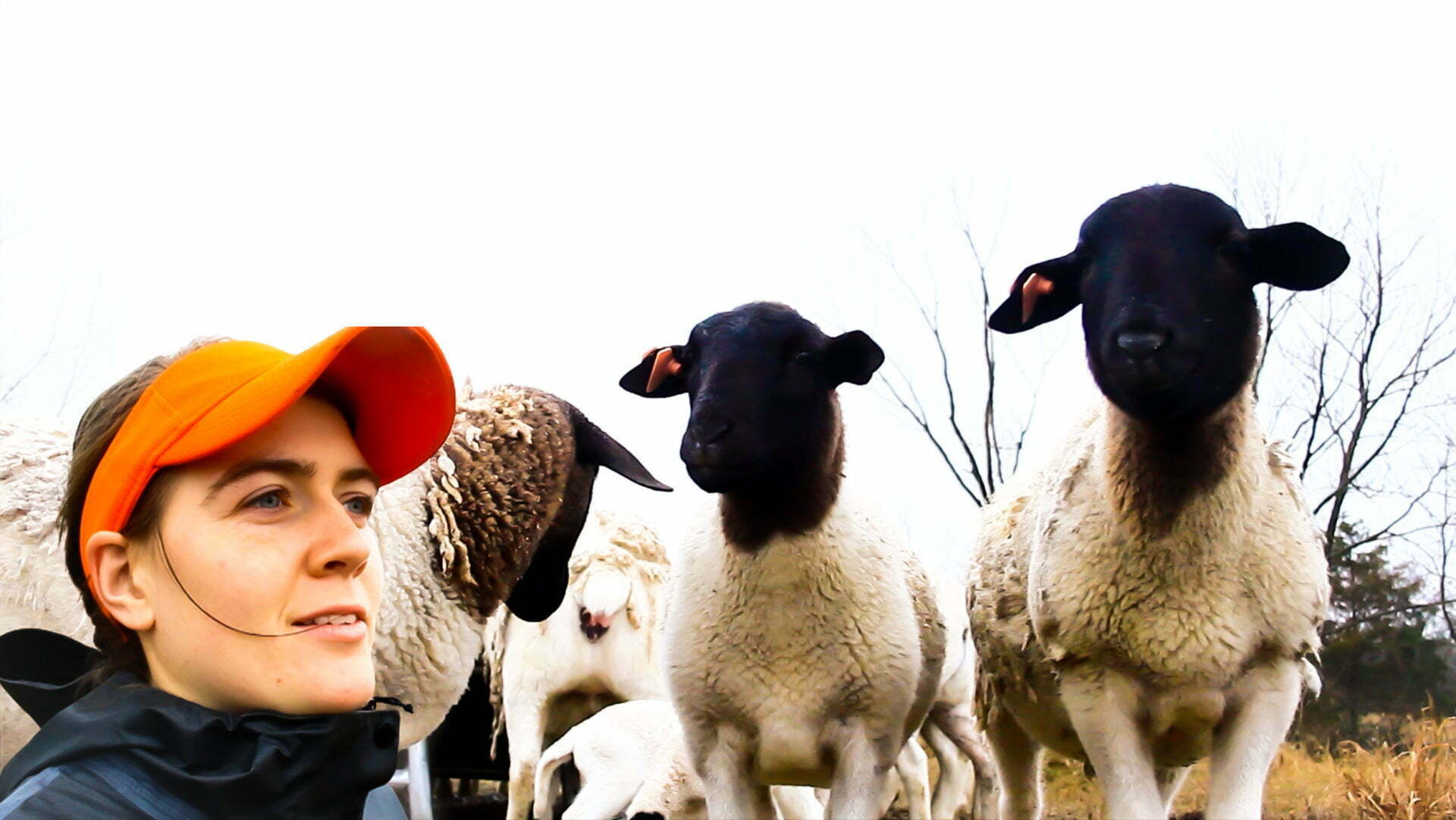
Leave a Reply