|
Hi Friends, Here is the replay from last night’s meetup, alongside a link to the special offer I provided for the extended training (available through Sept. 5th)! Email me with any questions :).
-the Shepherdess “So then neither is he that planteth any thing, neither he that watereth; but God that giveth the increase.” 1 Cor. 3:7 |
WHY FOSSIL FUELS WON’T KILL THE PLANET in 2025 | Explaining the Carbon Cycle and Methane Emissions | Global Climate Crisis
The conversation around carbon emissions is often marked by false predictions and emotionalism. Despite this, the policies and taxes stemming from these discussions are increasingly burdening our three essential industries: energy, agriculture, and transportation.
Fundamental realities are being laid by the wayside, and in today’s post, I want to take a moment to refocus on some of these fundamental realities.
My goal here is to clarify three terms frequently used to promote climate alarmism: carbon, methane, and emissions. Then, I’ll introduce two critical elements that are often left out of the conversation: sequestration and methanotrophs.
By the end, I will combing all five to give you a complete look at the carbon cycle.
Upcoming are five basic and universally accepted facts, but I do want it to be understood that I am coming at you from a distinctly Christian worldview. You are free to use the comment section to bring opinions to the contrary, but it is my firm belief that acknowledging Christ as creator is the key to maintaining clarity in a time when much of the population is exchanging truth for a lie.
Please share this video once you are done watching and especially consider sharing with children.
3 Terms in the Climate Crises Debate
Let’s start by defining three frequently used terms within the climate-crisis debate: carbon, methane, and emissions.
1. Carbon
Carbon is not the villain it’s often made out to be. According to World Book, carbon is one of the most familiar and important elements, making up the living tissue of all plants and animals. The form of carbon discussed in the news is primarily atmospheric carbon, also known as carbon dioxide or atmospheric CO2. Humans and animals exhale CO2, and it also enters the atmosphere when substances containing carbon, like wood, coal, or gasoline, are burned.
2. Methane
Methane (CH4) is a natural gas that forms when plants decompose in environments with little or no oxygen. This is why cows, when digesting plants in their rumen, belch methane. Humans also emit methane, though not at the same rate as a 2,000-pound cow.
3. Emissions
Emissions refer to the release of substances into the environment. When a train burns coal, the smoke from the smokestack is a carbon emission. When your car burns gasoline, the exhaust is a carbon emission. The power grid, when it powers your home or charges your electric car, burns fossil fuels, and that too results in carbon emissions. When humans and animals exhale, the gas released is a carbon emission.
Considering the millions of pounds of CO2 and methane emissions entering the atmosphere daily, it’s easy to paint a bleak picture. These compounds can indeed increase atmospheric temperature under certain conditions, though research within the climate conversation on this topic is conflicting.
Carbon Sequestration & Methanotrophs
Here’s where we introduce two critical aspects that the climate change movement often overlooks: carbon sequestration and methanotrophs.
1. Carbon Sequestration
Carbon sequestration is the process of removing CO2 from the atmosphere. Plants, much like humans rely on oxygen, depend on CO2 for survival. As grass sprouts from the ground or trees put out leaves, they’re pulling carbon out of the atmosphere. When pasture and cattle are managed mindfully, and root systems deepen, they pull even more carbon from the air. Grasslands, forests, wetlands, and oceans are the only natural means by which CO2 can be removed from the atmosphere.
2. Methanotrophs
Methanotrophs are microscopic bacteria that consume methane. These bacteria live in the soil, pulling methane out of the atmosphere. Fascinatingly, scientists have recently discovered methanotrophs in tree bark, prompting further research into where else these bacteria might exist and help reduce methane levels.
Population control as a solution?
You may have heard arguments suggesting that overpopulation creates a massive carbon footprint, implying that humans are responsible for destroying the Earth and that population control is the solution. However, even the UN acknowledges that man-made environments, such as industrial areas and urban centers, only occupy around 1 to 3 percent of the Earth’s total land surface. In contrast, 70 percent of the Earth’s surface is covered in vegetation. When we reject the notion that humanity is the problem, the picture becomes much more hopeful.
Where legitimate concerns exist over excess emissions, whether methane or CO2, humans have the capacity to steward natural resources in ways that exponentially increase the removal of these gases from the atmosphere.
My Experience with Regenerative Agriculture
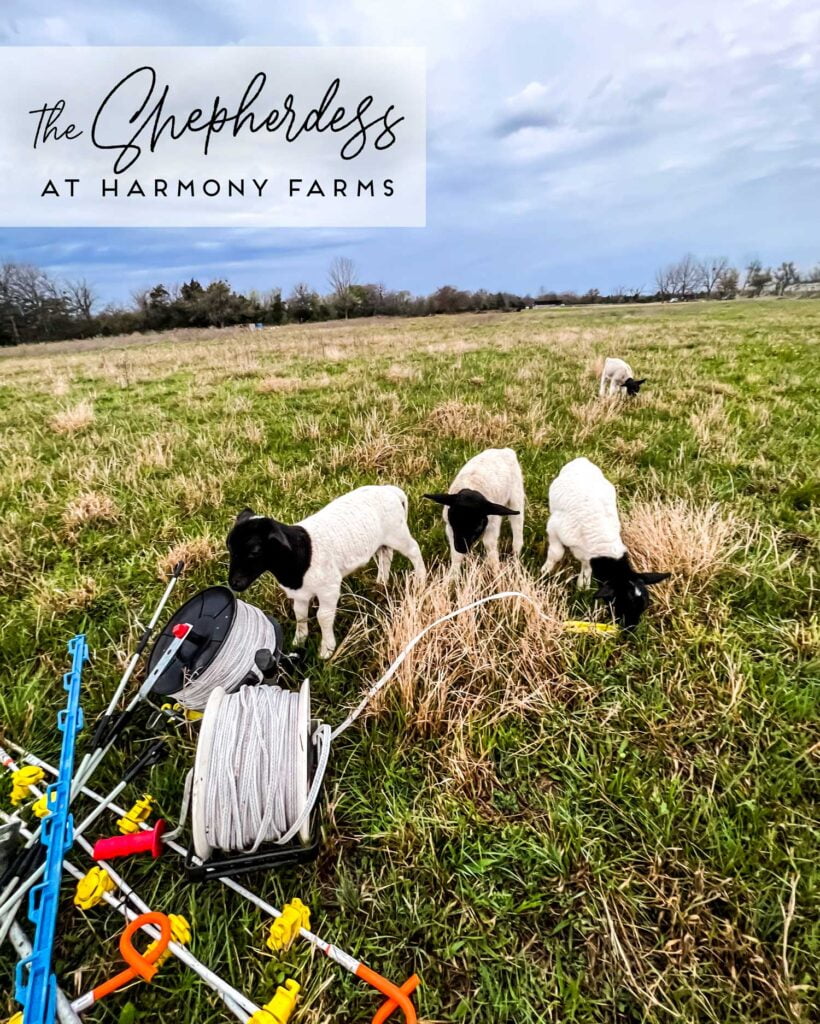
I speak from firsthand experience. I manage 30 acres of grassland in Northeast Texas using a method called regenerative agriculture. I was introduced to this farming method and its benefits four years ago. It offered me the chance to improve my land while growing healthy food for my local community. With no prior farming background and limited resources, I started with a few sheep and some electric fencing.
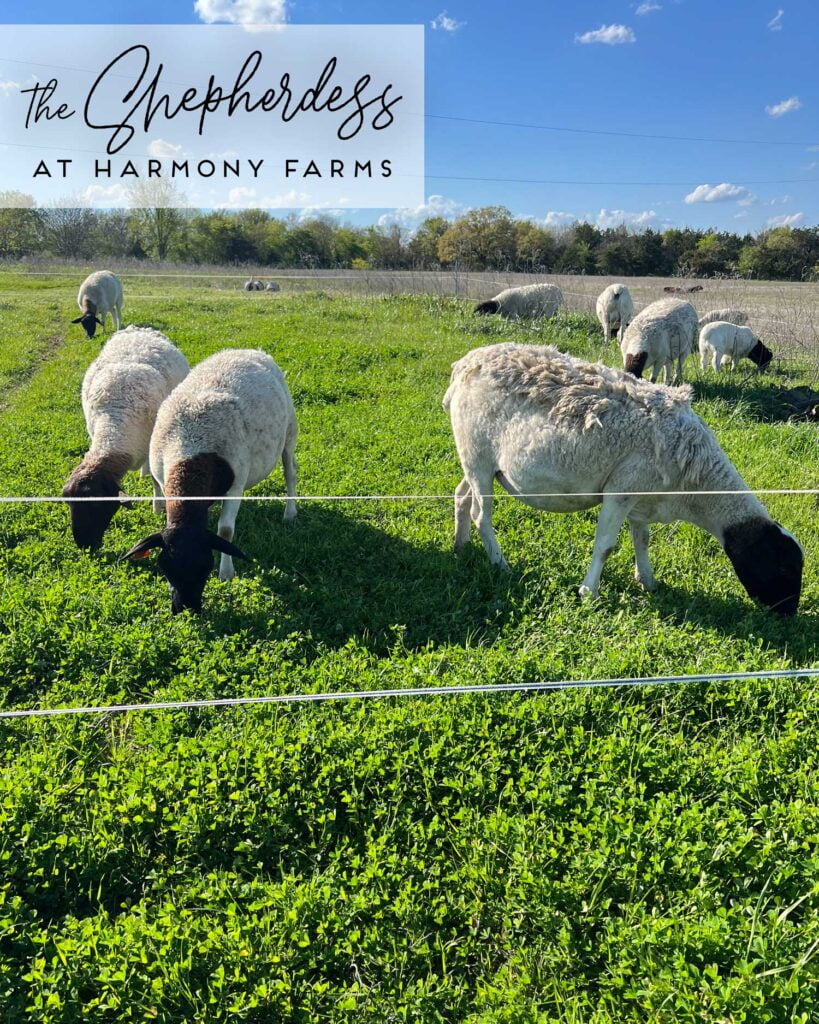
Four years later, my land boasts 200 to 300 percent more vegetation than neighboring pastures. This vegetation pulls carbon dioxide from the atmosphere, while the soil life pulls methane out. This productivity wouldn’t be possible without the animals on the land. The sheep and cows graze 24/7, fertilizing the pasture with their manure, which naturally contains nitrogen, phosphorus, and potassium. These nutrients accelerate plant growth and support the methanotrophs that consume methane.
I use electric fencing to rotate my livestock across the pasture, allowing each section to rest and regrow. This rest period not only promotes healthier grass but also enhances carbon sequestration and methane reduction. Some of the grasses on my pasture have root systems that are two to three times deeper than the grass growing above ground.
Ask yourself:
With what you now know of the carbon cycle: is it wise to tax cattle or make it more expensive for farmers to raise them? Will covering 10 million acres in solar panels really help with carbon sequestration? Is the push to end fossil fuels driving us toward an energy crisis?
These are important questions to consider. I hope this discussion helps shed light on the broader picture and encourages thoughtful dialogue on the best ways to steward our planet.
If you found this information helpful, please share this post. Consider subscribing to my newsletter using the link in the pinned comment to stay connected, regardless of what happens to my content on social platforms.
Check out my video on “Micro Ranching for Profit,” a documentary I made for the National Grazing Lands Coalition:
“Giving thanks unto the Father, which hath made us meet to be partakers of the inheritance of the saints in light:
Who hath delivered us from the power of darkness, and hath translated us into the kingdom of his dear Son:
In whom we have redemption through his blood, even the forgiveness of sins:
Who is the image of the invisible God, the firstborn of every creature:
For by him were all things created, that are in heaven, and that are in earth, visible and invisible, whether they be thrones, or dominions, or principalities, or powers: all things were created by him, and for him:
And he is before all things, and by him all things consist.” Colossians 1:12-17
🐑📚🥳(26 hours left)
|
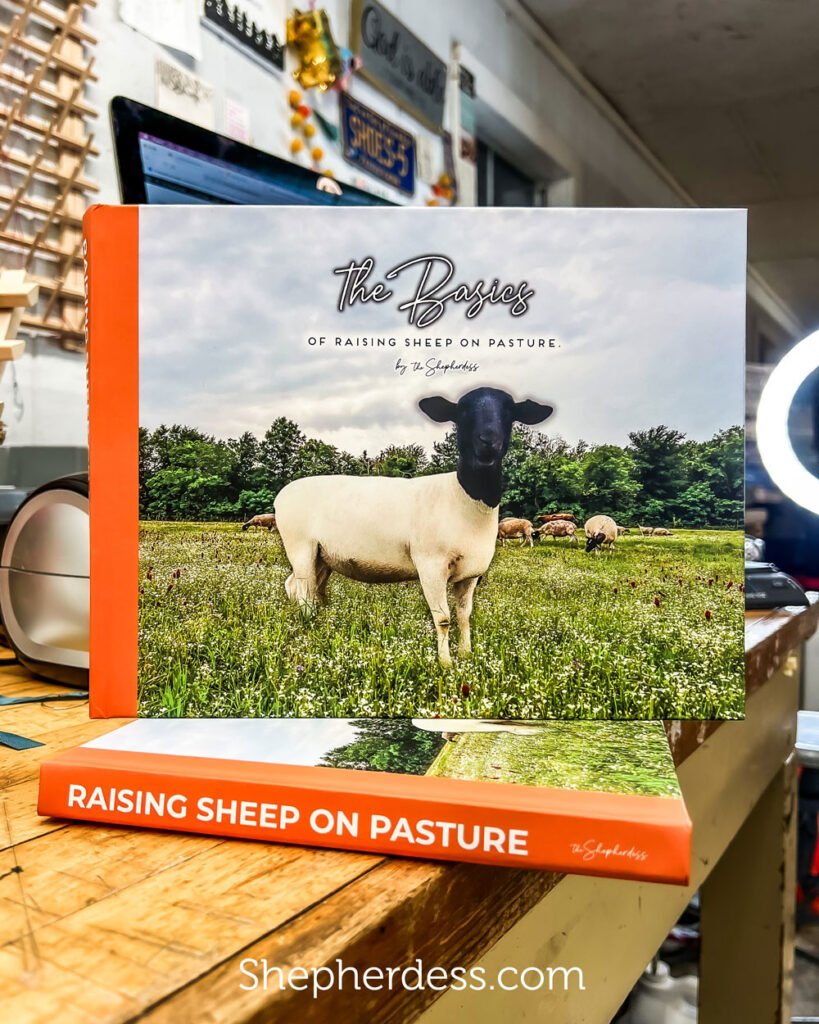
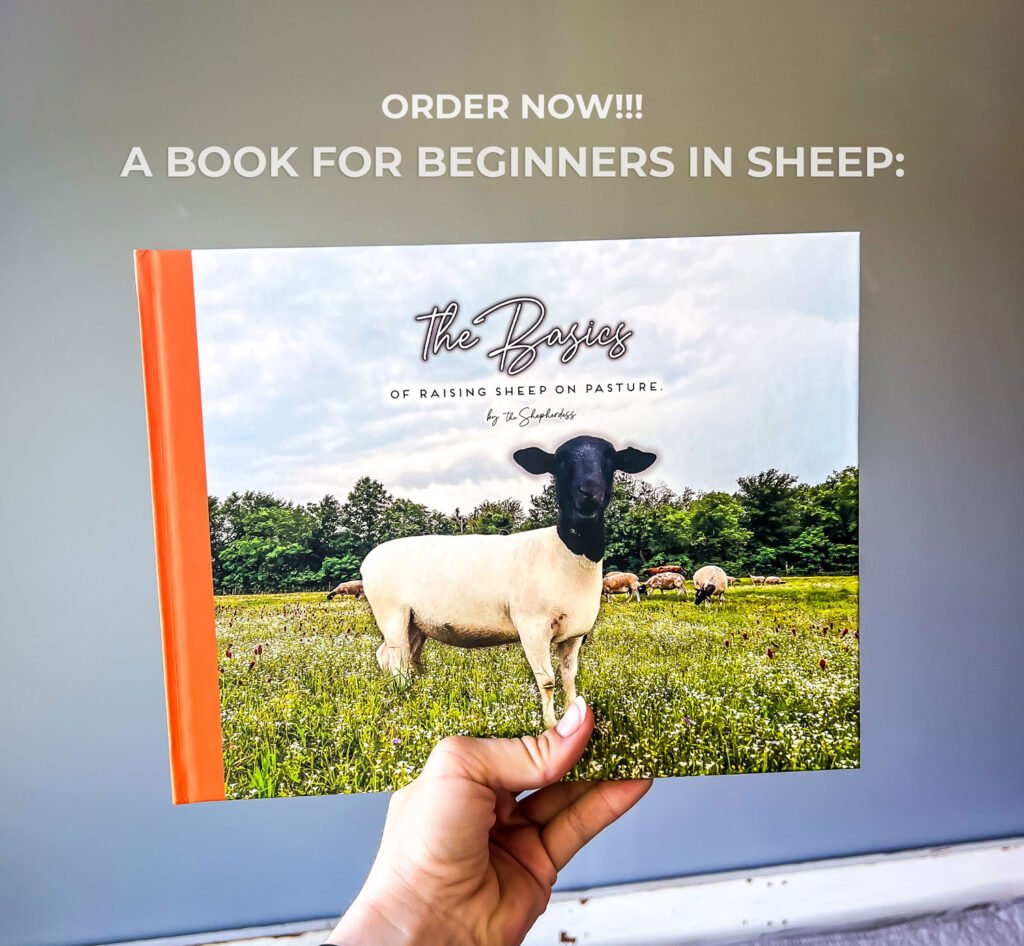
A final message about BIRTHDAY WEEK + a few sample pages from the BOOK!! Thank you all so much for making Birthday week so special. Let me know how you like your books once they arrive! Already own the book, but want access to the $30k Side Hustle Planner? Leave a review and I will send a digital copy of the $30K Planner!
-the Shepherdess “So then neither is he that planteth any thing, neither he that watereth; but God that giveth the increase.” 1 Cor. 3:7 |
Recession.
|
The word strikes fear in many, but I actually started my first home-business during the Great Recession of 2008. I was in 9th grade. I used a $14 allowance and supplies from around my house to get started. By the time I graduated high school, that side-hustle had become (by God’s grace) a full time income for me. I outline the planning process for a side-hustle in my $30k Side-Hustle Planner (+Video Class) — which is my GIFT with every order for the Basics of Raising Sheep on Pasture through Thursday, 8/22!
I am including the $30k Side Hustle Planner (+Video Class) with each copy of the Basics of Raising Sheep on Pasture (through Thursday, 8/22).
|
I believe God gives the increase, so I am not promoting any income guarantees… This planner designed to help you apply wisdom to the planning process :)!
| BUY THE BOOK, RECEIVE the $30K PLANNER BONUS! |
$30k Side Hustle Planner is FREE with EVERY ORDER FOR THE Basics of Raising Sheep on Pasture through Thursday 8/22!
Thanks for helping me celebrate Birthday Week for my book!! 🥳
I so appreciate you all,
-the Shepherdess
“Thus saith the Lord, thy Redeemer, the Holy One of Israel: “I am the Lord thy God who teacheth thee to profit, who leadeth thee by the way that thou shouldest go.” Isaiah 48:18
the names…
|
(If you can’t purchase a book right now, scroll to the bottom for links to my FREE resources) I’m continually humbled when names float across my screen that have been with me since (nearly) day 1. Names like Doug, Judah, George, Jessica, Tessa, and dozens more. This morning, so many of you (old and new) showed up to support the First Birthday Celebration of the Basics of Raising Sheep on Pasture. I am offering Birthday BONUSES this week, including:
Whether you are an old friends or a new one: THANK YOU. Your support of my paid products allows me to continue to create resources for this community. Can’t spend the money on a book right now? Most of my resources are actually free. Here are links to what I have to offer:
Thank you all so much! -the Shepherdess “I wish I had bought this book Before I bought my sheep. I think the book is UNDER priced because of the amount of information in it.” -Will P.
“So then neither he who plants is anything, nor he who waters, but God who gives the increase.” 1 Cor. 3:7 |
🥳📚LIVE NOW!! (bonus for first 20)
|
🎉1st BIRTHDAY EVENT IS LIVE!! (Small Farm Revival Tee for the first 20 to orders, and the $30k Side Hustle Planner comes WITH EVERY BOOK!!) the Basics Raising Sheep on Pasture (BOOK), Birthday week bonuses:🎉
Already own the book, but want access to the $30k Side Hustle Planner?
|
| LEAVE a Review |
Here is a video of how this book came together:
-the Shepherdess
“So then neither is he that planteth any thing, neither he that watereth; but God that giveth the increase.” 1 Cor. 3:7
1 year old. 🎉📚🐑
The celebration starts TOMORROW (8/15) at 8am CST!! Free tee for the first 20 orders on Thursday Morning.
DETAILS HERE ⬇️⬇️
the Basics Raising Sheep on Pasture (BOOK), Birthday week bonuses:🎉
- SMALL FARM REVIVAL tee for the first 20 orders on Thursday at 8am!
- $30k Side Hustle Planner and video course for with every book this week!
- I am signing the first 100 copies.
- FREE SHIPPING

Already own the book, but want access to the $30k Side Hustle Planner?
Leave a review at the website and I will give you a digital copy!
Interested in how this book came together? Here is a look at the self publishing process:
-the Shepherdess
“So then neither is he that planteth any thing, neither he that watereth; but God that giveth the increase.” 1 Cor. 3:7
1 year old. 🎉📚🐑
|
The celebration starts on Thursday (8/15) at 8am CST!! Free tee for the first 20 orders on Thursday Morning. DETAILS HERE ⬇️⬇️ the Basics Raising Sheep on Pasture (BOOK), Birthday week bonuses:🎉
Already own the book, but want access to the $30k Side Hustle Planner? Leave a review at the website and I will give you a digital copy!
Interested in how this book came together? Here is a look at the self publishing process: -the Shepherdess “So then neither is he that planteth any thing, neither he that watereth; but God that giveth the increase.” 1 Cor. 3:7 |
July 2024 Farm Update | Raising Dorper Sheep in Texas

Hi Friends!
This month is my 4th anniversary. 4 years ago I stepped on pasture with no previous experience in agriculture. I came from a background in Digital Marketing and product development in the retail apparel industry (yep, I went from fashion to farming).
Despite no background in farming, I had a deeply rooted drive to build out a food source for my family.
Over the past 4 years I have met thousands of others with the same drive (mostly through my Youtube channel).
There is so much happening right now that affirms our purpose.
Please keep at it. We may be on the brink of greater need than we could have ever imagined.
That was a more lengthy intro than normal, but I felt the need to encourage you forward. Now on to the farm update!

The flock is having a great summer. I made some adjustments to my breeding schedule and mineral regimen that have made a (huge) positive impact. The updates including increasing selenium and providing copper via a COWP Bolus. My spring lambs are all weaned and I have bred a few of my ewes for an October lambing!
I sent my 2nd round of grass-fed beeves off to the butcher! These guys
were about 27 months old. I’m excited to fill freezers with their
amazing meat. Here is a video that shares the whole process of raising grass fed beef on small acreage.
I always enjoy sharing paddock setup photos with you! If you click on the photo you’ll be taken to the complete supplies list with all the products I use for rotational grazing.
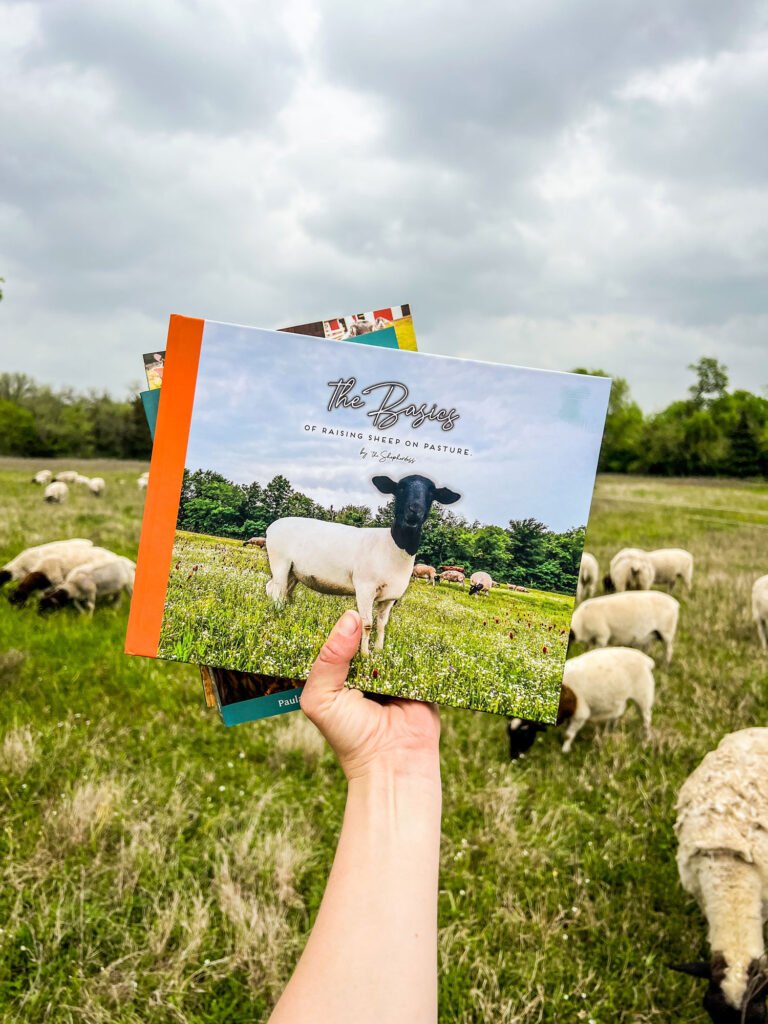
I sometimes perform fecal egg-counts at home check parasite loads. I talk about doing fecal egg counts from home in my book. I also talk about important parasites to watch for and how I treat them. Here is a sample page:
Sample page from The Basics of Raising Sheep on Pasture
Last but not least, I updated the Shepherdess COMPLETE STARTER KIT for 2024 (now includes 32 products). This is a collection of the most important supplies I keep for my flock (including lambing supplies). Here is a video about the kit:
Thanks for reading! Keep up the great work,
the Shepherdess
“Therefore, my beloved brethren, be ye steadfast, unmovable, always abounding in the work of the Lord, for ye know that your labor is not in vain in the Lord.” 1 Cor. 15:58
BREEDING DORPER SHEEP ON PASTURE (My Small-Scale System)
(Click Here) PRINTABLE BREEDING-PREP CHECKLIST!
Interested in purchasing my Dorper Lambs? Subscribe to my waitlist below!
An Overview of My Breeding Program for Dorper Sheep
Welcome! Today, I’m sharing a quick overview of my breeding program for my small flock of Dorper sheep, which I manage on 30 acres.
Topics I’ll Cover:
- Selecting a Breeding Ram
- Preparing Ewes for Breeding Season
- Essential Minerals for Flock Fertility
- Timing the Breeding Season for Optimal Pasture-Based Lambing

About My Farm:
I farm in Northeast Texas, where winters are mild and summers can be extremely hot. We raise purebred Dorper sheep, primarily for meat, alongside a small number of stocker cattle for grass-fed beef. The area receives about 45 inches of rainfall annually, making it ideal for regenerative, pasture-based farming.
My farming system is simple and low-input. Beyond pasture, feed supplements are reserved for emergencies. I don’t engage in broad-based pasture planting or cover cropping. My sheep graze whatever grows naturally, and we see forage quality improve year over year with good pasture management.
I practice rotational grazing using electric fencing, moving the sheep to new paddocks at least twice a week during the growing season. This regenerative approach has been crucial in taking our sheep and land from merely surviving to truly thriving.
While we have a simple two-sided shelter for protection against freezing rain and occasional snow, I aim to keep my sheep on pasture as much as possible throughout the year. I market Dorper sheep for breeding stock to other small farms, and what isn’t sold for breeding is raised as pasture-raised lamb.

Selecting a Breeding Ram:
The ram, or flock sire, is pivotal in upgrading or downgrading the quality of a sheep flock. When choosing a ram, I consider his physical characteristics and the system from which he comes—factors like grain versus grass feeding, climate, and flock health are crucial.
I recommend taking your time to find a high-quality ram, as he can significantly impact your flock. I once traveled 1,000 miles and spent around $3,000 to acquire an exceptional Dorper ram, and it was worth the investment.
Key traits I look for in a Dorper breeding ram include:
- Lowline Body: eg. Short legs.
- Muscular Build: Especially in the hindquarters, which is a prime meat area.
- Long, Deep Body: Ideal for premium cuts of meat.
- Parasite Resistance and Good Hooves: Essential in a high rainfall environment.
Ram-to-Ewe Ratio:
A good ram can service up to 40 ewes per cycle. However, I prefer one ram per 30 ewes to ensure no ewe is missed and to maintain a tighter lambing window. If you only have one high-quality ram, one per 40 ewes is sufficient.
Line Breeding:
I am often asked if you can breed a ram to his female offspring. Yes, you can breed a ram to his daughters, known as line breeding. I do this without hesitation up to 2-3 generations to enhance desirable traits. While some breeders go as far as 8 generations, I currently sell all third-generation ewe lambs rather than retaining them.

Ram Management:
When not breeding, my ram stays in a clean pen with fresh hay, minerals, and water. If you have only one ram, consider keeping a wether for companionship.
Preparing Ewes for Breeding:
Body Condition: Ewes should have a body condition score of 3 to 4 on a 1-5 scale before breeding. Poor condition can lead to complications such as pregnancy toxemia, hypocalcemia, and low milk production. It’s crucial to either cull thin ewes or supplement them before breeding.

Age for Breeding Ewes:
While ewe lambs can start cycling as early as four months, I prefer to breed them at six months, when they’ve reached half their adult weight. This simplifies management as I keep all sheep in one group.
Mineral Management:
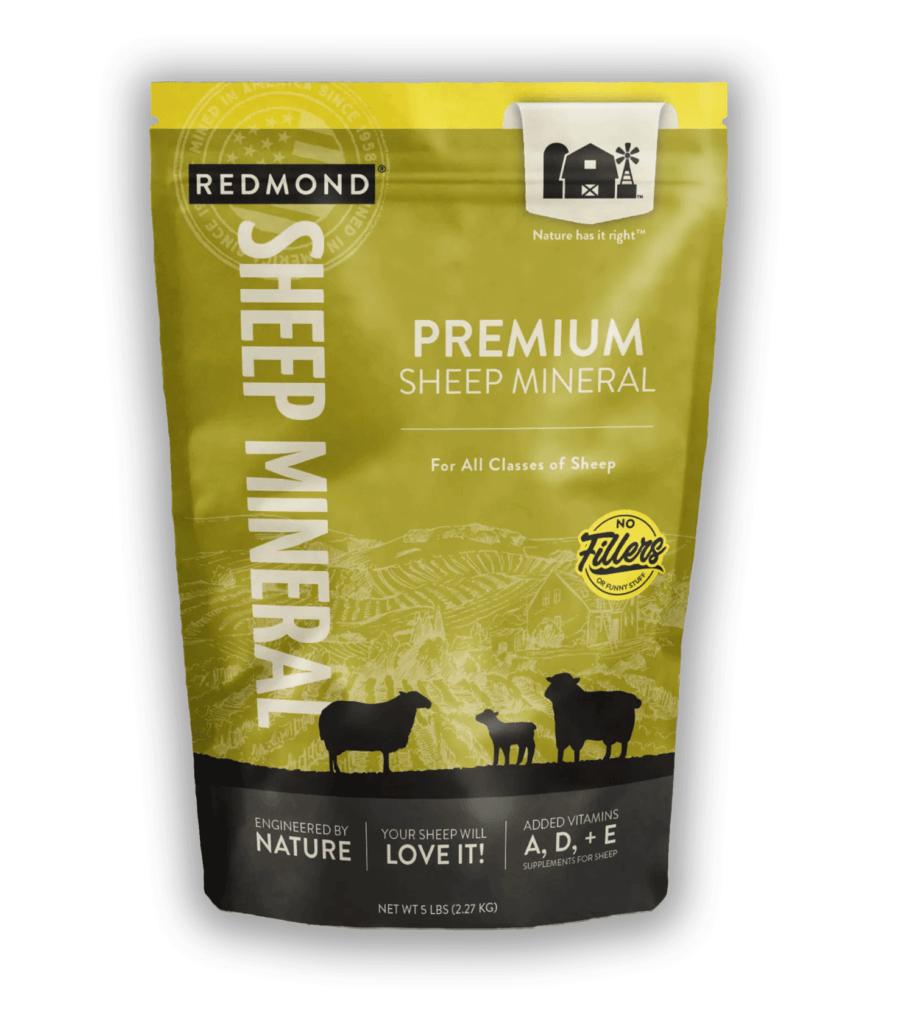
Loose minerals should be available year-round. I recommend Redmond Sheep Mineral, available on Shepherdess.com. Selenium is particularly important, especially in high rainfall areas like mine, where the soil is selenium-deficient. Ensure your mineral mix contains at least 45 PPM of selenium to prevent breeding issues, weak lambs, and white muscle disease.
Grain Flushing?
While grain flushing can increase twinning rates, I don’t practice it. Instead, I ensure my ewes are in good condition and graze them on the best pasture available. My focus is on long-term pasture management and culling ewes that can’t twin on pasture alone.
Timing the Breeding Season:
Lambing with the pasture is the safest choice for a pasture based lambing. To “lamb with the pasture,” calculate the breeding time by identifying when your pasture begins to grow and counting back five months. In Northeast Texas, I typically join my rams with the ewes in early October for March lambs.
Breeding Duration:
I leave the ram with the ewes for 51 days, covering three breeding cycles. This tighter window reduces the risk of lambs being born in parasite-heavy months and shortens the duration of lamb watch.
Adjustments in Breeding Timing:
This year, I bred a month earlier, resulting in February lambs. This adjustment yielded several benefits:
- Reduced Parasite Issues: Lambs gained weight before the parasite bloom in June-July.
- Simplified Management: Lambing was complete before spring grazing began.
- Improved Ewe Health: Peak lactation coincided with peak pasture quality, and ewes had better immunity against summer parasites and diseases.
I hope this overview of my breeding program provides valuable insights. If you found this helpful, please give it a thumbs up and check out the next video for a complete look at a pasture-based lambing season on my farm:
“Be thou diligent to know the state of thy flocks, and look well to thy herds. For riches are not for ever: and doth the crown endure to every generation?” Proverbs 27:23-24
HOW TO RAISE SHEEP (without pasture) | Feed Ration, Minerals, and Parasite Management
Most of you know I raise my sheep on pasture (almost) 24/7 – even in the winter. However I often receive questions from viewers who (either due to climate or small acreage) have to figure out how to feed and raise lambs when pasture is not available.
Today I’m talking with Tim at Linessa Farms who raises sheep in a blended system: 50 percent dry lot and 50 percent rotational grazing. Tim going to provide some answers to your questions: including to affordable feed rations for sheep, minerals for sheep, the best hay for sheep, creep feeding lambs, and more! Enjoy!
Q&A with Tim from Linessa Farms: How to Raise Sheep in a Dry Lot System
Q: Do you graze at all or are you 100% feed supplementing?
Tim: We run a blended system here. During the winter months, from October to May, we use a closed dry lot system. From May until October, we practice traditional rotational grazing. This is common in northern climates.
Q: You mentioned parasites. Are there specific ones that are particularly challenging in a dry lot situation compared to pasture?
Tim: Yes, you need to consider a broad spectrum of parasites, not just the commonly known ones like barber pole worms. In a dry lot, you also have to deal with lice, mange, and the often overlooked coccidia. Cleanliness in your water and bedding is crucial in a dry lot to prevent these issues. If you wouldn’t drink the water, neither should your animals.
Q: Let’s talk about coccidia. What have you found to be the most effective treatment?
Tim: The most effective and safest treatment for coccidia is Toltrazuril, known commercially as Baycox. It’s not FDA-approved in the U.S., so always consult your veterinarian. Unlike Corrid, which can cause vitamin B deficiencies in sheep, Toltrazuril is very effective without such side effects.
Q: How do you detect coccidia? It seems sneakier than other parasites.
Tim: Coccidia often causes unthriftiness, a failure to thrive, and subclinical levels might not show obvious symptoms. Clinical signs include diarrhea or scours. It’s a protozoan parasite that can cause long-term damage to the small intestine. Regular fecal samples are the best way to detect it.
Q: Does using feed in your system cut into your profit margins compared to full-time grazing?
Tim: Absolutely. Any additional costs, like feed or hay, impact your margins. You need to budget and plan for these expenses as they can fluctuate.
Q: What is your feed ration in the dry lot when you don’t have any grass?
Tim: This depends on the breed, but a general guideline is one flake of hay per head per day and about half a pound to one pound of corn per head per day. Adjustments can be made based on the body condition of your livestock. A flake is a segment from a small square bale of hay.
Q: What are the protein requirements for sheep?
Tim: Protein requirements vary by breed. You can use corn, which is about 7% protein, or feeds up to 16% protein. Anything above 16% is usually unnecessary unless you have show animals.
Q: Should you perform regular treatment for coccidia regardless of symptoms?
Tim: There are two main strategies: preventative and treatment. Preventatives like decox, bovetech, and rumensin keep coccidia from growing and are often added to feed. For treatment, Toltrazuril is effective for both preventing and treating coccidia. Regular preventative measures, especially in a dry lot, can be beneficial.
Q: What type of feeder system do you use for your wool sheep?
Tim: We use a creep feeding system, which allows smaller animals to access their feed while keeping adults out. This system ensures that smaller animals get enough feed and helps prevent the bigger animals from dominating the food supply. From birth until weaning, we use a full feed creep system where feed is always available to the young ones.
Brenda asks a good question. Do you supplement additional for better fiber?
Tim: Nutrition is key for good wool. Use a quality free-choice mineral to provide all necessary nutrients. Shampoos are secondary to a good diet.
Let’s talk about minerals just a little bit. This could probably be an entire two hours of its own, but just generally give a little minerals 101. And what do you use at your farm?
Tim: We created our own mineral mix with help from a Purdue University nutritionist. Free-choice loose minerals are better than blocks as they are easier on sheep’s teeth. Ensure a good calcium to phosphorus ratio (2:1) to avoid urinary calculi, especially in males. Avoid all flock minerals and use specific sheep minerals.
Okay. Where can we find your specially blended mineral? Do you sell it?
Tim: Yes, you can find it on the linessafarms.com online store. We even have a no-phosphorus mineral for castrated males.
Alright. Daniel asks: “what about barley? Is it cost-effective versus corn?“
Tim: Barley has higher protein (11-12%) than corn (7%) but is more expensive. I use barley as a supplement, not a staple. Cost-effectiveness depends on your local prices.
Aiden asks, what do you use to stop ticks?
Tim: For wool breeds, wool and lanolin create a natural barrier. For hair sheep, use pour-on insecticides like Silence or permethrin (Ultra Boss). Diatomaceous earth can be an option but has respiratory risks and is less effective when wet.
When you mention “consequences” is it the respiratory risks that you’re thinking of?
Tim: Yes, diatomaceous earth irritates the nose, throat, and lungs. Use it dry and with caution, but chemical treatments are more reliable.
Brenda asks another great question. What type of hay mix? Most alfalfa mixes are going to be 20 percent protein. We and the sheep like rye grass.
Tim: Hay quality varies. A grass mix with some alfalfa is preferable for sheep. Too much alfalfa can be overkill and may cause issues like cud spilling.
Alright, Tamlyn says, I can’t get my lambs to eat from the creep. What do I do?
Tim: Try adding soybean meal to the creep feeder; it’s fine-textured and attractive to lambs. Older lambs will eventually teach younger ones to use the feeder. Adding molasses or sweeteners can also help.
Daniel asks, are you able to get commodity prices on grain where you live?
Tim: Yes, contact local farmers to buy directly and save money. Use containers like 55-gallon barrels or mini bulks for storage. This approach cuts out middlemen and reduces costs.
So you are suggesting going direct to the farmer and essentially finding a way to store in bulk.
Tim: Exactly. Whole corn stores well if kept dry, and buying directly from farmers is cheaper. It benefits both the farmer and you.
Is there any harm in using an existing ram for new flocks?
Tim: It depends on your goals. For genetic diversity, bring in new genetics regularly. Using the same ram is fine for terminal breeds if you’re not keeping offspring.
Alright. Let’s talk about transitioning from dry lot to pasture. Any best practices for that?
Tim: Feed them their usual diet before turning them out to pasture. This prevents gorging and reduces the risk of bloat. Gradually introduce new forage over several days.
Are you still looking to breed out of season?
Tim: Yes, we use an accelerated lambing program and breed year-round. Success depends on your breed; for example, Polypay and Dorset breeds adapt better to out-of-season breeding than Katahdins.
WHY I SOLD MY COWS IN A SKYROCKETING CATTLE MARKET (2024) | Beef Cattle Ranching for Profit FARM
(PLAYLIST) Raising Beef Small Scale

Why I Sold All My Cows in a Skyrocketing Cattle Market
This video is for anyone considering investing in a cow herd but unsure of the best approach on small acreage. It’s also for those who, like I once was, own a cow herd but find it too costly to maintain. I’m going to do a quick review of how money is made in the conventional commodity cattle system.
We, as small-scale producers, can observe this system to develop something cost-effective or even profitable for ourselves. I will also break down how I’m raising grass-fed beef on my 30 acres without owning a single cow and explain my decision to get rid of all my cows.
By the way, I made six videos on raising beef cattle on a small scale. You can find the playlist in the pinned comment of this video, along with my free guide, The Absolute Beginner’s Guide to Raising Grass-Fed Beef.
The Three Segments of the Commodity Cattle System
First up, understanding the three segments of the conventional commodity cattle system and how money is made on cattle, period.
Cow-Calf Producers
The first segment of the commodity cattle system is the cow-calf producer. This rancher raises a herd of cows that produce healthy calves for market. Those cows need to raise a calf that then sells for more than it costs to raise for the year. For example, if a cow weans a 500-pound calf that sells for $2.50 per pound live weight, you earn $1,250 for that calf.
In order to turn a profit, the cow-calf producer has to keep the expenses associated with raising that cow and calf for the previous year under $1,250. This is typically very challenging. I cited a live weight price of $2.50 per pound for a calf because we are at the peak of a cattle cycle, meaning we see higher prices than in a very long time, if not ever.
However, during the valleys of these cattle cycles, which come quickly and harshly, a cow-calf producer considers himself very blessed to get $1.70 per pound live weight for a calf.
Backgrounders
The second segment of the commodity cattle system is backgrounding. Backgrounders buy those calves, now called stockers, and graze and supplement them for five months, aiming to add about 300 pounds. They then sell them to feedlots as feeder cattle. The profit in this segment comes from adding that 300 pounds to the calf as cheaply as possible, typically on pasture.
For example, as a backgrounder, you take that $1,250, 500-pound calf, grow it to 800 pounds over five months, and sell it for $2.30 per pound live weight. You earn a gross total of $1,840 for that feeder animal. That’s a $590 difference, and you will make a profit as a backgrounder if you can keep the expenses for that five-month period under $590.
Feedlots
The third segment of the commodity cattle system is the feedlot. Feedlots take those 800-pound feeders and feed them a ration of 80 percent grain to 20 percent roughage until they are ready for slaughter. The profit in feedlots lies in having access to grain and feed as cheaply as possible, which is why they are commonly owned and operated by commodity grain producers.
So basically, the rancher’s job ends where the feedlot begins. This is a very simple, some may argue oversimplified, look at the U.S. commodity cattle production system, but it does give you a general idea of how and when money is made. Payday comes whenever the cattle are passed on to the next segment of the system. As you’ll notice, the system is segmented to guarantee the rancher a payday at least once a year.
Considerations for Small Acreage Cow-Calf Operations
Now, if you start up a cow-calf operation to finish your own beef, like I did, your first payday will not come until 36 months after your bull joins those cows. Another consideration for small acreage cow-calf production is that you need to budget three times the pasture that the initial dry herd will need.
So, if you buy six dry cows and a bull, you really need enough pasture to support 18 head total. A dry cow, one that is not lactating, has its lowest nutritional requirements and eats the least it ever will in its whole life. Once the calf is born, the cow will eat the most it ever will in its whole life.
If you are raising that cow herd with the intention of producing food for yourself or meat for resale, you’ll be raising for 24 months. There will be a nine to twelve-month period where you have two sets of calves that your land needs to support, or you’ll need to bring in a lot of extra inputs to support those animals.
My Personal Experience
For me, I found that such slow cash flow exposed me to way too much risk. By exposure to risk, I mean that 36 months was too long to continue spending money before receiving any return. It also meant too much time for unpredictable expenses to pop up. With cows, unless you have an endless supply of pasture, those expenses escalate very quickly.
In the process of doing cow-calf on small acreage, I came to understand why most successful cow-calf operators run on hundreds, if not thousands, of acres, with additional leased land as backup. I had a few firsthand experiences that showed why cow-calf is riskier on small acreage without these backup resources.
The Impact of Drought
As an example, I hit a major drought about 12 months into the 36-month establishment period. At that point, I had 14 heads. Once the grass was gone, the 14 head were eating 10 to 12 round bales per month. At that time, if accessible, round bales cost between $100 and $120 per bale.
It was game over for half of my herd. I held on to the other half for another year before selling every last cow and keeping only what would qualify as stocker cattle. I am now raising stockers for grass-fed beef on my 30 acres, assuming the role of backgrounder and finisher according to the conventional cattle production system.
Benefits of Raising Stockers
Here are three reasons why this works well on my 30 acres and in my specific context.
Lower Expenses and Resource Demand
First, I don’t have the expenses or demand on my resources that I did when maintaining those mama cows and that bull. This offsets the cost of paying more for stocker cattle.
Minimal Equipment Needs
Second, raising stockers requires no heavy machinery or equipment. When I buy stockers, they’ve already had all the treatments typically administered in a chute system, and all that’s left for them to do is graze. That’s not to say something crazy couldn’t happen, but in the past four years, it just hasn’t with the stockers.
When I was raising my breeding cows, I faced situations where I really needed a head gate and a chute but didn’t have them. I foresaw that keeping the breeding group would require investing in large cattle handling equipment.
Flexibility of Stocking Rate
Third, stockers offer flexibility in stocking rate. For example, if I have larger demand for grass-fed beef orders one year, I can simply increase the number of stockers I purchase for my land.
Conclusion
Ultimately, I sold my breeding cows despite the hot cattle market because I don’t see a future in beef cattle. This video specifically explains how the commodity pork market crashed and why I believe the commodity beef market will soon follow. Watch it next.
“Ah Lord GOD! behold, thou hast made the heaven and the earth by thy great power and stretched out arm, and there is nothing too hard for thee…” Jeremiah 32:17
June 2024 Farm Update | Raising Dorper Sheep in Texas

Interested in purchasing my Dorper Lambs? Join my waitlist below!
Hi Friends,
This was a fun month: but definitely filled full of hot, sweaty work. Enjoy a look behind the scenes at June! Also, I finally posted a full video of my first time butchering a lamb on farm. Check it out here!

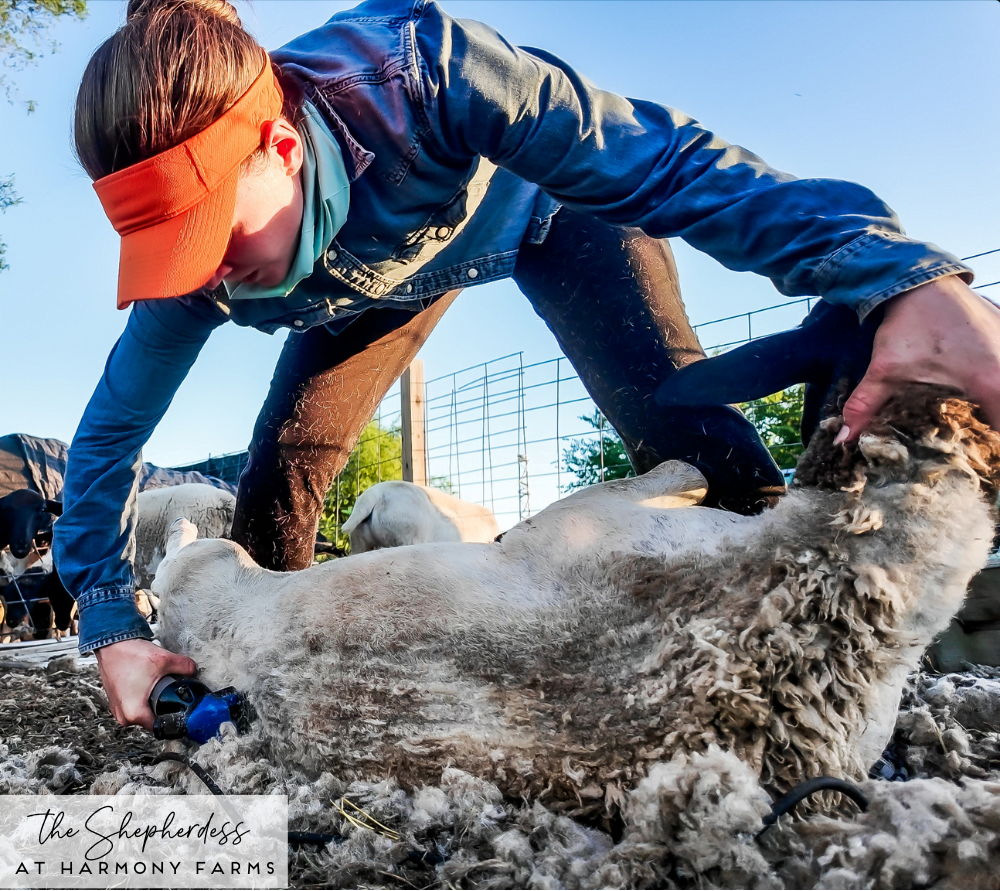
Because Dorpers are hair sheep, we only have to shear once every 3-4 years. That means this is only the 2nd time shearing at our farm. Last attempt ended with me losing a chunk of my finger, passing out at the sight of my own blood, and my brother taking over. This time was a major success in comparison. Everyone has a haircut and I still have my fingers… haha!
Before shearing.
Yes, hair sheep shed, but in my flock 1 in 4 retain some fuzz on their back strap. It builds up and needs to be removed… especially with Texas temperatures approching the triple digits. (For those who might ask: I am using Premier1’s 4000s Shearing Machine and the Apache 9-tooth comb)
After shearing: I love how shiny they are!
Do I cull for shedding? Not yet… I’m actually using a good shedding ram to breed the fuzz out. This ram sheds slick and has eliminated most of the wooliness in my lambs!
You guys always comment on pics of my grazing paddock setup. This one shows one of my favorite tools: my Tarapost reel stand!! For a complete list of my grazing/watering system supplies, CLICK HERE (or on the photo above)!
I’m always asked: “what is a sheep’s favorite grass?” My answer is: almost anything green (goatweed being the exception)!
This photo shows how they grazed out a paddock full of weeds in just 2 days!
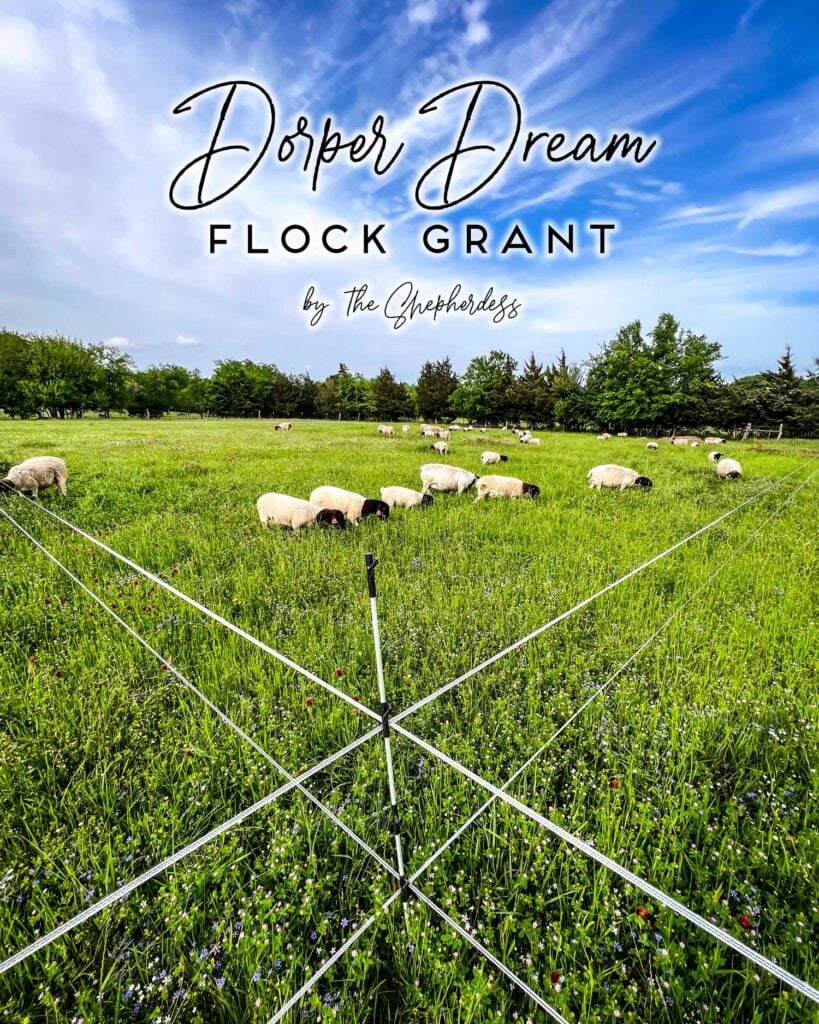
This was such a happy moment! Lucy was the 2024 Dorper Dream Flock Grant winner! We had roughly 147 grant applications and around 90 qualifiers. I performed a random drawing on the qualifiers and Lucy was the Dream Flock winner. She is a young farmer from the midwest, doing an amazing job!
Thank you to all who applied for the 2024 Dorper Dream Flock Grant, and for those who donated extra supplies to make the winner even more successful with these sheep! I look forward to providing another grant opportunity in 2025!
Until next time,
-the Shepherdess
“And let us not grow weary while doing good, for in due season we shall reap if we do not lose heart.” Galatians 6:9
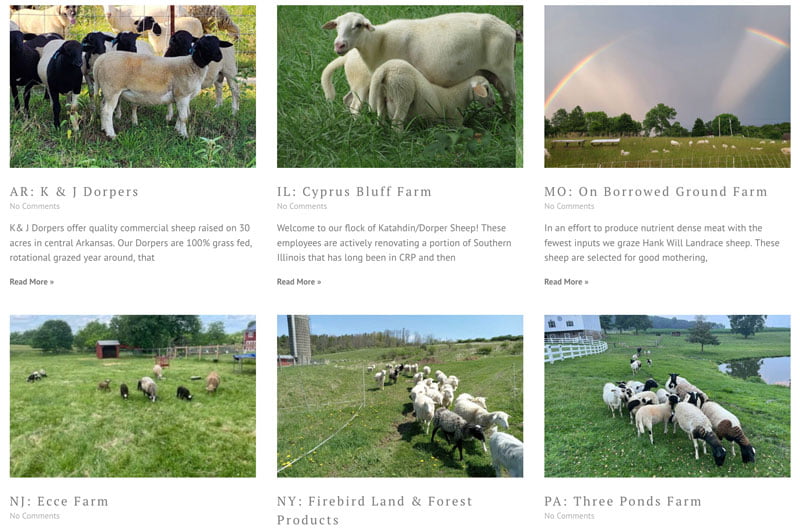
Looking for sheep to buy? Checkout the Shepherdess Breeder Directory!
LIVE NOW (3 days only)!! 👧🏻👦🏼
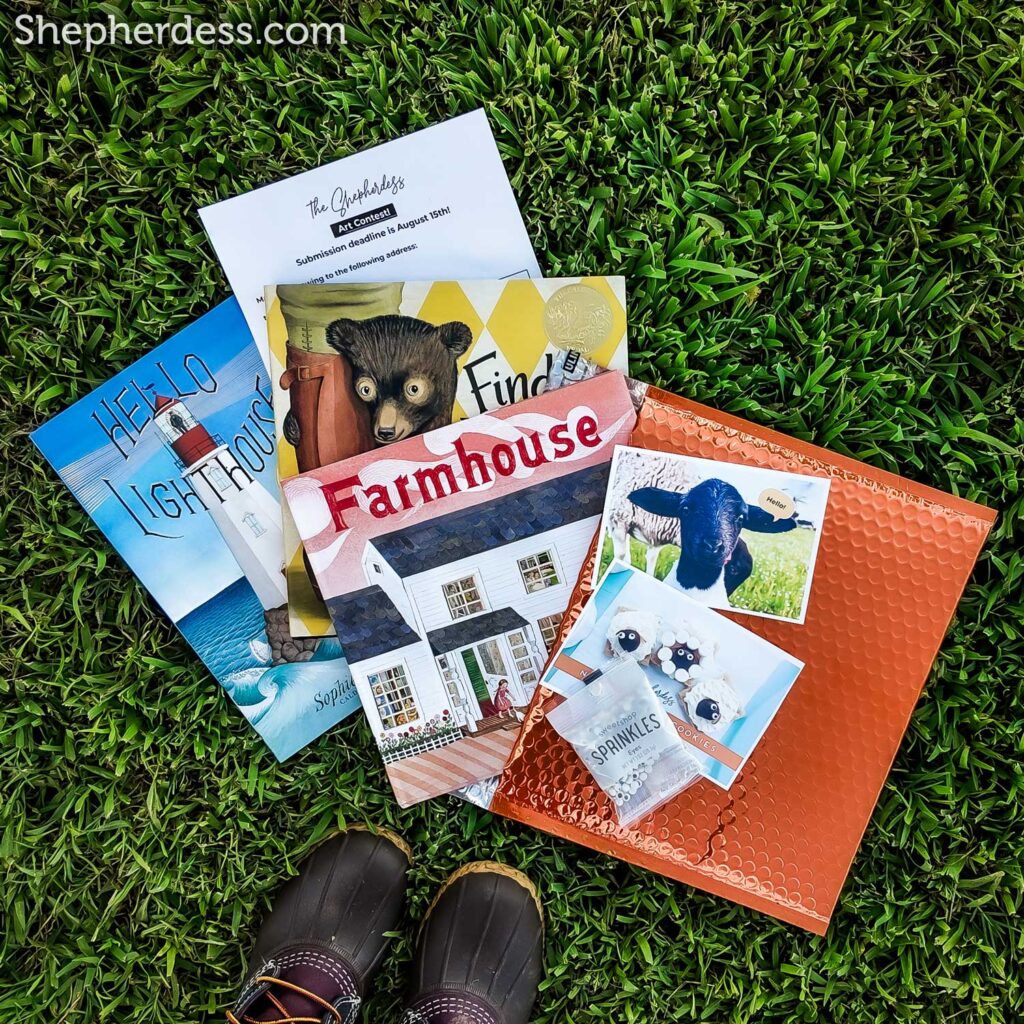
Shepherdess Summer Camp Kits are LIVE NOW!! First 10 orders receive a BONUS farmyard sticker book!!⬇️⬇️

This home-based activity bundle includes:
- 3 hardcopy books with complementary read-aloud videos.
- 3 engaging activities.
- Lifetime Access to 6 interactive videos on a child-safe platform.
- Chance to enter the Shepherdess Art Contest for the 2024 Grand Prize (9 book mega-bundle and a Child’s tee)!!
1 kit per household unless you desire each of your children to own their own copy of a book. If multiple children are using the kit, be sure to specify how many so that we can add extra supplies for the activities!
“Train up a child in the way he should go: and when he is old, he will not depart from it.” Proverbs 22:6
Coming Monday…
⬇️⬇️ Here is a video explaining what I have coming for children this MONDAY at 8AM CST!! I hope you’ll be a part of it!
- The first 10 orders will receive a Bonus Sticker Book (with 250 stickers included)!!!
- Available to purchase at Shepherdess.com for 3 Days only: beginning Monday June 17th at 8am (CST) – Wednesday June 19th at MIDNIGHT!
- Best suited for ages 3-12 years.
- To sponsor a child, CLICK HERE.
Hello everyone!
I am absolutely thrilled to announce an exciting new summer project specifically geared towards children. Recognizing a void in the children’s arena, especially during this month when we see some of the worst influences imposed upon our young ones, I felt a strong need to create something positive and enriching for them.
Let me share what inspired this project.
First and foremost, I love children. For a while now, I’ve wanted to create a project that promotes the development of their minds in the best, most relevant, and healthy ways. This idea was inspired by my own childhood experiences. Summers were a delightful blend of outdoor adventures and indoor activities. After tiring ourselves out playing outside, we’d come in and read away the afternoon.
With that childhood memory recapped, I am excited to introduce the Shepherdess Summer Camp Kit.

What’s Inside the Shepherdess Summer Camp Kit?
The Shepherdess Summer Camp Kit is a home-based activity bundle designed to provide an engaging, educational experience that your child can enjoy from the safety and comfort of your home. Here’s what’s included:
- Three Hardcopy Books: These books come with complimentary read-aloud sessions.
- Three Fun Activities: Each activity is designed to complement the themes of the books.
- Virtual Camp Classroom Platform: Your child will have access to a safe, child-friendly virtual camp where I will guide them through each book and activity with entertaining and interactive videos.
The virtual camp includes six videos in total, and you’ll have lifetime access to unlimited replays.
The Shepherdess Art Contest
To make the Shepherdess Summer Camp even more exciting, the kit includes an application to the Shepherdess Art Contest. Each child will have the opportunity to enter a photo of their artwork into a drawing, with a chance to win a grand prize: a 9-book bundle and Shepherdess Child’s Tee!
Sponsorship Opportunities
I understand that some of my followers might not have children or may be in a position where finances are tight. To bridge this gap, I’ve created an opportunity for sponsorships. If you’d like to see a child enjoy this unique opportunity, you can become a sponsor. Conversely, if you’re not in a financial position to afford the camp, you can apply to receive a sponsorship.
Please ensure that sponsorship applications reflect true need. Once the window to purchase the summer camp kit closes, I will pair sponsors with applications, and the opportunity to buy will no longer be available.
Limited Time Offer
The Shepherdess Summer Camp Kit is available for purchase for only three days: from Monday (June 17th) through midnight on Wednesday (June 19th). As a special bonus, the first 10 purchasers on Monday will receive a BONUS sticker book (with 250 stickers).
I am incredibly excited to see your children in the Shepherdess summer camp classroom! If you have any questions, feel free to reply to this post or email me directly.
-the Shepherdess
“Train up a child in the way he should go: and when he is old, he will not depart from it.” Proverbs 22:6
BUTCHERING A LAMB AT HOME (as a beginner) | Using Bearded Butcher Knives
Butchering a Sheep at Home (using Bearded Butcher Knives)
In this blog post, I’ll walk you through the process of butchering a sheep using only a knife and paracord. This guide is based on my first time experience and aims to provide useful insights for those who may find themselves in a similar situation.
Introduction
The first time I butchered a sheep was quite the learning experience. By the end of the winter, I had butchered four or five lambs and was surprised at how much my efficiency improved. Initially, my supplies were limited: I had an 6-inch Bearded Butcher boning knife, some paracord, and a tree limb.
Context and Preparation
This butchering session was unplanned, and my supply situation was limited. Despite this, I found the book “Butchering” by Adam Danforth to be invaluable. It’s a must-have for any homesteader. You can purchase it at Shepherdess.com to support my work.
In addition to this book, I binge-watched the Bearded Butcher Channel on Youtube and gained a lot of insight from simply watching experts perform the process on repeat.
The lamb died unexpectedly from bloat after consuming between 10 and 20 pounds of barley in one afternoon. Although I tried some rescue remedies, I caught the issue too late. This unfortunate event gave me the opportunity to practice butchering with a fresh kill, knowing exactly how and why the animal had died.
Tools and Setup
For this task, my primary tools were paracord and a knife. I also had a five-gallon bucket of water and a shallow rectangular tub lined with hay to catch the waste. Keeping the area clean and disposing of waste properly is crucial to avoid attracting predators.
Butchering Process
Even though the sheep was already dead, I practiced the same cuts as if it were alive, which prepared me for future butchering sessions. Following the instructions from Danforth’s book, I made an incision around the rectum and sealed it with a zip tie, then cut around the tail. Once these cuts were made, the skinning process became much easier. I made a seam from leg to leg, mimicking the inseam of pants, and peeled the skin off like a glove.
One challenge was hoisting the carcass up by its back legs. Initially, I tried using my body weight, but the lamb was too heavy. I ended up using our UTV to hoist it up. As the animal’s abdomen swells after death, it becomes more difficult to peel the hide without making a seam down the belly. I took my time and muscled through this part, improving my technique with each subsequent butchering.
Efficiency Improvements
The first butchering took me four hours, as I was learning and comparing what I saw to diagrams in Danforth’s book. By the third sheep, I had reduced the time to one hour and 20 minutes. I still used primarily paracord and a knife, but also used hedge trimmers to remove the head and hooves.
Conclusion
While I didn’t necessarily enjoy the process, I now feel confident in my ability to take an animal from pasture to plate, creating a complete supply chain here on the farm. This experience has also increased my appreciation for professional butchers :).
Make sure to give this post a thumbs up before you leave! Comment below with where you’re reading from—I love to read your comments. Also, check out my next post explaining why I chose Dorper sheep over St. Croix for my farm.
May 2024 Farm Update | Raising Dorper Lambs in Texas

Join the Waitlist for 2024 Dorper Lambs!
Hi Friends,
Here is a look behind the scenes for May at Harmony Farms! The Dorper Dream Flock WINNER was announced (congrats to Lucy Rickard!). Regarding the livestock sale on May 30th: some of you wondered why I did not send an email about the lambs on sale day. My spring lambs were all spoken for through my website within a few minutes. I did not want to frustrate you by sending you an email with links to sold out lambs.
If you missed my spring lamb availability, I should have a few more to offer this fall; including some more mature, breeding-ready rams for October joining! In the meantime, check out the Shepherdess Breeder Directory for farms near you!

This 5 month old grass (and milk) only ram lamb is starting to dwarf his mom!

It was such a pleasure it was to meet so many of you at the Sunny Hill Flower Farm Meet and Greet! I loved putting faces to names, hearing your stories, and talking small-scale farming/ranching. Such a pick-me-up! THANK YOU!!

I made a change this year that I am so happy about. I usually lamb in March and April. This year I lambed most of my flock in February. This allowed my lambs to put weight on before the late spring parasite bloom. As a result, they are more naturally resisting parasites and growing so well this year!

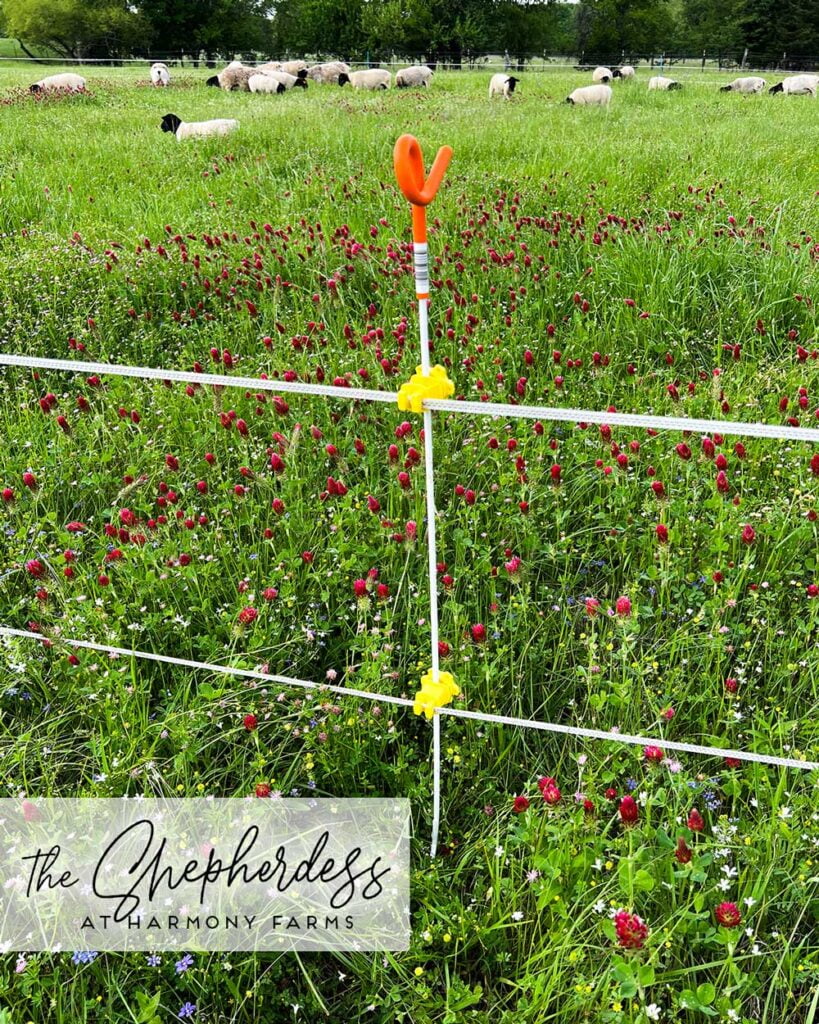
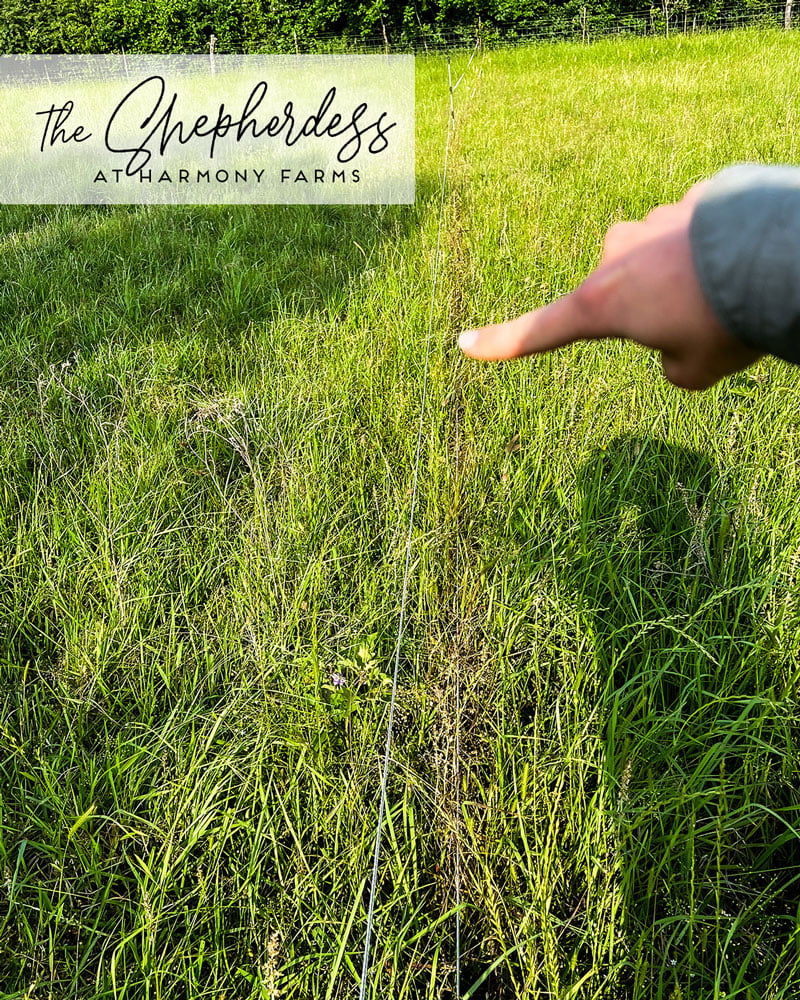
I rotate my sheep using 2 strands of poly-tape. Using poly-tape over electric netting requires that I use a 12Joule AC (AC means a wall-unit, not a solar) charger. You can see the burn-line underneath my poly-tape here!
I hope you enjoyed this update! Thank you for your support :).
-the Shepherdess
Looking for sheep to buy? Checkout the Shepherdess Breeder Directory!
“The angel of the Lord encampeth round about them that fear him, and delivereth them.” Psalm 34:7
HOW I’D START A FARM ON 3 ACRES (Beginner Plan) | Homesteading Small Scale
➡️ (PDF) Animals Per Acre PRINTABLE
🐐 Raising Goat Naturally Book
How I’d Build a Farm on 3 Acres
What if I had 3 acres instead of 30? How would I build a productive food source on 3 acres?
I often have people email me saying: I love what you are doing, but I have 3 acres, not 30… How can I make it work?
This video is going to answer that question.
- I am going to start by giving you 3 guiding principles to anchor your planning process.
- I am going to give you a list of exactly what animals (including which breeds and quantity of each) I would raise on my 3 acre farm.
- Finally I am going to break down exactly how much food this 3 acre homestead setup would produce per year… including what that translates into as far as calories; so that you will know what kind of human life this setup could sustain, and exactly how much you would need to supplement to feed your own family if that’s the goal of your homestead.
I have a free “Animals Per Acre” PDF for you (see link at the top of the post). It will show you how many animals (whether goats, sheep, pigs, chickens, cows, etc) that one acre can support, assuming you have 35+ inches of rainfall per year.
The assumption here is that you are not just looking to pack as many living creatures on 3 acres as possible: you are aiming to manage your homestead in alignment with your grass resource. Which will ultimately reduce feed inputs, reduce reliance on conventional supply chains, and keep your land and animals really healthy.
Here are the three critical questions that are important to answer as part of the pre-planning process for your 3 acre homestead setup:
3 Questions Before Planning Your 3 Acre Farm:
- Who will eat the food I grow: For me, the answer was: my family. With just 3 acres to work with, I would focus solely on food security. No market farming, no for-profit stuff: I would eat or feed my family with everything I grew.
- What will I grow: I would grow what I and my family eats on a regular basis. While this may seem like stating the obvious, it gets really easy for me to open a seed catalog pick out 16 different varieties of colorful squash… and then set back and realize that I can’t honestly name the last time I or my family ate squash. So instead of spinning my wheels growing things that no one wants to eat: I would focus on producing meat, dairy, and eggs.
- How many types of things will I initially commit to: I personally kept my 3 acre homestead startup at 3 enterprises, at least to start with. An enterprise being, a sheep or a cow or a garden. So if I had a sheep and a cow and a garden, that would be 3 enterprises total. I did this because I realized over the past few years that I burnout and my productivity per animal goes down when I try to juggle and optimize more than three food producing enterprises at once. You might be better at juggling than I am, but I would advise you set some limit on yourself upfront or you might hit some burnout.
What I Would Raise on 3 Acres:
Now that I have established those three guiding principles, here is what I would start with on 3 acres:
★25 Rhode Island Red Laying hens: Most people raise their hens from chicks, but you can buy ready to lay pullets through Facebook or craigslist if you want eggs right away.
★6 Dorper Wethers: A wether is a castrated male sheep to be raised not for breeding, but for meat. You want to buy that feeder lamb at around 50lb and finish it out to 90-100lb before slaughter. When it comes to buying a wether, they are not hard to find. You can find a sheep owners through Facebook or craigslist and typically most will have an abundance of wethers to offer in either February/March or July/August.
Here is a question I anticipate receiving: “why buy wethers instead of breeding your own sheep?” Well, If you only have 3 acres, breeding stock will consume most of your grass. For example, in order to have 6 lambs to grow out as meat, I would need to maintain a breeding group of 3 or 4 ewes plus a ram. If you have 5-7 acres, a breeding group would make more sense, but on 3 acres, raising meat wethers is a better way to work with your grass resources.
★Finally, I would raise 2 Nubian or French Alpine dairy goats. If you can find a bred-nanny to buy, this would be ideal. A bred nanny is a pregnant female goat. This will allow you to avoid the hassle of finding and maintaining a male goat right away. Your nanny will begin producing milk after the kids are born and with these two breeds in particular, they will stay in milk for almost an entire year after kidding.
How much food would my 3 acre operation produce per year?:
At average production levels per animal, this 3 acre homestead setup would produce about 2677.5lb of food per year or 1.3 million calories.
1.3 million calories breaks down to 4000 calories per day. Which will be 100% of the calories necessary to support about 2 people.
Production goals:
Each laying hen must produce 300 eggs per year.
Each feeder Lamb needs to yield 40 lbs of meat after butcher.
Each goat must produce 218 gallons of milk per year (milking twice per day).
On 3 acres there is opportunity to grow: more chickens a garden, etc. But I personally would only expand once my animals were consistently reaching production levels I just listed.
5 WINS FOR FOOD FREEDOM | Amish Farmer Update, Raw Milk Laws, Farming, Homesteading, Prepping
March 2024 West Virginia Legalizes raw milk with no strings attached in House Bill 4911 which cites that “sales of raw milk are permitted in West Virginia as long as the containers are clearly labeled as ungraded raw milk. What’s more is that the bill gives the seller of that raw dairy immunity from suit or liability.
Again, March 2024: USDA Responds to public pushback and reinstates Mandatory Country of Origin Labeling for meat products nationwide.
Correcting dishonest legislation that allows imported meat and poultry to be marketed “product of USA”.
Yet again, March 2024: Judge removed the Pennsylvania Department of Agricultures strangle hold on the Amish Farmer, re-establishing Amos Miller’s right to serve private members in 49 of 50 states.
May 2024: The Louisiana Raw Milk Bill passes the House with a vote of 95 to 0. If passed by senate and signed into law, the bill will bring the USA down to just 5 states that prohibit the sale of Raw milk, down from 25 states in 2006.
Enacted in 2017 and revised in 2023 MAINE FOOD SOVEREIGNTY ACT: cites that “local food producers in communities with food sovereignty laws are to remain exempt from state licensing and inspections of food produced, sold, and consumed locally.”
Why am I listing all of these victories shotgun style?
Because I want to remind you that activism makes an impact.
About 8 weeks ago I launched what ended up being an 8-video series that began by highlighting some massive and disturbing overreach is it pertains to state and federal agencies against private farms. The series concluded with me having a 1-1 sit-down with a member of US Congress; asking point-blank questions how can we as concerned citizens be proactive in re-establishing essential civil liberties.
If you missed any of those videos, I’m going to link the entire playlist down below.
But as I have shared this video series, I have realized it can be really easy to fuel an imbalance and isolate our focus on our opponents advancements. And while I do believe it is strategic to know when and how our enemies are advancing… Providing continuous exposure to the aggression of our opponents might leave some feeling that activism is ineffective, our efforts are futile, and we might as well go belly up in a bunker waiting for a massive EMP attack.
I have felt this because, while a majority of my comments section is full of proactive people who are excited to lie building their farms or supporting local food as a means of activism and cultural kickback: I started getting comments from people encouraging me to go build an armored ark, give up because at max we have a year before the world is on fire, or don’t get married because my children will inherit nothing but microchips in their forehead.
And I am calling out these negative comments because this is the mindset that opponents of liberty want us to assume: they want us to belly up in a bunker (or armored ark) with no progeny and no one to obstruct their ongoing efforts to totally overtake culture and society.
So this video is to help you refocus on a fundamental truth: and that is that standing in the gap for what is right makes a difference. Period.
In addition to being a biblical concept, it’s akin to Newton’s 3rd law: for every action there is an equal and opposite reaction.
Exercising our duty to peacefully protest what is wrong, petitioning government authorities on behalf of what is right, and probably most importantly: just walking the walk by re-establishing our own small farms and supporting local food.
THESE are things that obstruct the pathway of those who would do us ill. And these are things we must continue to do.
Citation for Food Freedom Victories:
https://www.marlerblog.com/lawyer-oped/a-legal-history-of-raw-milk-in-the-united-states/
Details on 2024 Dorper Lambs for Sale
Hi friends,
On May 28th I am announcing the winner of the Dorper Dream Flock Giveaway(8 days left to submit your grant application if you have not yet!).

May 30th Lamb Sale Details:
On May 30th I will be selling a handful of ewes lambs and rams lambs from my flock. They will be for sale through this link at 8 am CST (bookmark that link for quick access on sale May 30th). Here are some details about the sheep I am offering:
- The Dorpers I am offering for sale are purebred. Their sire (father) is registered, their dams (moms) are commercial purebred ewes.
- These are some of the most solid grass-based Dorper genetics you will find. These Dorpers will thrive on a well-managed pasture based system. At my farm, grain is reserved for emergency situations and is not a baseline feed for my flock. Quality pasture is our baseline!!
- Pickup dates will be scheduled for June-July in Northeast Texas (more information will be provided directly to the buyers after purchase).
- Rams and ewes are half brothers/sisters this year, so I do not advise breeding them together.

-the Shepherdess
“He maketh me to lie down in green pastures: he leadeth me beside the still waters.” Psalm 23:2

Dorper Dream Flock Grant
Hello Friends,
I want to make sure you know about my 2024 Dorper Dream Flock Grant. Through this grant I am giving one of you 3 sheep from my flock to start your own! (1 ram and 2 ewes)
I am accepting applications for 2024’s flock grant through May 28th! Tap the button below for more information on how to submit your grant application:
-the Shepherdess
“Know that the LORD Himself is God; It is He who has made us, and not we ourselves; We are His people and the sheep of His pasture.” Psalm 100:3
April 2024 Farm Update

Interested in purchasing my Dorper Lambs? Join my waitlist below!
Hello Friends,
The lambs are growing strong and we have more grass than they can eat! It has been an amazing spring so far!
I have 2 MAJOR announcements at the bottom of this email. #1. Details and a date for 2024 Lamb Reservations and #2. Information on the 2024 Dorper Dream Flock Grant! Scroll and enjoy!
The Crimson Clover came in strong this year and provided protein rich feed for my ewes (alongside ryegrass, vetch, Persian clover, and more). This Crimson Clover grows naturally in East Texas, however 2 years ago I broadcast a 50 lb bag of seed on this pasture. Here is a video that shares the process!
Aside from hand-broadcasting, I do not perform any major pasture plantings. There are 3 reasons for this: #1: Seed and the planting process is expensive, #2: sheep thrive on lower quality pasture (planting fancy grasses is not a priority), and #3 The quality of my pasture has naturally improved with good grazing management.
I have a few Pigtail Posts leftover! Free shipping on $75+ so grab a set if you haven’t already!
2024 Livestock Sale: May 30th at 8AM (online only at Shepherdess.com)
On May 30th at 8am CST I will be posting both Dorper ewes and rams for sale at Shepherdess.com. My rams and ewes are from a single genetic line this year (with exception of the Dream Flock Grant), so they cannot be bred together; however the quality is rock solid and these sheep will shine in a well-managed pasture based system.
2024 Dorper Dream Flock Giveaway (details below):
Two days before my livestock sale (May 28th), I will be announcing the winner of the 2024 Dorper Dream Flock giveaway.
That’s right, I am giving one of you the chance to start your Dorper dream flock, with 3 sheep from my flock! I will be selecting one farm/homestead to receive 2 Purebred Dorper breeding ewes, 1 Purebred Ram, a COMPLETE Shepherdess Supplies Kit, and a 1-1 consultation call (between the winner and I)! DETAILS to enter HERE!
Thanks so much for reading!
-the Shepherdess
“Know ye that the LORD he is God: It is he that hath made us, and not we ourselves; We are his people, and the sheep of his pasture.” Psalm 100:3
“CIRCUMVENTION OVER COMPLIANCE” | Food Laws with Representative Thomas Massie
THE $1.5 TRILLION QUESTION | Update on the 2023 Farm Bill (with PRIME ACT)
The $1.5 Trillion Dollar Question: Will the Farm Bill Equal Food Freedom?
I am going to ask you to weigh in on a $1.5 trillion dollar question in the comments below, but first, I have to rewind and share something that happened last summer.
Food Freedom and The Viral Video
Last August, I made a 60-second video that went viral, and in it, I petitioned viewers to call their state representatives on behalf of the PRIME Act, a bill that (if passed into law) would allow me (and small farmers everywhere) to sell meat products processed by our local butchers… something that (believe it or not) is currently illegal.
The Cost of Compliance: USDA vs. Local Butcher
In fact, if I try to sell you this beautiful pasture-raised leg of lamb, which was grown here on my land in rural East Texas and processed by my small-town butcher 15 miles away, I could be federally prosecuted, hit with massive fines, and potentially go to jail.
This is because this meat is missing this: a USDA inspection stamp. This stamp comes when a meat product is processed at a USDA-approved facility with a USDA agent overseeing every step of the processing.
If I have this stamp, I can sell this leg of lamb to anyone in the USA, but without it, I can sell this leg of lamb to no one.
Navigating the Farm Bill
Which seemed like a major win, UNTIL I started to dig into the Farm Bill itself… and found that using the Farm Bill to pass food freedom legislation might be like renting office space in a burning building… but I want to know if you agree… So listen to these facts and give me your honest opinion in the comments section because many of you have asked for an update on this legislation since I posted that viral video last summer.
Understanding the Farm Bill: Historical Context
The first Farm Bill was constructed in 1933 as part of FDR’s New Deal, in response to the economic collapse of the Great Depression and the simultaneous agricultural collapse during the Dust Bowl of the 1930s. To this point, agricultural subsidies did not exist, and the USDA’s power was largely limited to seed collection and the distribution of information. The Farm Bill of 1933, otherwise known as the Agricultural Adjustment Act of 1933, was aimed at regulating commodity (which is mostly grain) prices by subsidizing farmers to grow or not grow certain crops based on projected market demand. It also granted the USDA a huge amount of power as the USDA largely became the intermediary agency through which a massive amount of funding flowed.
The Modern Farm Bill: A Fiscal Giant
The Farm Bill has become a true behemoth over the past 100 years. From a dollars standpoint, the Farm Bill is now the second largest piece of legislation regularly passed by the US govt. The 2023 farm bill proposed a spending budget of $1.5 trillion over the course of 5 years, up from roughly $800 Billion in 2018.
But I found out that only 10-15% of these funds are directly designated to farmers.
So something like the PRIME ACT, which is actually asking the USDA to not be involved in local meat processing, might not work so great.
The Influence of Special Interests: A Disturbing Reality
The article goes on to cite that “Rather than solving agricultural problems, the Farm Bill ‘artificially, arbitrarily and harmfully distorts a beneficial exchange of goods and services. Instead, we get political gamesmanship controlled by special interests who pay for access to politicians using the excess profits they’ve earned from their government-granted privilege.”
A Dilemma: To Engage or to Protest?
So, this is the $1.5 trillion question that I want you to answer: Should we participate in the Farm Bill by trying to cobble together favorable legislation for food freedom, or should we protest the Farm Bill in favor of a total remapping of legislation; maybe spending a little less based on the fact that the USA is running a $1 trillion per year budget deficit?
Reflecting on Personal Stance: Reconsidering Support
For me personally, what I know of the Farm Bill now has me retracting my support of pursuing favorable legislation for my small farm through it. I realize that if the Farm Bill passes, a majority of the funding will go to 4-letter agencies who are, willfully or not, making it increasingly difficult for local farmers to thrive.
Your Voice Matters: Vote Below
Vote below, and I’ll be interested in your opinion.
What happened to the 2023 Farm Bill?
For those wondering: The 2023 Farm Bill never passed, and all hopes for progress with the PRIME Act died with it. Currently, the US Govt. has sort of extended the 2018 Farm Bill, and funds are continuing to flow under 2018’s legislative framework.
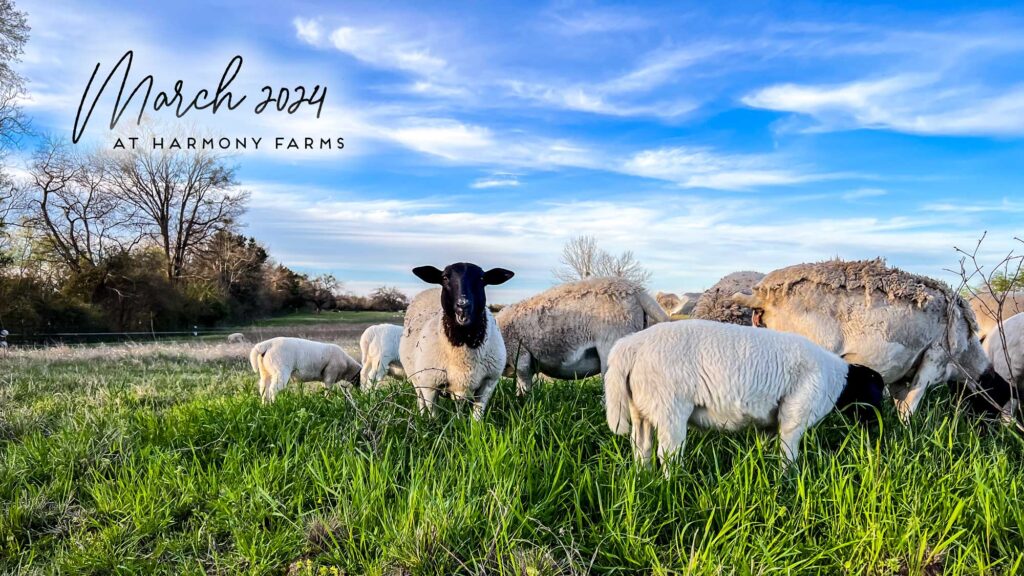
March 2024 Farm Update | Raising Dorper Lambs in Texas

Interested in purchasing my Dorper Lambs for your own farm? Join my waitlist below!
Hey Friends,
I am so excited to share behind the scenes from March at my farm. Also, mark your calendars for May 10-11th. Lordwilling, I will be in Luling Texas for a meet-and-greet! Market at the Farm is a free event hosted by Sunny Hill Flower Farm at Mercy Meadows Ranch. RSVP below!
Market at the Farm in Luling, TX is the perfect Mother’s Day day trip: U-pick flower garden, live music, food, coffee, petting zoo, games for children, local vendor market and more! I hope to see you there :).
(RSVP is free. If your schedule changes you can be cancel any time before the event.)

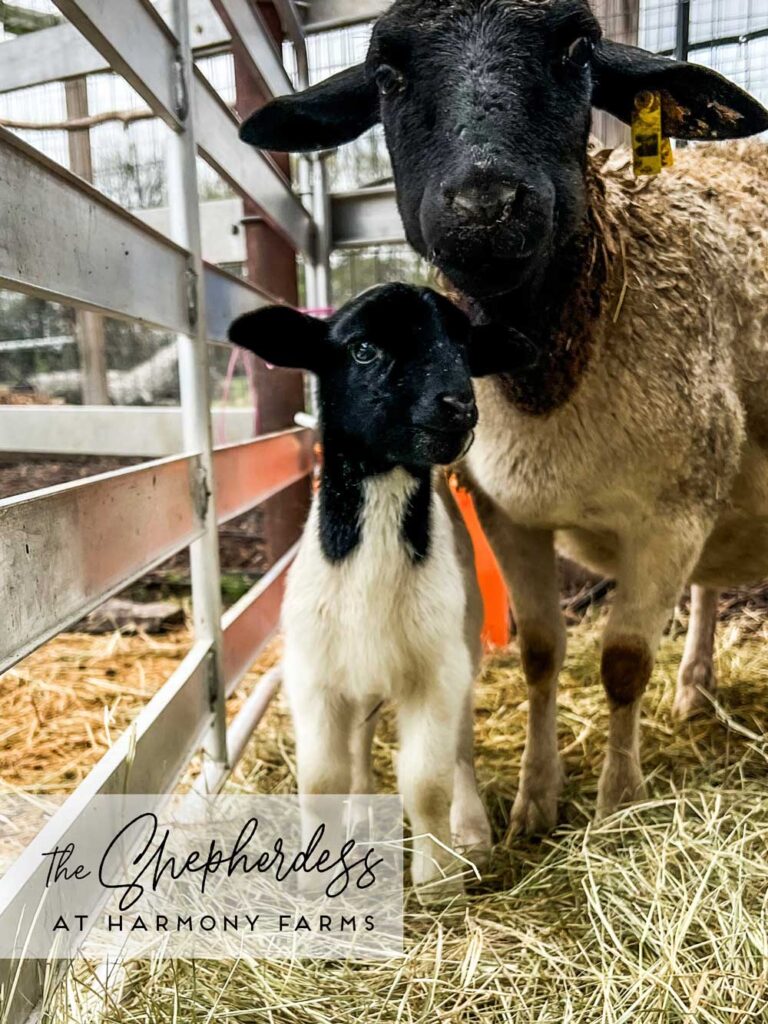
The very last lamb of the season was born in March! I will have more details on 2024 lambs for sale in April’s farm update! Please stay tuned.
I’m grateful for early spring pasture! I launched my spring grazing program on March 7th, one week ahead of schedule! I was definitely glad to stop feeding hay a bit early this year :).
Speaking of grazing! I found a great deal on 1000 Pigtail Posts for rotational grazing (previous owner used them to create dividers at a concert)! But I don’t need all 1000… I’m passing the deal on to you by selling bundles of 20 at almost HALF RETAIL PRICE (free shipping on $75+). Go grab some!!

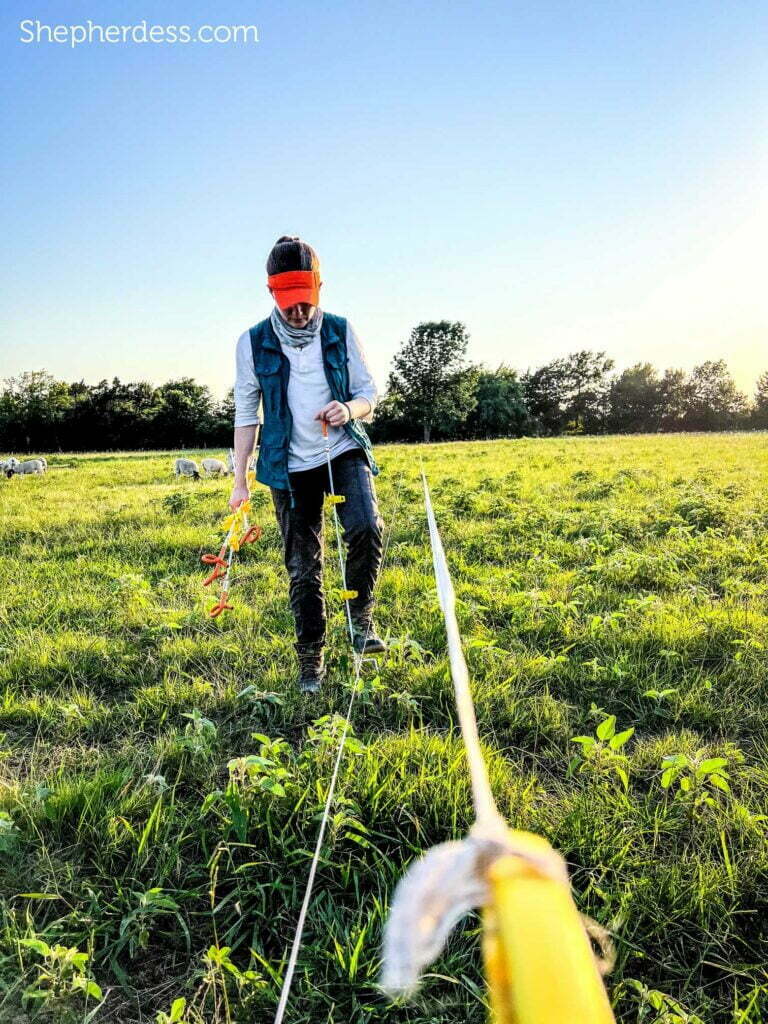
I rotational graze my sheep, moving them to a fresh paddock around 2-5x per week. I use two lines of (electric) Polytape to create new paddocks. The lines are set at around 6″ and 24″. The heights make it too low to crawl under and too high to (comfortably) jump over.

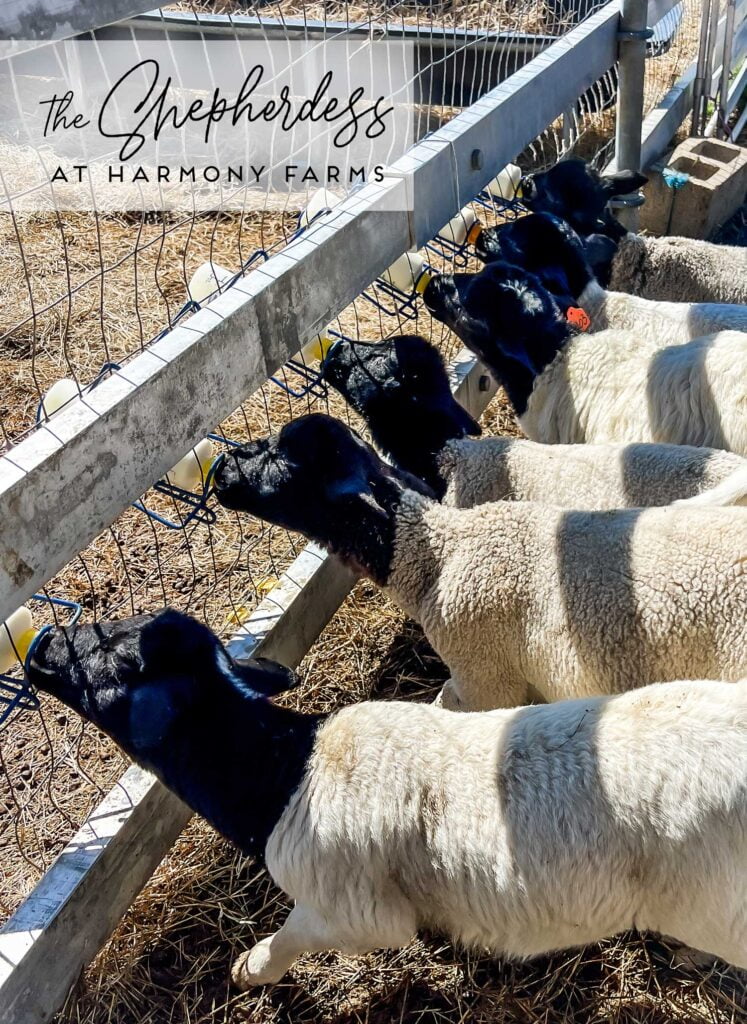
With 6 bottle lambs at once, I decided to invest in some fenceline bottle racks! It is fun to watch them lineup and feed themselves!
I have been weaning my bottle lambs at 40lbs (reaching this weight by about 10 wks old). I feed them hay and alfalfa pellets (sometimes a small handful of crushed barely mixed in) so that they are ready for a full transition to solid food once they reach 40 lb.

For my regular lambs I wean them off their moms around 50 lbs. They stay in my weaning pen until they reach 60lb. In the weaning pen I deworm them and feed hay and alfalfa until they hit 60lb. It usually takes 4-6 weeks for them to reach 60lb. At 60lb, they graduate to pasture and are grazed the same as the rest of the flock. This is my 3rd year using this weaning system. Lambs in this system seem to have better parasite resistance than the rest!
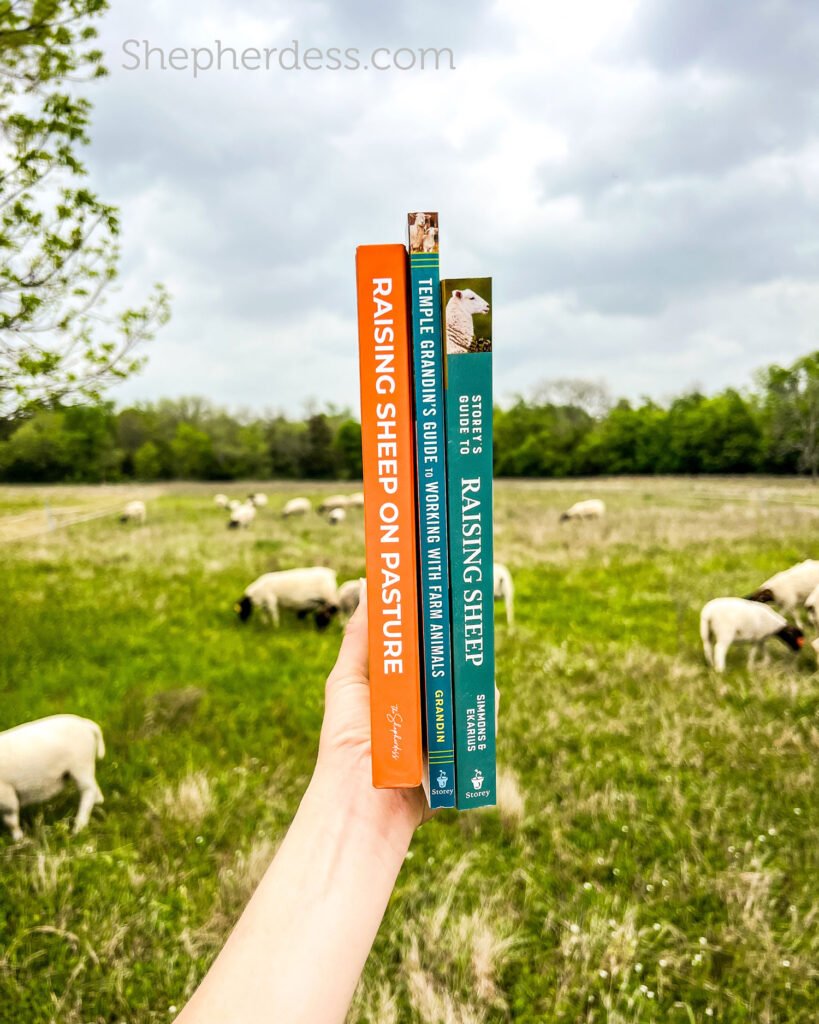
I just listed my Raising Sheep Book Bundle, with the 3 books I recommend you have on hand as a beginner Shepherd. You can buy all 3 together or individually by clicking here!
Thanks for reading! I appreciate your support very much!
-the Shepherdess
“The grass withereth, the flower fadeth; but the word of our God shall stand for ever.” Isaiah 40:8
Why Prepping is Not Just for the Apocalypse | Homesteading in 2024
CLICK HERE for my 2 FREE FOOD GROWING GUIDES
I was having a conversation with someone who is setting up his 5-acre homestead. He posed a question to me along the lines of: “What will cause the next round of food shortages? What kind of apocalyptic predictions are motivating you to farm?”
A lot of scenarios went through my head at that moment: world war, currency collapse, political upheaval, extreme drought, grid outages, cyberattacks, and more.
But I paused for a couple of seconds before responding… because despite the fact that I do believe the future will hold worse things than we have ever seen; I am not prepping based on what I think I’ll see, I am prepping based on what I have already seen.
In this video, I am going to cover 4 Black Swan events from the past 100 years and how I am using them to try to make the right decisions for whatever the future holds.
Sidenote: I believe what I have just said with respect to “the worst is yet to come” without fear because I trust in the Lord, not my farm, as my ultimate source of security. I can say what I just said without being a fear monger because the Lord invites you to trust in Him as your ultimate source of security as well.
So back to the conversation I was having with this guy: Despite all the apocalyptic scenarios swirling in my head, I said: “I am not prepping based on what I think I’ll see, I am prepping based on what I’ve already seen.”
I shared with him that during 2020 and all of the insanity that I saw, I kept having this phrase run through my head: “this is a drill, this is a drill, this is a drill”
I had this intuition that Covid was not going to be a long-term disruption, but rather the opportunity to see how we would perform if a long-term disruption knocked at our door.
And how did we perform? Did our supply chains hold out? Did we, as individuals, have the food reserves to make it past that 1-2 months? Did we have a local farm to buy from should those supply chain disruptions have lasted for years instead of weeks?
For me personally, in 2020, the answer to a majority of these questions was: no. Which is why I started raising some of my own food and dedicated myself to creating free resources for those who would come behind me in the effort. If you click the first link in the description of this video, I’ll send you my two most popular beginner food growing guides for free.
But Covid was just the first of 4 Black Swan-style Events we discussed:
#2: The second was drought-induced famine. We all remember the dust bowl during the great depression of the 1930s. That time period was a succession of 3 major droughts, which resulted in a 32% decrease in wheat production nationwide, forcing many farmers off the land. [https://news.uchicago.edu/story/dust-bowl-would-devastate-todays-crops-study-finds]
More recently, similar droughts have swept the southwestern United States costing crop farmers Billions of dollars in revenue and accelerating the decline of US beef industry.
When the mega-drought hit my farm in Northeast Texas back in 2022, I witnessed mile-long lines of local ranchers lining up to liquidate their cattle. Shortly after this, I found out that, historically, ranchers would keep up to 18 months of hay reserves for their herds as a general practice, not a pre-apocalyptic practice.
Which is an action step I am implementing here in a year of abundance from a rainfall perspective: going old school and putting back 18 months of hay for my flock.
#3: The third event we discussed was World War. It has been nearly 80 years since the end of WW2. Previous to WW2, the United States was involved in 3 major wars within the same span of time: the Civil War, ending in 1861; WW1, ending in 1914; and WW2 ending in 1945.
The present 80-year span of relative peace within our borders is an anomaly and a major world war in the near future cannot be ruled out.
It was through the Victory Garden movement during WW2 that Americans used their backyards to produce 48% of their own food supply.
The victory garden movement was a major contributor to national security during wartime as much of the commercial food supply was being exported to troops and allies on the front lines.
We can learn from this and engineer our backyards to produce in a similar fashion.
#4: Family emergencies. While this is more general than historic, I recently heard a story of a homestead mom who had been gardening and preserving food for something bad she expected would happen in the world. Then, her husband was injured and not able to generate an income for almost a whole year. It was her food preps that provided groceries during a time when they were without a primary income.
The story was an amazing reminder to me as a lady that you never know what you are prepping for. Using seasons of abundance to put back canned goods, extra flour, or a few extra pounds of meat in the freezer may pay off in ways you would not have expected.
——-
Over the past 4 years, I have realized alongside many of you that we are living in a state of NOT NORMAL.
Relying on a farming population of 2% to feed an entire nation is not normal. Having 80% of our meat supply controlled by 4 companies is not normal. Factory Farming practices that cause a loss of soil at a rate 10x that of replenishment is not normal. Having a cropping system that relies on the use of 1 billion pounds of cancer-causing pesticide is not normal. Having 300-MILLION people tied to 1 power grid is not normal.
A return to normal may be labeled as prepping or apocalyptic… raising a family pig, milking your cow, gardening, canning, and having enough food in the pantry to last 3-5 months: THESE WERE a way of life 60-70 years ago.
PERSONAL: I am personally preparing for massive, long-term breakdown of critical supply chains. I cannot tell you what will trigger it or when it will be. Something in me hopes that it will not be for another 10-25 years because realistically, we need that much time to establish the skills and resources necessary to brave that kind of a collapse.
If I have children, it will likely be them who will face on a large scale what I am seeing today on a small scale. I want to hand them practical tools and skillsets to face that uncertainty.
You would be considered foolish if you did not do these things. And today there is a strange inversion where some consider you paranoid or crazy if you do put back food preps.
So if anyone asks why you are so worried about the end of the world, tell them you aren’t afraid, you are just going back to normal.
“NO EVIDENCE PROVIDED” AMISH FARMER COURTROOM RECAP (2024) | Amos Miller Organic Farm
The hearing began at 1:30 p.m., and the tiny courtroom seated 35 people. It was immediately filled with more than 100 people turned away at the door due to capacity.
I was ushered in with a media pass and seated in the front row, with Amos and Rebecca Miller seated just behind me in the second row. Pennsylvania Judge Thomas B. Sponaugle did not allow attendees to take notes during the hearing; only members of the media were permitted to write notes and take them out of the courtroom. Sheriff’s deputies stood at the door requiring attendees to hand in all notes taken inside the courtroom before they could exit.
A court hearing is just that: the Judge sets and hears both sides as each side brings a set of witnesses and testimonies that they hope will persuade the judge to rule in their favor. A hearing is not a trial, and there is no jury.
The PDA (which will henceforth be abbreviated as the PDA) entered the courtroom with evidence and witnesses they hoped would persuade the judge to uphold the emergency injunction they placed on Miller’s Organic Farms. An injunction that restricted Miller Organic Farm from distributing any raw dairy products to its private members UNTIL Amos Miller applied for a Pennsylvania raw dairy permit.
Robert Barnes entered the courtroom with evidence and witnesses he hoped would persuade the judge to revoke the emergency injunction until Miller had a proper trial. The evidence Robert Barnes presented was on two fronts. That (#1) by obtaining a raw dairy permit, Miller would actually be restricted in his rights.
And this is because the Pennsylvania raw dairy permit only allows for the sale of three products: raw milk, raw yogurt, and hard cheese that has been aged for 60 days or more.
By obtaining a permit, Miller would be immediately restricted from offering his private members his cream, butter, soft cheeses, kefir, raw colostrum, and more.
Judge Thomas B. Sponaugle entered the courtroom and immediately made the statement that he had read the 330+ affidavits filed by Miller’s Attorney as well as Letters from the public. He cited that he had great respect for what people believed, but that it was his job to interpret and uphold the law, not to redefine or change it.
Judge Sponaugle opened the hearing by asking Robert Barnes if Miller had filed for a raw dairy permit. To which Barnes responded, “No, your honor, applying for such a permit would restrict my client’s rights.”
At that point, the hearing began, and the Pennsylvania Department of Agriculture called its witnesses to the stand.
PDA WITNESS #1: Nicole Martz, the Woman who Led the January 4th search on Miller’s farm, Chief of food Safety at the Pennsylvania Department of Agriculture. While at Miller’s Organic Farm, Martz collected 33 samples of various raw dairy products, several dozen photos of Amos Miller’s farm and farm facilities, and gathered enough information to construct a complete diagram of Miller’s Organic Farm Facilities, which was presented in court.
Nicole Martz cited that she observed on-site un-inspected milk tankers, employees bottling milk without gloves, a stirring spoon that touched the wall and the floor, boots with organic material on them; goat milk labeled for pet consumption but bottled as is consistent with human consumption, and more.
After Nicole Martz offered testimony, Robert Barnes began asking her the following questions:
Barnes: Has anyone complained to the state regarding being harmed by Amos Miller’s food?
Martz: No.
Has any of Amos Miller’s food ever been recalled?
Martz: No.
Barnes: Was Miller excluded from the facility while the search warrant was being executed?
Martz: No, Amos Miller was not excluded; he was simply not cooperating. Media was excluded.
Barnes Asked: Did you tell Miller he was authorized to come in and observe the search warrant?
Martz Responded: No.
Sheri Morris is called to the witness stand (assistant director at the Bureau of Food Safety):
The second witness called to the stand was Sheri Morris, the woman responsible for signing the affidavit of probable cause which enabled the search warrant to be performed on Miller Organic Farm. Sheri Morris has been with the PDA for 25 years and is assistant director at the Bureau of Food Safety. Sheri Morris cited that the job of the Pennsylvania Department of Agriculture was to regulate all food in the commonwealth, besides that which is regulated by the FDA. Sheri Morris said the scope of the PDA’s regulation includes the regulation of food sold at private buying clubs like Sam’s Club and regulating snack bars at private member-only clubs and golf courses.
The probable cause that Sheri Morris cited as grounds for the search warrant of Miller’s Organic Farms was #1 a 2016 case of E. coli in Michigan that was tied to a patient who had previously been a customer of Amos Miller’s. The second case was what Sheri Morris initially said was a complaint of E. coli out of New York State, but had to correct herself on the witness stand and cite it was not a complaint but rather a report and that the patient did not want to offer any comments.
Sheri Morris oversaw the lab testing for the 33 samples that were collected from Miller’s Organic Farm. The samples were tested for: E. coli, campylobacter, Salmonella, and Listeria. Remember that 2 cases of E. coli being the basis on which the search warrant was issued.
The Lab report returned no positive E. coli, campylobacter, or Salmonella. However, traces of Listeria were found in 8 of the 33 samples.
Robert Barnes questioned Sherri Morris: (As a reminder, this is not verbatim dialogue, but paraphrase and summation from my short notes)
Barnes: Did the testing you performed on the dairy samples taken from Miller’s Organic Farms return positive for E. coli?
Sheri Morris responded: The tests did not come back positive.
Robert Barnes: Did the testing you performed on the dairy samples taken from Miller’s Organic Farms return negative for E. coli?
Sheri Morris: The tests were not positive, but they were not negative either. The results were inconclusive, but inconclusive does not mean negative.
At this point in time, the courtroom filled with a faint murmuring of laughter from the audience.
Robert Barnes asked: Did you have these test results before January 24th (Sidenote: January 24th was when the PDA officially sued Miller’s Organic Farm and put an injunction on the whole dairy operation)?
Sheri Morris responded that the test results were present. There was no positive test result for E. coli, neither were they negative; there were only inconclusive results.
Robert Barnes: Has any customer of Miller’s or any resident of Pennsylvania whatsoever filed a complaint that they were ever injured or made ill by Miller’s food?
Sherri Morris: No.
There were two more witnesses for the PDA; they generally followed the same course. Barnes concluded his questioning of every witness from the PDA with the same question: Has any customer of Miller’s or any resident of Pennsylvania ever filed a complaint that they were injured or made ill by Miller’s food? Every time the answer was no.
After the PDA witnesses were finished, it was Barnes’s turn to bring forward his witnesses on Miller’s behalf.
Barnes brought around 10 witnesses forward. A majority of them were customers of Millers who testified to the health benefits and safety of his foods. Some testified to the remission of autistic tendencies in their children as they began consuming Miller’s Raw Dairy products, others testified to the ability to wean off of pharmaceuticals after consuming Miller’s Raw Colostrum and fermented food. Some testified that since they had been without Miller’s products for a month (due to the emergency injunction placed by the PDA), they have had to revert to the use of conventional pharmaceuticals to manage health problems.
But one of the expert witnesses brought forth in Miller’s defense was Margaret Coleman, a medical microbiologist who formerly worked with the USDA. Coleman is currently a bacteriologist and an expert in risk analysis for public health.
Margaret Coleman independently reviewed the PDA’s lab results on the samples collected from Miller’s farm.
Pay very close attention to this next portion.
Eight of the 33 samples from Miller’s organic farm contained Listeria according to the PDA’s lab reports. However, Bacteriologist Margaret Coleman brought something to light with respect to the nature of Listeria. She cited that when it comes to Listeria, it is the quantity of micro-organisms that typically leads to infection, not the presence of the bacteria alone. Coleman cited that according to a USDA study in 2003, typically no illness results until 10,000 listeria organisms are present, with Canada citing up to a 100,000 micro-organism limit.
Barnes asked Coleman: How many Listeria micro-organisms were cited on the Lab reports from samples obtained from Miller Organic farms?
The PDA Attorney immediately shouted, “OBJECTION, no evidence present.”
Barnes responded: NO EVIDENCE PROVIDED.
At that point, the judge looked very sternly at the PDA attorney and said: “Why were these particular lab reports not provided to Miller’s legal team in advance of this hearing?”
The PDA Attorney responded that her team had prioritized collecting information for their defense and did not have the time to provide the reports to Barnes.
The judge was visibly disgusted by this.
At this point in time, it was nearing 5 p.m., and the judge began to wrap the hearing up.
He asked the question of Robert Barnes: Does holding a raw dairy permit change the health profile or decrease the benefits of Miller’s Organic raw dairy products? To which Barnes responded: “Yes, because obtaining a permit would restrict Miller from offering a majority of the raw dairy product that his private members benefit from.”
The judge seemed at this point confused that a permit would limit a dairy producer.
At which point PDA attorney interjected and explained that under a Permit Miller can only sell. Milk, yogurt, and hard cheese aged for 60+ days.
The judge then asked: cannot Miller simply obtain a permit for these three products and continue offering the other products without permit?
The PDA Attorney responded “No. With a raw dairy permit Miller would not be allowed to sell anything beside raw whole milk, yogurt, and hard cheese.”
At this point, the judge dismissed the public and privately convened with the attorneys to finish the hearing. The following day, Judge Thomas B. Sponaugle issued a ruling to uphold the injunction against Miller’s Dairy operation.
Please share this video, and I will put my 1-1 interview with Robert Barnes on screen here once it is available.
February 2024 Farm Update | Raising Dorper Lambs in Texas

Interested in purchasing my Dorper Lambs for your own farm? Join my waitlist below!
Hi all,
February was busy and I am excited to give you a look at it! I have had several emails asking if I have been impacted by the the Texas Wildfires. No, I am closer to the Louisiana border than the Texas Panhandle. Please pray the fires come under control within the next week. Ranchers are depending on it for spring grazing.
I have been sharing about Amos Miller case since early 2022 when the Federal Govt. filed suit against his Organic Farm. Miller Organic Farm is now being sued by the state (a second major lawsuit). This month, I left the farm to attend the Amos Miller Rally in Lancaster, PA. I obtained press-pass to the court hearing and plan to update you all with more info on the proceedings. WATCH MY AMOS MILLER VIDEOS HERE!
Lambing is almost finished! I have one ewe left to give birth. I am grateful for a good season and lambs that are growing like weeds! A few of the Lambs that were born in November have already been weaned. The lamb at the front is not weaned, but is a bottle lamb so she is residing at the weaning pen :).
Despite a (mostly) smooth lambing season, I hit a snag with one of my ewes. The ewe was small, the lamb was large and poorly positioned.
After trying for an hour to deliver the lamb, I loaded the ewe into a pet taxi and took her to the vet (thanks to my dad and brother’s help)…

After a rough c-section a big ram lamb was BORN ALIVE, but not responsive!

I spent about 30 minutes rubbing, stimulating, and even giving the lamb CPR. The vet also came and gave him a stimulant.
The lamb survived and is THRIVING!! I am so grateful to the Lord for a happy ending! His mother is also recovering very well!
If you are waiting on info regarding Dorper Lambs for SALE, be watching for info in the coming month. I am focusing a lot more on meat sales this year, but may have a handful of really high quality breeding ewes and rams up for grabs.
My EAT BEEF, NOT BUGS tee is now available in sizes S-3XL!! Your purchases help support my farm and the work I share on the internet.
If you are interested in raising sheep yourself, check out my book: The Basics of Raising Sheep on Pasture
Thanks so much for supporting my work!
-the Shepherdess
“For a just man falleth seven times, and riseth up again: but the wicked shall fall into mischief.” Proverbs 24:16
HUNDREDS PROTEST AT AMISH FARMER HEARING
AMISH FARMER RAIDED (again) 2024
Click to Watch all 2024 AMOS MILLER, Amish Farmer VIDEOS HERE
PREVIOUS VIDEOS ON AMOS MILLER FEDERAL CASE:
Amos Miller 2022 Federal Case Recap
Amos Miller 2022 Federal Case Verdict
2024 Pennsylvania Department of Agriculture Lawsuit Against Amos Miller Organic Farms:
Amos Miller, the Amish Farmer in Bird in Hand PA has been raided and is being sued by the Pennsylvania Department of Agriculture in 2024. In this video I am going to provide you with details surrounding the January 2024 raid of Millers Organic Farm by the State of Pennsylvania; a raid which comes just one year after the conclusion of the Federal Government’s lawsuit against Miller in the United States vs Miller Organic Farm case.
PLEASE SHARE THIS VIDEO: there has been very little media coverage of the most recent raid and the scope of this suit is too large to be glazed over.
I covered Miller’s Federal case which spanned from 2019-2023 in 2 videos, linked below.
As it stands in the USA today, every meat and dairy product that is sold at the retail level must be either directly inspected by a USDA or state agent, or (as in the case with dairy) must be processed by an establishment with license and/or permits from the state or federal government.
Private membership associations like Miller’s Organic Farm, as well as herdshares, etc. are final avenues through which small farmers can provide product direct to consumers without government mediation.
Even moreso, it is the final avenue through which YOU the consumer can opt-out of a dangerously centralized agricultural system, a system that is at present a threat to National security.
Henry Kissinger, National Security advisor under Nixon and Ford said this: “Control oil and you control nations, control food and you control people.”
If the state or federal government can de-legitimize or bankrupt Miller’s 4000+ member Private Membership Association, it could signal the beginning of the end for thousands of other small farmers across the USA who are operating under the same framework.
If you are local to Pennsylvania, or can at all make the trip I want to encourage you to be present at the Lancaster County Courthouse on February 29th at at 11:30am.
for the COURT RALLY that will directly precede Amos’s Court Hearing at 1pm.
If you are like me (not local) donate to Amos Millers Give-Send-Go Campaign using the link below. Robert Barnes is the Lawyer representing Miller Organic farms and is from my evaluation, Barnes is doing so with a firm grasp on what this means for food freedom in the USA. Barnes has estimated that legal fees for Miller’s case will reach one-quarter million dollars by the end of March.
According to Attorney Robert Barnes, the State of Pennsylvania has sued Amos Miller and is in pursuit of a COMPLETE and permanent injunction against Miller Organic Farms.
If won, the lawsuit will set legal precedence for the shut down of the thousands of private farming operations across the USA.
By all appearances, the end goal is not Amos Miller; but, as Kissinger cited, control of the people through food.
Now for the recap of the raid on Miller Organic Farm in January of 2024, as provided by Miller’s Attorney Robert Barnes as well as the Lancaster Patriot. Both sources linked in the description.
Search warrant issued on January 3rd:
On January 3rd a search warrant was ordered for Miller’s Organic Farm by Judge B. Denise Commins
In order to obtain a legitimate search warrant, a crime or probable cause must be present.
In the place of crime and probable cause, the Pennsylvania Department of Agriculture presented two allegations of food borne illness tied to Miller’s dairy product: one from 2016 and another from 2023.
According to Miller’s Attorney Robert Barnes there were two 2 major problems with these allegations:
#1 The allegations were unverified and dated back to 2016 and 2023. Remember, in 2023 Miller reached a settlement with the federal govt. and these allegations fell under that timeframe.
According to Barnes, The Pennsylvania Department of Agriculture lied by omission, failing to cite this fact, which would have disqualified their use as the “crime” or “probable cause” necessary to justify a new search warrant.
What is more, is that Miller Organic Farm has had no customer complaints filed at the state level in over 15 years, which leaves one to wonder how the state materialized these complaints in the first place.
#2 Were the allegations of food borne illness legitimate they ought to have been served through Miller’s legal representative, Robert Barnes, and not through a search warrant.
Raided by Pennsylvania Department of Agriculture and State Police on January 4th:
The Pennsylvania Department of Agriculture wasted no time, however. The very next day, on January 4th, they conducted a search of Miller’s Organic Farm was, with Pennsylvania State Police offering assistance on site. (-lancaster Patriot).
During this search a Detainment Order was placed on a large portion of Miller’s Food Inventory. The detainment order prohibited Miller’s Organic food products from being distributed to the private members until further notice.
The Pennsylvania Department of Agriculture and State Police allowed no 3rd party on the premises while they conducted the search of Miller’s Organic Farm…. As such there was no accountability for what was done to or with the food products during the search.
The Pennsylvania Department of Agriculture left with several of Miller’s food products in coolers and affixed a sign to the door that prohibited the contents of the Freezer units from being sold or sampled by Miller. This leaves Miller without the ability to perform the independent testing that may be necessary to disprove potential allegations of contamination.
What’s more is that according to Robert Barnes, detaining food products was not an allowance provided by the search warrant. Barnes cited that what happened here was a general warrant which is in direct violation of the 4th Amendment to the United States Constitution:
“The right of the people to be secure in their persons, houses, papers, and effects, against unreasonable searches and seizures, shall not be violated, and no Warrants shall issue, but upon probable cause, supported by Oath or affirmation, and particularly describing the place to be searched, and the persons or things to be seized.”
What is more, according to Barnes, the warrant for the January 4th search was issued on the basis of Miller’s DAIRY products, however the entire content of Miller’s freezer was restricted, including the pasture raised meat products that were stored alongside the dairy. Several of Miller’s shelved products including granola, canned goods, etc were labeled with Detention order stickers. Tens of thousands of dollars worth of highly perishable merchandise was detained; creating yet another significant financial loss for Miller.
On January 19th
On January 19ththe State of Pennsylvania added an extension to the original detention order. The original detention order restricted food inventory that was on site during the January 4th search. However, the extension on January 19th prohibited the distribution of newly processed dairy products.
On January 24th
“Pennsylvania Department of Agriculture Sues Amish Farmer Amos Miller”
Attorney General Michelle A. Henry said in a statement. “We cannot ignore the illnesses and further potential harm posed by distribution of these unregulated products… Pennsylvanians should know what is in the products they and their families are consuming.”
The irony of that statement is that a primary reason Miller’s 4000 Customers buy his organic food is because in doing so they know exactly what is in the products they and their families are consuming.